





















Shandong Zhongjie Special Equipment's main products include: fuel (gas) boilers, organic heat carrier boilers, biomass boilers, waste heat recovery boilers, and other boiler products; vacuum insulation cryogenic pressure vessels such as LNG tanks, oxygen-nitrogenargon tanks, and CO2 tanks; pressure vessel products such as denitrification engineering equipment, heat storage and energy storage equipment, and complete chemical equipment; central air conditioning and HVAC equipment such as ground (water) source heat pumps, air-source units, water-cooled screw units, and air-cooled modular units. Planned products include large-scale energy centers, LNG transport vehicles, LNG tank containers, and other green energy equipment.
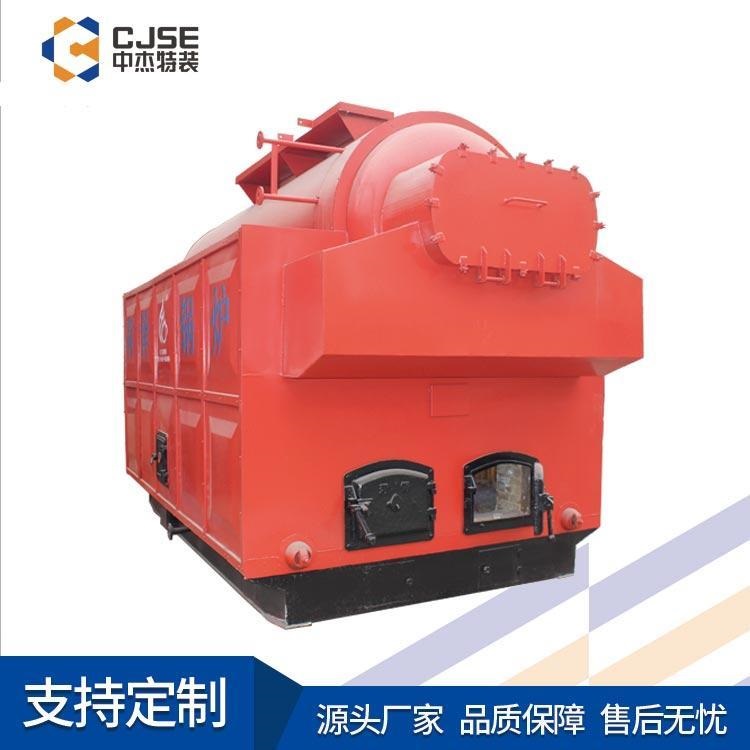
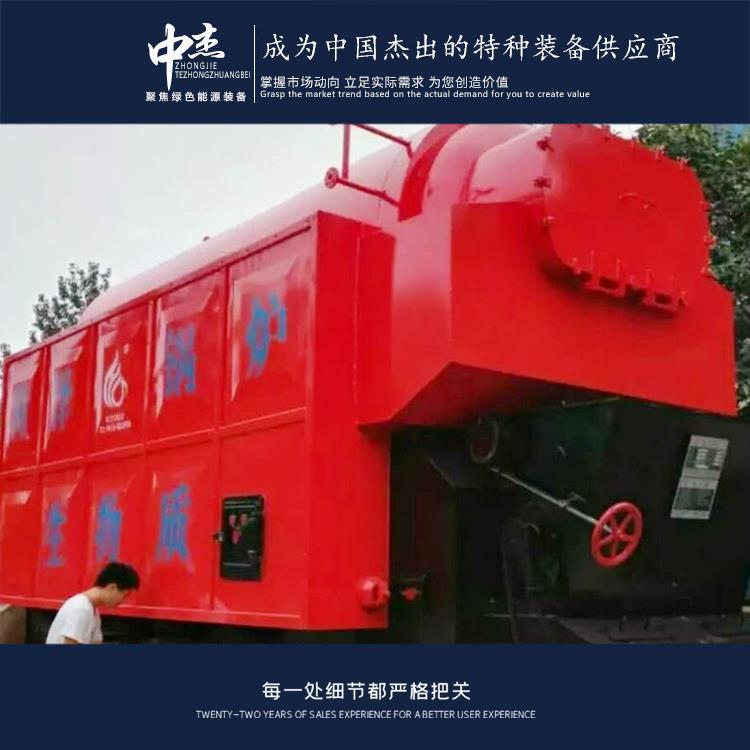
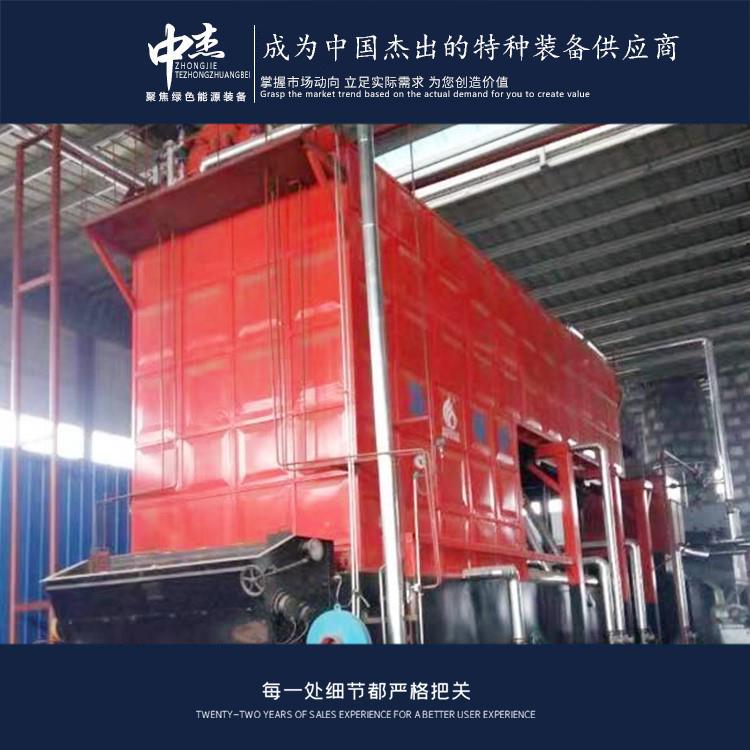
Chain生物质 boiler, also known as chain grate biomass boiler, is a special type of biomass boiler. It uses a chain grate as the fuel conveying and combustion device.
Chain grate consists of a series of interconnected chains, with evenly spaced grate plates distributed along them. Fuel is transported from one end of the furnace to the other through the movement of the chain grate, while simultaneously burning within the furnace.
The working principle of the chain biomass boiler is: the fuel is evenly distributed on the chain grate, and as the chain moves, the fuel gradually moves towards the outlet of the furnace. Inside the furnace, the fuel is thoroughly mixed with air, releasing heat energy through combustion reactions. At the same time, the design of the grate plates and the movement of the chain ensure uniform and complete combustion of the fuel.
Chain biomass boiler features include:
Versatile: Chain grate burners are adaptable to various biomass fuels such as wood chips, straw, etc., demonstrating strong fuel adaptability.
High combustion efficiency: The design of the chain grate ensures even and complete combustion of the fuel, enhancing combustion efficiency.
Operation Stable: The movement of the chain grate is stable, ensuring reliable fuel feeding and combustion process, leading to high operational stability of the boiler.
Suitable for Large Capacity Boilers: Chain biomass boilers are designed for large capacity boiler systems, meeting the requirements of the industrial and heating sectors.
Chain biomass boilers have wide applications in the field of biomass energy utilization, efficiently utilizing biomass fuel to achieve sustainable energy use.
A hot water boiler is a device used to supply hot water. With the increasing energy demands and environmental awareness, hot water boilers have seen continuous advancements and improvements in technology and application.
Below are the trends in hot water boiler development:
Energy-saving: Energy-saving in hot water boilers is an important direction for development. By improving the combustion technology of the boiler, the design and material selection of the heat exchanger, we can enhance the efficiency of heat energy utilization, reduce energy consumption and emissions.
Temperature Control Intelligence: With the advancement of intelligent technology, the temperature control systems of hot water boilers are becoming increasingly intelligent. Through the use of control algorithms and sensor technology, temperature control and energy consumption management are achieved, enhancing system stability and comfort.
Multi-energy supply: To reduce dependence on traditional energy sources, the trend in hot water boiler development is towards multi-energy supply. In addition to traditional fuels like gas and oil, an increasing number of hot water boilers are now utilizing renewable energy sources such as biomass, solar, and geothermal, achieving energy diversification and sustainable development.
Environmental Protection and Emission Reduction: Environmental protection and emission reduction is an important direction for the development of hot water boilers. By improving combustion technology, increasing flue gas purification equipment and control systems, reducing pollutant emissions during the combustion process, and protecting the environment and human health.
Safety and Reliability: The safety and reliability of hot water boilers are crucial for development. By enhancing the structural design of the boiler, improving the safety valve and control system, we enhance the safety performance of the boiler to prevent accidents.
Miniaturization and Modularity: With the acceleration of urbanization, there is a distinct trend towards miniaturization and modularity in hot water boilers. These miniaturized hot water boilers can adapt to the needs of urban buildings, reducing land occupation and installation costs, while enhancing flexibility and scalability.
Overall, the development trend of hot water boilers is towards energy-saving, intelligence, multi-energy supply, environmental protection and emission reduction, safety and reliability, miniaturization, and modularization. These trends will drive continuous innovation and application of hot water boiler technology, providing more comfortable, reliable, and environmentally friendly hot water supply for people.
Possible reasons for the black smoke produced by biomass boiler combustion may include:
Incomplete Combustion: Inadequate oxygen supply or insufficient combustion temperature of biomass fuel can lead to incomplete combustion, producing a large amount of smoke and black smoke. This may be due to poor ventilation in the combustion chamber, poor fuel quality, or incorrect setting of combustion parameters.
High moisture content: Excessive water content in biomass fuel can lead to the evaporation of a large amount of steam during combustion, lowering the combustion temperature and thus affecting the combustion efficiency, resulting in black smoke.
Fuel Quality Issue: Impurities, ash, or uneven moisture content in biomass fuel can affect the combustion process, leading to incomplete combustion and the production of black smoke.
Combustion Equipment Issues: If there are malfunctions or wear in the combustion equipment of biomass boilers, such as slagging in the combustion chamber or clogging of the burners, it can affect combustion efficiency and lead to the production of black smoke.
To reduce the emission of black smoke, the following measures can be taken:
Ensure sufficient oxygen supply: Adjust the ventilation system of the combustion equipment to ensure adequate oxygen supply, enhance combustion efficiency, and reduce the emission of black smoke.
Control combustion temperature: Adjust combustion parameters, such as combustion temperature and duration, to ensure complete fuel combustion and reduce the production of black smoke.
Optimize fuel quality: Select biomass fuel in appropriate quantities, ensuring consistent dryness and quality, reducing moisture content and impurities, and enhancing combustion efficiency.
Regular Maintenance: Perform regular maintenance on biomass boilers to clean the combustion chamber, burners, and other components, ensuring the equipment operates smoothly and reduces the production of black smoke.
Install Pollutant Control Equipment: As required, install flue gas purification equipment such as dust collectors and desulfurization devices, effectively removing particles generated during the combustion process.
In the technical aspect of biomass boilers, the following three issues need to be addressed with emphasis:
Enhanced Combustion Efficiency: Biomass fuel has distinct characteristics from traditional fossil fuels, which easily produce particulates like straw and wood chips during combustion, resulting in lower efficiency. Therefore, research and improvement of the combustion system, optimization of the combustion process, and enhancement of combustion efficiency are necessary to reduce energy waste.
High-Temperature Corrosion Issues: Ash and elements like chlorine in biomass fuel tend to cause corrosion at high temperatures, damaging the metal components of boilers. To address high-temperature corrosion, it is necessary to develop and apply corrosion-resistant materials, control combustion conditions, and minimize corrosion occurrences.
Ash handling and utilization: Biomass fuel combustion generates a large amount of ash, including waste, ash content, and unburned materials. The handling and disposal of ash is a significant issue, requiring the development and application of ash handling technologies, including ash recycling, resource utilization, and chemical treatment.
By addressing these three issues, the combustion efficiency of biomass boilers can be further enhanced, corrosion risks reduced, and the effective handling and utilization of ash and slag achieved, promoting the sustainable development of biomass energy.
Shandong Zhongjie Special Equipment, welcome customers to our factory for business discussions.
WeChat Official Account

Scan to follow Official Account



















