


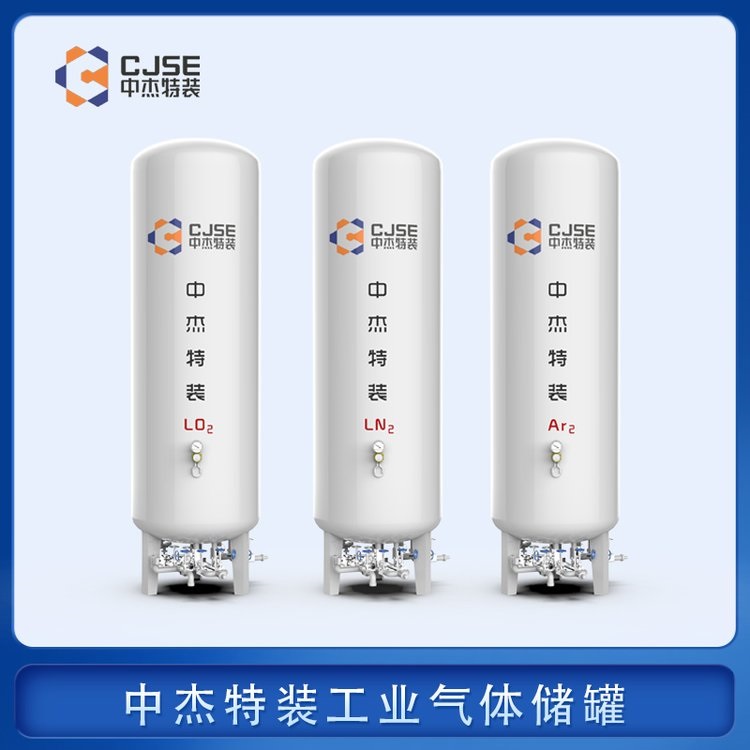

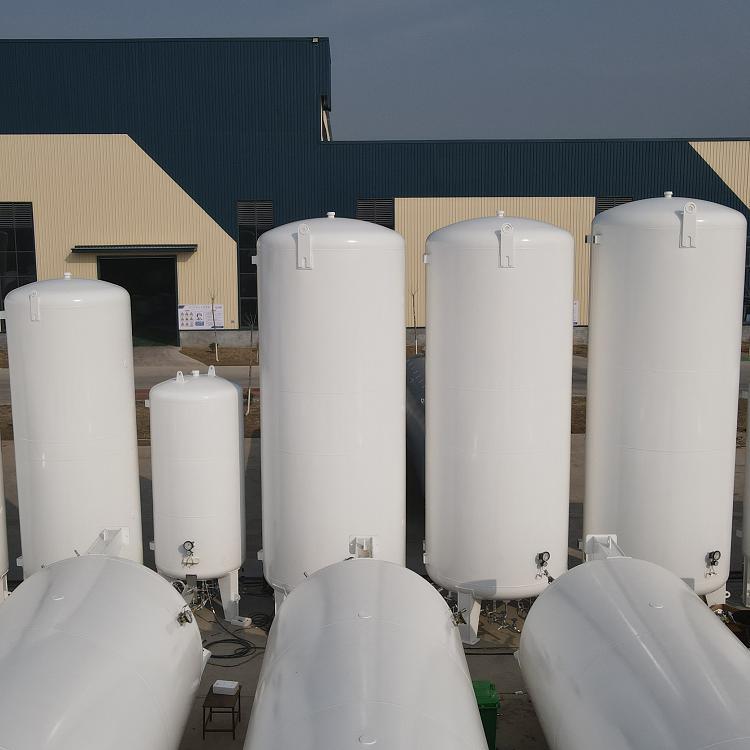
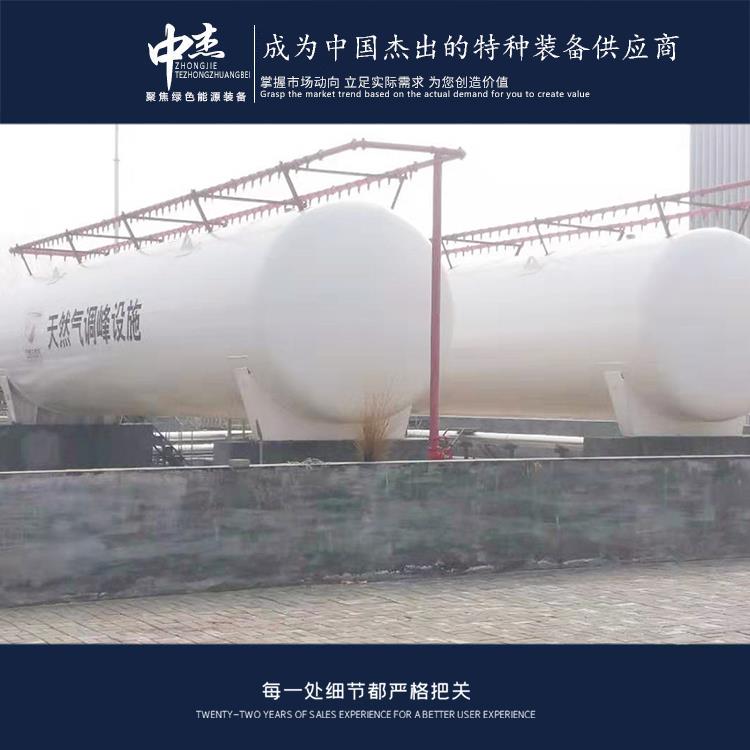


















Shandong Zhongjie Special Equipment (formerly Heze Boiler Factory Co., Ltd.) holds an A-grade boiler manufacturing license, an A2-grade pressure vessel manufacturing license, an A2-grade pressure vessel design license, a B-grade boiler installation license, and GB2/Class, GC2/Class pressure pipeline installation licenses, as well as a mechanical and electrical equipment installation contracting qualification. It is a member of the China Boiler and Water Treatment Association, the China Chemical Equipment Association, and the director unit of the Shandong Equipment Manufacturing Association. The company has also passed certifications for the ISO9001 Quality Management System, ISO14001 Environmental Management System, OHSAS18001 Occupational Health and Safety Management System, and the American ASME/U2 certification.
Liquid oxygen low-temperature storage tanks are primarily used for storing and supplying liquid oxygen, with their application methods varying based on specific needs and scenarios. Here are some common applications of liquid oxygen low-temperature storage tanks:
Applications: Liquid Oxygen Low-Temperature Storage Tanks are widely used in the field for cryogenic preservation of biological samples, cells, tissues, and vaccines. Institutions such as biopharmaceutical research organizations and biobanks utilize these tanks to store and protect these biological materials.
Experimental Research: Liquid Oxygen Low-Temperature Storage Tanks are used to provide low-temperature environments in scientific research and laboratories for freezing preservation and experiments. These tanks play a crucial role in experimental research across various fields, including physics, chemistry, biology, and materials science.
Industrial Applications: Liquid Oxygen Low-Temperature Storage Tanks are used in the industrial field for providing low-temperature cooling in processes such as metal processing, welding, and heat treatment. These tanks can provide low temperatures to achieve the required hardness and toughness of the metal during processing.
Food Industry: Liquid Oxygen Low-Temperature Storage Tanks are used in the food industry for freezing and refrigerating foods such as frozen meats, frozen fruits, and frozen seafood. The low temperature of liquid oxygen can quickly freeze foods, preserving their freshness and quality.
Liquid oxygen low-temperature storage tanks are used in the field for storing and supplying liquid oxygen as fuel. As a high-energy fuel, liquid oxygen is widely used in the propulsion systems of engines and vessels.
During the operation of liquid oxygen low-temperature storage tanks, it is essential to strictly adhere to relevant safety regulations and operational guidelines to ensure the safe operation and use of the tanks. Liquid oxygen is highly flammable, so fire prevention measures must be taken when using liquid oxygen low-temperature storage tanks, and it must be ensured that there are no ignition sources nearby.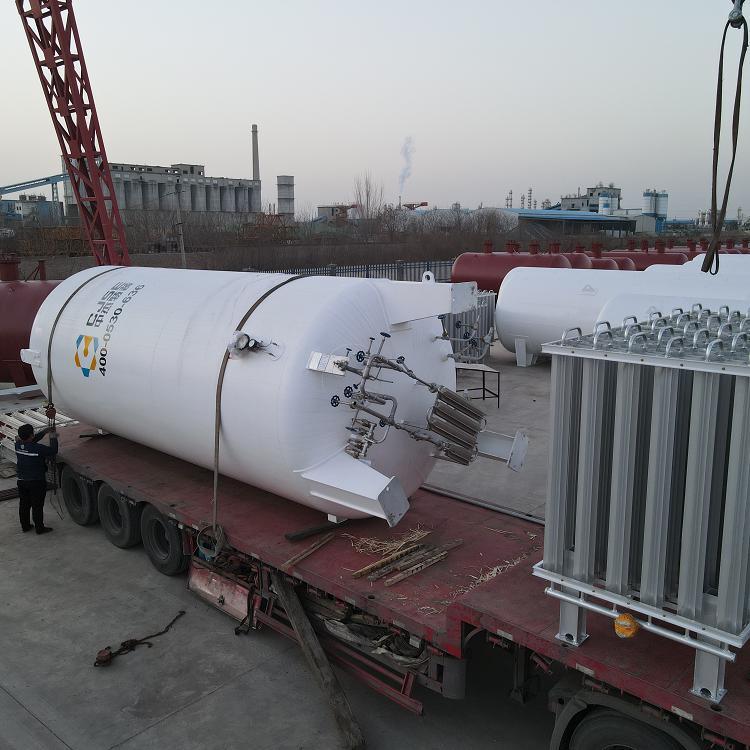
During the installation process of central oxygen supply low-temperature liquid oxygen storage tank units, particular attention should be paid to the following aspects:
Safe Operation: Strict adherence to safety procedures and standards is mandatory during the storage tank installation process. Operators must be trained, familiar with the properties and safety requirements of liquid oxygen, and knowledgeable about the equipment and operational procedures to ensure safety during operations.
Fire Prevention Measures: Liquid oxygen contains a high oxygen content and is prone to cause fires. During the installation process, necessary fire prevention measures should be taken, such as setting up fire barriers, using fire-resistant coatings, and prohibiting open flames, to prevent fire outbreaks and spread.
Leakage Control: Pay attention to leakage control during the installation process. Oxygen leakage from liquid oxygen can increase oxygen concentration, raising the risk of fire and explosion. Leak detection devices and alarm systems should be equipped to promptly detect and control leaks, and appropriate emergency measures should be taken.
Oxygen Concentration Monitoring: During the installation process, the oxygen concentration around the liquid oxygen storage tank should be monitored regularly. High oxygen concentrations can intensify the combustion of flammable materials, increasing the risk of fire and explosion. Take timely measures to ensure the oxygen concentration remains within a safe range.
Grounding and Static Electricity Protection: During the liquid oxygen equipment process, ensure proper grounding of the storage tank and related equipment to reduce static accumulation and discharge. Use static-conductive materials and anti-static equipment to minimize the dangers caused by static electricity.
Regular inspections and maintenance: After the installation is completed, the liquid oxygen tank should be regularly inspected and maintained. This includes visual inspections, pressure tests, leak detection, etc., to ensure the tank's safety and stability.
Be mindful that during the installation of the central oxygen supply low-temperature liquid oxygen storage tank, operations should be conducted by experienced personnel and in accordance with relevant safety procedures and standards. Throughout the installation process, closely monitor safety risks and take timely measures to ensure the safety and stability of the installation.
The reasons for the peak popularity of low-temperature liquid storage tanks in recent years are as follows:
Rising Demand: With the development of industries, scientific research, and other fields, there is a growing demand for low-temperature liquids. Low-temperature liquid storage tanks can effectively store and supply liquid oxygen, liquid nitrogen, liquid gases, and other low-temperature liquids, meeting the needs of various sectors.
Technological Advancements: In recent years, there have been continuous improvements and innovations in the manufacturing and material technologies for low-temperature liquid storage tanks. The application of new insulating materials, advanced refrigeration systems, and safety control devices has enhanced the performance and safety of the tanks, making them more reliable and secure.
Enhanced Environmental Awareness: Low-temperature liquid storage tanks enable effective storage and utilization of low-temperature liquids, reducing energy waste and environmental pollution. Against the backdrop of rising environmental awareness, low-temperature liquid storage tanks, as an environmentally friendly and energy-saving device, have garnered more attention and application.
Emerging Application Fields: The demand for low-temperature liquid storage tanks is increasing in emerging application fields. For instance, the application of liquid nitrogen in frozen food, biopharmaceuticals, and semiconductor manufacturing is becoming more widespread, driving the development of low-temperature liquid storage tanks.
Policy Support: The government has supported and encouraged the development of low-temperature liquid storage tanks. Through policy guidance and financial support, the industry has been promoted and expanded.
In summary, the peak status of low-temperature liquid storage tanks in recent years is mainly due to increasing demand, technological advancements, heightened environmental awareness, the development of new application areas, and policy support. These factors have collectively driven the rapid growth of the low-temperature liquid storage tank industry.
The use of low-temperature liquid storage tanks requires attention to the following matters:
Safe Operation: Operators must undergo training to understand the tank's operational procedures and safety precautions. Adhere to the correct operational steps to ensure safe operation.
Protective Gear: Operators should wear appropriate protective gear, such as thermal suits, gloves, etc., to safeguard against injuries from low-temperature liquids.
Leak Prevention: Regularly inspect the seals of tanks and associated pipelines to prevent leaks of low-temperature liquids. Keep the area around the tank clean to avoid debris obstructing leak detection and handling.
Fire Protection: Low-temperature liquids are highly flammable and fire prevention measures must be taken. Keep the area around storage tanks free from ignition sources, prohibit smoking and open flames. Equip with appropriate fire-fighting equipment to address fire risks.
Pressure Control: Regularly inspect and maintain the pressure control system of the storage tank to ensure the pressure inside is within a safe range. Safety valves and pressure sensors, among other equipment, should operate normally, and abnormal pressure situations should be detected and addressed promptly.
Insulation Protection: Low-temperature liquid storage tanks should be equipped with an effective insulation layer to reduce heat transfer and liquid evaporation. The selection and installation of the insulation layer should comply with relevant standards and requirements.
Regular inspections and maintenance: Conduct regular checks of the tank's exterior and interior conditions, including checking for leaks, corrosion, wear, or other damage. Pay special attention to inspecting the tank's interfaces, valves, and pipelines, ensuring they operate normally.
Emergency Preparedness: Develop an emergency response plan including measures for leaks, fires, and other unforeseen incidents. Operators should be familiar with the emergency response plan and equipped with appropriate emergency equipment and fire fighting tools.
Zhongjie Special Equipment upholds the grand vision of "realizing the dreams of our employees, creating value for our customers, and striving for the prosperity and strength of our motherland," wholeheartedly devoting ourselves to the development of green energy equipment, offering society high-quality products and services at competitive prices!
WeChat Official Account

Scan to follow Official Account



















