


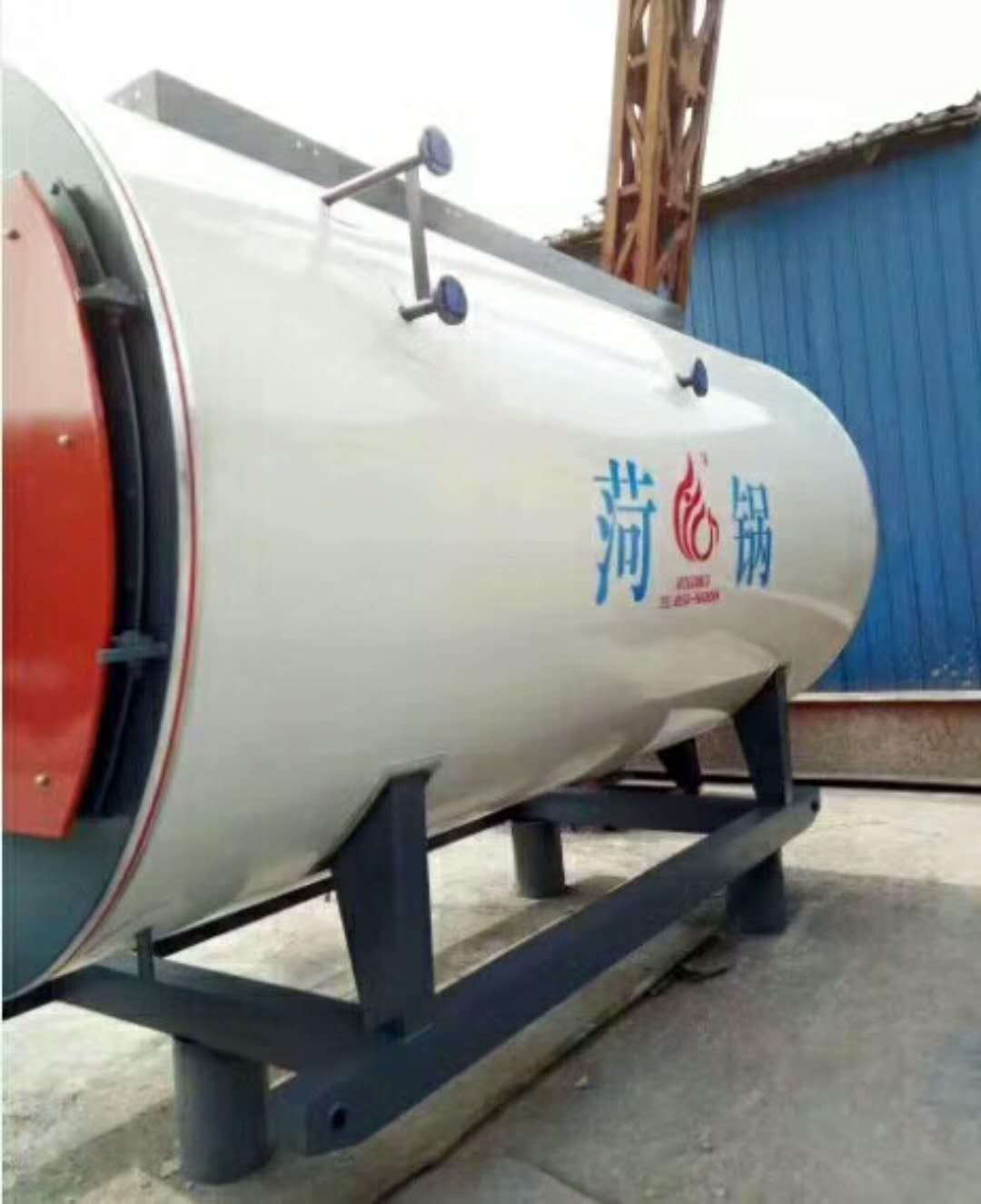

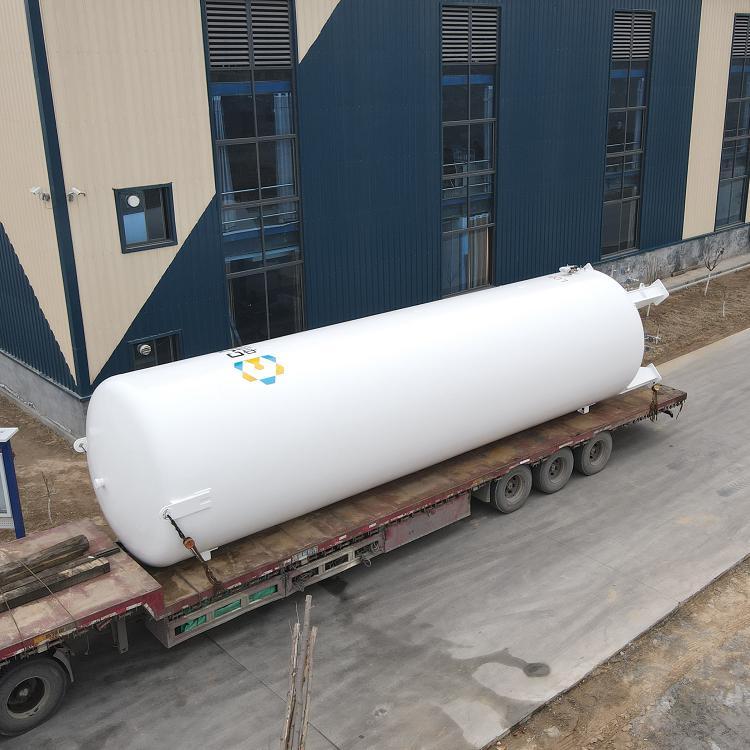
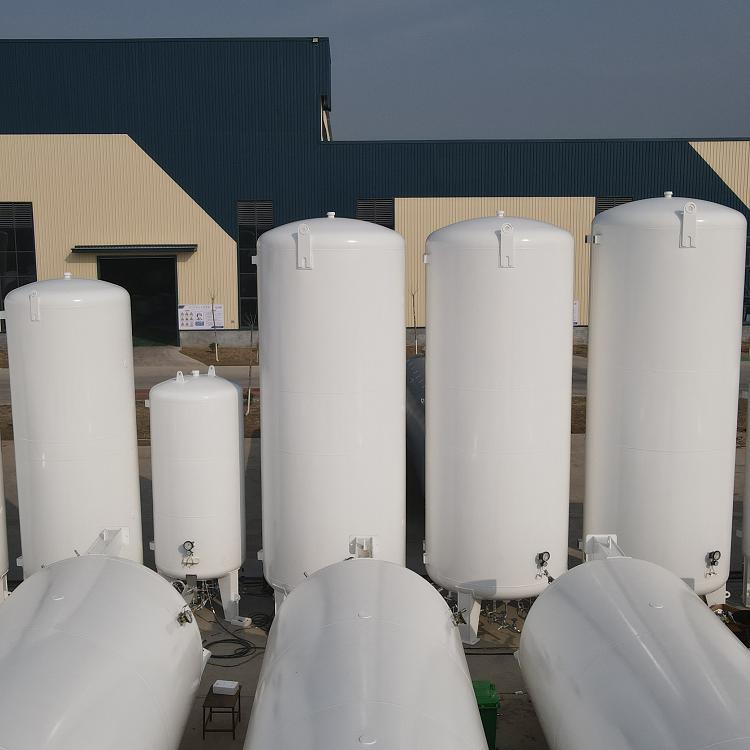


















Shandong Zhongjie Special Equipment (formerly Heze Boiler Factory Co., Ltd.) holds an A-grade boiler manufacturing license, A2-grade pressure vessel manufacturing license, A2-grade pressure vessel design license, B-grade boiler installation license, GB2 and GC2 pressure pipeline installation licenses, and electromechanical equipment installation contracting qualifications. It is a member of the China Boiler and Water Treatment Association, the China Chemical Equipment Association, and a director unit of the Shandong Equipment Manufacturing Association. The company has also passed certifications for the ISO9001 Quality Management System, ISO14001 Environmental Management System, OHSAS18001 Occupational Health and Safety Management System, and the American ASME/U2 certification.
Low-temperature CO2 storage tanks are equipment used for storing and transporting low-temperature liquid CO2. Here are some key points related to low-temperature CO2 storage tanks: Tank Structure: These tanks typically feature a double-walled design, with the inner wall for liquid CO2 storage and the outer wall for insulation. The interiors are usually made of stainless steel or aluminum alloy, offering excellent corrosion resistance. Storage Temperature: The storage temperature for low-temperature CO2 tanks usually ranges from -40°C to -196°C, depending on specific application requirements. Temperature control is crucial for maintaining the stability and safety of the liquid CO2. Storage Capacity: The capacity of low-temperature CO2 storage tanks can be selected based on actual needs, typically ranging from a few thousand to tens of thousands of liters. The choice of capacity should consider storage requirements, supply frequency, and spatial constraints. Safety Protection: These tanks require safety protection devices such as pressure relief valves, pressure sensors, and temperature sensors to ensure internal pressure and temperature remain within safe limits. Transportation: Low-temperature CO2 storage tanks can be transported via road, rail, or ship. Proper insulation measures must be taken during transportation to maintain the low-temperature state of the liquid CO2 inside. Safe Operation: Operation of low-temperature CO2 storage tanks requires training and adherence to safety operating procedures. Operators should be familiar with the tank's characteristics and safety considerations to ensure safe and effective operation. Regular Inspection and Maintenance: Regular inspections and maintenance are necessary for low-temperature CO2 storage tanks, including visual inspections, valve and pipe checks, and pressure relief device checks. Regular maintenance ensures the tank operates normally and safely. The above points cover some knowledge related to low-temperature CO2 storage tanks. When using and operating these tanks, it is essential to follow relevant safety regulations and standards, and consult with experts to ensure safety and effectiveness.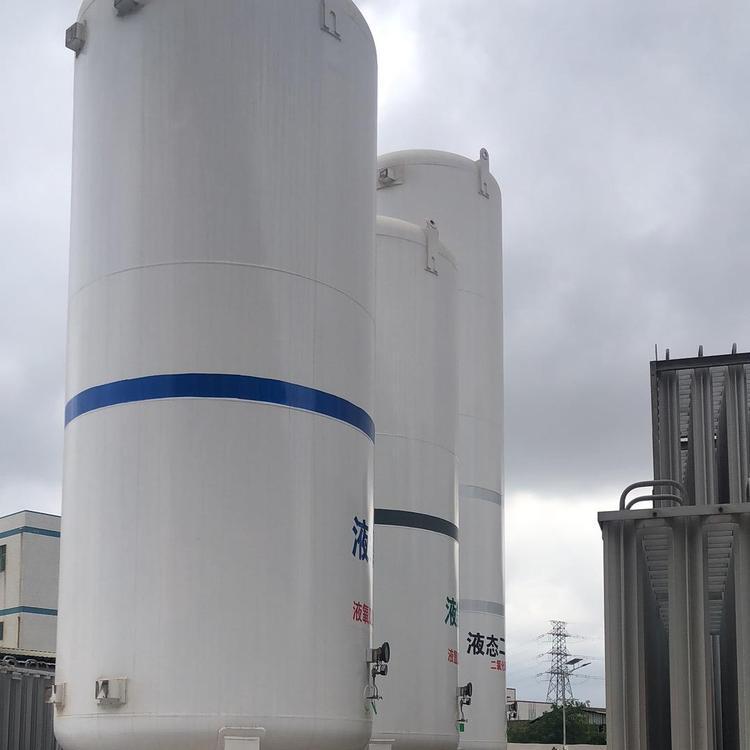
Carbon dioxide tanks are equipment used for storing and transporting carbon dioxide (CO2). They are typically sealed containers with specialized design and structure to ensure safe storage and use of CO2. Here are some common details about carbon dioxide tanks: Storage Form: CO2 is a gas at room temperature but can be compressed into a liquid under high pressure for easier storage and transport. Carbon dioxide tanks are commonly used for storing liquid CO2. Storage Pressure: These tanks usually store high-pressure CO2 at around 20-25 bar. This high-pressure state helps maintain CO2 in a liquid state. Storage Capacity: The capacity of carbon dioxide tanks can vary from a few thousand liters to tens of thousands of liters, depending on specific application needs. Safety: CO2 is colorless, odorless, and non-toxic, but at high concentrations, it can be dangerous to humans, causing asphyxiation. Therefore, appropriate safety measures like ventilation and protective gear are necessary when using carbon dioxide tanks to ensure the safety of operators. Application Areas: Carbon dioxide tanks are widely used across various industries, including food and beverage, manufacturing, firefighting, and gas supply. They are used to store and provide CO2 to meet diverse industry needs. It is important to note that the design, manufacturing, and use of carbon dioxide tanks must comply with relevant regulations, standards, and safety requirements. When operating carbon dioxide tanks, follow the operating manual and safety guidelines, and cooperate with local regulatory authorities to ensure the tank's safety and reliability.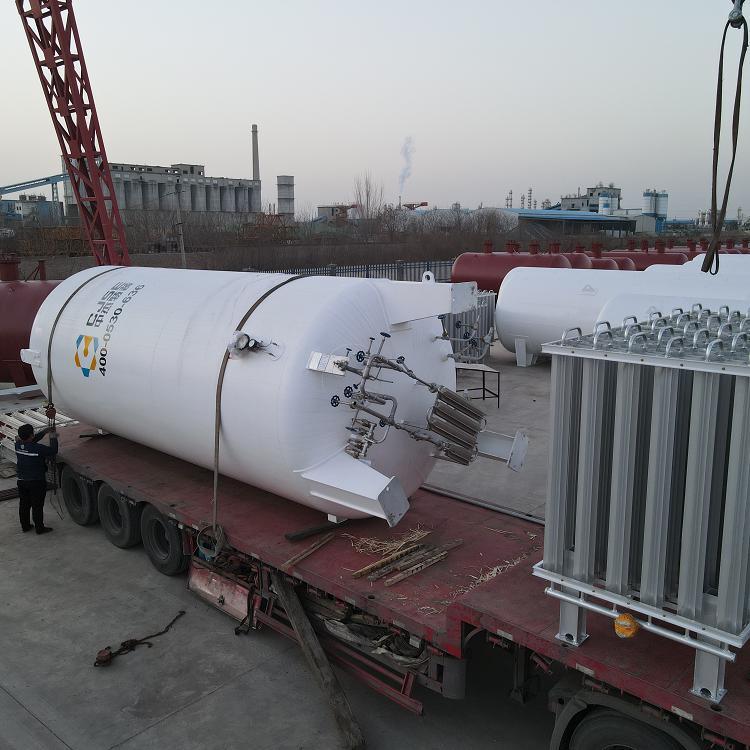
The commissioning process for carbon dioxide storage tanks typically includes the following steps and contents: Tank Installation Inspection: Check if the tank's installation location, foundation, and support structure meet design requirements, ensuring stability and safety. Pipeline Connection Inspection: Verify the tank's connections to inlets and outlets are secure, and that valves and pipes open and close properly, ensuring the integrity and proper operation of the pipeline system. Tank Cleaning and Draining: Before commissioning, clean and drain the tank to ensure no impurities or residues are present, as well as no other gases or liquids. Tank Pressure Testing: Conduct pressure tests on the tank, including static pressure tests and leak tests. The static pressure test involves increasing pressure to check the tank's sealing and pressure resistance. The leak test checks for any leaks in the tank and pipeline system. Control System Commissioning: Calibrate and adjust the tank's control system, including pressure, temperature, and level sensors, to ensure accuracy and reliability. Safety System Testing: Test the tank's safety system, including safety valves, pressure gauges, and level gauges, to ensure proper operation and response. Operating Parameter Adjustment: Adjust the tank's operating parameters, such as pressure, temperature, and level, based on actual needs and process requirements, to meet process specifications and safe operation. Documentation and Reporting: Record and organize data, test results, and operational records during the commissioning process, generating a commissioning report for future reference and management. The above steps and contents are general for the commissioning of carbon dioxide storage tanks, and specific commissioning processes may vary depending on the tank's design requirements and application scenarios. During commissioning, strictly adhere to relevant safety operation procedures and standards to ensure the safety and effectiveness of the commissioning process.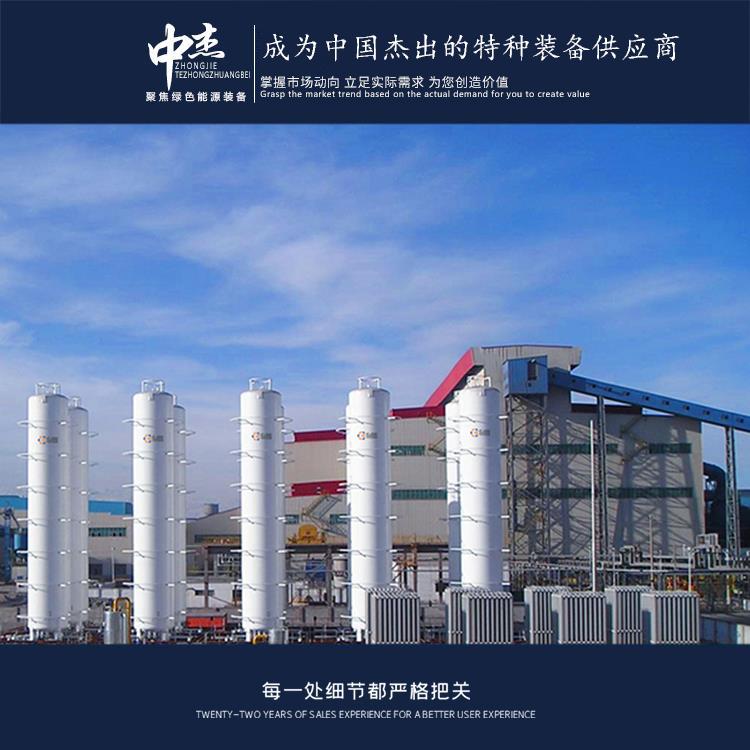
二氧化碳储罐在使用过程中可能会遇到一些常见问题,需要进行维修和处理。以下是一些常见的问题和相应的维修方法: 泄漏问题:储罐可能出现泄漏,导致二氧化碳的损失和安全隐患。维修方法包括检查和更换密封件、修复或更换泄漏的管道和阀门等。 腐蚀问题:储罐的外壁和内壁可能会受到腐蚀,影响储罐的结构和安全性。维修方法包括清洗和修复腐蚀部位,涂覆防腐涂层,或者更换受损的部件。 压力问题:储罐的压力可能出现异常,过高或过低,影响储罐的正常运行。维修方法包括检查和调整压力控制系统,修复或更换压力传感器、安全阀等。 温度问题:储罐的温度可能出现异常,过高或过低,影响二氧化碳的储存和使用。维修方法包括检查和调整温度控制系统,修复或更换温度传感器、冷却设备等。 控制系统问题:储罐的控制系统可能出现故障,导致无常控制和监测储罐的运行状态。维修方法包括检查和修复控制系统的电气元件、传感器、仪表等。 需要注意的是,对于二氧化碳储罐的维修和处理,应由的技术人员进行操作,并遵循相关的安全操作规程和标准。在维修过程中,应确保储罐的安全性和稳定性,以及维修过程的安全性。好咨询工程师或储罐制造商的建议和指导。
Our company attaches great importance to technological innovation and R&D design. We have one municipal-level enterprise technology center in Heze City, equipped with testing facilities for non-destructive testing, physical and chemical testing, welding testing, hydrostatic testing, etc. We have over 600 types of equipment, including CNC machine tools, X-ray flaw detectors, digital ultrasonic flaw detectors, mechanical property testing machines, chemical analyzers, spectrometers, tensile testing machines, plasma welding machines, and more. The key products and technologies we have developed, such as welding for temperature and pressure vessels, emissions reduction for biomass boilers, and waste heat utilization, have successively been selected for multiple Shandong Provincial Department of Industry and Information Technology science and technology innovation projects, Shandong Provincial key projects, and Heze City innovation and excellence projects. We have accumulated a total of 27 authorized utility models, 16 authorized inventions, participated in drafting 2 standards, 2 industry standards, and registered 15 trademarks. The technical team of our company, in collaboration with Professor Yajiang Li of Shandong University, has developed deep cryogenic container processing technology using the international plasma arc + filler wire tungsten inert gas arc welding (PAW-GTAW) technology. After the provincial-level scientific and technological achievement appraisal, the technology level has reached an international standard in the field of deep cryogenic container manufacturing. Choose Zhongjie Special Equipment, and let's create brilliance together!
WeChat Official Account

Scan to follow Official Account



















