


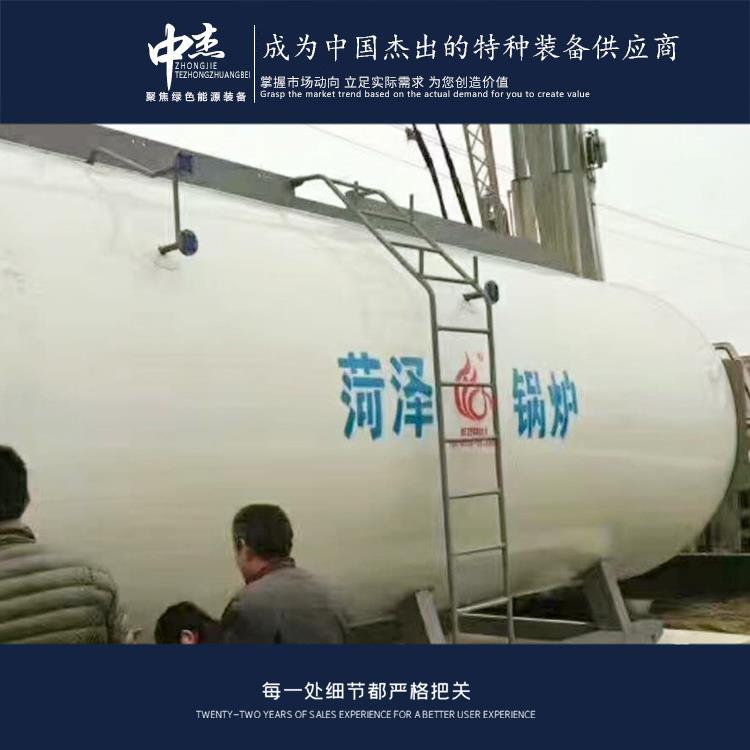

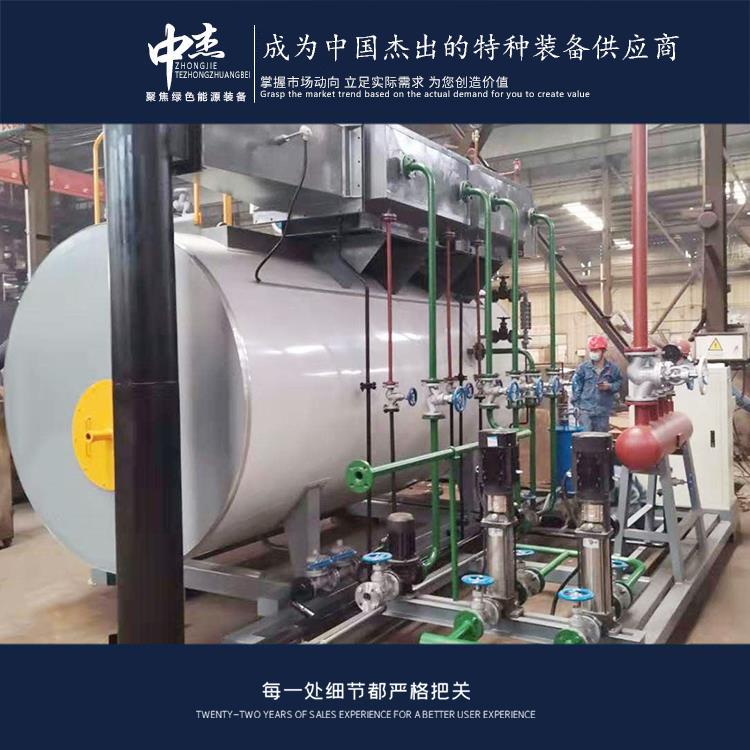
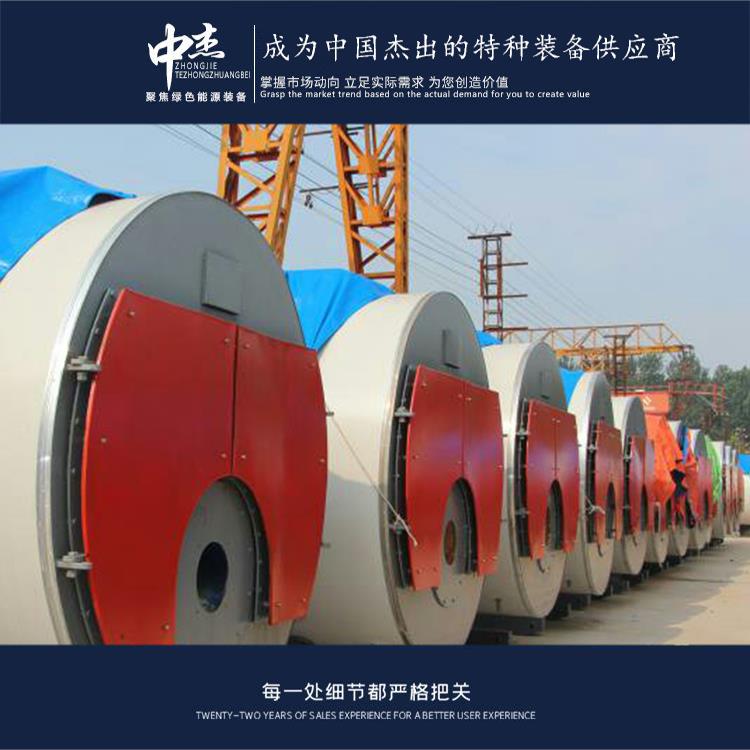


















Shandong Zhongjie Special Equipment's main products include: fuel (gas) boilers, organic heat carrier boilers, biomass boilers, waste heat recovery boilers, and other boiler products; vacuum insulation cryogenic pressure vessels such as LNG tanks, oxygen-nitrogen-argon tanks, and CO2 tanks; pressure vessel products such as denitrification engineering equipment, heat storage and energy storage equipment, and complete chemical equipment; central air conditioning and HVAC equipment like ground (water) source heat pumps, air source units, water-cooled screw units, and air-cooled modular units. Planned products include large-scale energy centers, LNG transport vehicles, LNG tank containers, and other green energy equipment.
Yes, durable thermal oil boilers typically have a longer service life. Here are some reasons:
- Material Quality: Thermal oil boilers are made with high-quality materials, such as heat-resistant and corrosion-resistant steel and alloy materials. These materials can withstand high temperatures and pressures, offering good durability and corrosion resistance, thereby extending the boiler's lifespan.
- Design and Manufacturing Process: Long-lasting thermal oil boilers usually employ advanced design and manufacturing techniques. Rational structural design and precise manufacturing processes can reduce stress concentration and thermal stress, enhancing the boiler's stability and durability.
- Regular Maintenance and Care: Regular maintenance and care are crucial for extending the service life of thermal oil boilers. Regularly cleaning and inspecting the internal pipes, flues, and burners, and promptly replacing worn parts, can minimize malfunctions and damage, thus extending the boiler's life.
- Proper Operation and Management: Correct operation and management are also vital factors in ensuring the lifespan of thermal oil boilers. Operators should follow the operation manual and procedures, avoid overloading and improper operations, and ensure the boiler operates safely and stably.
- It's important to note that even durable thermal oil boilers require regular inspections and maintenance to ensure proper operation and extend their service life. Additionally, the lifespan of the boiler is affected by factors such as the operating environment, load conditions, and operating methods. Therefore, proper use and maintenance are key to ensuring the longevity of thermal oil boilers.
The purpose of oxygen removal from feed water in industrial boilers is to minimize oxygen corrosion and bubble formation within the boiler, ensuring the safety and smooth operation of the boiler and piping systems. The main methods of oxygen removal include:
1. Mechanical Oxygen Removal: This involves physically removing oxygen from the water. Common mechanical oxygen removal equipment includes deaerators and degassers. Deaerators achieve this by atomizing water into a film, taking advantage of the differential solubility of gases to remove oxygen from the water. Degassers do so by atomizing water into fine droplets, again utilizing the differential solubility of gases to remove oxygen.
2. Thermal Oxygen Removal: This method involves heating the water body, taking advantage of the property that oxygen solubility decreases with increasing temperature to remove oxygen from the water. Common thermal oxygen removal equipment includes deaeration pots and deaerators. Deaeration pots release oxygen from the water by heating it to saturation temperature. Deaerators heat the water to reduce oxygen solubility and remove oxygen.
3. Chemical Oxygen Removal: This method involves adding chemicals to react with the oxygen in the water, thus removing oxygen from the water. Common chemical oxygen removal agents include salts, reductants, etc. Chemical oxygen removal is often used in high-pressure boiler systems and can effectively remove oxygen from the water.
The choice and method of oxygen removal depend on the specific boiler system and water quality. In practice, a combination of oxygen removal methods is often employed to achieve the desired results. The selection and operation of oxygen removal equipment should be assessed and adjusted based on actual conditions to ensure the safety and smooth operation of the boiler system.
The inspection of heat-conducting oil boiler tube plates is to ensure the safe operation of the boiler and prevent potential issues. The following are general steps for inspecting heat-conducting oil boiler tube plates:
- Visual Inspection: Conduct a visual inspection to check for any obvious corrosion, cracks, deformation, or other anomalies on the surface of the tube plate. Pay special attention to checking for cracks or leaks at the welds and joints.
- Clean the Tube Plate: Clean the surface of the tube plate thoroughly to remove dirt and deposits for proper inspection.
- Ultrasonic Testing: Use an ultrasonic testing instrument to inspect the tube plate to detect any possible cracks or other defects. Ultrasonic testing can help determine the integrity and reliability of the tube plate.
- Pressure Test: Perform a pressure test to verify the sealing and pressure resistance of the tube plate. Gradually increase the pressure during the test, observe for any leakage, and ensure the tube plate can withstand the designed pressure.
- Tube Plate Thickness Measurement: Use an ultrasonic thickness gauge to measure the thickness of the tube plate to ensure it meets design requirements. Pay particular attention to the corrosion of the tube plate to ensure it is within a safe range.
- Weld Inspection: Inspect the welds of the tube plate to ensure the quality of the welds meets relevant standards and specifications. Check the integrity of the welds, the quality of the weld, and whether the welding process meets requirements.
- Record and Report: Record and report the inspection results of the tube plate, including any issues found, corrective measures, and recommendations. These records and reports can serve as references for future maintenance and management.
It is important to note that the inspection of heat-conducting oil boiler tube plates should be carried out by qualified personnel and strictly in accordance with relevant standards and specifications. If any issues or anomalies are found, appropriate repair and maintenance measures should be taken promptly to ensure the safe operation of the boiler.
The flow rate of thermal oil in the oil pipes of a thermal oil furnace is typically determined by specific application and equipment requirements, without a unified fixed value. However, generally speaking, the flow rate of thermal oil within the pipes should be maintained within a reasonable range to ensure proper equipment operation and heat transfer efficiency. Excessive flow rate of thermal oil can lead to issues such as increased system pressure loss and pump power consumption, increased pipe friction loss leading to energy loss, and increased system noise and vibration. On the other hand, a low flow rate can cause insufficient heat transfer, affecting equipment thermal efficiency, prolonged oil residence time in pipes, which can lead to oxidation and thermal decomposition, reducing the lifespan of the thermal oil, and the formation of carbon deposits in pipes, increasing resistance and affecting fluid flow. Therefore, when designing and operating a thermal oil furnace system, it's necessary to consider specific equipment parameters, the properties of the thermal oil, and pipe layout factors, among others, to determine an appropriate flow rate. Typically, the flow rate should be within the range of 0.5-2.0 m/s, but the exact figures should be adjusted and optimized based on the actual situation. In practice, the flow rate of thermal oil can be controlled by monitoring and adjusting the pump flow and pipe resistance to meet the equipment's heat energy and operational requirements.
Zhongjie Special Equipment upholds the grand vision of "realizing employees' dreams, creating customer value, and striving for the prosperity and strength of our motherland," focusing solely on the development of green energy equipment. We dedicate high-quality, cost-effective products and services to society!
WeChat Official Account

Scan to follow Official Account



















