


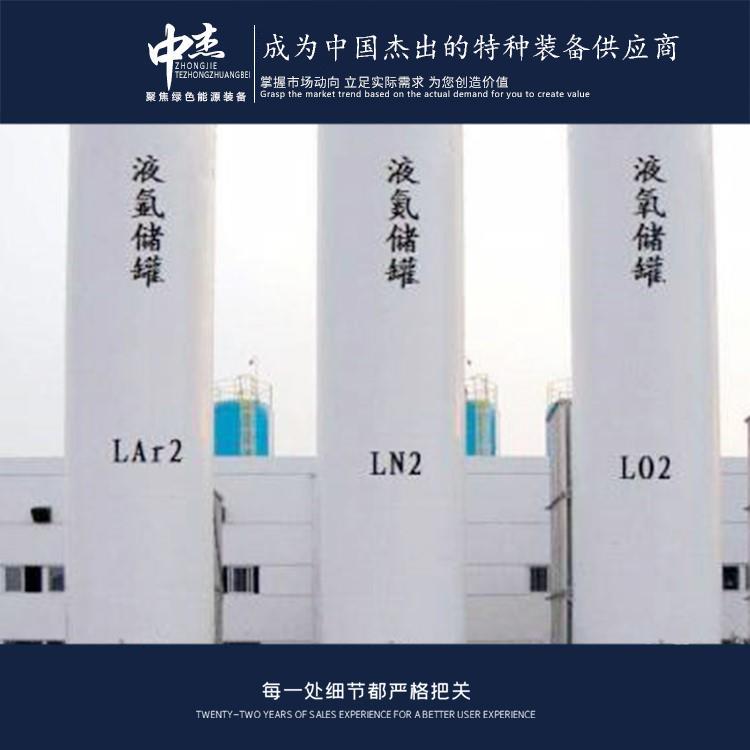

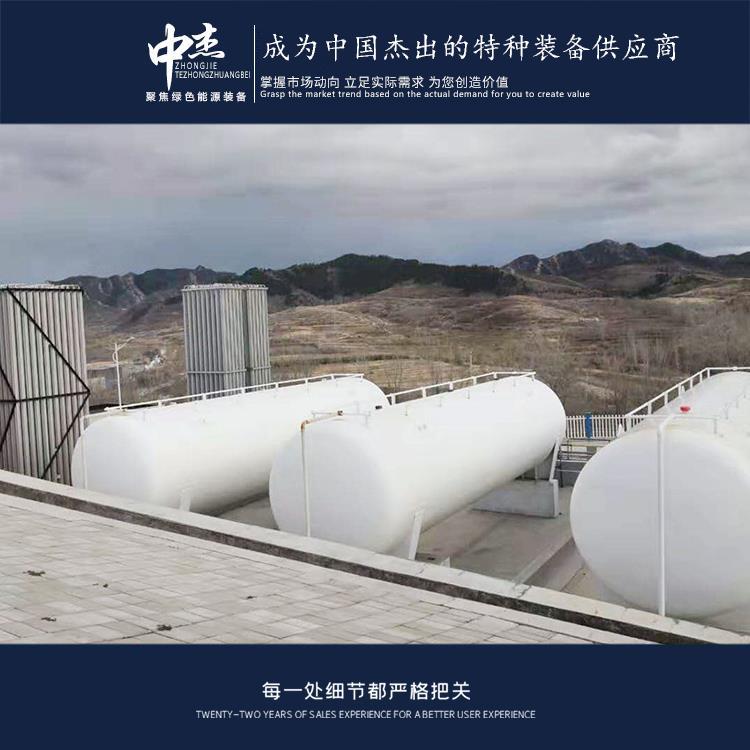
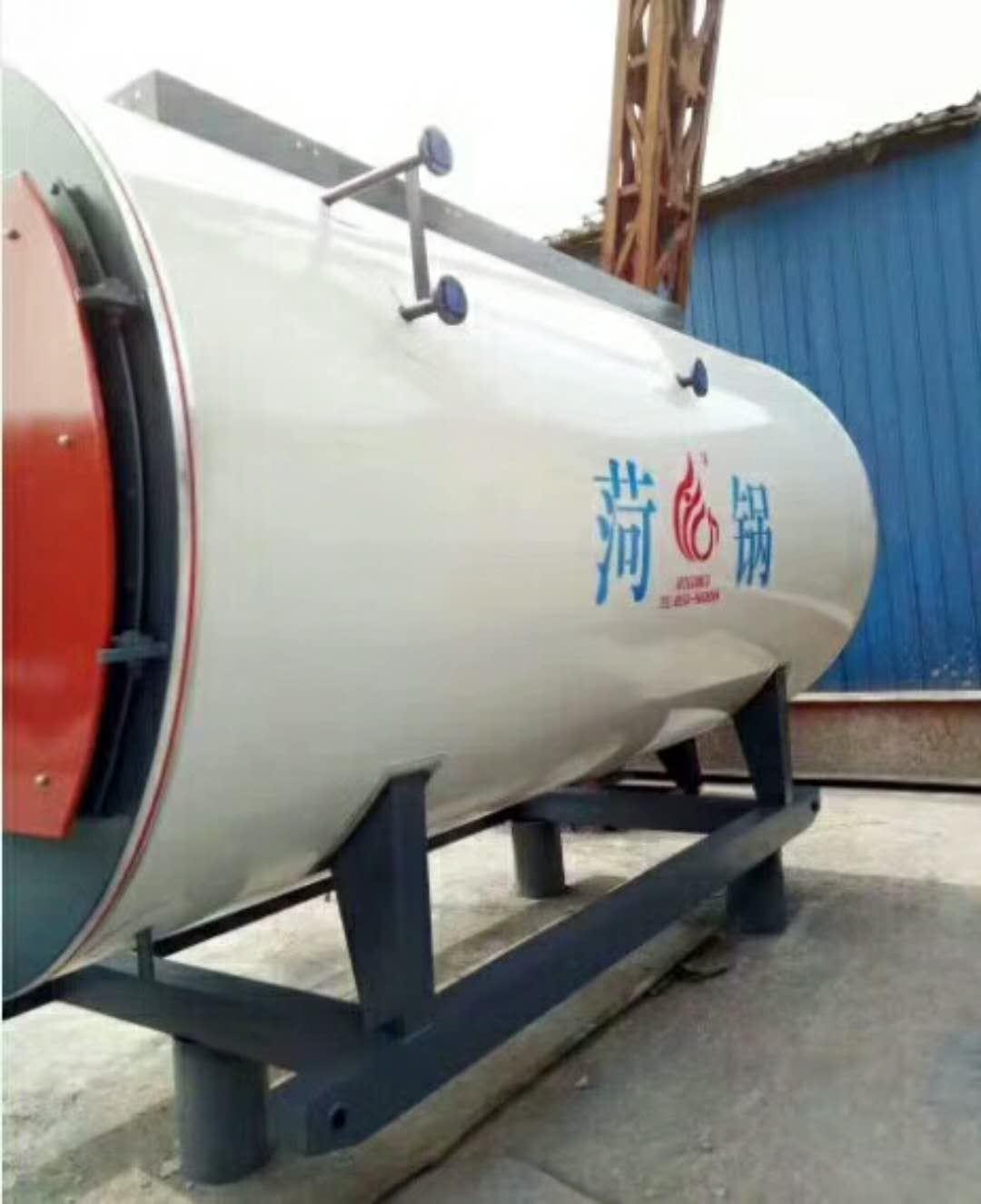


















Shandong Zhongjie Special Equipment specializes in: fuel (gas) boilers, organic heat carrier boilers, biomass boilers, waste heat recovery boilers, and other boiler products; vacuum insulation cryogenic pressure vessels such as LNG tanks, oxygen/nitrogen/argon tanks, and CO2 tanks; pressure vessel products including denitrification engineering equipment, heat storage and energy storage equipment, and complete chemical equipment sets; central air conditioning and ventilation equipment such as ground (water) source heat pumps, air source units, water-cooled screw units, and air-cooled modular units. Planned products include large-scale energy centers, LNG transport vehicles, and LNG tank containers, among other green energy equipment.
Key measures to ensure the quality of CO2 storage tanks include the following aspects:
- Selecting qualified suppliers: Choose suppliers with a good reputation and experience, ensuring their tanks meet relevant quality standards and specifications. This can be achieved by evaluating suppliers' qualifications, referring to customer reviews, and conducting on-site inspections.
- Strict quality control: Implement strict quality control measures during the manufacturing process of the tanks, which include the selection and inspection of raw materials, control of production processes, monitoring of process parameters, product testing and inspections, to ensure the tanks meet quality requirements.
- Compliance with standards and regulations: The design, manufacturing, and installation of the tanks should comply with relevant standards and regulations, such as industry standards and specifications. These include the structural design of the tank, material selection, welding techniques, corrosion prevention measures, safety valves, and the configuration of pressure sensors.
- Regular inspections and maintenance: Tanks should undergo regular inspections and maintenance during use to ensure safety and reliability. This involves checking the tank's appearance, seals, valves, and pipeline connections, conducting pressure tests and leak detection on a regular basis, and promptly addressing any anomalies.
- Establishing a quality management system: Develop a comprehensive quality management system, including quality control processes, document records, quality training, and internal audits. By establishing such a system, the quality control and continuous improvement of the tanks can be ensured.
- Third-party testing and certification: It is possible to delegate tank testing and certification to third-party institutions to verify the quality and compliance of the tanks. These third-party testing and certification bodies are often independent and objective, providing impartial assessment and certification results.
- By implementing these measures, the quality of CO2 storage tanks can be effectively ensured, enhancing their safety and reliability.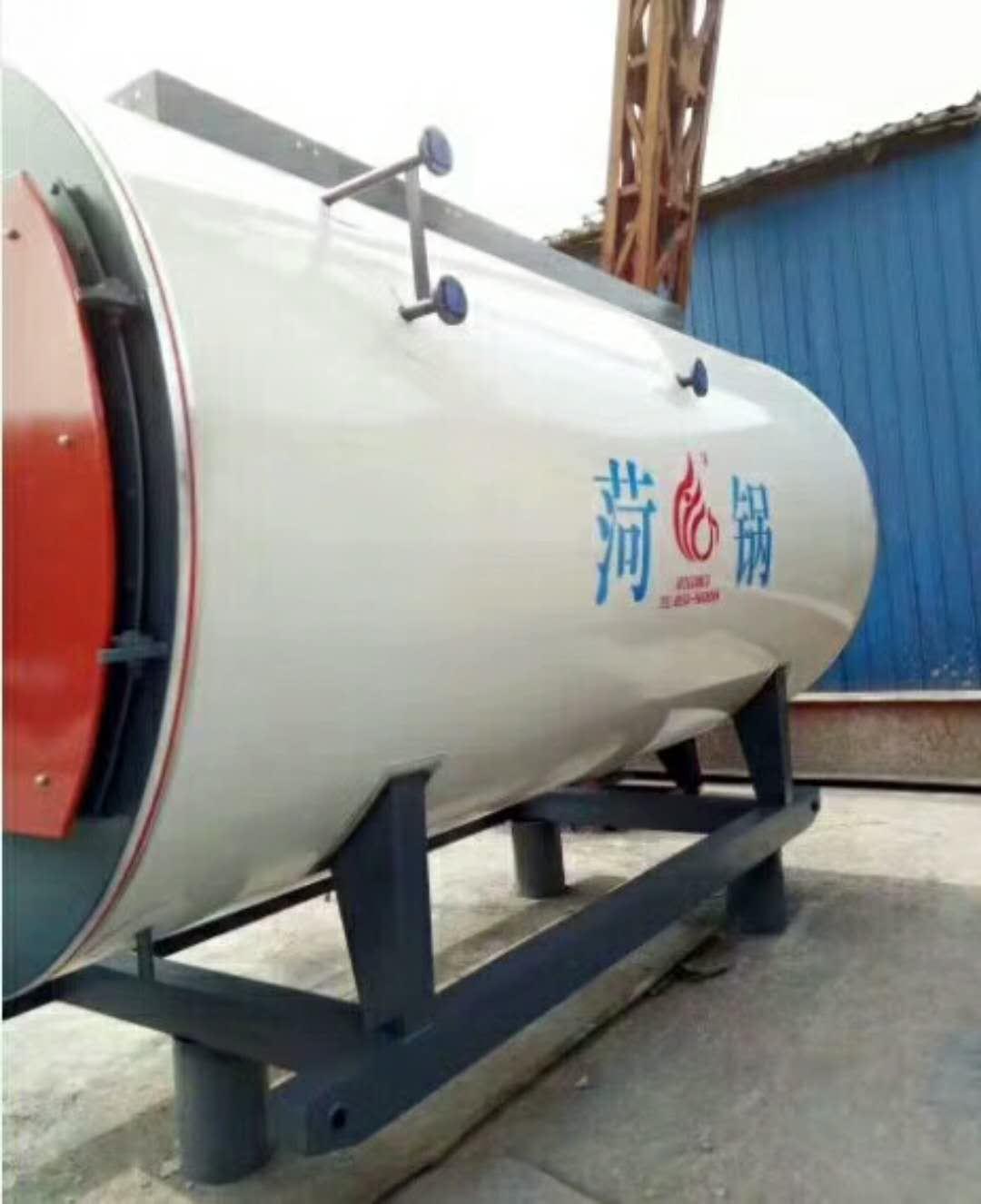
Common disadvantages of corrosion in pressure vessels during use include:
- Chemical media: Certain chemical media are corrosive, such as acids, alkalis, salts, etc. When these media come into contact with the vessel material, corrosion may occur.
- Humidity and moisture: High humidity environments or long-term exposure to moisture can lead to corrosion on the vessel surface. Particularly in the presence of oxygen, the corrosion rate may increase.
- Rusting: When the protective layer on the vessel surface (such as coatings or plating) is damaged or destroyed, the vessel may suffer from rusting. Rusting can damage the vessel's surface and may lead to further corrosion.
- Electrochemical corrosion: When different metals or metals and non-metals come into contact, an electrochemical corrosion battery may form. This type of corrosion can cause localized corrosion on the vessel surface.
- Welding defects: Defects like weld pores and cracks may be introduced during the welding process. These defects may become starting points for corrosion.
Corrosion weakens the structural integrity of the vessel, increasing the risk of leakage or rupture. Therefore, regular inspection and maintenance of the corrosion-resistant layer, coating, or plating on pressure vessels are important. If corrosion issues are found, timely measures should be taken to repair or replace the damaged parts.
In addition, selecting appropriate materials and corrosion prevention measures, as well as proper operation and maintenance methods, can reduce the risk of corrosion in pressure vessels. Adhering to relevant safety operation procedures and standards ensures the safe operation of pressure vessels.
Carbon dioxide tank debugging typically involves the following steps and contents: Tank installation check: Inspect the tank's installation location, foundation, and supporting structure to ensure they meet design requirements, ensuring the tank's stability and safety. Connection pipeline check: Verify the tank's connection with the inlets and outlets is secure, and that valves and pipelines can open and close properly, ensuring the integrity and normal operation of the pipeline system. Tank cleaning and emptying: Prior to debugging, the tank must be cleaned and emptied to ensure no impurities or residues, and no other gases or liquids are present. Tank pressure test: Conduct pressure tests on the tank, including static pressure and leakage tests. Static pressure testing involves increasing pressure to check the tank's sealing and pressure resistance. Leakage testing checks for any leakage in the tank and pipeline system. Control system debugging: Adjust and calibrate the tank's control system, including pressure, temperature, and level sensors, to ensure accuracy and reliability of the control system. Safety system testing: Test the tank's safety system, including safety valves, pressure gauges, and level gauges, to ensure proper operation and response of the safety system. Operating parameter adjustment: Adjust the tank's operating parameters according to actual needs and process requirements, such as pressure, temperature, and level, to meet process requirements and safe operation. Documentation and reporting: Record and organize data, test results, and operational records during debugging, generate a debugging report for future reference and management. The above are general steps and contents of carbon dioxide tank debugging, and specific debugging operations may vary based on tank design requirements and application scenarios. During debugging operations, strictly adhere to relevant safety operation procedures and standards to ensure safety and effectiveness of the debugging process.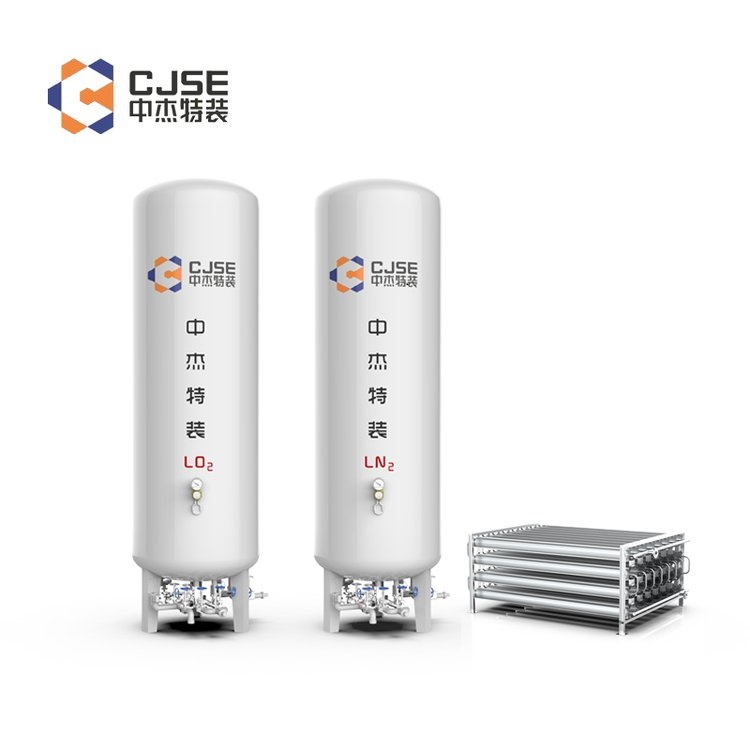
The design requirements for carbon dioxide storage tanks typically include the following aspects: Pressure Vessel Design: Carbon dioxide storage tanks are usually designed as high-pressure vessels capable of withstanding high pressure. The design must comply with relevant standards and regulations, such as Standard GB150 "Steel Pressure Vessels." Material Selection: The choice of materials for the tank should consider the properties of carbon dioxide, such as high pressure, high oxidizing, and corrosive nature. Common materials include carbon steel and stainless steel, with selection based on specific working conditions and requirements. Safety Valve and Pressure Control: The tank should be equipped with a safety valve and pressure control device to ensure internal pressure remains within a safe range. The safety valve should be selected according to design requirements and regularly inspected and tested to ensure proper operation. Insulation Performance: Since carbon dioxide needs to remain in a liquid state at low temperatures, the tank should have good insulation properties to prevent excessive evaporation of liquid carbon dioxide and energy loss. The selection and design of insulation materials and layers should consider working temperatures and environmental conditions. Leak Detection and Alarm: The tank should be equipped with leak detection devices and alarm systems, along with corresponding monitoring equipment. These devices can detect leaks in a timely manner and trigger alarms to take appropriate measures. Structural Strength and Stability: The tank's structural design should have sufficient strength and stability to withstand internal pressure and external loads. The structural design must comply with relevant standards and regulations, such as Standard GB12337 "Design Code for Pressure Vessels." Safe Operation and Maintenance: The design of the tank should consider the ease of safe operation and maintenance, such as the placement of manholes, inspection openings, and drain outlets.
Zhongjie Special Equipment adheres to the grand vision of "realizing employees' dreams, creating value for customers, and striving for the prosperity and strength of our motherland," focusing on the development of green energy equipment. We dedicate products and services with high cost-performance to the society!
WeChat Official Account

Scan to follow Official Account



















