


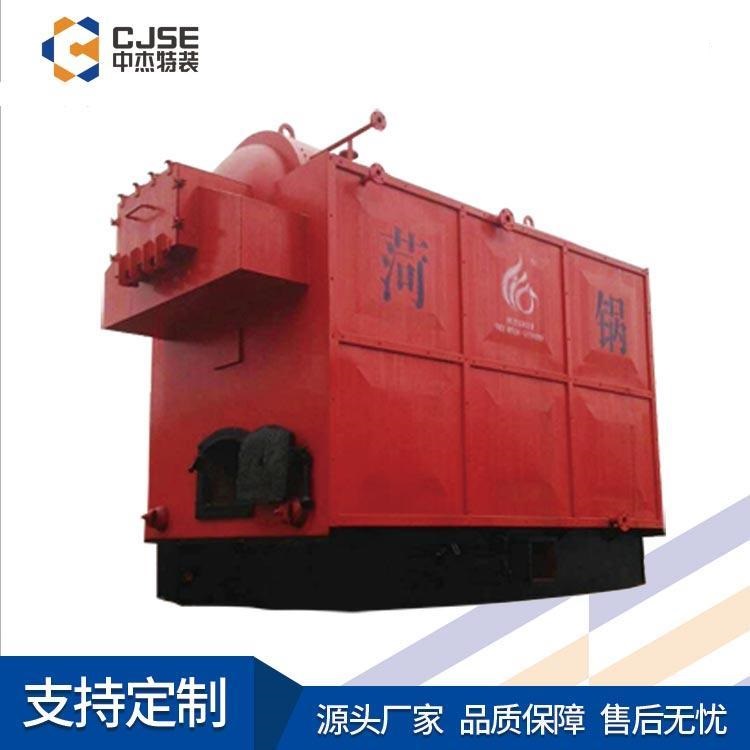

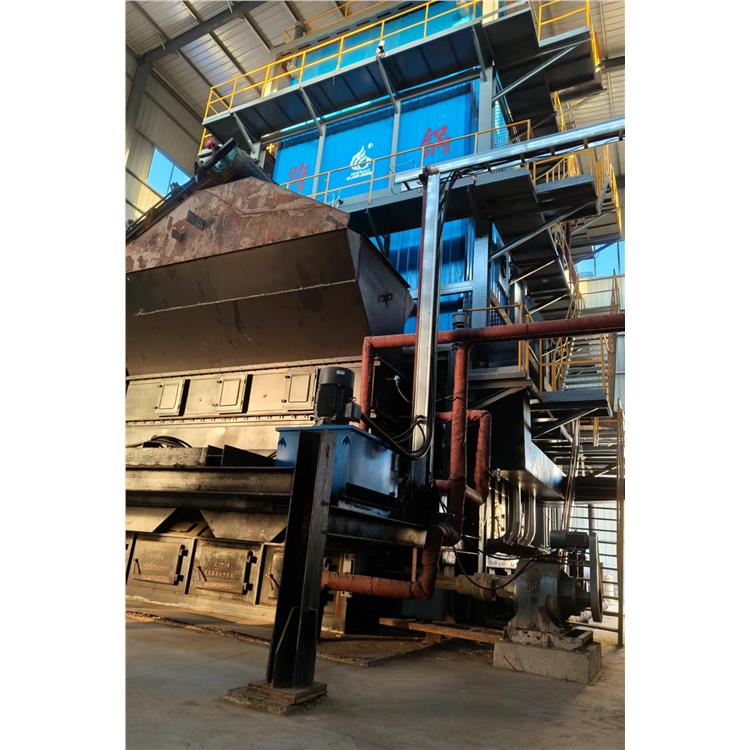
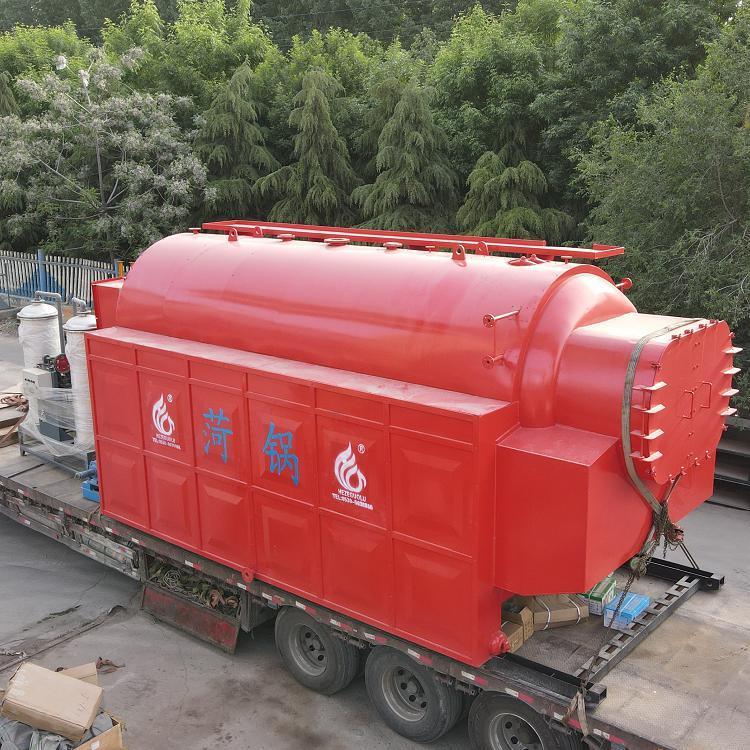


















Shandong Zhongjie Special Equipment (formerly Heze Boiler Factory Co., Ltd.) was established in 2001, located at No. 2218 Jinnan Road, Economic and Technological Development Zone, Heze City, with a registered capital of 50 million yuan and total assets of 500 million yuan. The company has 7 business centers: boilers, deep-freeze containers, pressure vessels, central air conditioning, engineering installation, international trade, and Internet of Things. It has three factory sites on Jinnan Road, East Changjiang Road, and Bohai Road, covering a total area of 200,000 square meters, with the main workshop spanning 83,000 square meters. It currently employs 710 people, including 247 engineers and technicians and 82 intermediate-level technicians. In December 2016, it was recognized as a "High-tech Enterprise" by the Science and Technology Department. In June 2021, it was identified as a "Specialized and New Enterprise in Shandong Province" by the Ministry of Industry and Information Technology. In June 2022, it was recognized as a "Gazelle Enterprise in Shandong Province" and in August 2022, it was identified as a "Specialized and New Small Giant Enterprise" by the Ministry of Industry and Information Technology.
Possible reasons for incomplete combustion in biomass boilers may include the following aspects:
Poor fuel quality: Low-quality biomass fuel, such as excessive moisture content and uneven particle size, can affect the combustion process. Fuel with high moisture content can lead to reduced combustion temperature and incomplete combustion.
Insufficient air supply: Air is essential during the combustion process. If there is insufficient air supply, the fuel cannot react fully with oxygen, leading to incomplete combustion. Possible causes include blocked air inlets, fan malfunctions, etc.
Unstable Combustion System: Instability in the combustion system may also result in incomplete combustion. For instance, improper adjustment of the burner, or an unreasonably designed combustion chamber, could affect the stability of the combustion process.
Insufficient combustion temperature: Low combustion temperature can lead to incomplete combustion. Possible causes include improper adjustment of the burner and unstable fuel supply.
Ash accumulation in combustion chamber: Ash buildup in the combustion chamber can affect the combustion process, impeding the contact between fuel and oxygen, leading to incomplete combustion.
Insufficient combustion time: Insufficient combustion time can also lead to incomplete burning. If the fuel stays in the combustion chamber too briefly, it cannot burn fully, resulting in unburned fuel residues.
Inadequate combustion chamber design: An improperly designed combustion chamber, such as one that is too large or too small, hinders the thorough mixing of fuel and oxygen, leading to incomplete combustion.
Above are some possible causes of incomplete combustion in biomass boilers, which require analysis and resolution based on specific circumstances. Regular maintenance, rational fuel selection, and optimization of the combustion system are recommended.
Biomass boilers can be categorized according to various classification criteria. Here are some common methods:
By method of combustion classification:
Direct Combustion Boiler: Directly burns biomass fuel to produce heat energy.
Gasification Boiler: Converts biomass fuel into combustible gas, which is then burned.
Pyrolysis Boiler: Converts biomass fuel into combustible gas and solid carbon through pyrolysis, then burns them.
Categorized by fuel type:
Wood biomass boiler: Utilizes wood chips, wood shavings, cassava residue, and other wood-based fuels.
Crop biomass boiler: Utilizes crop residues such as straw, rice husk, and wheat straw as fuel.
Industrial waste biomass boiler: Utilizes industrial waste materials like sawdust and pulp sludge as fuel.
Categorized by boiler type:
Water tube biomass boiler: Heat is transferred through water pipes arranged inside the combustion chamber.
Fire-tube Biomass Boiler: The combustion chamber is equipped with fire tubes, transferring heat through the tubes.
Hybrid biomass boiler: Combines the features of both water-tube and fire-tube designs, featuring both water tubes and fire tubes.
By power scale classification:
Small biomass boilers: Typically range from 1 to 10 MW in power, suitable for small buildings and rural heating.
Medium-sized biomass boiler: Power typically ranges from 10 to 50 MW, suitable for medium-sized industrial plants and large buildings.
Large Biomass Boilers: Power over 50MW, suitable for large industrial plants and centralized heating.
These categorization methods merely provide a general overview of biomass boilers; in reality, there are more detailed classifications and combinations. Different types of biomass boilers may vary in application scenarios and technical characteristics.
Developing biomass boiler heating is an effective measure to combat air pollution. Here are some relevant suggestions:
Replace High-Polluting Energy: Replace traditional coal boilers with biomass boilers to reduce emissions of air pollutants generated by coal combustion. The combustion of biomass fuel produces relatively fewer pollutants, resulting in less pollution to the atmosphere.
Enhance Combustion Efficiency: By optimizing the combustion process of biomass boilers, improve combustion efficiency, reduce fuel waste, and lower emissions of pollutants. Adjust combustion parameters, such as combustion temperature and duration, to achieve more complete combustion.
Regulate Pollutant Emissions: Utilize pollution control technologies such as flue gas desulfurization, denitrification, and particulate matter capture to reduce emissions. Install flue gas purification equipment to effectively remove pollutants like nitrogen oxides and particulates generated during the combustion process.
Enhanced Monitoring and Management: Establish and improve a monitoring system to oversee the operation status and pollutant emissions of biomass boilers, and conduct assessments. Strengthen the management of biomass boilers to ensure regular maintenance and equipment upkeep.
The methods for setting the pressure of biomass hot water boilers mainly include the following:
Regular Discharge: Regularly discharge excess water from the boiler to maintain normal working pressure. Discharging excess water helps prevent excessive internal pressure in the boiler, ensuring stable operation.
Timed Operations: Perform operations at regular intervals based on the water level of the boiler to maintain normal working pressure. Pay attention to the control amount to avoid excessive operation leading to overly high boiler pressure.
Pressure Control System: The installed pressure control system continuously monitors the boiler's pressure via sensors and controllers, adjusting automatically according to set values. In case the boiler pressure exceeds the set value, the control system automatically reduces fuel supply or releases excess moisture to maintain a stable working pressure for the boiler.
Pressure Regulator: Install a pressure regulator on the boiler's water inlet pipe. By adjusting the valve opening, control the water inflow to maintain the boiler's stable working pressure. The pressure regulator can automatically adjust according to the set value, keeping the boiler pressure within the appropriate range.
Pressure Regulator: Install a pressure regulator in the boiler's combustion system to control the steam pressure of the boiler by adjusting the combustion intensity of the burner. The pressure regulator can automatically adjust the operating state of the burner based on the set value to maintain a stable working pressure of the boiler.
Above are common methods for setting the pressure of biomass hot water boilers. According to actual conditions and requirements, a suitable pressure setting method can be chosen to maintain the stable working pressure of the boiler.
Shandong Zhongjie Special Equipment, welcome customers to our factory for cooperation discussions.
WeChat Official Account

Scan to follow Official Account



















