


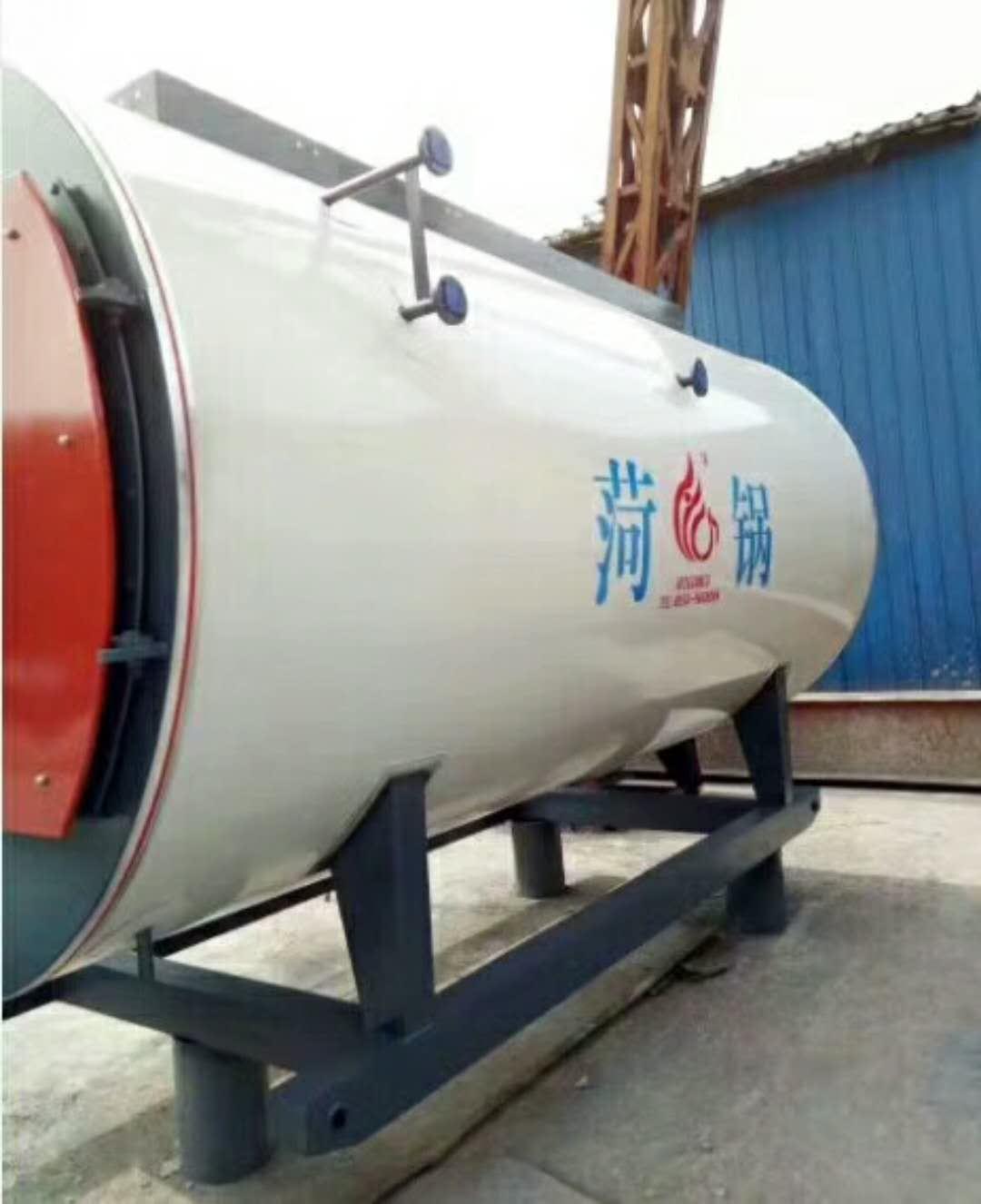

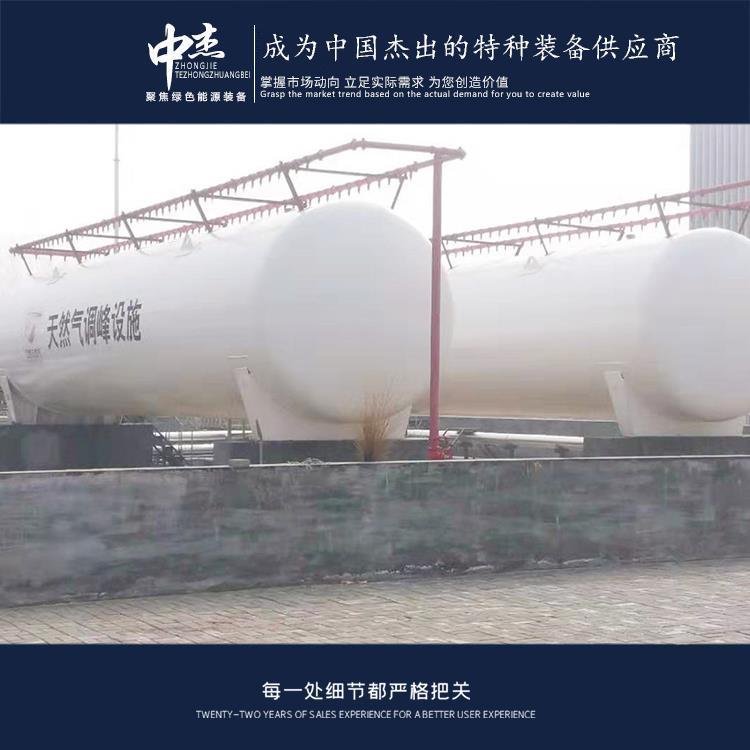
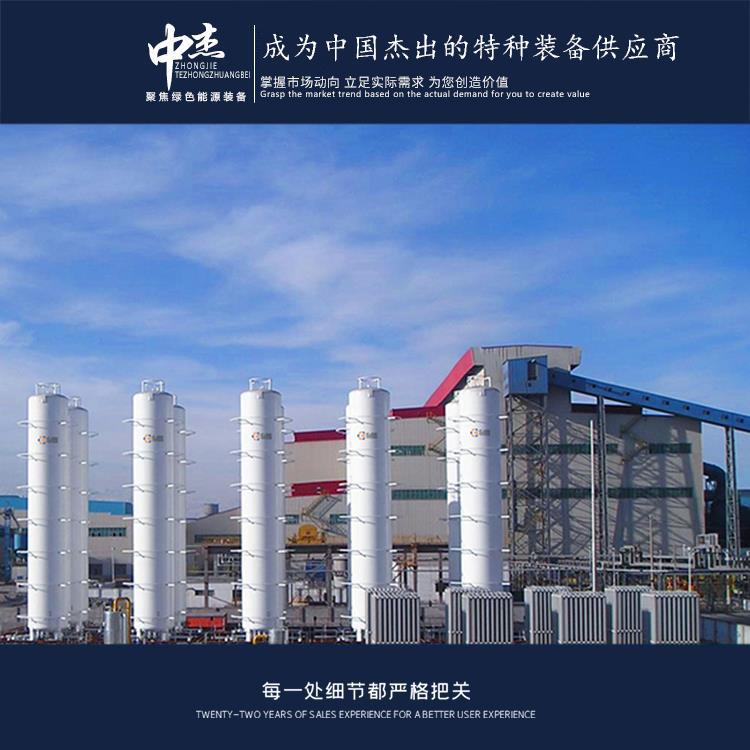


















Shandong Zhongjie Special Equipment (formerly Heze Boiler Factory Co., Ltd.) holds an A-grade boiler manufacturing license, an A2-grade pressure vessel manufacturing license, an A2-grade pressure vessel design license, a B-grade boiler installation license, and GB2/Class and GC2/Class pressure pipeline installation licenses, as well as an electromechanical equipment installation contracting qualification. It is a member of the China Boiler and Water Treatment Association, the China Chemical Equipment Association, and a director unit of the Shandong Equipment Manufacturing Association. The company has also passed the ISO9001 Quality Management System, ISO14001 Environmental Management System, OHSAS18001 Occupational Health and Safety Management System certifications, and the American ASME/U2 certification.
Carbon dioxide storage tanks possess the following characteristics:
High-pressure storage: Carbon dioxide storage tanks are commonly used for high-pressure storage and can withstand significant pressure. The carbon dioxide inside the tank exists in a gaseous or liquid state, with the pressure typically ranging from tens to hundreds of MPa (Megapascals).
High-density storage: When stored in a liquid state, carbon dioxide has a higher storage density compared to its gaseous form. Liquid storage allows for more carbon dioxide to be stored in relatively smaller tanks, enhancing storage efficiency.
Corrosiveness: Carbon dioxide has a certain degree of corrosiveness, which can erode certain materials. Therefore, carbon dioxide storage tanks are usually made of corrosion-resistant materials like stainless steel or alloy steel to ensure durability and safety.
Temperature sensitivity: Carbon dioxide is a gas at room temperature but can condense into a liquid at lower temperatures. Thus, carbon dioxide storage tanks often require insulation to maintain a low internal temperature.
Safety protection: Carbon dioxide storage tanks are equipped with safety valves and pressure relief devices to control internal pressure and temperature, ensuring the safety of the storage process. Additionally, the tanks must have excellent sealing properties to prevent leaks.
Widespread applications: Carbon dioxide storage tanks are extensively used in various fields such as the food and beverage industry, pharmaceutical industry, and chemical industry. They are utilized for freezing food, refrigeration equipment, gas supply, and more, meeting diverse industry needs.
In summary, carbon dioxide storage tanks are characterized by high-pressure and high-density storage, corrosiveness, temperature sensitivity, safety protection, and wide application. These features make them an essential equipment for storing and using carbon dioxide in numerous industries.
When using a 50-cubic-meter liquid oxygen storage tank, the following safety concerns should be noted: Fire and Explosion Prevention: Liquid oxygen is highly oxidizing and can support combustion. Therefore, avoid contact and ensure there are no open flames or other ignition sources nearby. Ventilation: Evaporation of liquid oxygen produces a large amount of oxygen, so good ventilation around the tank is necessary to prevent oxygen buildup and the risk of explosion. Avoid High Temperatures: Liquid oxygen may cause combustion or explosion when in contact with high-temperature objects. Thus, avoid exposing the liquid oxygen tank to high-temperature environments or contact with hot objects. Pressure Control: Use the liquid oxygen tank according to its designed pressure and flow rate, avoiding exceeding its capacity. Regularly inspect and maintain the safety valve to ensure proper operation and prevent overpressure. Corrosion Prevention: Regularly inspect and maintain the liquid oxygen tank to prevent corrosion, especially on the tank surface and contact areas. Keep them dry and clean to avoid corrosion. Safe Operation: Operators should receive relevant training to understand the safe operation procedures and standards for liquid oxygen tanks. Follow correct procedures, wear personal protective equipment, and ensure safe operation. Emergency Preparedness: Establish an emergency response plan when using a liquid oxygen tank and equip it with appropriate fire extinguishing and first-aid equipment. Operators should be familiar with emergency procedures and able to respond quickly to emergencies. Note that the above safety concerns are general recommendations. Specific safe operation should be based on the design and usage requirements of the liquid oxygen tank. Before using the liquid oxygen tank, it is recommended to refer to relevant safety operation manuals and guidelines to ensure safe operation.
Carbon dioxide tank level gauges are devices used to measure and monitor the liquid level of CO2 within the tank. Depending on different working principles and application requirements, common types of CO2 tank level gauges include the following:
- Buoy Level Gauge: Uses the buoyancy of a float to indicate liquid level highs and lows, measuring the level through a mechanical device or electrical signal sensor connected to the float.
- Pressure Level Gauge: Utilizes the relationship between liquid pressure and level to measure the level. It calculates the liquid level height by measuring the pressure change on a pressure sensor.
- Ultrasonic Level Gauge: Measures the level using the propagation time of ultrasound. An ultrasonic transmitter emits waves, and when the beam encounters the liquid surface, part of it is reflected back. The level height is calculated by measuring the reflection time.
- Capillary Level Gauge: Uses the capillary principle to measure the level. By inserting a thin tube into the liquid, the liquid rises within the tube, and the level height is calculated based on the rise.
- Level Gauge: Measures the level by reflecting waves. The transmitter emits waves, and when the beam hits the liquid surface, part of it is reflected back. The level height is calculated by measuring the reflection time.
These level gauges can be selected for application in CO2 tanks based on specific needs and tank design. When selecting and installing level gauges, factors such as liquid properties, working environment, and precision requirements should be considered, ensuring they match the tank's safe operation and monitoring system.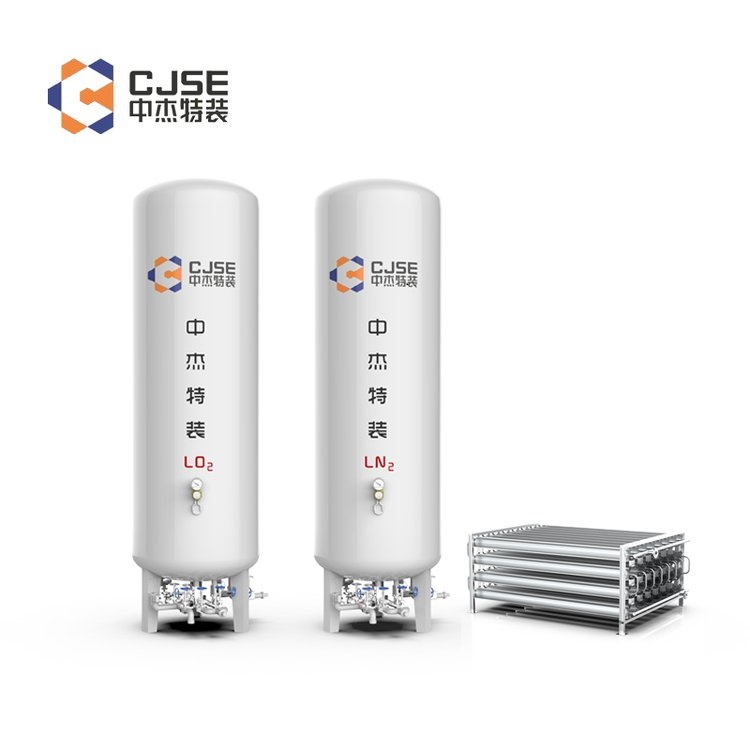
在二氧化碳储罐罐区进行安全操作时,需要遵循以下几个关键步骤和注意事项: 储罐区域划定:将储罐区域划定为专门的区域,并设置明确的标识和警示标志,以提醒人员注意安全。 人员培训:确保所有操作人员都接受过相关的培训,了解储罐的特性、操作规程和应急措施。培训内容应包括储罐的安全操作、泄漏处理、火灾应对等。 个人防护装备:所有进入储罐区域的人员都应佩戴适当的个人防护装备,如防护服、安全鞋、、手套等。这些装备可以提供保护,减少潜在的伤害风险。 操作规程:制定和遵守储罐的操作规程,包括储罐的开启、关闭、充装、排空等操作步骤。确保操作人员按照规程进行操作,避免操作失误和事故发生。 泄漏处理:储罐区域应配备适当的泄漏处理设备和材料,以应对可能的泄漏情况。操作人员应熟悉泄漏处理程序,并及时采取措施进行泄漏控制和清理。 火灾安全:储罐区域应配备适当的消防设备和灭火器材,并确保操作人员了解火灾应对程序。禁止在储罐区域内吸烟或使用明火,以防止火灾风险。 定期检查和维护:定期检查储罐的安全阀、压力表、温度传感器等设备的工作状态,并进行必要的维护和修理。确保储罐的正常运行和安全性。 应急预案:制定储罐区域的应急预案,包括事故报警、人员疏散、急救措施等。所有操作人员应熟悉应急预案,并定期进行演练和培训。 需要注意的是,以上是一般的安全操作指导,具体的操作要求可能会因不同的储罐设计和使用场景而有所差异。在进行储罐操作时,应遵循相关的安全操作规程和标准,确保操作的安全性和有效性。好咨询工程师或储罐制造商以获取具体的操作指导。
Our company places great emphasis on technological innovation and R&D, boasting one municipal-level enterprise technology center in Heze City. We have established testing facilities for non-destructive testing, physical and chemical testing, welding testing, hydrostatic testing, and more. Equipped with over 600 pieces of various equipment including CNC machine tools, X-ray flaw detectors, digital ultrasonic flaw detectors, mechanical property testing machines, chemical analyzers, spectrometers, tensile testing machines, plasma welding machines, and more, our R&D has focused on key products such as temperature and pressure vessel welding, biomass boiler emission reduction, and waste heat utilization. These technologies have been selected for multiple Shandong Provincial Department of Industry and Information Technology science and technology projects, Shandong key projects, and Heze City innovation and excellence projects. We have accumulated 27 authorized utility model patents, 16 authorized invention patents, participated in drafting 2 standards, 2 industry standards, and registered 15 trademarks. Our technical team, in collaboration with Professor Yajiang Li of Shandong University, has developed deep cryogenic container processing technology using the international plasma arc + wire filling tungsten inert gas arc welding (PAW-GTAW) technique. This technology has been appraised as reaching international standards in the field of deep cryogenic container manufacturing. Choose Zhongjie Special Equipment, and let's create brilliance together!
WeChat Official Account

Scan to follow Official Account



















