


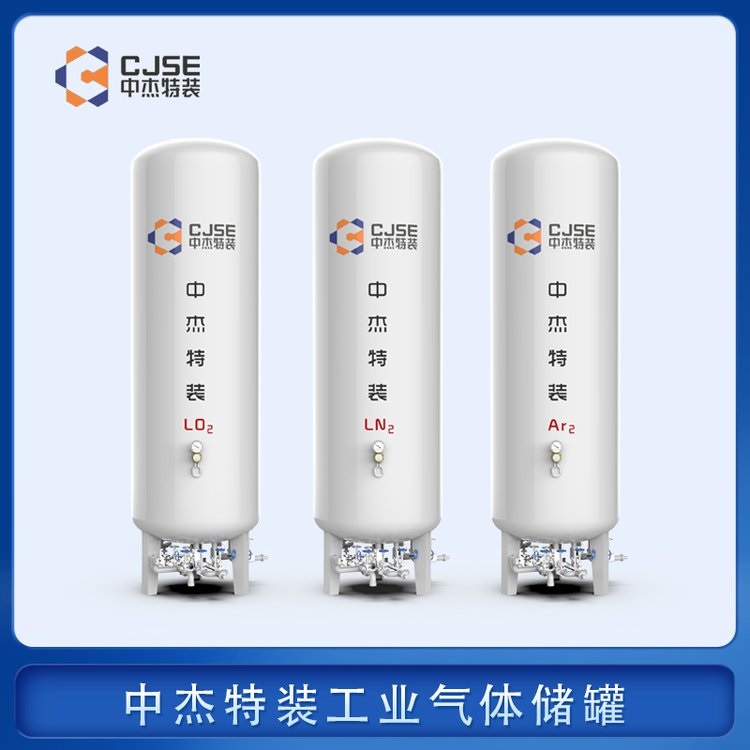

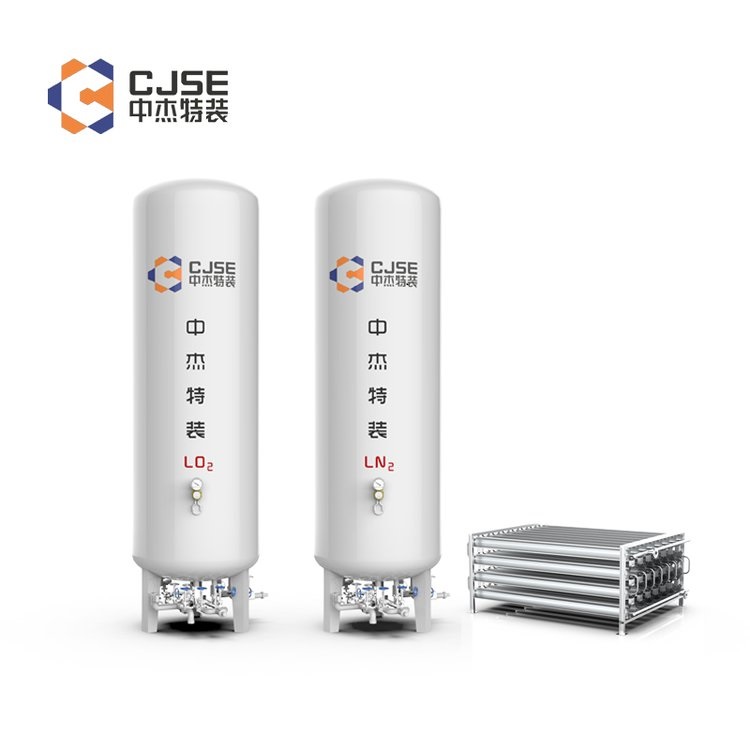
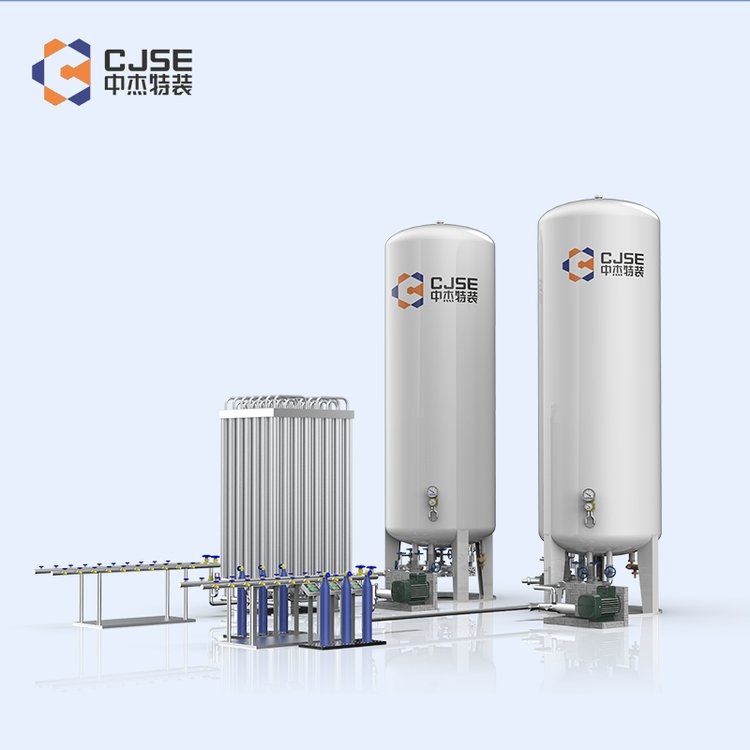


















Shandong Zhongjie Special Equipment's main products include: fuel (gas) boilers, organic heat carrier boilers, biomass boilers, waste heat boilers, and other boiler products; vacuum insulation cryogenic pressure vessels such as LNG tanks, oxygen/nitrogen/argon tanks, and CO2 tanks; pressure vessel products such as denitrification engineering equipment, heat storage and energy storage equipment, and complete chemical equipment; central air conditioning and HVAC equipment such as ground (water) source heat pumps, air source units, water-cooled screw units, and air-cooled modular units. Planned products include large-scale energy centers, LNG transport vehicles, LNG tank containers, and other green energy equipment.
To prevent risks associated with liquid oxygen storage tanks, the following precautions can be taken:
Safety Operations and Management: Establish and enforce stringent safety operations and management systems, including proper use of tanks, operational procedures, and safety training. Ensure operators possess the necessary safety awareness and skills, adhere to operational procedures, and minimize operational errors and the likelihood of accidents.
Regular Inspections and Maintenance: Conduct regular inspections and maintenance on liquid oxygen tanks, including visual inspections, pressure tests, and leak detection. Promptly identify and address any issues with the tanks to ensure their safety and reliability.
Safety devices and protective equipment: Tanks should be equipped with necessary safety devices, such as pressure relief valves, level alarms, and protective equipment like firewalls and explosion-proof devices. These devices and equipment can take timely measures in abnormal situations to ensure the safety of the tank.
Fire prevention measures: Liquid oxygen contains a high oxygen content, which is prone to causing fires. Therefore, fire prevention measures such as firewalls and fire extinguishers should be set up around the storage tanks to prevent the spread and enlargement of fires.
Leakage Control and Emergency Response Plan: Establish a leakage control and emergency response plan for liquid oxygen storage tanks, including leakage control measures, emergency response procedures, evacuation plans, etc. In the event of a leakage incident, we can take swift action to control the leak and ensure personnel safety.
Training and Awareness Enhancement: Conduct regular safety training for operators of liquid oxygen storage tanks to enhance their safety awareness and emergency response capabilities. Strengthen safety
Oxygen storage tanks and liquid oxygen storage tanks are equipment used for oxygen storage, but they have some distinctions:
- Storage Form: Oxygen storage tanks are typically used for storing gaseous oxygen, while liquid oxygen storage tanks are used for storing liquid oxygen. Oxygen is in a gaseous state at room temperature but is cooled to a liquid state at low temperatures for more efficient storage and use.
- Storage Pressure: Oxygen storage tanks usually store high-pressure oxygen, with pressures around 200-300 bar. Liquid oxygen storage tanks, however, store liquid oxygen at lower pressures, generally around 2-5 bar.
- Storage Capacity: Oxygen storage tanks usually have smaller capacities, suitable for personal or small-scale use. Liquid oxygen storage tanks have larger capacities, suitable for industrial or large-scale applications.
- Storage Method: Oxygen storage tanks store oxygen in a gaseous form, utilizing compressed gas storage. Liquid oxygen storage tanks store oxygen in a liquid form, converting it to a liquid state by cooling it to temperatures below its boiling point.
- Safety Requirements: Due to the high oxidizing nature of liquid oxygen, liquid oxygen storage tanks require stricter safety standards in design and use. They typically need to have good thermal insulation, leak control, and fire prevention measures to ensure safe operation.
- It should be noted that the specific design and specifications of oxygen storage tanks and liquid oxygen storage tanks may vary depending on different regions and application sites. When using these tanks, it is important to follow applicable regulations, standards, and safety guidelines, and to cooperate with local regulatory authorities and personnel to ensure the safety and reliability of the tanks.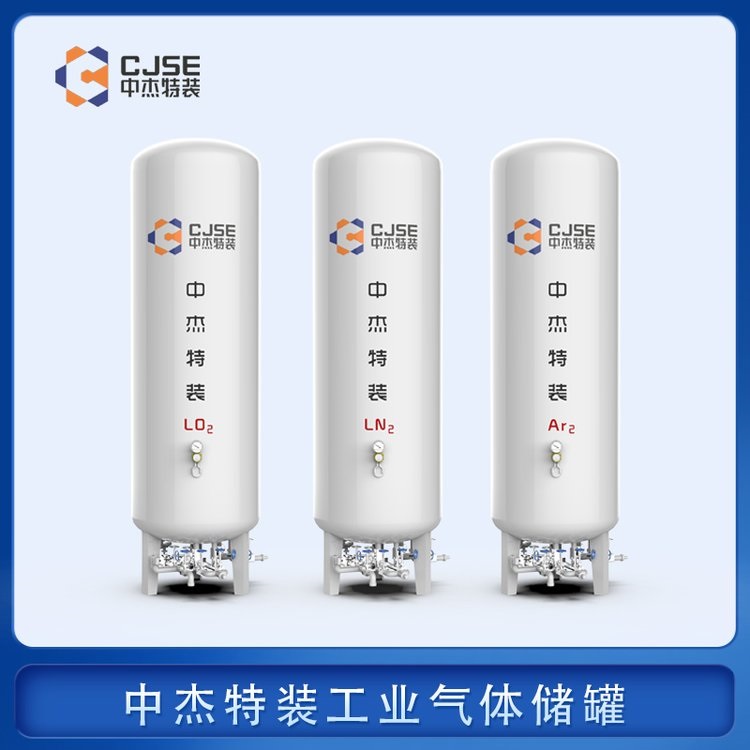
The reasons for the peak popularity of low-temperature liquid storage tanks in recent years are as follows:
Rising Demand: With the development of industries, scientific research, and other fields, there is a growing demand for low-temperature liquids. Low-temperature liquid storage tanks can effectively store and supply liquid oxygen, liquid nitrogen, and other low-temperature liquids, meeting the needs of various fields.
Technological Advancements: In recent years, there have been continuous improvements and innovations in the manufacturing and material technologies of low-temperature liquid storage tanks. The application of new insulating materials, advanced refrigeration systems, and safety control devices has enhanced the performance and safety of the tanks, making them more reliable and secure.
Rising Environmental Awareness: Low-temperature liquid storage tanks enable effective storage and utilization of low-temperature liquids, reducing energy waste and environmental pollution. Amidst the growing environmental awareness, low-temperature liquid storage tanks, as eco-friendly and energy-saving equipment, have garnered more attention and applications.
Emerging Application Fields: There is an increasing demand for cryogenic liquid storage tanks in emerging application fields. For instance, the application of liquid nitrogen in frozen food, biopharmaceuticals, and semiconductor manufacturing is becoming more widespread, which has driven the development of cryogenic liquid storage tanks.
Policy Support: The government has provided support and encouragement for the development of low-temperature liquid storage tanks. Through policy guidance and financial support, the industry has been promoted and expanded.
In summary, the reasons for the peak popularity of low-temperature liquid storage tanks in recent years mainly include increasing demand, technological advancements, heightened environmental awareness, the development of new application areas, and policy support. These factors have collectively spurred the rapid growth of the low-temperature liquid storage tank industry.
Liquid oxygen storage tanks offer the following advantages:
High Storage Density: Liquid oxygen tanks store oxygen in a liquid state, offering a higher storage density compared to gas storage. This means more oxygen can be stored in a limited space, providing extended supply times.
High Purity Oxygen Supply: Liquid oxygen tanks can provide high purity oxygen supply. The liquid oxygen undergoes refrigeration and purification processing to obtain high purity oxygen, meeting the requirements of various applications such as industry and scientific research.
User-friendly: The liquid oxygen tank is designed for ease of use. It features an internal level gauge and pressure gauge for convenient monitoring. Additionally, the tank is equipped with safety devices such as pressure relief valves and level alarms to ensure safe operation and usage.
Long-term Storage: Liquid oxygen tanks are suitable for long-term storage of oxygen. The低温properties of liquid oxygen can slow down the evaporation and oxidation of oxygen, thereby extending its storage life. This is beneficial for applications that require long-term oxygen storage, such as institutions, laboratories, and industrial production.
Overall, liquid oxygen tanks offer high storage density, high purity oxygen supply, ease of use, and long-term storage advantages. This makes liquid oxygen tanks a reliable choice for oxygen supply, widely used in industrial and scientific research fields.
ZJ Special Equipment adheres to the grand vision of "realizing employees' dreams, creating value for customers, and striving for the prosperity and strength of our motherland," and is dedicated to the development of the green energy equipment industry. We commit to society with high-quality products and services at competitive prices!
WeChat Official Account

Scan to follow Official Account



















