


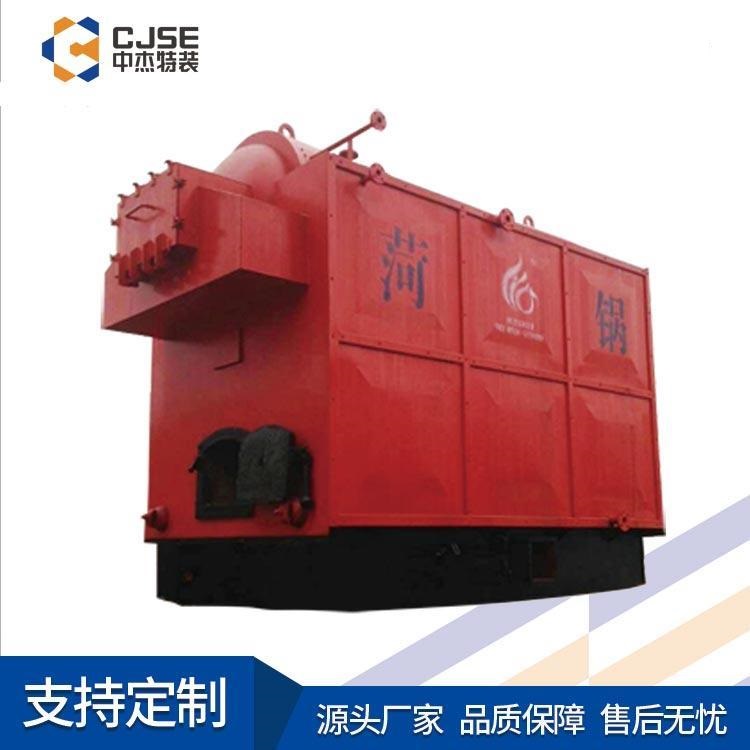

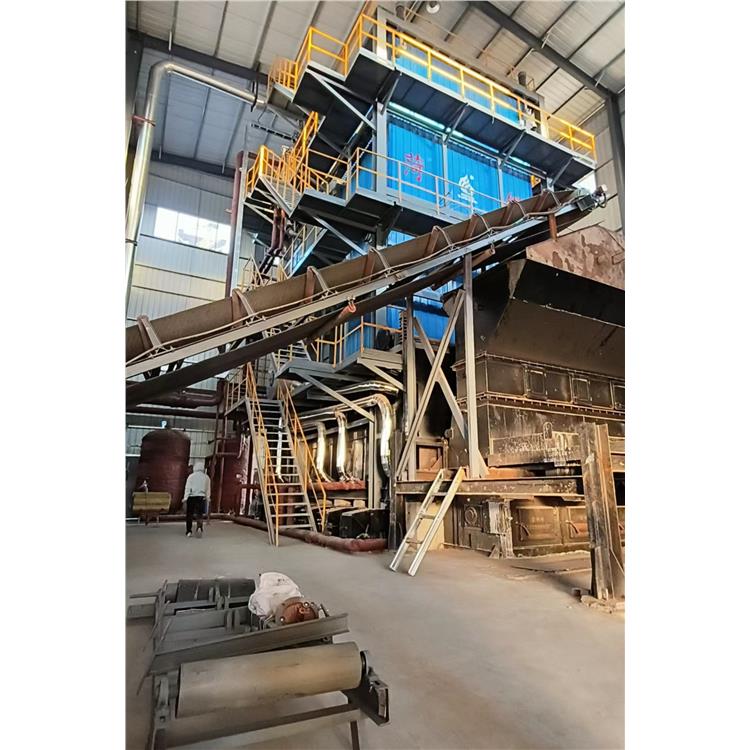
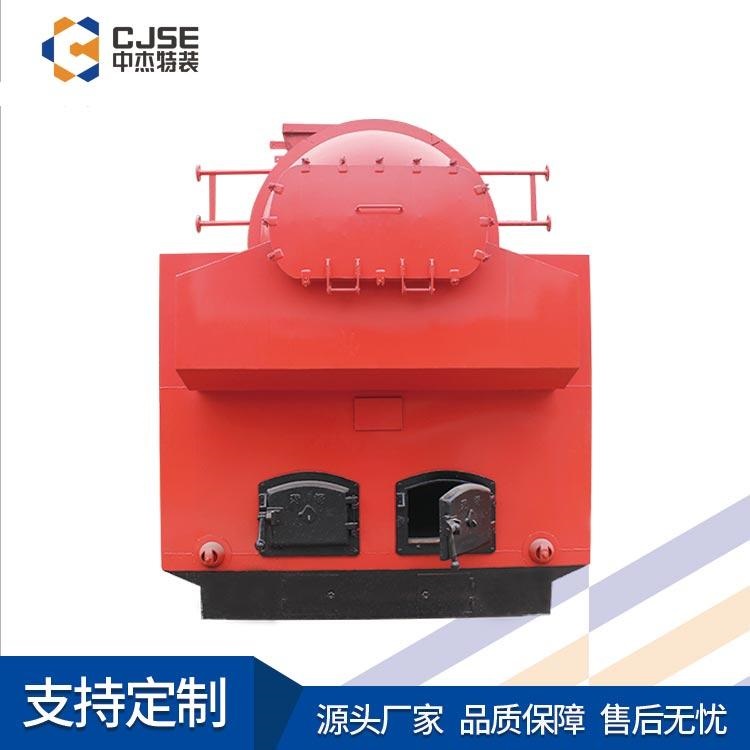


















Shandong Zhongjie Special Equipment (formerly Heze Boiler Factory Co., Ltd.) was established in 2001, located at No. 2218 Jinnan Road, Economic and Technological Development Zone, Heze City. With a registered capital of 50 million yuan and total assets of 500 million yuan, the company has seven business centers: boilers, deep-freezing containers, pressure vessels, central air conditioning, engineering installation, international trade, and the Internet of Things. It has three factory sites on Jinnan Road, East Changjiang Road, and Bohai Road, covering a total of 200,000 square meters. The main workshop spans 83,000 square meters. The company currently employs 710 people, including 247 engineers and technicians, and 82 intermediate-level technical personnel. In December 2016, it was recognized as a "High-tech Enterprise" by the Science and Technology Department. In June 2021, it was identified as a "Specialized and New Enterprise in Shandong Province" by the Ministry of Industry and Information Technology. In June 2022, it was recognized as a "Gazelle Enterprise in Shandong Province," and in August 2022, it was identified as a "Specialized and New Small Giant Enterprise" by the Ministry of Industry and Information Technology.
To prevent the issue of high-temperature corrosion in biomass boilers, the following measures can be taken:
Select appropriate materials: Choose corrosion-resistant metal materials for boiler components, such as stainless steel and heat-resistant steel. These materials offer excellent corrosion resistance and can maintain stability in high-temperature and corrosive environments.
Control combustion conditions: Reasonably control parameters such as temperature, oxygen content, and combustion rate of biomass combustion to avoid excessive temperatures and oxygen levels, thereby reducing corrosion occurrence.
Pre-treatment Fuel Prior to Combustion: Pre-treat biomass fuel, such as drying, sieving, and decontamination, to reduce ash and salt content in the fuel, and minimize the risk of corrosion.
Regulate acidic substances in flue gas: By adding corrosion inhibitors or flue gas treatment equipment, control the acidic substance content in flue gas, and reduce its corrosive effect on metal surfaces.
Regular cleaning and maintenance: Periodically clean the internal soot and dirt of the boiler to keep it clean. During the cleaning process, appropriate cleaning agents and tools can be used to remove internal dirt, preventing corrosion.
Regular Inspections and Maintenance: Regularly inspect and maintain biomass boilers to promptly identify and address corrosion issues. Entrust maintenance personnel to conduct routine checks and maintenance tasks.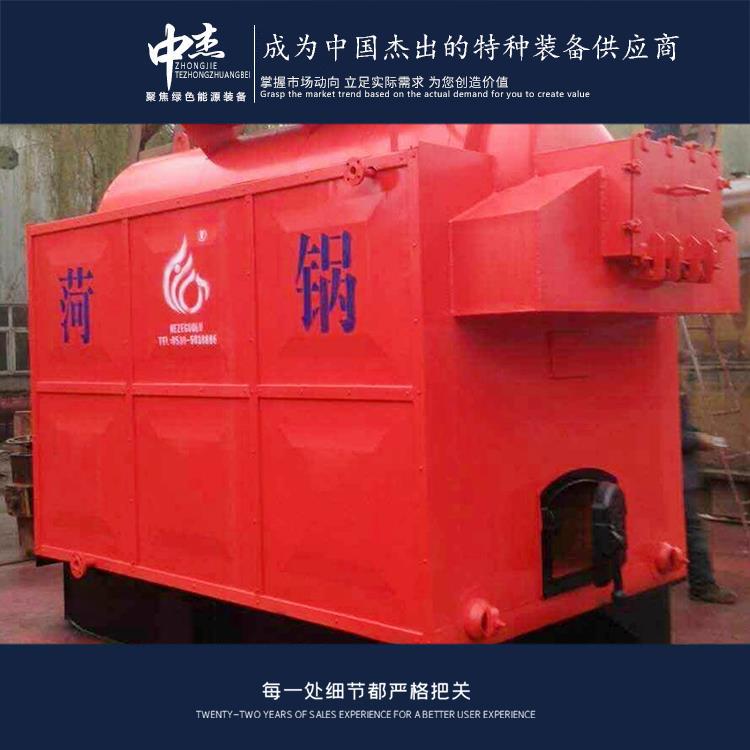
Biomass boilers, as equipment that converts thermal energy using biomass fuel, offer the following advantages:
Renewable Energy: Biomass fuel is a renewable energy source that can be continually replenished through planting and cultivation. Compared to fossil fuels, the use of biomass fuel has a smaller environmental impact and is beneficial for sustainable development.
Environmental Protection and Energy Saving: The emissions and waste from biomass combustion are relatively low, with low pollution content in the combustion emissions. Biomass fuel itself has low sulfur and low nitrogen characteristics, and the waste after combustion can be reused as organic fertilizer or biomass fuel, reducing environmental pollution.
Diversity and Flexibility: Biomass fuel options are abundant, including sawdust, straw, and more. Different fuels can be selected based on actual conditions, enhancing their substitutability and adaptability.
Utilization: The biomass boiler employs advanced combustion technology and heat conversion equipment, maximizing the thermal energy of biomass fuel and enhancing thermal efficiency. Additionally, equipped with an economizer and flue gas recirculation system, further heat efficiency is achieved.
Economic Efficiency: Biomass fuel is more stable and cheaper compared to fossil fuels. The investment and operating costs of biomass boilers are relatively low, offering good economic efficiency.
Broad Application: Biomass boilers are suitable for various fields, including industrial production, heating, and power generation. They can meet the thermal energy needs in different scenarios.
In summary, biomass boilers offer advantages such as renewable energy, environmental protection, energy conservation, diversity and flexibility, utilization, economy, and wide application, making them a sustainable thermal energy conversion option.
When planning and arranging the bag dust collector for biomass boilers, the following aspects should be considered:
Baghouse position: The baghouse should be located near the biomass boiler flue gas outlet to effectively capture particulate matter in the flue gas. Additionally, the placement of the baghouse should facilitate operation and maintenance, ensuring ease of cleaning and filter bag replacement.
Arrangement of smoke进出口: The smoke进出口 of the bag dust collector should be connected to the smoke管道 of the biomass boiler to ensure smooth entry and exit of the smoke. The arrangement of the进出口 should consider the uniformity of smoke flow and minimize resistance to enhance the dust removal effect and operational efficiency of the system.
Baghouse dust collector dimensions and capacity: Determine the dimensions and capacity of the baghouse based on the biomass boiler's flue gas flow rate and particulate load. Ensure the baghouse meets the flue gas treatment requirements and achieves the expected dust removal effect.
Filter Bag Arrangement and Selection: Filter bags are the core components of bag dust collectors. Appropriate filter bag materials and specifications should be chosen based on the characteristics of flue gas and the nature of particulate matter. The arrangement of filter bags should be reasonable to ensure the flue gas passes through the bags evenly, capturing particles to the maximum extent.
Dust removal system arrangement: Bag filters require regular cleaning to maintain the cleanliness of the filter bags and dust removal efficiency. The arrangement of the dust removal system should be user-friendly and easy to maintain, ensuring the effectiveness and efficiency of the cleaning process.
Arrangement of emission pipelines: After treatment by the bag dust collector, flue gas must be discharged into the atmosphere. The arrangement of the emission pipelines should ensure the safety and compliance of flue gas emissions.
When planning and arranging biomass boiler bag dust collectors, it is recommended to collaborate with environmental engineers or equipment suppliers, design and construct based on specific conditions, to ensure the operation and environmental protection effect of the dust removal system.
Biofuel hot water boilers may produce scale during operation, which can affect the boiler's heat transfer and efficiency. Here are some methods to reduce scaling:
Fuel Selection: Choose high-quality biomass fuel such as wood chips and straw, etc. Avoid using fuel with excessive impurities and ash to reduce the generation of dirt.
Combustion Adjustment: Properly regulate combustion parameters such as fuel supply, oxygen supply, and combustion temperature. Both excessively high and low combustion temperatures can lead to the formation of deposits. Maintaining an appropriate combustion temperature aids in reducing the buildup of deposits.
Clean combustion chamber: Regularly clean the combustion chamber to remove ash and dirt generated during the combustion process. Use appropriate tools and cleaning agents to ensure the chamber remains clear and clean.
Heat Exchanger Cleaning: Regularly clean the heat exchangers, particularly those on the flue side. The smoke generated during the combustion process may contain particles and ash, which can adhere to the surface of the heat exchanger, affecting heat transfer efficiency. Using appropriate cleaning methods, such as mechanical or chemical cleaning, can reduce the accumulation of dirt.
Water Treatment: Proper water treatment for boiler feed water to prevent impurities and sediments from settling inside the boiler. Methods such as water softening, deoxygenation, and scaling removal can be employed to maintain clean and stable water supply.
Regular Maintenance: Schedule regular maintenance and inspections for the boiler, including cleaning and replacing critical components. Early detection and treatment of soiling issues can prevent further accumulation of soiling and impact on the boiler's normal operation.
Please note that the specific methods for reducing soiling may vary depending on the model and manufacturer of the biomass hot water boiler. It is recommended to refer to the manufacturer's operation manual and guidelines to adopt appropriate soiling reduction measures based on the specific situation.
Our company attaches great importance to technological innovation and research and development. We possess one municipal enterprise technical center in Heze City, and have established testing facilities for non-destructive testing, physical and chemical testing, welding testing, hydrostatic testing, etc. We are equipped with over 600 types of instruments and equipment, including CNC machine tools, X-ray flaw detectors, digital ultrasonic flaw detectors, mechanical property testing machines, chemical analyzers, spectrometers, tensile testing machines, plasma welding machines, and more. The key products and technologies we have developed, such as temperature and pressure vessel welding, biomass boiler emission reduction, and waste heat utilization, have successively been included in multiple Shandong Provincial Department of Industry and Information Technology science and technology projects, Shandong Provincial key projects, and Heze City innovative and excellent projects. We have accumulated a total of 27 authorized utility models, 16 authorized inventions, participated in drafting 2 standards, 2 industry standards, and registered 15 trademarks. The technical team of our company, in collaboration with Professor Yajiang Li of Shandong University, has jointly developed deep cryogenic container processing technology, utilizing the internationally recognized plasma arc + filler wire argon arc welding (PAW-GTAW) technology. After provincial-level scientific and technological achievement identification, the technology level has reached international standards in the field of deep cryogenic container manufacturing. Choose Zhongjieteqiang, and let's create brilliance together!
WeChat Official Account

Scan to follow Official Account



















