


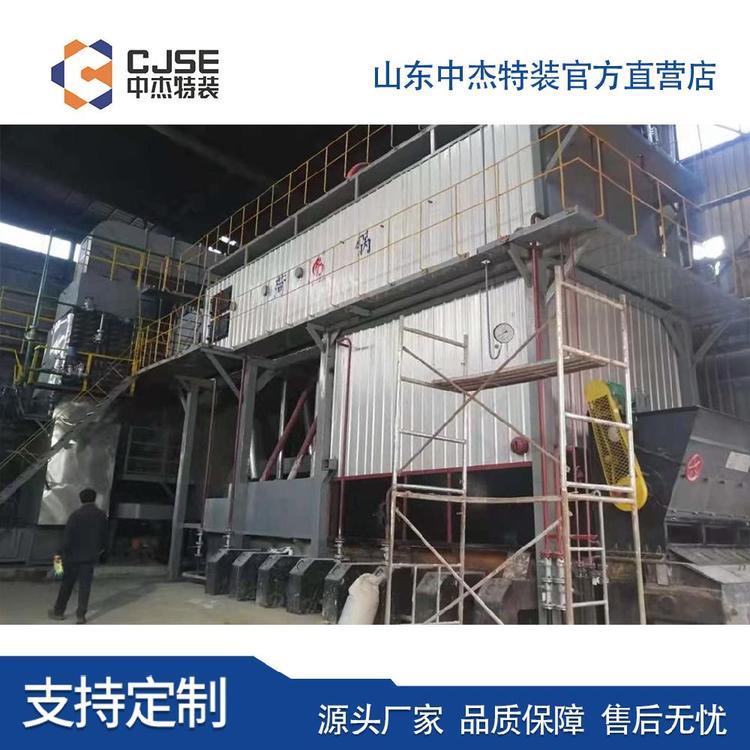

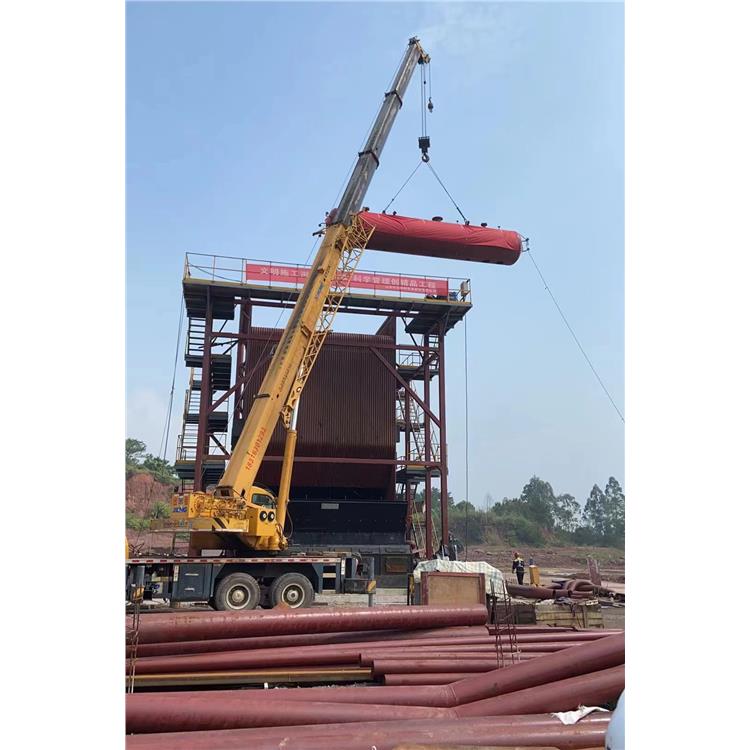
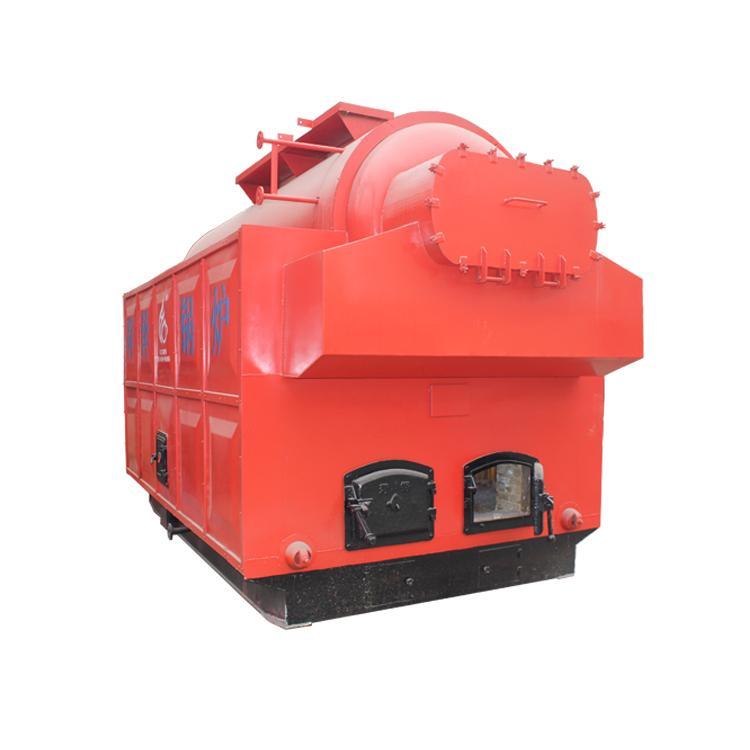


















Shandong Zhongjie Special Equipment (formerly Heze Boiler Factory Co., Ltd.) holds an A-grade boiler manufacturing license, an A2-grade pressure vessel manufacturing license, an A2-grade pressure vessel design license, B-grade boiler installation and GB2, GC2 class pressure pipeline installation licenses, as well as a machinery and electrical equipment installation contracting qualification. It is a member of the China Boiler and Water Treatment Association, the China Chemical Equipment Association, and the director unit of the Shandong Equipment Manufacturing Association. The company has also passed certifications for the ISO9001 Quality Management System, ISO14001 Environmental Management System, OHSAS18001 Occupational Health and Safety Management System, and the American ASME/U2 certification.
Several advantages come with choosing biomass boilers:
Renewable Energy: The fuel used in biomass boilers comes from organic matter such as plants, animals, and microorganisms, making it a renewable energy source. Compared to traditional fossil fuels, biomass fuel has lower carbon emissions and environmental impact, contributing to the reduction of greenhouse gas emissions and being more environmentally friendly.
Diverse Fuel Sources: Biomass fuel sources are widespread, including wood, straw, waste crops, food scraps, and municipal solid waste. This diversity in fuel sources allows biomass boilers to be flexible and adaptable, utilizing waste and by-products from plants and animals, thereby reducing resource waste.
Environmental Friendliness: The carbon dioxide emitted during the combustion process of biomass boilers can be absorbed by plants, forming a cycle that reduces air pollution. Additionally, the emissions and ash produced by biomass boilers during combustion are relatively low, resulting in minimal environmental impact.
Energy Security: Biomass, as a native renewable energy source, can reduce dependence on imported energy and enhance energy security. In areas with scarce resources, the use of biomass boilers can provide a reliable energy supply.
Economic Efficiency: Biomass fuel is relatively cost-effective, allowing for reduced energy costs. Furthermore, the technology and equipment for biomass boilers are continuously evolving and maturing, making them even more economically viable.
The Zhongjie Specialized Biomass Boiler has the following technical advantages:
Our combustion technology: The ZJET biomass boiler utilizes advanced combustion techniques such as fluidized bed combustion and chain grate combustion, enabling the combustion of biomass fuel. It boasts high combustion efficiency and high thermal energy utilization, reducing energy waste.
Multiple Fuel Compatibility: The Zhongjie biomass boiler is designed for compatibility with a variety of biomass fuels such as wood chips, straw, and waste crops, offering strong fuel adaptability. Suitable fuels can be selected based on actual conditions to achieve diversified energy utilization.
Heat Exchanger Design: The heat exchangers for Zhongjie's biomass boiler installations are designed to maximize the thermal energy in flue gases, enhancing thermal efficiency. The material and structural design of the heat exchangers have been optimized for optimal heat conduction and exchange.
The control system: The control system of the Zhongjie biomass boiler equipped with advanced technology ensures precise control and adjustment of parameters such as temperature, pressure, and fuel supply. It is equipped with safety protection features, including overheat protection and low water level protection, to ensure the safe operation of the boiler.
Low Emission Environmental Protection: The Zhongjie biomass boiler utilizes advanced combustion and purification technologies, effectively controlling emissions such as particulates and nitrogen oxides during the combustion process. It boasts lower carbon and environmental pollutant emissions.
High Reliability and Stability: The materials and processes used in Zhongjie's customized biomass boiler are of excellent durability and stability. Rigorous quality control and testing ensure the boiler's high reliability and long-term stable operation.
A hot water boiler is a device used for supplying hot water. With the increasing demand for energy and environmental awareness, hot water boilers have seen continuous development and improvement in both technology and applications.
Below are the trends in the development of hot water boilers:
Energy-saving: The energy-saving of hot water boilers is an important development direction. By improving the combustion technology of the boiler, the design and material selection of the heat exchanger, we enhance the efficiency of heat energy utilization, reduce energy consumption and emissions.
Temperature Control Intelligence: With the advancement of intelligent technology, the temperature control systems of hot water boilers have become increasingly intelligent. By utilizing advanced control algorithms and sensor technology, temperature control and energy consumption management are achieved, enhancing system stability and comfort.
Multi-energy Supply: To reduce dependence on traditional energy sources, the trend in hot water boiler development is towards multi-energy supply. In addition to traditional fuels like gas and oil, an increasing number of hot water boilers are now utilizing renewable energy sources such as biomass, solar, and geothermal, achieving energy diversification and sustainable development.
Environmental Protection and Emission Reduction: Environmental protection and emission reduction is a key direction for the development of hot water boilers. By improving combustion technology, increasing flue gas purification equipment and control systems, pollutants emitted during the combustion process are reduced, protecting the environment and human health.
Safety and Reliability: The safety and reliability of hot water boilers are crucial for development. By enhancing the structural design of the boiler, improving the safety valve and control system, we boost the safety performance of the boiler to prevent accidents.
Miniaturization and modularization: With the acceleration of urbanization, there is an evident trend towards miniaturization and modularization in hot water boilers. Miniature hot water boilers can better adapt to the demands of urban buildings, reducing floor space and installation costs while enhancing flexibility and scalability.
Overall, the trend in hot water boiler development is towards energy efficiency, intelligence, multi-energy supply, environmental protection and emission reduction, safety and reliability, miniaturization, and modularization. These trends will drive continuous innovation and application of hot water boiler technology, providing more comfortable, reliable, and environmentally friendly hot water supply for people.
Reducing the emissions of nitrogen oxides (NOx) from biomass boilers can be achieved through the following measures:
Combustion Control Technology: Utilizes advanced combustion control techniques, such as low nitrogen combustion technology. By optimizing the combustion process and regulating the combustion temperature and oxygen concentration, the formation of nitrogen oxides is reduced. Methods like staged combustion and optimized combustion chamber design can be employed to lower combustion temperatures and extend combustion times, further decreasing nitrogen oxide emissions.
SNCR Technology: Selective Non-Catalytic Reduction (SNCR) technology involves injecting reductants, such as urea solution, into the combustion process to react with nitrogen oxides, converting them into nitrogen and water. This technique can reduce the formation and emission of nitrogen oxides during combustion.
SCR Technology: Selective Catalytic Reduction (SCR) technology is a nitrogen oxide control method. By injecting urea solution into flue gas and acting through a catalyst, nitrogen oxides are converted into nitrogen and water. SCR technology achieves nitrogen oxide removal at lower temperatures, suitable for large biomass boilers.
Flue Gas Recirculation (FGR): FGR technology recycles a portion of flue gas back into the boiler combustion chamber, reducing combustion temperature and oxygen concentration, thereby minimizing the formation of nitrogen oxides. This technique can control nitrogen oxide emissions by adjusting the recirculation ratio.
Fuel Selection and Pretreatment: Opting for low nitrogen fuels, such as low nitrogen biomass fuels, can reduce the formation of nitrogen oxides. Additionally, for biomass fuels with high nitrogen content, pretreatment measures like drying and gasification can be taken to decrease the formation of nitrogen oxides during combustion.
Regular Maintenance and Cleaning: Regularly maintain and clean biomass boilers to ensure the cleanliness and proper operation of components such as burners and heat exchangers. Cleaning the combustion chamber and heat exchangers can reduce the accumulation of dirt, enhance heat transfer efficiency, and lower nitrogen oxide emissions.
By integrating the aforementioned measures, emissions of nitrogen oxides from biomass boilers can be effectively reduced, achieving both environmental protection and energy-saving objectives. The specific measures to be chosen should be based on the characteristics of the boiler, operating conditions, and emission requirements.
Our company attaches great importance to technological innovation and R&D design. We have one municipal-level enterprise technology center in Heze City, equipped with testing facilities for non-destructive testing, physical and chemical testing, welding testing, hydrostatic testing, etc. We have over 600 types of equipment including CNC machine tools, X-ray flaw detectors, digital ultrasonic flaw detectors, mechanical property testing machines, chemical analyzers, spectrometers, tensile testing machines, plasma welding machines, and more. The key products we have developed, such as welding technology for temperature and pressure vessels, biomass boiler emission reduction, and waste heat utilization, have successively been included in multiple Shandong Provincial Department of Industry and Information Technology science and technology innovation projects, Shandong Provincial key projects, and Heze City innovative and excellent projects. We have accumulated a total of 27 authorized utility models, 16 authorized inventions, participated in drafting 2 standards, 2 industry standards, and registered 15 trademarks. Our technical team, in collaboration with Professor Yajiang Li from Shandong University, has developed deep cryogenic container processing technology using the international plasma arc + wire feeding tungsten inert gas arc welding (PAW-GTAW) technology. After provincial-level scientific and technological achievement evaluation, the technology level has reached an international standard in the field of deep cryogenic container manufacturing. Choose Zhongjie Special Equipment, and let's create brilliance together!
WeChat Official Account

Scan to follow Official Account



















