





















Shandong Zhongjie Special Equipment (formerly Heze Boiler Factory Co., Ltd.) was established in 2001, located at No. 2218 Jinnan Road, Development Zone, Heze City. With a registered capital of 50 million yuan and total assets of 500 million yuan, the company operates seven business centers: boiler manufacturing, deep-freezing containers, pressure vessels, central air conditioning, engineering installation, international trade, and Internet of Things. It has three factory sites on Jinnan Road, East Changjiang Road, and Bohai Road, covering a total area of 200,000 square meters, with the main workshop spanning 83,000 square meters. Currently, there are 710 employees, including 247 engineers and technicians, and 82 intermediate-level technicians. In December 2016, the company was recognized as a "High-tech Enterprise" by the Science and Technology Department. In June 2021, it was named a "Specialized and New Enterprise in Shandong Province" by the Ministry of Industry and Information Technology. In June 2022, it was identified as a "Gazelle Enterprise in Shandong Province," and in August 2022, it was recognized as a "Specialized and New Small Giant Enterprise" by the Ministry of Industry and Information Technology.
For the maintenance of carbon dioxide storage tanks, here are some recommended methods:
Regular Inspections: Regularly inspect the tank's exterior and interior for signs of corrosion, cracks, and leaks. Non-destructive testing methods, such as ultrasonic testing, can be used to assess the tank's integrity.
Cleaning and Corrosion Protection: Regularly clean the tank's exterior to remove dirt and debris. For tanks with corrosion-resistant coatings, regularly check the condition of the coating and perform repairs or recoating to protect against corrosion.
Leak Detection: Regularly conduct leak detection to ensure there are no leakage issues. Use gas detectors or leak detectors for testing, or perform pressure tests to evaluate the tank's sealing performance.
Safety Valve Inspection: Regularly inspect and test the operational status of safety valves to ensure they function properly under overpressure conditions. Adjust and test according to the specifications and requirements of the safety valves.
Piping and Valve Maintenance: Regularly inspect and maintain the piping and valves connected to the tank to ensure their proper operation and sealing performance. Clean and lubricate valves, and check for leaks at pipeline connections.
Documentation: Record the dates, contents, and results of maintenance, establishing a maintenance record for the tank. Keep related documents and reports for future reference and review.
Please note that for the maintenance of carbon dioxide storage tanks, it is recommended to follow relevant safety operating procedures and standards. If you do not have the relevant knowledge and experience, it is advisable to consult personnel or manufacturers for maintenance work.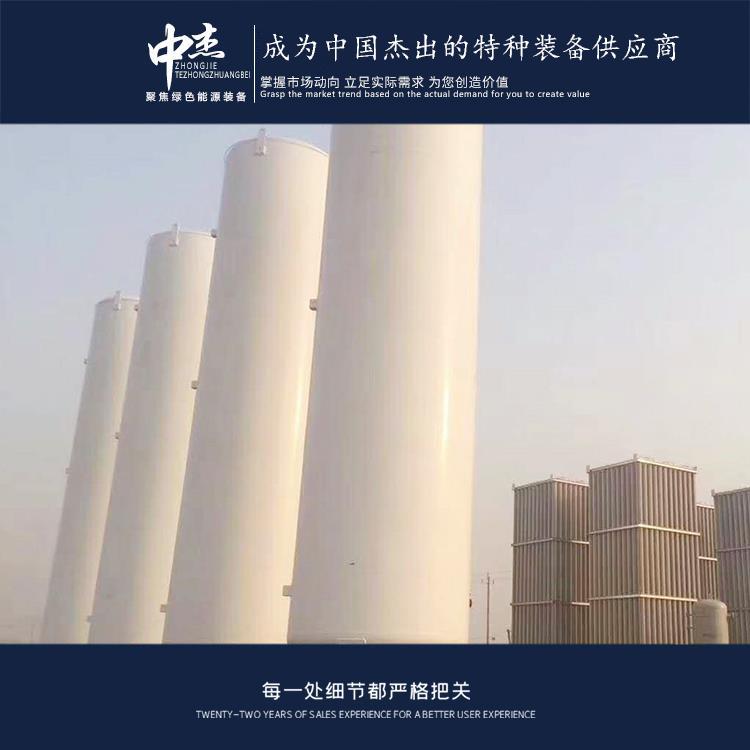
When planning CO2 storage tanks, several requirements must be considered:
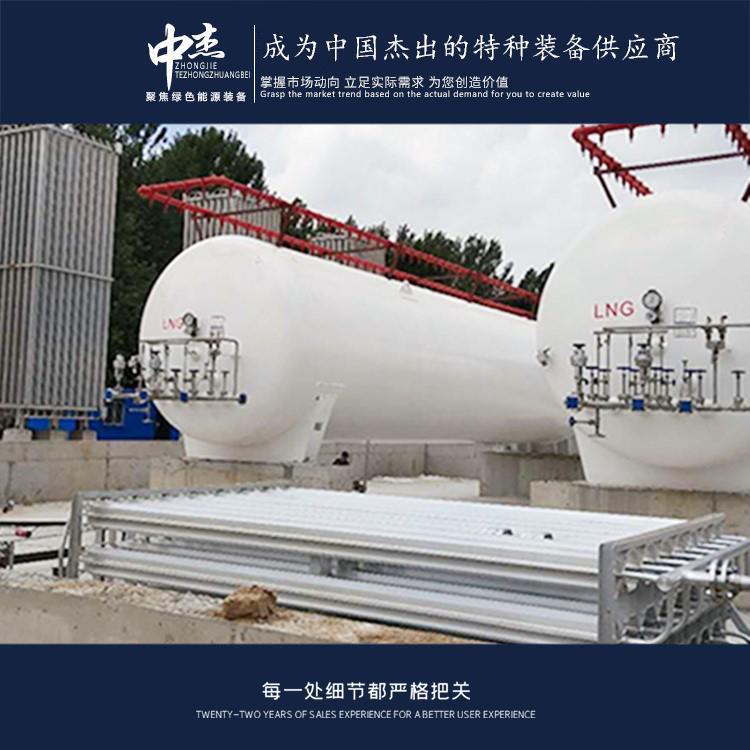
Safety Distance: Tanks should maintain adequate distance from surrounding buildings, equipment, and personnel to prevent injuries and losses in case of unexpected accidents. Specific requirements for safety distance should be defined according to local regulations and standards.
Tank Capacity: Determine the tank's capacity based on actual needs and usage. The choice of capacity should consider CO2 usage, storage duration, and supply demands.
Tank Layout: The layout should facilitate operation and maintenance while meeting safety and environmental protection requirements. Sufficient spacing between tanks should be ensured for ease of operation and maintenance.
Tank Material: Select appropriate materials for tank construction to ensure corrosion and pressure resistance. Common materials include carbon steel and stainless steel.
Safety Equipment: Tanks should be equipped with necessary safety equipment, such as safety valves, pressure and temperature sensors, to ensure safe operation.
Leak Prevention: Measures should be taken to prevent CO2 leakage, such as sealed valves and leak detection systems. Corresponding leak handling procedures and emergency plans should also be in place.
Environmental Impact Assessment: An environmental impact assessment should be conducted when planning tanks to evaluate their impact on the surrounding environment and implement corresponding environmental protection measures.
Regulations and Standards: When planning tanks, adhere to local regulations and standards, including building codes, safety specifications, and environmental protection requirements.
Note that planning CO2 storage tanks should be carried out by engineers or relevant agencies to ensure compliance with safety and environmental protection standards. Consulting with local authorities for advice and guidance is also essential.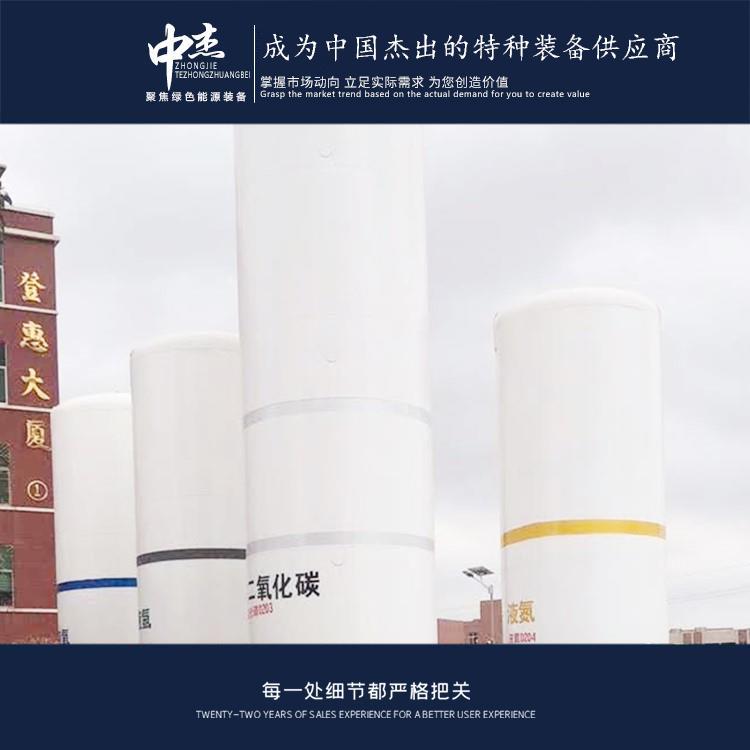
Low Temperature Carbon Dioxide Storage Tank Knowledge
1. Structure of Low Temperature Carbon Dioxide Storage Tanks
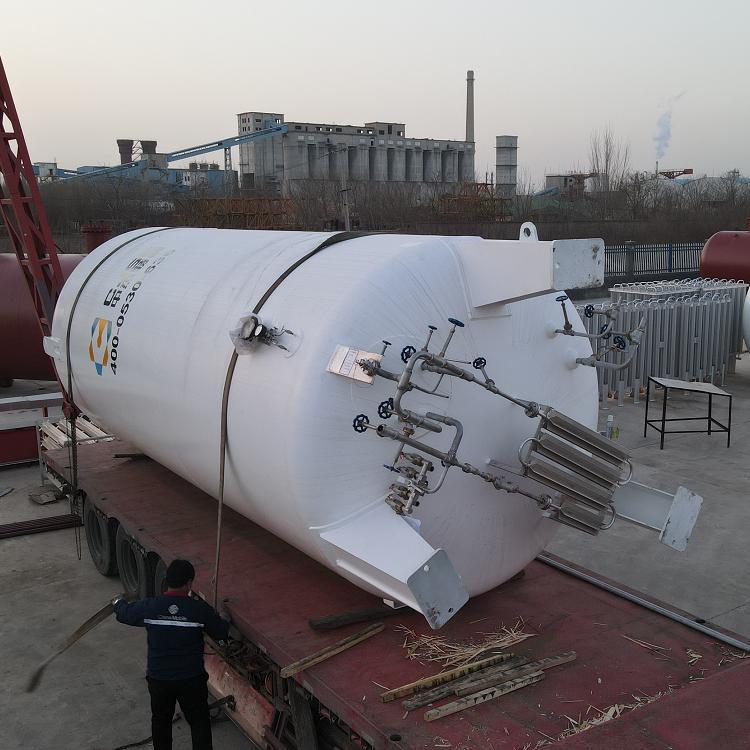
Low temperature carbon dioxide storage tanks typically have a double-walled cylindrical structure, with the inner cylinder made of 6MnDR alloy steel and the outer cylinder of Q245R or Q345R pressure vessel steel plate. The piping is made of austenitic stainless steel, and the insulation space is filled with high vacuum sintered sand or wrapped with multiple layers of insulation. The storage tank is equipped with valves for operation, which are arranged for ease of use. Pressure gauges and level indicators are also installed for monitoring the pressure and liquid level inside the tank.
2. Key Features of Low Temperature Carbon Dioxide Storage Tanks
(1) The storage tank is equipped with a liquid filling connector for trucks, allowing liquid supply to vaporizers, trucks, and pumps.
(2) Both the inner and outer cylinders of the storage tank have safety equipment to ensure safe operation for the user.
(3) The insulation material of the low temperature carbon dioxide storage tank is specially treated to provide a longer vacuum lifespan. Additionally, the tank is equipped with a vacuum gauge for measuring the insulation space vacuum when needed.
3. Transportation of Low Temperature Carbon Dioxide Storage Tanks
(1) During road transportation, the storage tank should be securely fastened to the vehicle, travel at moderate speeds, and avoid collisions with other objects.
(2) After arrival, the unloading personnel should work with the equipment supervisor to develop a scientific and reasonable unloading plan.
4. Installation of Low Temperature Carbon Dioxide Storage Tanks
(1) Once the storage tank arrives at the installation site, it can be positioned when installation conditions are met. During the installation process, avoid impacts and hits, and pay special attention to the explosion-proof equipment on the outer cylinder and the vacuum valve, which should not be touched.
(2) Perform a gas-tightness test on the inner cylinder system of the storage tank using nitrogen to the working pressure. After confirming that valves, pipes, flanges, etc., are leak-free, the installation is complete.
(3) The installation dimensions of the low temperature carbon dioxide storage tank are specified in the supply materials. When considering liquid loading and unloading with trucks, account for the vehicle's travel path.
The internal structure of a carbon dioxide storage tank typically includes the following main components:
- Tank Shell: The tank shell is the primary container for storing carbon dioxide, usually made of carbon steel or stainless steel. It is designed with sufficient strength and sealing to withstand the pressure and load inside the tank.
- Lining Layer: To prevent direct contact between carbon dioxide and the tank shell, avoiding corrosion and contamination, the interior of the tank is often coated with a lining layer. The lining is typically made of corrosion-resistant materials such as glass fiber reinforced plastic or polyester resin.
- Support Structure: To support the weight of the tank and maintain stability, a support structure is usually installed inside the tank. This can include supports, brackets, etc., to support the bottom and side walls of the tank.
- Internal Accessories: The tank is also equipped with some important accessories, such as level gauges, pressure sensors, temperature sensors, and safety valves. These accessories are used to monitor and control the liquid level, pressure, and temperature inside the tank to ensure safe operation.
- Pressure Relief Device: To prevent excessive internal pressure, the tank is usually equipped with a pressure relief device, such as a safety valve. When the internal pressure exceeds the set value, the pressure relief device will automatically open to release pressure, protecting the tank's safety.
- Inlet and Outlet Pipes: The tank also features inlet and outlet pipes for injecting and discharging carbon dioxide. These pipes are typically connected to external supply or consumption systems to facilitate the storage and use of carbon dioxide.
The above describes the general internal structure of carbon dioxide storage tanks. Specific structural design and configurations may vary depending on the tank's purpose and specifications. When using and maintaining the tank, it is necessary to...
Shandong Zhongjie Special Equipment, welcome customers to our factory for business discussions.
WeChat Official Account

Scan to follow Official Account



















