





















Shandong Zhongjie Special Equipment (formerly Heze Boiler Factory Co., Ltd.) was established in 2001, located at No. 2218 Jinnan Road, Development Zone, Heze City, with a registered capital of 50 million yuan and total assets of 500 million yuan. The company has 7 business centers: boilers, deep-freeze containers, pressure vessels, central air conditioning, engineering installation, international trade, and Internet of Things. It has three factory sites on Jinnan Road, East Changjiang Road, and Bohai Road, covering a total of 200,000 square meters. The main workshop spans 83,000 square meters. There are currently 710 employees, including 247 engineers and technicians, and 82 intermediate-level technical personnel. In December 2016, it was recognized as a "High-tech Enterprise" by the Science and Technology Department. In June 2021, it was identified as a "Specialized and New Enterprise in Shandong Province" by the Ministry of Industry and Information Technology. In June 2022, it was recognized as a "Gazelle Enterprise in Shandong Province" and in August 2022, as a "Specialized and New Small Giant Enterprise" by the Ministry of Industry and Information Technology.
Carbon dioxide has wide applications in the field of food freezing. Here are some common uses of carbon dioxide in food freezing:
1. Freezing Food Processing: Carbon dioxide is often used in the processing of frozen food. By exposing the food to liquid carbon dioxide, the temperature can be rapidly reduced, achieving quick freezing. This quick freezing effectively preserves the quality, texture, and nutritional value of the food.
2. Freezing Storage: Carbon dioxide is also used in the freezing storage of food. During the freezing storage process, the food is placed in a low-temperature environment, and the temperature of the food is reduced below the freezing point through the refrigerating action of carbon dioxide, thus extending the shelf life of the food.
3. Freezing Transportation: Carbon dioxide plays a crucial role in the freezing transportation of food. By using carbon dioxide freezing technology during transportation, the low-temperature state of the food can be maintained, preventing quality loss of the food.
4. Freezing Display: In the retail food industry, carbon dioxide is also used in frozen display cabinets. By injecting carbon dioxide gas into the display cabinet, the low-temperature state of the food can be maintained, showcasing the food while keeping it fresh and of high quality.
Compared to traditional freezing techniques, carbon dioxide freezing has some advantages, such as faster freezing speed, better freezing effect, and less impact on food quality. However, the use of carbon dioxide freezing technology requires safe operation to avoid leakage of carbon dioxide and harm to humans. Therefore, when using carbon dioxide for food freezing, it is necessary to follow relevant safety operation procedures and guidelines.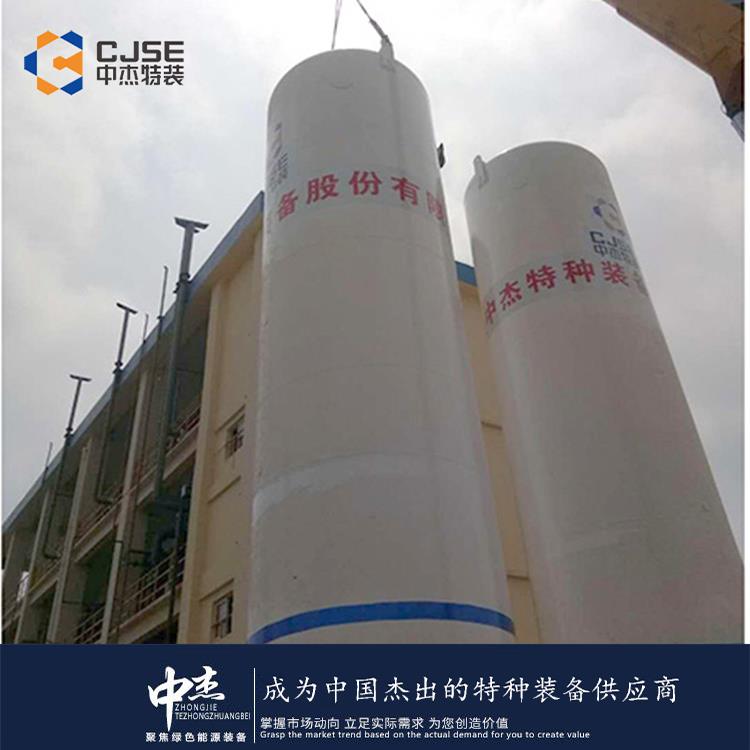
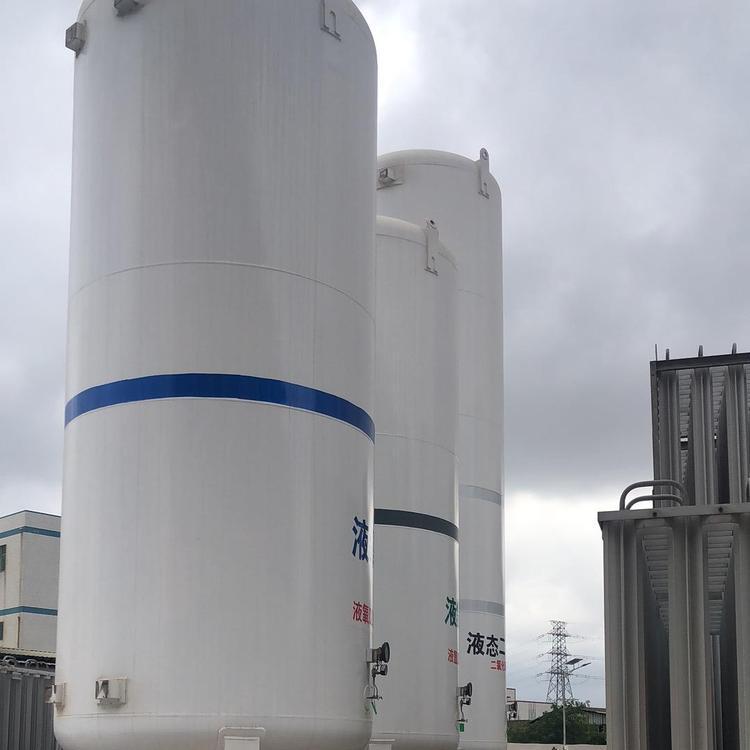
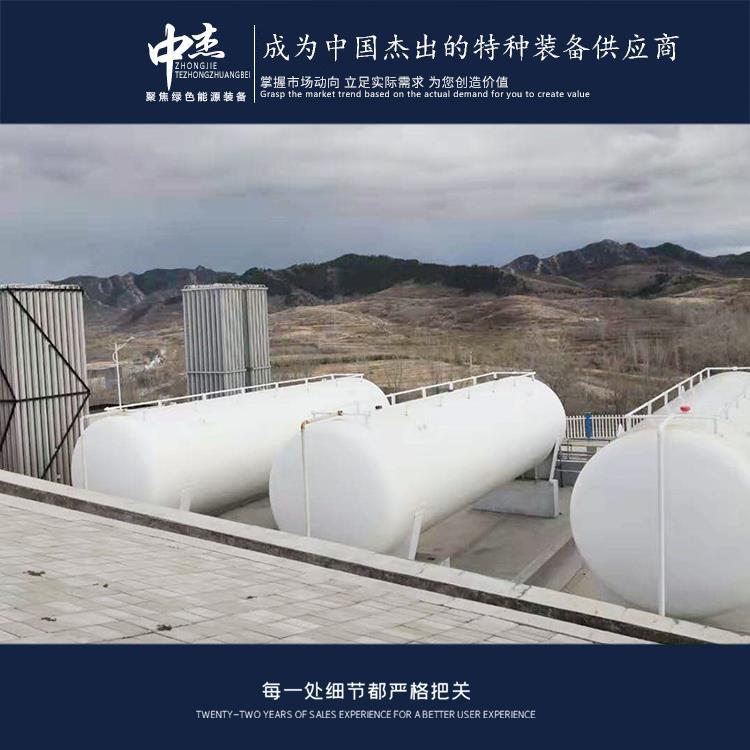
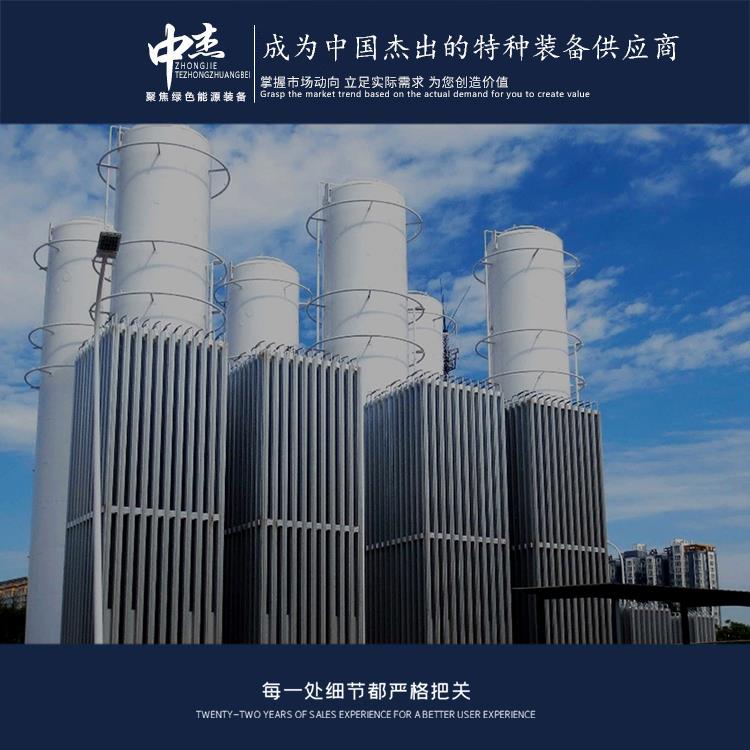
Carbon dioxide tanks fall under the category of pressure vessels. Pressure vessels are sealed containers capable of withstanding internal pressure, used for storing and transporting gases, liquids, or mixtures. A carbon dioxide tank is a pressure vessel designed for storing and transporting carbon dioxide, featuring special design and structure to ensure safe storage and use of carbon dioxide. Depending on design and application, carbon dioxide tanks can be either vertical or horizontal, with varying capacities and pressure ratings. When using carbon dioxide tanks, it is necessary to comply with relevant regulations and standards to ensure safe operation and use.
Water pressure testing of CO2 storage tanks is a common quality inspection method used to verify the tank's sealing and pressure resistance. Below are the general steps for conducting a water pressure test on CO2 storage tanks:
Preparation: Ensure the tank interior is clean and the tank is empty. Check the tank's valves, pipes, and connections to ensure they are sealed properly.
Filling with Water: Fill the tank with water, using tap water or another clean source. Ensure even water filling to avoid bubbles or dead spots.
Applying Pressure: Use a pressure pump or other pressure device to gradually increase water pressure until reaching the predetermined test pressure. The test pressure is typically determined based on the tank's design requirements and relevant standards.
Maintaining Pressure: After reaching the test pressure, hold it for a period, usually 15-30 minutes. During this time, observe for any leakage and check for leaks at valves and connection points.
Pressure Release: Release the water pressure inside the tank, ensuring a slow and even release to avoid sudden pressure release causing shock.
Inspection and Evaluation: After pressure release, inspect the tank's exterior and interior for any leakage. Evaluate the test results to ensure the tank's sealing and pressure resistance meet requirements.
It is important to note that when conducting water pressure tests, follow relevant safety operation procedures and standards to ensure safety and reliability during the process. Additionally, based on the tank's design and usage requirements, other types of tests can be conducted, such as gas pressure tests, ultrasonic inspections, etc., to comprehensively assess the tank's quality and performance. Seek advice and guidance from consulting experts.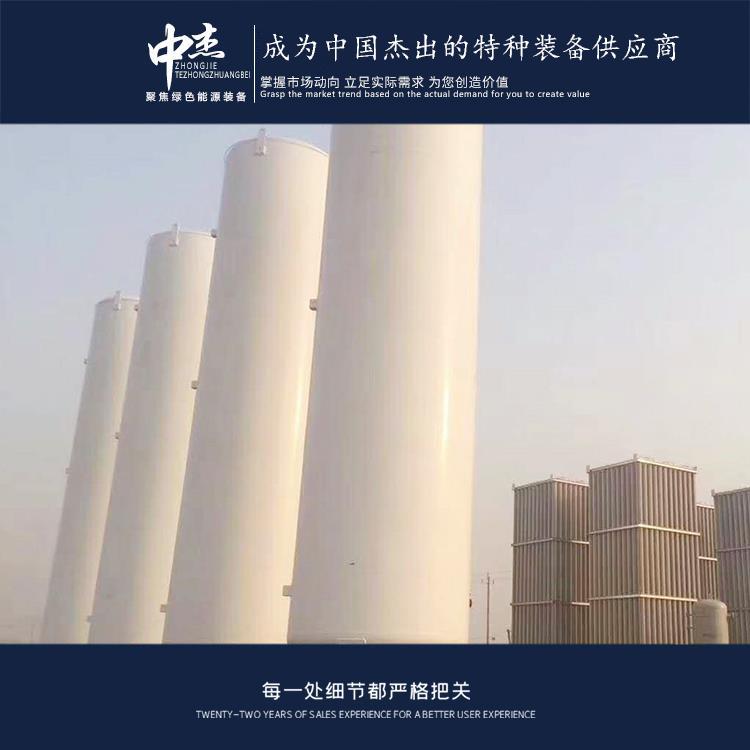
When handling CO2 storage tanks, static electricity is a safety issue that needs attention. Here are some methods to avoid static electricity:
- Grounding: Ensure that the tank and related equipment are properly grounded. Grounding releases static electricity to the ground, reducing the likelihood of static buildup. Use specialized grounding equipment and wires to ensure reliable grounding.
- Antistatic Equipment: Use antistatic equipment such as antistatic clothing, shoes, and gloves. These devices help eliminate or reduce static buildup and protect the safety of operators.
- Avoid Friction: Prevent friction during operations, especially when in contact with flammable or combustible gases. Friction generates static electricity, increasing the risk of fire or explosion.
- Control Humidity: Maintain an appropriate humidity level in the operating environment; higher humidity can reduce the generation and accumulation of static electricity. Use humidifiers or other humidity control devices to adjust the environmental humidity.
- Avoid Plastic or Rubber Materials: Plastic and rubber materials are prone to static electricity; try to avoid using these materials during operations. Choose materials with good antistatic properties for handling.
- Static Eliminators: Use static eliminators to eliminate or reduce static buildup. Static eliminators neutralize static electricity by releasing charges, reducing the danger of static.
- Tank Cleaning: Regularly clean the interior of the tank to remove accumulated impurities and dirt. Be mindful of preventing static generation and accumulation during cleaning.
Note that the methods to avoid static electricity should be determined based on the specific operating environment and tank characteristics. During operations, follow relevant safety regulations and standards, and consult with experts if necessary.
Zhongjie Special Equipment adheres to the grand vision of "realizing employees' dreams, creating value for customers, and striving for the prosperity and strength of our motherland," and is dedicated to the development of the green energy equipment industry. We offer products and services with high cost-performance to contribute to society!
WeChat Official Account

Scan to follow Official Account



















