


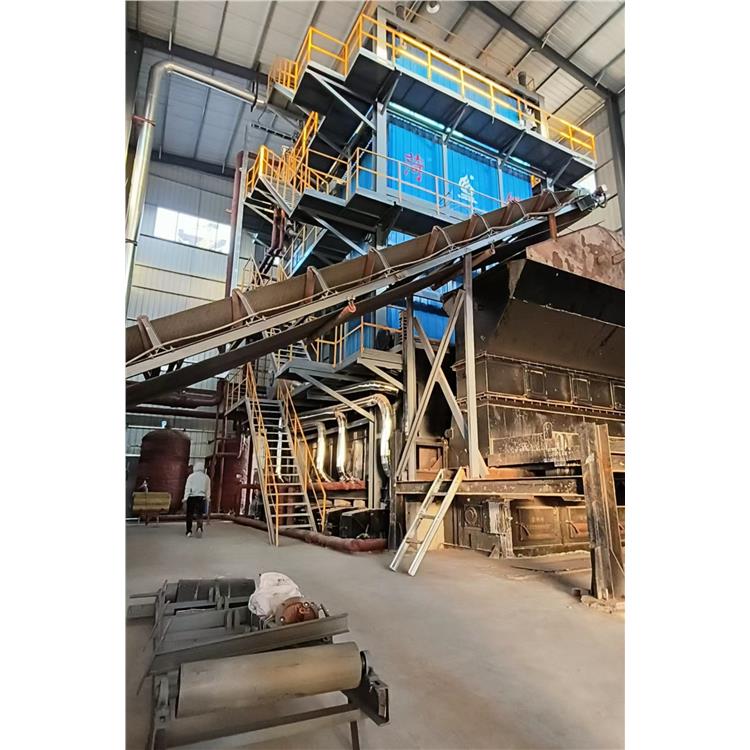

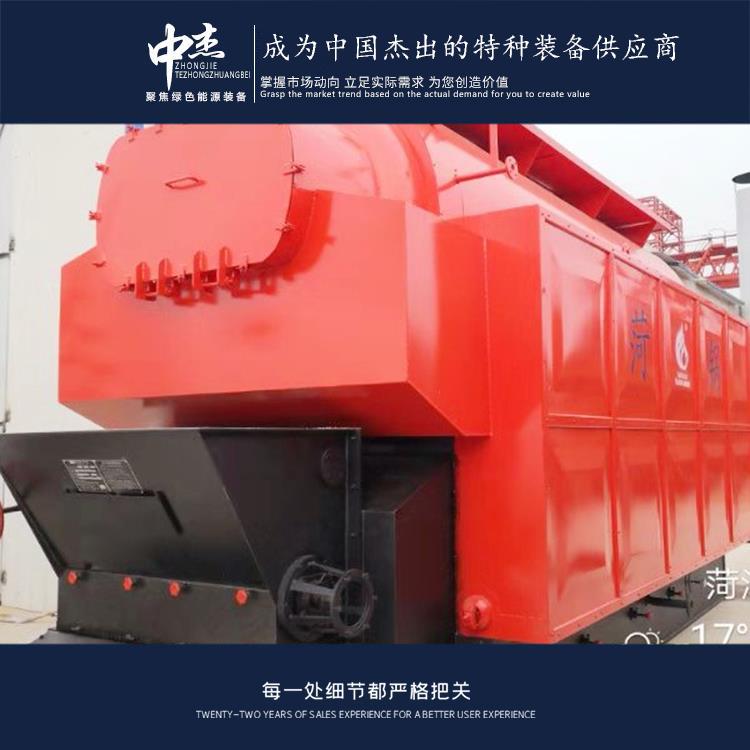


















Shandong Zhongjie Special Equipment's main products include: fuel (gas) boilers, organic heat carrier boilers, biomass boilers, waste heat recovery boilers, and other boiler products; vacuum insulated cryogenic pressure vessels such as LNG storage tanks, oxygen-nitrogen-argon storage tanks, and CO2 storage tanks; pressure vessel products like denitrification engineering equipment, heat storage and energy storage equipment, and complete chemical equipment sets; central air conditioning and ventilation equipment such as ground (water) source heat pumps, air source units, water-cooled screw units, and air-cooled modular units. Planned products include large-scale energy centers, LNG transport vehicles, LNG tank containers, and other green energy equipment.
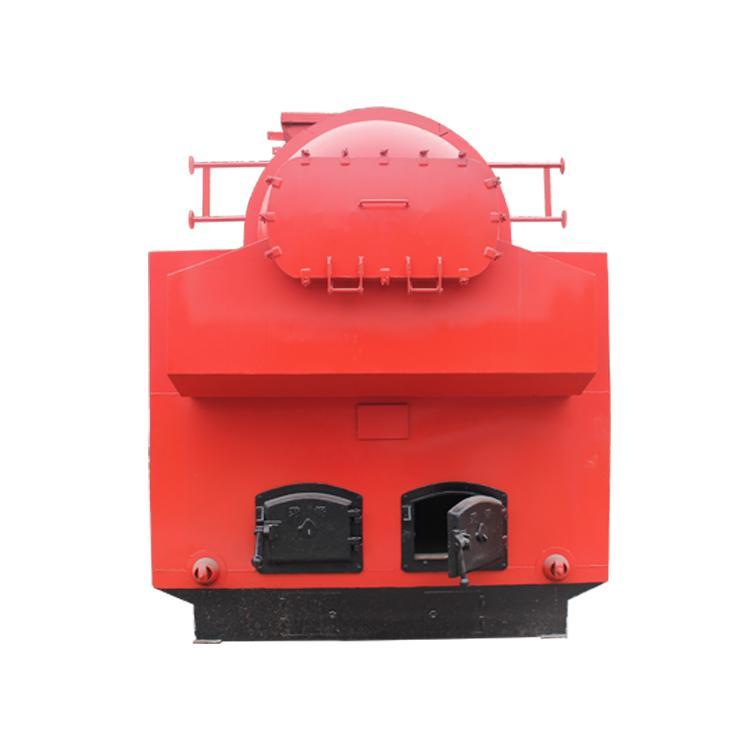
The DZH steam boiler is a manually fueled solid fuel boiler with the following technical features:
Fuel Combustion Method: The DZH steam boiler utilizes a manual combustion method, where operators manually add fuel and adjust the combustion process. This method is relatively simple and flexible, suitable for small to medium-sized applications.
Multiple Fuel Adaptability: The DZH steam boiler boasts strong fuel adaptability, capable of burning solid fuels such as wood chips and straw. This feature enables the widespread application of the DZH steam boiler in various regions and under different fuel resource conditions.
Furnace Structure: The DZH steam boiler features a double-chamber furnace design, with a partition between the combustion chambers. This structure enhances the temperature and combustion efficiency of the chambers, thereby improving thermal efficiency.
Flue Gas Channel: The flue gas channel of the DZH steam boiler features a spiral flue tube design, which increases the contact area between flue gas and water, enhancing heat exchange efficiency. Additionally, a flue gas reversal chamber is installed within the flue gas channel, causing the flue gas to flow repeatedly within the furnace, thereby increasing the residence time of the flue gas and improving combustion efficiency.
Safety Protection: The DZH steam boiler is equipped with various safety devices such as pressure controllers, water level controllers, and overheat protectors, ensuring the safe operation of the boiler.
Compact Structure: The DZH steam boiler features a compact structure with minimal floor space, making it ideal for installation in limited areas.
In summary, the DZH steam boiler boasts strong fuel adaptability, flexible operation, and high thermal efficiency, making it suitable for small to medium-sized solid fuel steam demand scenarios.
Bio-mass boiler furnace ash blowing refers to the process of cleaning the combustion area within the furnace by using an ash blowing device. The purpose of ash blowing is to remove ash and slag within the furnace, maintain the unobstructed flow of the combustion area, enhance combustion efficiency, and ensure the stability of the boiler's operation.
Furnace ash blowing operations are generally categorized into two methods: mechanical ash blowing and pulse ash blowing.
Mechanical Ash Blowing: Mechanical ash blowing is a process that uses mechanical devices, such as rotary ash blowers and chain ash blowers, to clean the combustion area within the furnace chamber. The mechanical ash blower rotates or moves periodically to remove ash and slag from the combustion area.
Pulse Cleaning: Pulse cleaning involves using high-pressure gas or compressed air to喷射 through nozzles into the combustion area within the furnace, creating shock and vibration to remove ash and slag. Pulse cleaning is characterized by its effective and rapid cleaning performance.
The impact of the furnace ash blowing operation on biomass boilers is mainly reflected in the following aspects:
Clean combustion area: The furnace ash blowing can burn the slag and accumulated ash in the combustion area, keeping the combustion area clear, which is conducive to the full combustion of fuel and improves combustion efficiency.
Reduce smoke resistance: The furnace ash blowing can burn the ash and slag in the combustion area, reducing the resistance in the smoke passage, which is conducive to the smooth exhaust of flue gas and improves the heat exchange efficiency of the boiler.
Biomass boiler drying kiln refers to the process of using a biomass boiler for kiln heating. The following is a brief procedure:
Prepare fuel: Select appropriate biomass fuel such as wood chips, straw, etc., and perform pretreatment such as drying and sieving to ensure fuel quality and meet the requirements of the oven.
Ignition and ignition adjustment: Place the fuel into the combustion chamber of the biomass boiler, ignite it, and make the ignition adjustment. The ignition adjustment includes adjusting the oxygen supply to the combustion chamber, fuel supply, and combustion temperature, etc., to ensure stable combustion.
Heating and Temperature Control: As the fuel burns, biomass boilers produce high-temperature flue gas, which transfers its thermal energy to the drying kiln through a heat exchanger. During the heating process, it is necessary to control the temperature of the drying kiln to ensure that the materials inside receive adequate heating.
Furnace Operation and Monitoring: During the furnace heating process, both operation and monitoring are required. Operation involves controlling fuel supply, heat transfer, and the movement of materials inside the furnace. Monitoring includes tracking parameters such as furnace temperature, pressure, and combustion efficiency to ensure normal operation and safety.
Furnace Completion and Cleaning: Upon completion of the heating process or achievement of the desired furnace effect, cease fuel supply and heating, and perform the furnace completion procedures. Post-completion, it is necessary to clean the furnace and biomass boiler, as well as the ash and soot in the combustion chamber and flue, to maintain the cleanliness and proper operation of the equipment.
The internal structure of an automatic biomass boiler typically includes the following main components:
Combustion Chamber: The combustion chamber is the area within a biomass boiler where combustion takes place. It typically consists of the burner, combustion chamber walls, top, and bottom. The combustion chamber provides the space and oxygen required for combustion, enabling biomass fuel to burn and generate heat energy.
Chimney System: The chimney system is designed to direct the exhaust gases produced by combustion out of the combustion chamber. It includes chimney pipes, chimneys, and flue gas purification equipment, etc. The design and layout of the chimney system can effectively improve the efficiency of gas emission and the utilization of thermal energy.
Heat Exchangers: Heat exchangers are a critical component in biomass boilers, used to transfer the thermal energy from the flue gas produced by combustion to water or other working substances. Common types of heat exchangers include water tube heat exchangers and flue tube heat exchangers. The design and material selection of heat exchangers are crucial for improving
Our company attaches great importance to technological innovation and research and development, boasting 1 municipal-level enterprise technology center in Heze City. We have established testing facilities for non-destructive testing, physical and chemical testing, welding testing, hydrostatic testing, and more. We are equipped with over 600 types of instruments and equipment, including CNC machine tools, X-ray flaw detectors, digital ultrasonic flaw detectors, mechanical property testing machines, chemical analyzers, spectrometers, tensile testing machines, plasma welding machines, and others. The key products and technologies we have developed, such as welding for temperature and pressure vessels, emissions reduction for biomass boilers, and waste heat utilization, have successively been selected for multiple Shandong Provincial Department of Industry and Information Technology scientific and technological innovation projects, key projects in Shandong Province, and Heze City innovation and excellence projects. We have accumulated a total of 27 authorized utility models, 16 authorized inventions, participated in drafting 2 standards, 2 industry standards, and registered 15 trademarks. The technical team of our company, in collaboration with Professor Li Yajiang of Shandong University, has developed deep cryogenic container processing technology using the international plasma arc + filler wire tungsten inert gas arc welding (PAW-GTAW) technology. After provincial-level scientific and technological achievement evaluation, the technological level has reached international standards in the field of deep cryogenic container manufacturing. Choose Zhongjie Special Equipment, and let's create brilliance together!
WeChat Official Account

Scan to follow Official Account



















