


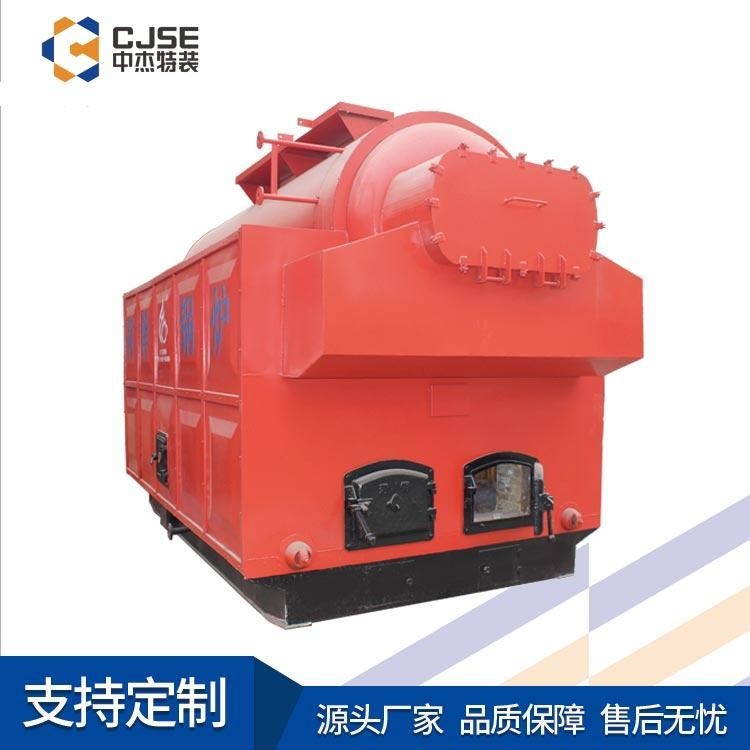

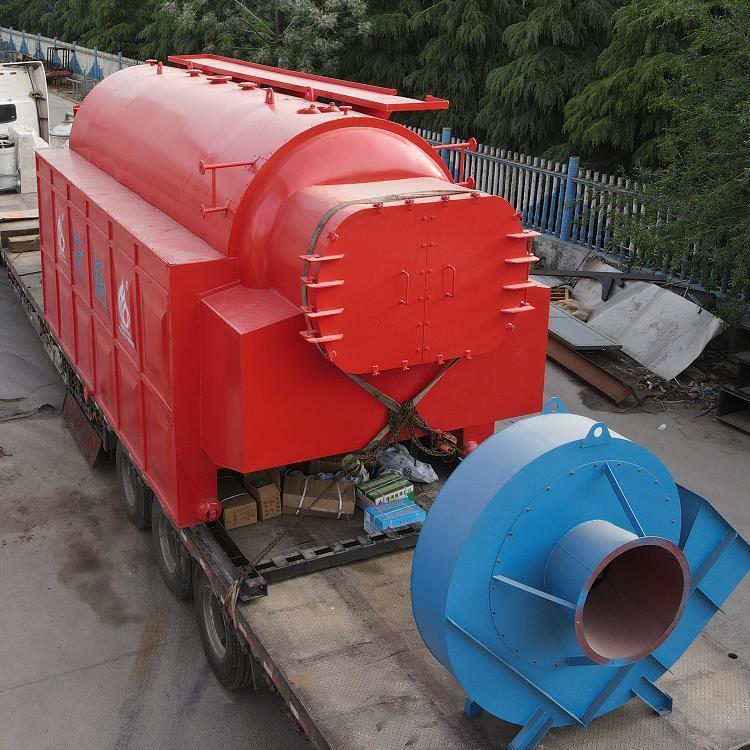
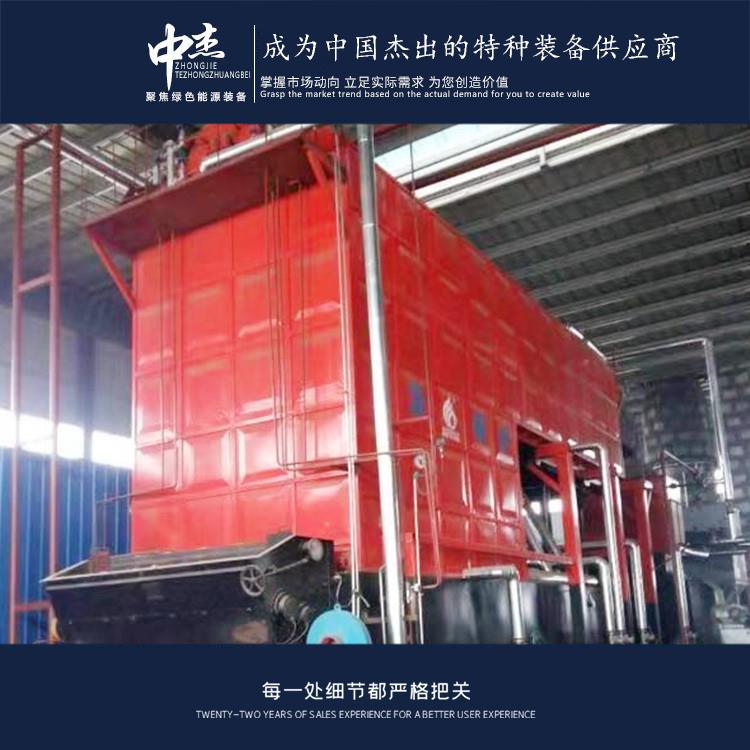


















Shandong Zhongjie Special Equipment (formerly Heze Boiler Factory Co., Ltd.) holds an A-grade boiler manufacturing license, an A2-grade pressure vessel manufacturing license, an A2-grade pressure vessel design license, a B-grade boiler installation license, and GB2/Class, GC2/Class pressure pipeline installation licenses, as well as a qualification for electromechanical equipment installation contracting. It is a member of the China Boiler and Water Treatment Association, the China Chemical Equipment Association, and the council member of the Shandong Equipment Manufacturing Association. The company has also passed certifications for the ISO9001 Quality Management System, ISO14001 Environmental Management System, OHSAS18001 Occupational Health and Safety Management System, and the U.S. ASME/U2 certification.
The use of biomass boilers holds significant importance for energy conservation and emission reduction:
Reducing Carbon Emissions: The fuel used in biomass boilers comes from organic matter such as plants, animals, and microorganisms. The carbon dioxide released during combustion can be absorbed by plants, forming a cycle. Compared to traditional fossil fuels, biomass fuel has a lower carbon emission, which can effectively reduce greenhouse gas emissions and is of great significance in combating climate change.
Reduce Energy Consumption: Biomass boilers, utilizing combustion technology and a heat recovery system, can enhance energy utilization efficiency and minimize waste. By conserving energy, energy costs can be reduced and the benefits of energy use can be improved.
Decrease dependency on fossil fuels: Biomass, as a local renewable energy source, can reduce reliance on imported fossil fuels and enhance energy security. In areas with scarce resources, the use of biomass boilers can provide a reliable energy supply, diminishing dependence on external energy sources.
Promoting agricultural and forestry development: Fuel for biomass boilers primarily comes from agricultural by-products like straw and wood, fostering the sustainable development of agriculture and forestry. By effectively utilizing agricultural and forestry waste, we can reduce resource waste and enhance the overall benefits of the agricultural and forestry industries.
Promote Environmental Protection: The combustion of biomass boilers produces relatively few emissions and ash, causing less environmental impact. Moreover, the use of biomass boilers helps reduce the exploitation and destruction of natural resources, safeguarding the ecological environment.
In summary, utilizing biomass boilers is of great significance for energy conservation and emission reduction.
The extinguishing process and maintenance methods for fully automatic biomass boilers are as follows:
Extinguishing Process:
Cease Fuel Supply: Prior to extinguishing the biomass boiler, discontinue fuel supply and ensure the fuel supply pipeline is closed.
Turn off the burner: Switch the burner's switch or the extinguish button on the control panel to the off position, stopping the burner from operating.
Allow to Cool: Wait for the boiler to cool down to a safe temperature, which usually takes some time. Do not operate during this period to prevent any accidents.
Shut off power: After the boiler has completely cooled down, turn off the power switch of the boiler to ensure the boiler is in a power-off state.
Maintenance Instructions:
Clean Combustion Chamber: Regularly clean the combustion chamber to remove ash and dirt generated during the combustion process. Use appropriate tools and cleaning agents to ensure the chamber remains clear and clean.
Heat Exchanger Cleaning: Regularly clean heat exchangers, particularly those on the flue side. During the combustion process, flue gases may contain particulates and slag, which can adhere to the surface of the heat exchanger, affecting heat transfer efficiency. Appropriate cleaning methods, such as mechanical or chemical cleaning, can reduce the accumulation of dirt.
Inspect and Replace Critical Components: Regularly inspect and replace critical components such as burners, valves, sensors, etc. Ensure these parts operate and perform properly to avoid malfunctions and safety hazards.
Water Treatment: Proper water treatment for boiler feed to prevent impurities and sediments from accumulating inside the boiler. Methods such as water softening, deoxygenation, and scaling removal can be employed to maintain the cleanliness and stability of the supply.
Please provide the Chinese content you would like translated into American English.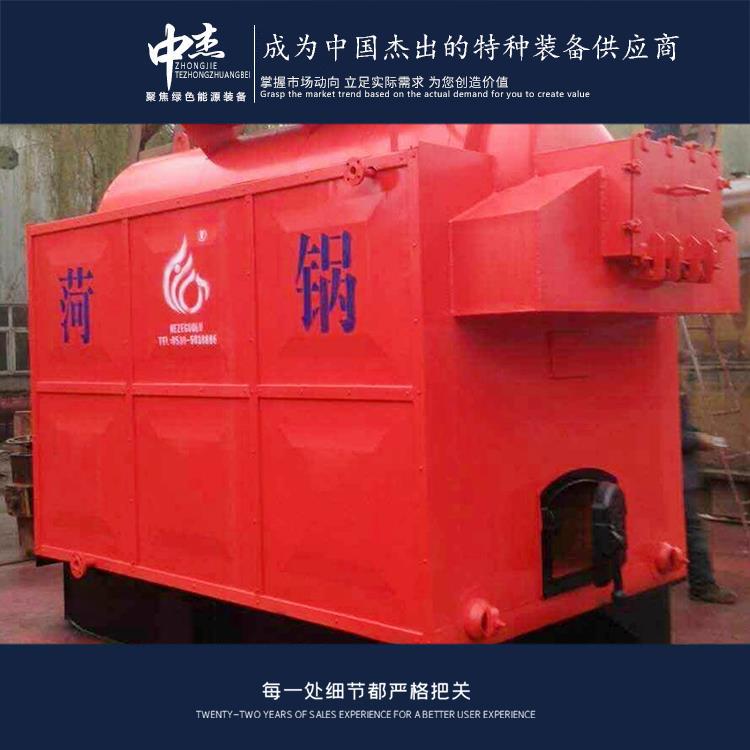
There are several methods for setting the pressure of biomass hot water boilers:
Regular Discharge: Regularly discharge excess water from the boiler to maintain normal working pressure. Discharging excess water helps prevent excessive internal pressure in the boiler, ensuring stable operation.
Timing: Operate at regular intervals based on the water level of the boiler to maintain normal working pressure. Pay attention to control the amount to avoid overfilling and causing excessive boiler pressure.
Pressure Control System: The installation of a pressure control system allows for real-time monitoring of the boiler's pressure through sensors and controllers, with automatic adjustments made according to set values. In the event that the boiler pressure exceeds the set value, the control system will automatically reduce fuel supply or expel excess moisture to maintain a stable working pressure for the boiler.
Pressure Regulating Valve: Install a pressure regulating valve on the boiler's water inlet pipe, adjusting the valve opening to control the water inflow and maintain the boiler's stable operating pressure. The pressure regulating valve can automatically adjust according to the set value, keeping the boiler pressure within the appropriate range.
Pressure Regulator: Install a pressure regulator in the boiler's combustion system to control the steam pressure by adjusting the combustion intensity of the burner. The pressure regulator can automatically adjust the burner's operating state based on the set value to maintain a stable working pressure for the boiler.
Above are common methods for setting the pressure of biomass hot water boilers. Depending on actual conditions and requirements, suitable pressure-setting methods can be chosen to maintain the boiler's stable working pressure.
Controlling slagging in biomass boilers is a crucial measure to ensure the normal operation of the boiler and extend its lifespan. Here are some common methods to control slagging in biomass boilers:
Select fuel wisely: Opt for high-quality, properly moisture-content biomass fuel to avoid using overly wet or excessively contaminated fuel, which can reduce the likelihood of coking.
Regulate Combustion Temperature: Reasonably control the combustion temperature of biomass boilers to avoid excessively high temperatures, reducing the fuel's residence time in the furnace and minimizing the risk of slagging.
Enhanced Furnace Cleaning: Regularly clean the furnace to remove ash and accumulated soot, ensuring the furnace remains clear and reducing the likelihood of slag formation.
Regulate Excess Air: Properly control the air supply during the combustion process of biomass boilers to prevent excessive air from entering the furnace, reducing the risk of fuel oxidation and slagging.
Regular Ash Blowing: Perform regular ash blowing on biomass boiler components such as economizers and superheaters to remove ash and slag, maintaining heat exchange efficiency and reducing the likelihood of scaling.
Enhanced Monitoring and Inspection: Regularly monitor and inspect biomass boilers, including parameters such as furnace temperature, flue gas composition, and furnace pressure, to promptly identify any anomalies and take appropriate actions.
These measures can help control the fouling issue in biomass boilers, maintain normal boiler operation, and extend the service life of the boiler. Additionally, based on specific circumstances, other appropriate measures can be adopted in conjunction with actual operating experience and technical requirements.
Zhong Jie Special Equipment upholds the great vision of "Realizing the dreams of our employees, creating value for our customers, and striving for the prosperity and strength of our motherland," devoting ourselves wholeheartedly to the development of the green energy equipment industry. We offer the society high-quality and cost-effective products and services!
WeChat Official Account

Scan to follow Official Account



















