


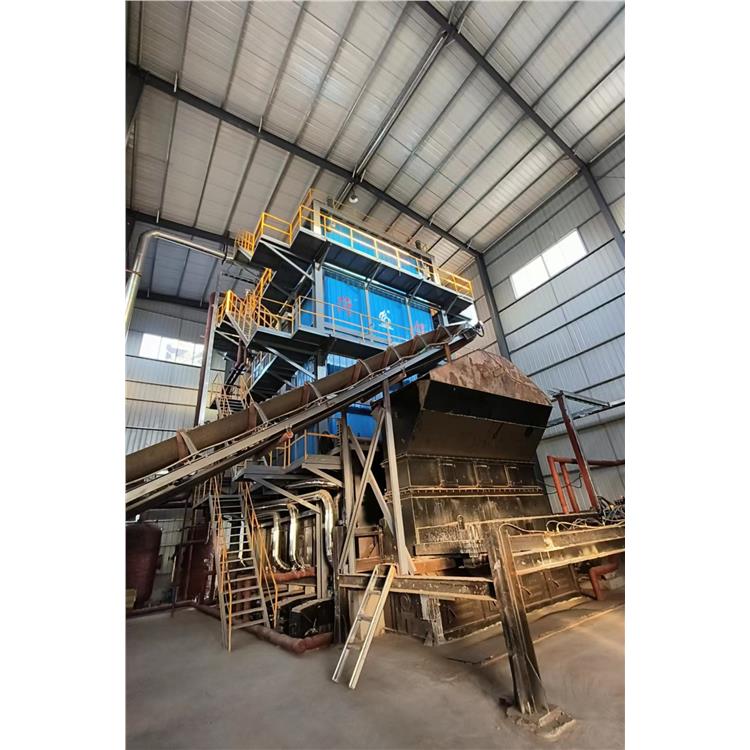


















Shandong Zhongjie Special Equipment Co., Ltd. (formerly Heze Boiler Factory Co., Ltd.) was established in 2001 and is located at No. 2218 Jinnan Road, Development Zone, Heze City. With a registered capital of 50 million yuan and total assets of 500 million yuan, the company has 7 business centers: boilers, deep-freeze containers, pressure vessels, central air conditioning, engineering installation, international trade, and Internet of Things. It has three factory sites on Jinnan Road, East Changjiang Road, and Bohai Road, covering a total area of 200,000 square meters, with the main workshop spanning 83,000 square meters. The company currently employs 710 people, including 247 engineers and technicians, and 82 intermediate-level technicians. In December 2016, it was recognized as a "High-Tech Enterprise" by the Science and Technology Department. In June 2021, it was identified as a "Specialized and New Enterprise in Shandong Province" by the Ministry of Industry and Information Technology. In June 2022, it was recognized as a "Gazelle Enterprise in Shandong Province" and in August 2022, as a "Specialized and New Small Giant Enterprise" by the Ministry of Industry and Information Technology.
Biomass boilers and coal-fired boilers differ in terms of fuel, environmental performance, and sustainability.
Fuel Type: Biomass boilers utilize renewable biomass fuels such as wood chips and straw, whereas coal-fired boilers use fossil fuels like coal. Biomass fuels are renewable and low-carbon, while coal is a finite resource that, when burned, produces a large amount of carbon dioxide and other pollutants.
Environmental Performance: Biomass boilers emit relatively fewer pollutants during the combustion process, such as carbon dioxide, nitrogen oxides, and particulates. In contrast, coal-fired boilers produce more pollutants, including nitrogen oxides, particulates, and heavy metals, which have a significant impact on atmospheric environment and human health.
Sustainability: Biomass fuel is a renewable resource that can be cultivated and recycled within a regenerative cycle, offering good sustainability. Coal, on the other hand, is a finite resource, and its mining and combustion can cause environmental damage.
Combustion Efficiency: The combustion efficiency of biomass boilers is relatively lower due to the complex chemical and physical properties of biomass fuel, which tends to produce more ash and carbon deposits during the combustion process. In contrast, coal-fired boilers have a higher combustion efficiency, as the chemical properties of coal fuel are more stable and the combustion process is more complete.
Technical Requirements: Biomass boilers compared to coal-fired boilers
Energy-saving methods for biomass hot water boilers mainly include the following aspects:
Fuel Selection: Choose biomass fuels in bulk, such as wood chips and straw, ensuring the moisture content and particle size meet the boiler's requirements. Low moisture content and appropriate particle size of the fuel can enhance combustion efficiency and reduce energy waste.
Combustion Optimization: Enhance combustion efficiency through process optimization. Adjust combustion parameters, such as temperature and duration, to achieve more complete combustion and reduce fuel waste.
Reclaimed Heat Utilization: Utilize waste heat from flue gas for energy recovery. By installing a flue gas waste heat recovery unit, reclaim and utilize the remaining heat in flue gas for other heating needs, such as heating and hot water, to enhance energy efficiency.
Boiler Insulation: Enhance the insulation of the boiler to minimize heat loss. Insulate the boiler shell and pipes to reduce heat dissipation and improve the thermal efficiency of the boiler.
Control System Optimization: Optimize the boiler's control system to achieve precise temperature and pressure control. Through rational control strategies, reduce energy waste and enhance the boiler's operational efficiency.
Regular Maintenance: Perform regular maintenance on biomass hot water boilers to ensure normal operation. Clean the combustion chamber, heat exchangers, and other components, inspect and replace worn-out parts, and ensure the boiler's operation.
Energy Management: Establish a scientific energy management system, monitor and analyze energy consumption, and formulate reasonable energy-saving measures. Continuously optimize the operation of boilers through energy management to achieve energy-saving objectives.
By integrating the above energy-saving methods, the energy utilization efficiency of biomass hot water boilers can be improved, energy waste reduced, and the goal of energy conservation and environmental protection achieved.
The occurrence of oil atomization in thermal oil furnaces may be related to the following operations:
Excessive oil pump pressure: If the oil pump pressure of the thermal oil furnace is set too high, exceeding the design requirements, it may lead to oil spitting. Excessive oil pump pressure increases the amount of oil ejected by the nozzle, surpassing the combustion requirements within the furnace.
Excessive nozzle orifice size: An overly large nozzle orifice in a thermal oil furnace leads to excessive oil injection, which can also cause oil spitting. The nozzle orifice size should be selected reasonably based on the combustion requirements within the furnace and design specifications.
Excessive Furnace Temperature: Overheating within the thermal oil furnace, exceeding the design requirements, may lead to oil spraying occurrences. Elevated temperatures reduce the viscosity of the thermal oil, increasing the risk of oil spraying.
Low oil level: A low oil level in the thermal oil furnace can cause the oil pump to intake air, leading to oil atomization. The oil level should be maintained within the normal range to prevent the oil pump from ingesting air.
Oil Pump Failure: Faults in the thermal oil furnace oil pump, such as pump blockage or oil leakage from the pump housing, may lead to oil jetting. Regularly inspect and maintain the oil pump to ensure its proper operation.
Oil Tube Blockage: Oil tube blockage in a heat transfer oil furnace, caused by the accumulation of impurities or sediments inside, may lead to oil spray incidents. Regularly clean and maintain the oil tubes to ensure smooth oil flow.
Improper operation: Failure to follow the correct operational procedure when handling a thermal oil furnace, such as over-adjusting the oil pump pressure or arbitrarily changing nozzles, can lead to oil leakage issues.
To reduce NOx emissions from biomass boilers, the following measures can be taken:
Combustion Control Optimization: By optimizing the combustion process, controlling the combustion temperature and oxygen supply, and reducing NOx emissions. Adjustments can be made to the burner's structure and parameters to ensure a more complete and even combustion, minimizing the formation of hotspots.
Combustion Chamber Design Enhancement: Improved design of biomass boiler combustion chambers, increasing mixing and residence time for better fuel and air blending, reducing NOx emissions.
SNCR Technology: Selective Non-Catalytic Reduction (SNCR) technology involves adding a reductant, such as urea, during the combustion process to react with NOx and convert it into nitrogen and water. This technique can effectively reduce NOx emissions, but requires system design and adjustments based on specific conditions.
SCR Technology: Selective Catalytic Reduction (SCR) technology is a NOx control method that involves adding a catalyst, such as, to flue gas to cause a reaction with NOx, converting it into nitrogen and water. SCR technology can achieve high NOx removal efficiency, but it requires a significant investment and operating cost.
Flue Gas Recirculation (FGR): Flue gas recirculation technology recycles a portion of the flue gas back into the combustion process, reducing combustion temperature and minimizing NOx formation. This technology can achieve NOx control by adjusting the recirculation ratio.
Regular maintenance and cleaning: Regular maintenance for biomass boilers
ZJ Special Equipment adheres to the grand vision of "realizing employees' dreams, creating value for customers, and striving for the prosperity and strength of our motherland," wholeheartedly committed to the development of green energy equipment. We dedicate products and services with high cost-performance to society!
WeChat Official Account

Scan to follow Official Account



















