


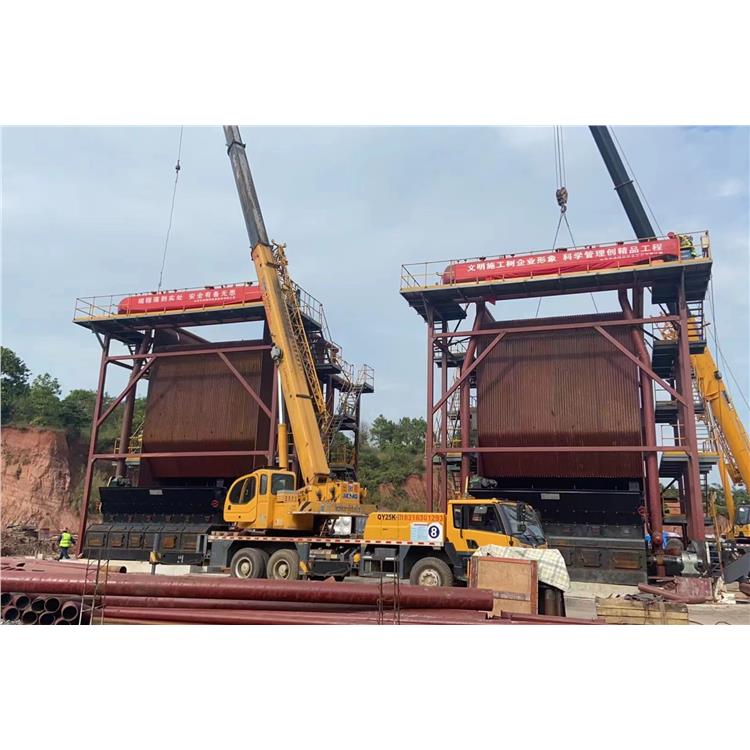

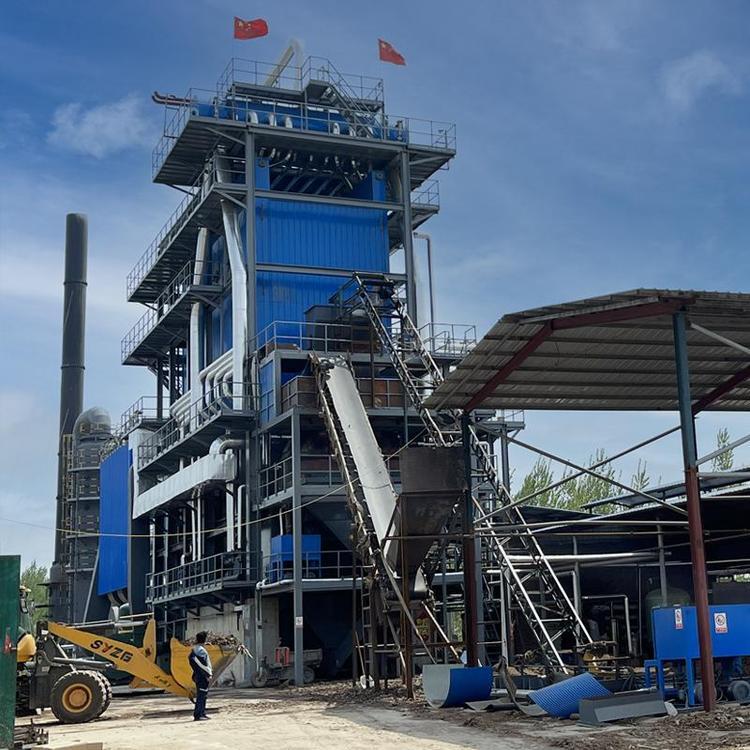
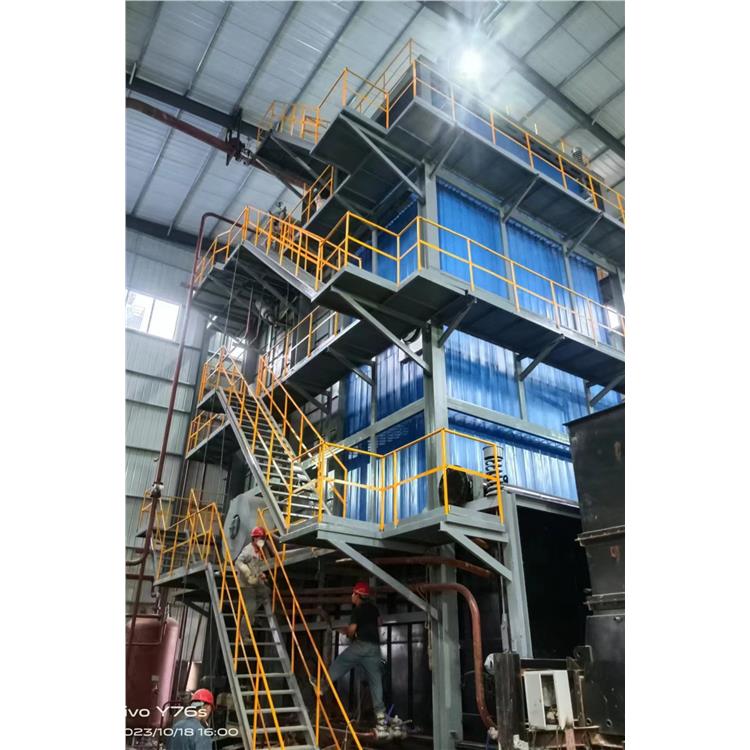


















Shandong Zhongjie Special Equipment's main products include: fuel (gas) boilers, organic heat carrier boilers, biomass boilers, waste heat boilers, and other boiler products; vacuum insulation cryogenic pressure vessels such as LNG tanks, oxygen/nitrogen/argon tanks, and CO2 tanks; pressure vessel products such as denitrification engineering equipment, heat storage and energy storage equipment, and complete chemical equipment; central air conditioning and HVAC equipment such as ground (water) source heat pumps, air source units, water-cooled screw units, and air-cooled modular units. Planned products include large-scale energy centers, LNG transport vehicles, LNG tank containers, and other green energy equipment.
A chain biomass boiler is a common type of biomass boiler, with its working principle and process as follows:
Fuel Supply: Biomass fuel (such as wood chips, straw, etc.) is transported to the combustion chamber of the chain boiler through the feeding system.
Fuel combustion process: The fuel is ignited in the combustion chamber, while the chain boiler's chain system begins to operate. Under the movement of the chain, the fuel gradually advances forward and burns simultaneously in the combustion chamber. During the combustion process, the fuel is fully mixed with air, and the heat energy produced is transferred to the boiler's water or other working medium.
Flue Gas Emission: The flue gas produced by combustion is channeled through the flue system of the combustion chamber and released into the chimney. During the flue gas emission process, it can be treated with flue gas purification equipment to reduce the emitted particulate matter and gas pollutants.
Heat Recovery: The heat generated by combustion is transferred to water or other working substances through the heat exchanger of the boiler, raising their temperature. After heat recovery, the hot water or steam can be used for heating, hot water supply, or other industrial processes.
Control System: Chain biomass boiler typically comes with an automatic control system, which monitors and adjusts parameters such as temperature, pressure, and fuel supply during the combustion process. The control system can be automatically adjusted to meet actual requirements, ensuring the safe and efficient operation of the boiler.
Overall, the biomass chain grate boiler gradually pushes biomass fuel into the combustion chamber through a chain system for combustion. The heat energy is transferred to water or other working substances through a heat exchanger, achieving heat recovery and utilization. This boiler boasts high combustion efficiency and strong fuel adaptability, and is widely used in heating, industrial heating, and other fields.
The damage to the economizer tubes of biomass boilers may include the following scenarios:
Pipe Corrosion: Flue gases produced by biomass combustion contain certain acidic substances, which may lead to corrosion of economizer pipes. Long-term corrosion can result in reduced wall thickness of the pipes, the formation of holes and cracks.
Pipe Blockage: During the biomass combustion process, flue gas may contain some ash and particulate matter, which may deposit and accumulate in the economizer pipe, leading to blockage. Blockage can affect the flow of flue gas and reduce heat exchange efficiency.
Pipe fatigue: The significant temperature and pressure variations in biomass boilers can lead to long-term thermal expansion and contraction, causing fatigue damage to economizer pipes, such as cracks and deformation.
In response to the aforementioned issues, the following solutions can be adopted:
Enhanced Corrosion Protection Measures: Corrosion prevention can be applied internally within the economizer pipes, such as by applying a corrosion-resistant coating or manufacturing the pipes from corrosion-resistant materials, to minimize corrosion occurrence.
Regular Cleaning and Maintenance: Regularly clean and maintain the economizer to prevent the accumulation of ash and particulate matter within the pipes, which can lead to blockages. Methods such as mechanical cleaning and water flushing can be employed.
Enhanced Monitoring and Inspection: Regularly inspect economizers, including pipe thickness measurements and crack detection, to promptly identify issues and implement repair measures.
Optimize operating parameters: Reasonably adjust the operating parameters of the biomass boiler, such as combustion temperature and air volume, to minimize damage to the economizer.
High evaporation rate in biomass pellet boiler fuel may lead to the following issues:
Incomplete combustion: High-volatile fuel releases a large amount of steam during combustion, which lowers the combustion temperature and affects the completeness of the burn. Incomplete combustion leads to heat loss and increased emissions, reducing the boiler's thermal efficiency and environmental performance.
Poor combustion stability: Fuels with high volatility can easily cause instability in the combustion process, leading to issues like flameout and uneven combustion. This may result in unstable boiler operation and affect the stability of hot water supply.
To address issues caused by high-evaporation fuel, the following measures can be taken:
Combustion System Optimization: Optimizing the combustion system of biomass pellet boilers, including aspects such as combustion chamber design, combustion air supply, and mixing. Enhancing combustion completeness and stability through measures like increasing combustion temperature and oxygen supply.
Combustion Control: Utilizes a combustion control system that monitors and adjusts parameters such as temperature and oxygen content in real-time during the combustion process. Adjusts the supply of combustion air based on actual conditions to maintain stability and completeness of combustion.
Fuel Pretreatment: Pre-treat biomass pellets with high volatility content, such as drying and crushing. By reducing the moisture content and particle size of the fuel, the volatility content is minimized, enhancing the combustion efficiency and stability.
Burn Parameters Adjustment: Adjust the boiler's burn parameters, such as combustion temperature and time, based on actual conditions. Through reasonable parameter adjustments, make the combustion process better suited to the characteristics of high-evaporation fuel.
During operation, biomass thermal oil heaters are prone to scaling due to the high temperature of the thermal oil and prolonged use. To prevent the formation of scale, manufacturers typically adopt the following measures:
Selecting the Appropriate Thermal Conductive Oil: Manufacturers choose thermal conductive oils with good thermal stability and antioxidant properties to minimize scale formation. The selection of thermal conductive oil should be reasonably matched based on the actual operating conditions and requirements.
Regulate oil temperature and flow rate: Manufacturers will control the temperature and flow rate of the thermal oil based on its properties and operational requirements. Excessive temperature and rapid flow can lead to scale formation, so appropriate adjustments are necessary.
Regular Cleaning and Maintenance: Manufacturers recommend users to regularly clean and maintain biomass thermal oil heaters to remove scale buildup. Cleaning agents and equipment that can be used during the process, as well as the scale, will help restore the normal operation of the heater.
Install filters and descaling devices: Manufacturers may install filters and descaling devices in biomass thermal oil heaters to filter out impurities and scale from the thermal oil. These devices can effectively prevent scale buildup, extending the lifespan of the thermal oil heater.
Regular Monitoring and Analysis: Manufacturers may advise users to regularly monitor and analyze the properties and quality of the thermal oil, to detect any anomalies promptly and take appropriate actions.
Zhongjie Special Equipment upholds the grand vision of "realizing employees' dreams, creating value for customers, and striving for the prosperity and strength of our motherland," and is dedicated to the development of the green energy equipment industry. We offer society high-quality products and services at competitive prices!
WeChat Official Account

Scan to follow Official Account



















