


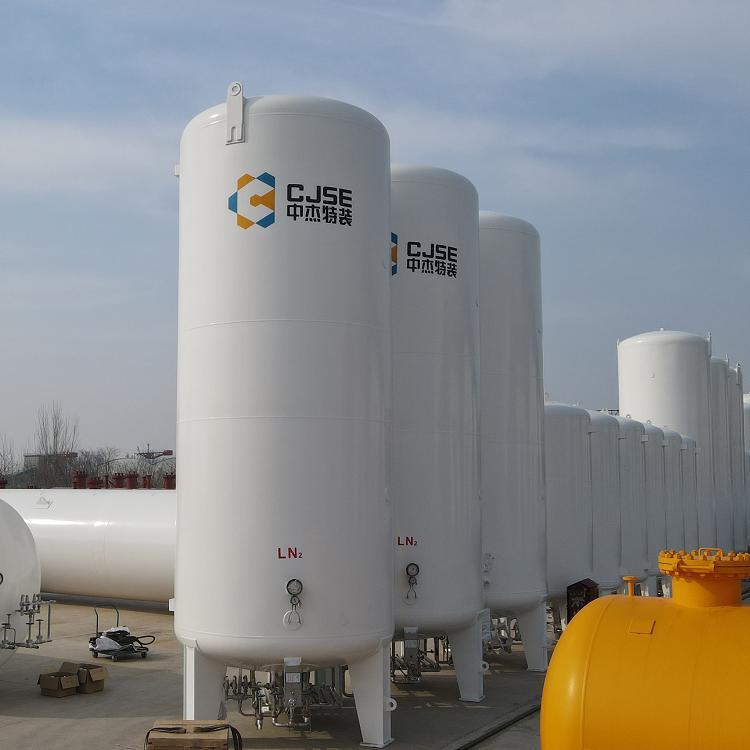

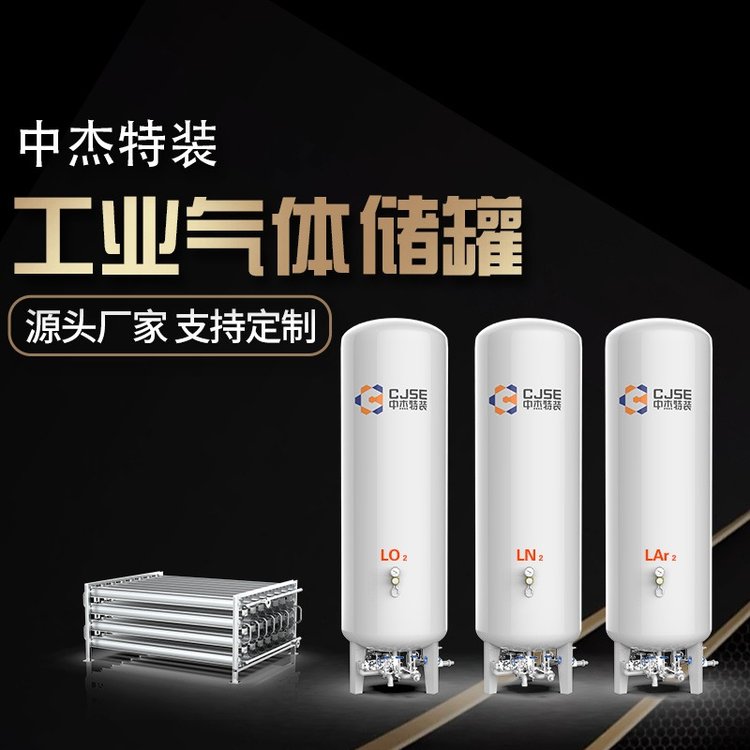
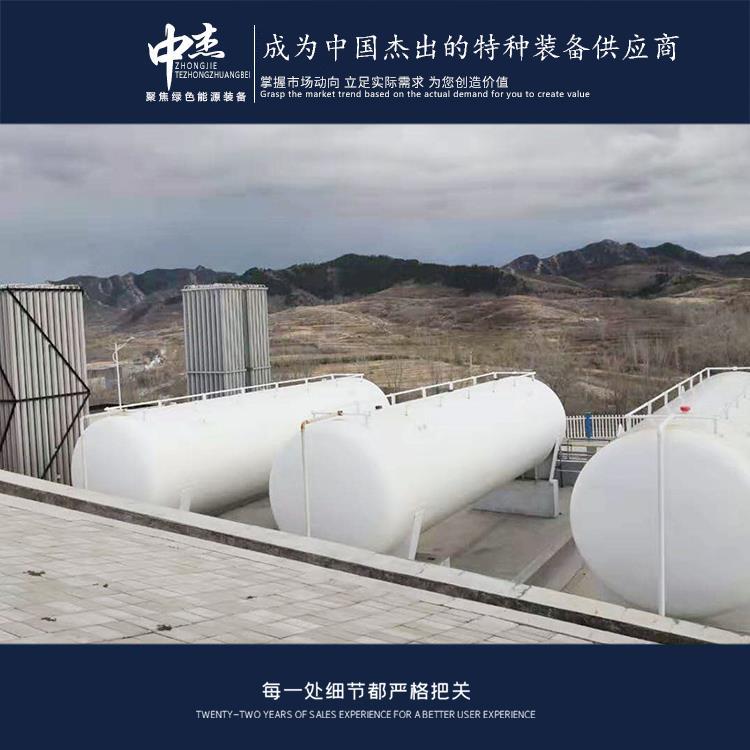


















Shandong Zhongjie Special Equipment (formerly Heze Boiler Factory Co., Ltd.) holds an A-grade boiler manufacturing license, A2-grade pressure vessel manufacturing license, A2-grade pressure vessel design license, B-grade boiler installation license, and GB2/Class, GC2/Class pressure pipeline installation license, as well as a mechanical and electrical equipment installation contracting qualification. It is a member of the China Boiler and Water Treatment Association, the China Chemical Equipment Association, and the council member of the Shandong Equipment Manufacturing Association. The company has also passed the ISO9001 Quality Management System, ISO14001 Environmental Management System, OHSAS18001 Occupational Health and Safety Management System certifications, and the American ASME/U2 certification.
Several factors need to be considered when determining the design pressure and calculated pressure of a liquid oxygen storage tank:
Design Pressure: Design pressure refers to the maximum pressure a tank can withstand under normal operating conditions. When determining the design pressure, factors such as the working pressure range of liquid oxygen, the material strength of the tank, and safety factors must be considered. Generally, the design pressure should be slightly higher than the high working pressure of liquid oxygen to ensure the tank's safety and reliability within the normal operating range.
Calculated Pressure: The calculated pressure refers to the actual working pressure of the tank under the design pressure. The calculated pressure is determined based on factors such as the properties of liquid oxygen, the geometric shape of the tank, and the material strength. The calculated pressure should take into account factors like the expansion coefficient of liquid oxygen, temperature changes, and pressure fluctuations to ensure the safety and stability of the tank under actual operating conditions.
To determine the design pressure and calculated pressure of liquid oxygen storage tanks, it is generally necessary to refer to relevant standards and regulations, such as Standard GB150 "Steel Pressure Vessels" and GB18442 "Technical Conditions for Storage Tanks of Liquid Oxygen, Liquid Nitrogen, and Liquid Argon". These standards and regulations provide detailed design and calculation methods to ensure the safety and reliability of the tanks.
In practical applications, the design pressure and calculated pressure of liquid oxygen storage tanks should be calculated and determined by pressure vessel designers. They will consider various factors such as specific engineering requirements, tank dimensions, and materials to ensure that the tank's design and use comply with relevant safety standards and regulations.
During the process of constructing low-temperature liquid oxygen storage tanks with central oxygen supply, it is necessary to pay special attention to the following aspects:
Safe Operation: Strict adherence to safety procedures and standards must be followed during the storage tank assembly process. Operators should be trained, aware of the properties and safety requirements of liquid oxygen, familiar with the equipment and operational procedures, ensuring the safety of operations.
Fire Prevention Measures: Liquid oxygen contains a high oxygen content, which is prone to causing fires. During the installation process, necessary fire prevention measures should be taken, such as setting up fire barriers, using fire-resistant coatings, and prohibiting open flames, to prevent the occurrence and spread of fires.
Leakage Control: Pay attention to leakage control during the installation process. Oxygen leakage can lead to increased oxygen concentration, which in turn raises the risk of fire and explosion. Be equipped with leak detection and alarm systems to promptly detect and control leaks, and take appropriate emergency measures.
Oxygen Concentration Monitoring: During the installation process, the oxygen concentration around the liquid oxygen storage tank should be monitored regularly. High oxygen concentrations can intensify the combustion of flammable materials, increasing the risk of fire and explosion. Take timely measures to ensure the oxygen concentration remains within a safe range.
Grounding and Static Protection: During the liquid oxygen process, ensure that the storage tank and related equipment are properly grounded to minimize the accumulation and release of static electricity. Use static conductive materials and antistatic equipment to reduce the risks caused by static electricity.
Regular inspections and maintenance: After the installation is completed, the liquid oxygen tank should be regularly inspected and maintained. This includes visual inspections, pressure tests, leak detection, etc., to ensure the tank's safety and stability.
Be mindful that during the installation of the central oxygen supply low-temperature liquid oxygen storage tank, it should be operated by experienced personnel and follow the relevant safety operation procedures and standards. During the installation process, safety risks should be closely monitored, and timely measures should be taken to ensure the safety and stability of the installation.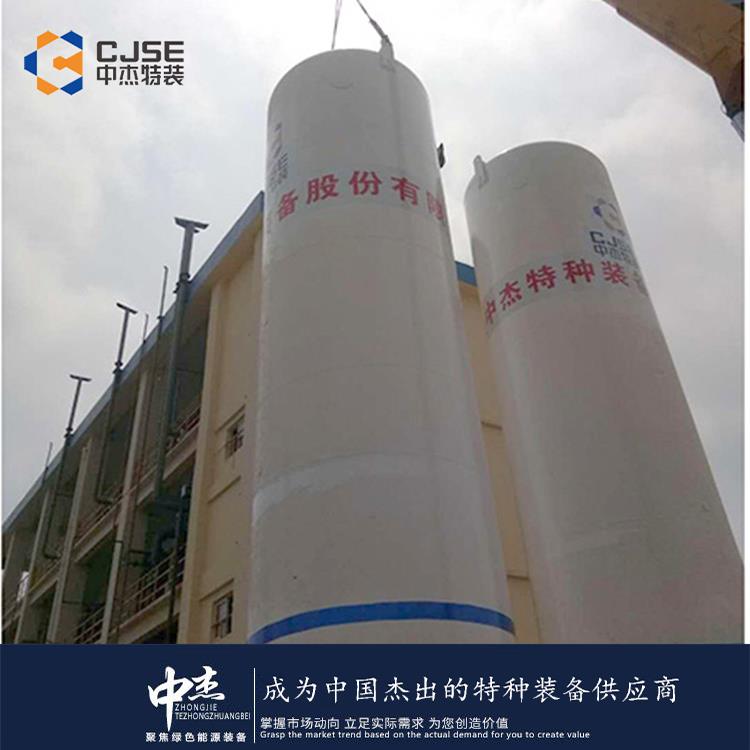
Standard specifications for liquid oxygen tanks may vary by region. Here are examples of some common standards:
US Standards: The American National Standards Institute (ANSI) and the American Petroleum Institute (API) have issued a series of standards for liquid oxygen tanks, such as ANSI/API Standard 2510 "Design and Construction of Liquid Oxygen Tanks" and ANSI/API Standard 2510A "Supplementary Requirements for the Design and Construction of Liquid Oxygen Tanks."
European Standards: The European Committee for Standardization (CEN) has issued a series of standards for liquid oxygen tanks, including EN 13458 "Liquid Oxygen Tanks. Design and Manufacture" and EN 14015 "Vertical Welded Steel Fixed Tanks. Design and Manufacture."
Chinese Standards: The Standardization Administration of the People's Republic of China (SAC) has issued a series of standards for liquid oxygen tanks, such as GB/T 18442 "Design Specifications for Liquid Oxygen Tanks" and GB/T 18443 "Construction and Acceptance Specifications for Liquid Oxygen Tanks."
These standards typically cover requirements for the design, manufacture, installation, operation, maintenance, and inspection of liquid oxygen tanks. They encompass provisions for the tank's structure, materials, safety valves, insulation, leak control, fire protection measures, and safety distances to ensure the safety and reliability of the liquid oxygen tanks.
When designing, manufacturing, and using liquid oxygen tanks, it is essential to adhere to applicable standards and regulations and collaborate with local regulatory authorities and personnel to ensure the tanks meet relevant safety requirements and regulations.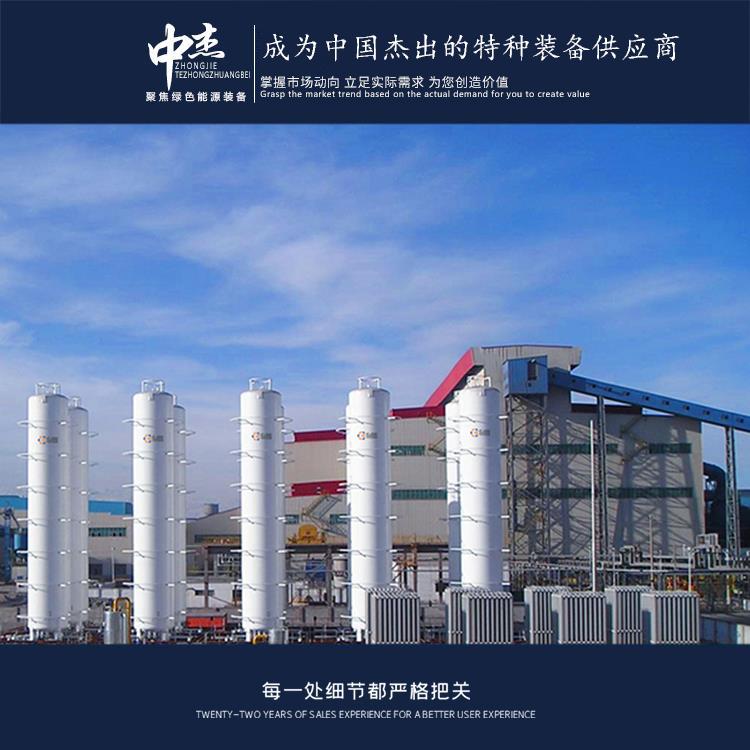
The filling process for liquid nitrogen tanks typically includes the following steps:
Preparation: Ensure the storage tank and filling equipment are in good condition, free from damage or leaks. Check that the insulation layer of the tank is intact and undamaged.
Safety Inspection: Check the tank and its surrounding environment for safety. Ensure there are no flammable materials or other hazardous items in the vicinity of the tank.
Connect equipment: Link the filling equipment to the storage tank. Ensure a tight and reliable connection with no leaks.
Prepare Liquid Nitrogen: Prepare liquid nitrogen supply, ensuring the quality and purity meet the requirements.
Open Valve: Follow the operation instructions of the filling equipment to gradually open the corresponding valves, allowing liquid nitrogen to flow from the supply source into the storage tank.
Regulate Flow: Adjust the flow control valve of the filling equipment as needed to control the inflow speed of liquid nitrogen. Ensure the flow rate is moderate, avoiding too fast or too slow.
Level Monitoring: Continuously monitor the liquid nitrogen level within the tank via a level gauge or other level monitoring devices, ensuring the level is maintained within a safe range.
Stop Filling: Close the valve of the filling equipment when liquid nitrogen fills the tank or reaches the desired level, halting the inflow of liquid nitrogen.
Disconnect: Disconnect the filling equipment from the storage tank and ensure there are no leaks at the connection point.
Safety Inspection: Recheck the tank and its surrounding environment for safety, ensuring there are no leaks or other potential hazards.
Please note that the process described is for general reference only, and the actual filling process may vary depending on the specific type of storage tank and filling equipment. When performing filling operations for liquid nitrogen tanks, please adhere to the relevant operational specifications and safety requirements, and ensure that the operators are properly trained and skilled in safety procedures.
Shandong Zhongjie Special Equipment, welcome customers to our factory for business discussions.
WeChat Official Account

Scan to follow Official Account



















