


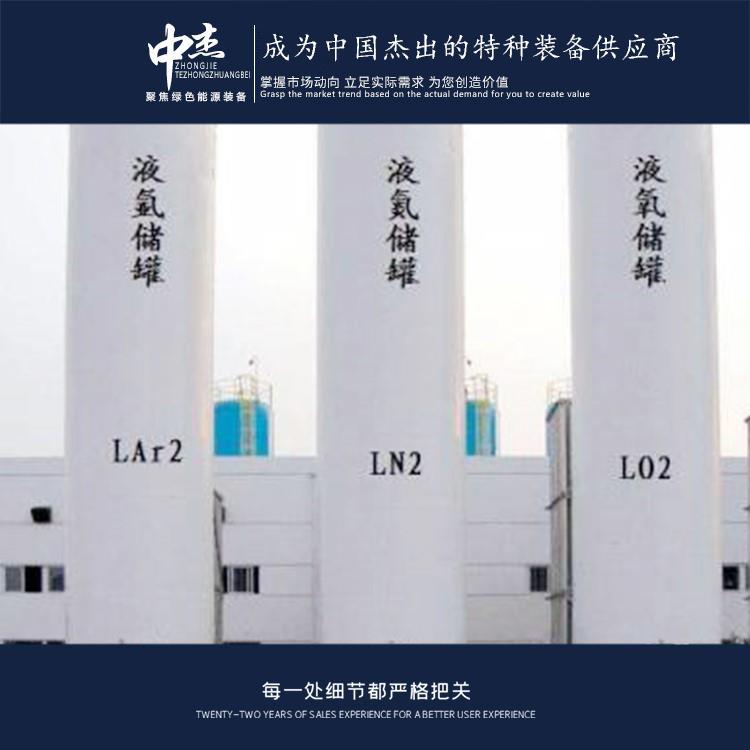

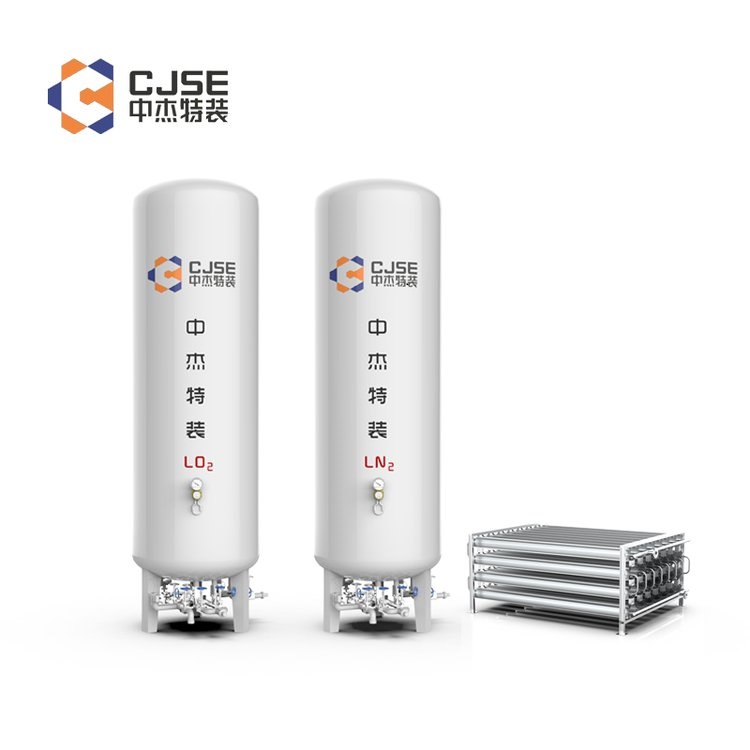
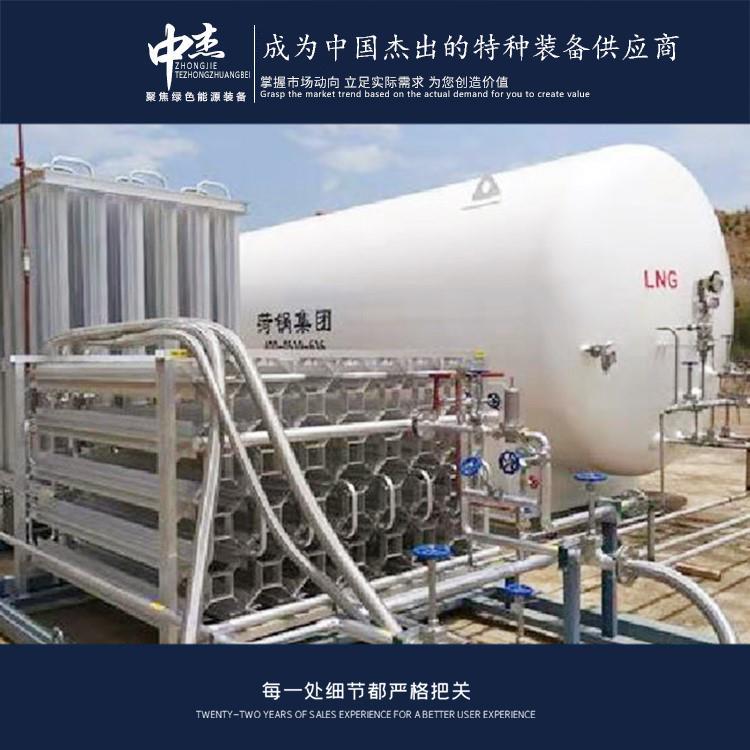


















Shandong Zhongjie Special Equipment's main products include: fuel (gas) boilers, organic heat carrier boilers, biomass boilers, waste heat recovery boilers, and other boiler products; vacuum insulation cryogenic pressure vessels such as LNG tanks, oxygen-nitrogen-argon tanks, and CO2 tanks; pressure vessel products such as denitrification engineering equipment, heat storage and energy storage equipment, and complete chemical equipment; central air conditioning and HVAC equipment such as ground (water) source heat pumps, air source units, water-cooled screw units, and air-cooled modules. Planned products include large-scale energy centers, LNG transport vehicles, LNG tank containers, and other green energy equipment.
Liquid oxygen low-temperature storage tanks are primarily used for storing and supplying liquid oxygen, with their application methods varying based on specific requirements and scenarios. Here are some common applications of liquid oxygen low-temperature storage tanks:
Applications: Liquid oxygen low-temperature storage tanks are widely used in the field for cryogenic preservation of biological samples, cells, tissues, and vaccines. Institutions such as biomedical research organizations and biobanks utilize liquid oxygen low-temperature storage tanks to store and protect these biological materials.
Experimental Research: Liquid Oxygen Low-Temperature Storage Tanks are used to provide low-temperature environments in scientific research and laboratories, for cryogenic preservation and experiments. These tanks play a crucial role in experimental research across various fields, including physics, chemistry, biology, and materials science.
Industrial Applications: Liquid Oxygen Low-Temperature Storage Tanks are used in the industrial field for providing low-temperature cooling, serving processes such as metalworking, welding, and heat treatment. These tanks can achieve low temperatures, enabling metals to reach the required hardness and toughness during processing.
Food Industry: Liquid Oxygen Low-Temperature Storage Tanks are used in the food industry for freezing and refrigerating food items such as frozen meats, frozen fruits, and frozen seafood. The low temperature of liquid oxygen rapidly freezes the food, preserving its freshness and quality.
Liquid oxygen low-temperature storage tanks are used in the field for storing and supplying liquid oxygen as fuel. As a high-energy fuel, liquid oxygen is widely used in the propulsion systems of engines and devices.
During the operation of liquid oxygen low-temperature storage tanks, it is crucial to strictly adhere to relevant safety regulations and operation guidelines to ensure safe operation and use. Liquid oxygen is highly flammable, so fire prevention measures must be implemented when using liquid oxygen low-temperature storage tanks, and it is essential to ensure that there are no ignition sources in the vicinity of the tank.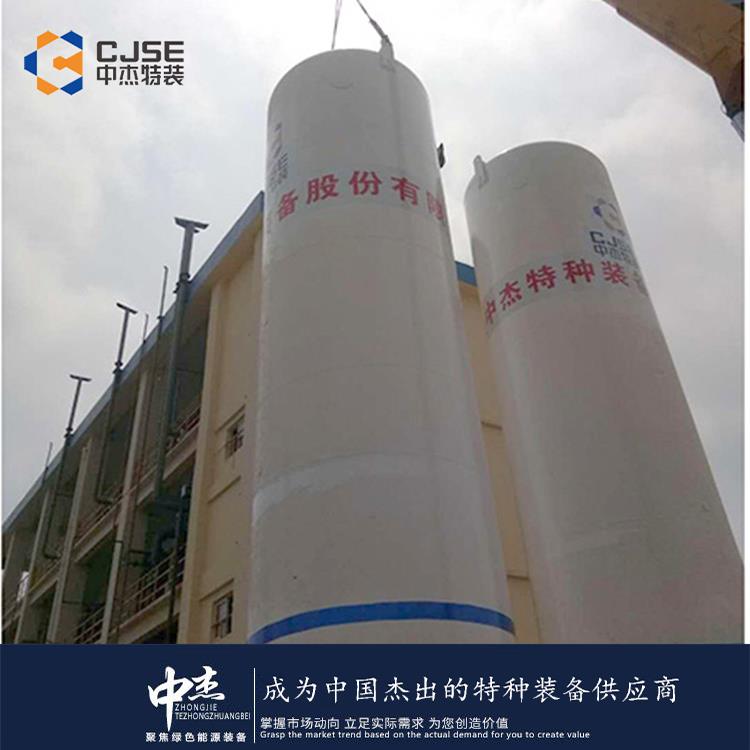
Liquid Argon Storage Tanks are specialized equipment designed for storing liquid argon, featuring the following parameters, functions, and characteristics:
Parameters:
Tank Capacity: The capacity of liquid argon tanks can be customized to meet requirements, with various sizes available such as 500L, 1000L, 2000L, and so on.
Working Pressure: The working pressure of liquid argon tanks is typically at atmospheric pressure or slightly above.
Storage Temperature: Liquid argon tanks are typically stored at -196 degrees Celsius, which is the boiling point of argon, maintaining its liquid state.
Feature:
Store Liquid Argon: Liquid argon tanks are primarily used for storing liquid argon, maintaining its liquid state at low temperatures for supply and usage.
Insulation: The liquid argon storage tank is equipped with thermal insulation materials and structural design to minimize heat conduction and retention, maintaining the low temperature state of liquid argon.
Safety Control: The liquid argon storage tank is equipped with safety devices such as pressure relief valves and level alarms to ensure safe operation and use.
Features:
High Purity Supply: Liquid Argon Tanks offer high purity liquid argon for various applications including cryogenic storage, gas shielding welding, semiconductor manufacturing, and more.
Long-term Storage: Liquid argon tanks can store liquid argon for extended periods, thereby extending its service life. By controlling the temperature inside the tank and the performance of the insulation layer, the evaporation and oxidation of liquid argon are slowed down.
Multi-Disciplinary Applications: Liquid argon storage tanks are widely used in industries such as cryogenics and semiconductor manufacturing.
Environmental Protection and Energy Saving: Liquid argon storage tanks enable efficient storage and utilization of liquid argon, reducing energy waste and environmental pollution.
Overall, liquid argon tanks are designed for storing liquid argon, thermal insulation, and safety.
Prior to filling the liquid nitrogen tank, the following checks must be conducted:
Tank exterior inspection: Check for any obvious damage, deformation, or corrosion on the tank's exterior, including the tank wall, valves, pipes, and joints.
Sealability Inspection: Inspect the storage tank's sealing performance, including checking for leaks at valves and pipe connections, to ensure the tank maintains good sealing integrity.
Pressure Check: Verify that the tank's pressure gauge is functioning properly and that the pressure is within the normal range to ensure the tank operates normally.
Level Inspection: Check the liquid level in the tank to ensure it is within the normal range, avoiding issues caused by levels that are too high or too low.
Insulation Layer Inspection: Verify the integrity of the storage tank's insulation layer, checking for any damage or detachment to ensure effective insulation and minimize evaporation losses of liquid nitrogen.
Leakage Inspection: Check for signs of liquid nitrogen leakage around the tank, including frost, ice, or liquid nitrogen stains on the ground.
Safety Equipment Inspection: Verify that the safety equipment of the storage tank, such as leak detectors, alarm systems, and safety valves, is functioning properly to ensure the tank's safety.
Cleaning Inspection: Ensure the interior of the tank is clean, removing accumulated impurities and dirt to maintain the tank's cleanliness and hygiene.
The above lists the checks required prior to filling the liquid nitrogen tank, ensuring the safe operation of the tank and proper storage of liquid nitrogen. During the inspection process, strictly adhere to the relevant operational procedures and safety requirements to ensure operational safety.
The inspection of liquid nitrogen tanks refers to the regular checks and maintenance of the tanks to ensure their safe operation and efficient use. Here is a common-sense introduction to the inspection of liquid nitrogen tanks:
Appearance Inspection: Regularly inspect the exterior of the storage tank, including the tank body, insulation layer, valves, and pipelines, etc. Note any cracks, corrosion, wear, or other damage. Also, check that the insulation layer is intact with no breaks or loose parts.
Level Check: Regularly inspect the liquid nitrogen tank's level to ensure it remains within the normal range. This can be done using level gauges or level scales, among other equipment.
Pressure Check: Inspect the tank's pressure to ensure it's within the safe range. Pressure gauges or pressure sensors can be used for the check.
Leak Inspection: Check for signs of liquid nitrogen leakage around the storage tank, such as vapor fog, frost, or freezing. If leakage is detected, take prompt measures to repair it.
Valve and Pipe Inspection: Verify that the valves and pipes of the storage tank are functioning properly, without any gas leaks or blockages. Ensure the tightness and unobstructed flow of the valves and pipes.
Safety Device Inspection: Check the storage tank's safety devices, such as pressure relief valves, temperature sensors, and level alarms, to ensure they are functioning properly.
Maintenance Records: Timely record the inspection results and maintenance records of the storage tank, including liquid level, pressure, insulation status, leakage conditions, etc. These records help monitor the tank's operational condition and identify issues promptly.
Note that inspections of liquid nitrogen tanks must comply with relevant safety regulations and operating guidelines. Liquid nitrogen is highly flammable at low temperatures, so operators must wear appropriate personal protective equipment and ensure the operation area is free of any ignition sources. Regular inspections help identify issues promptly and take corrective measures, ensuring the safe and efficient operation of the tank.
Zhongjie Special Equipment upholds the great vision of "realizing employees' dreams, creating customer value, and striving for the prosperity and strength of our motherland," and is dedicated to the development of the green energy equipment industry. We commit to society with high-quality, cost-effective products and services!
WeChat Official Account

Scan to follow Official Account



















