


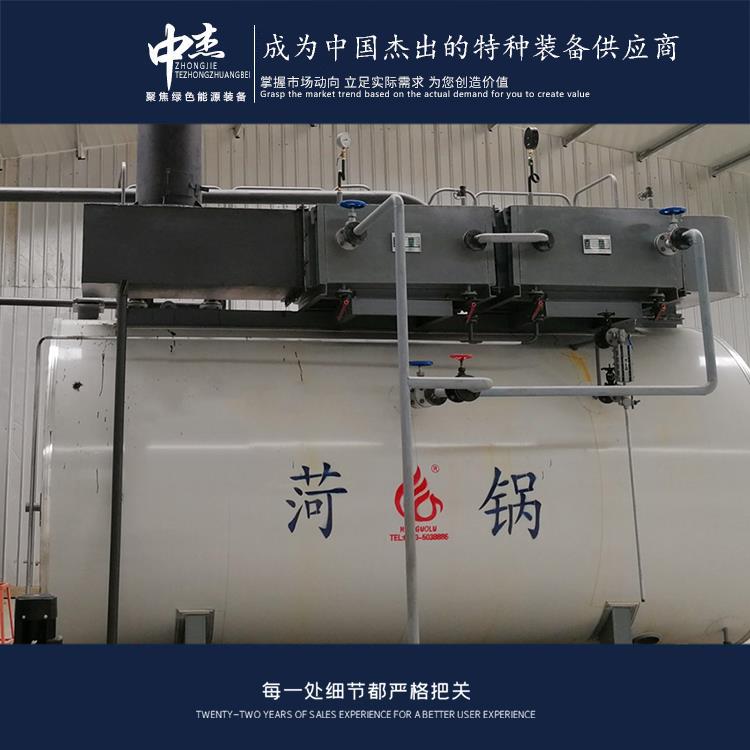

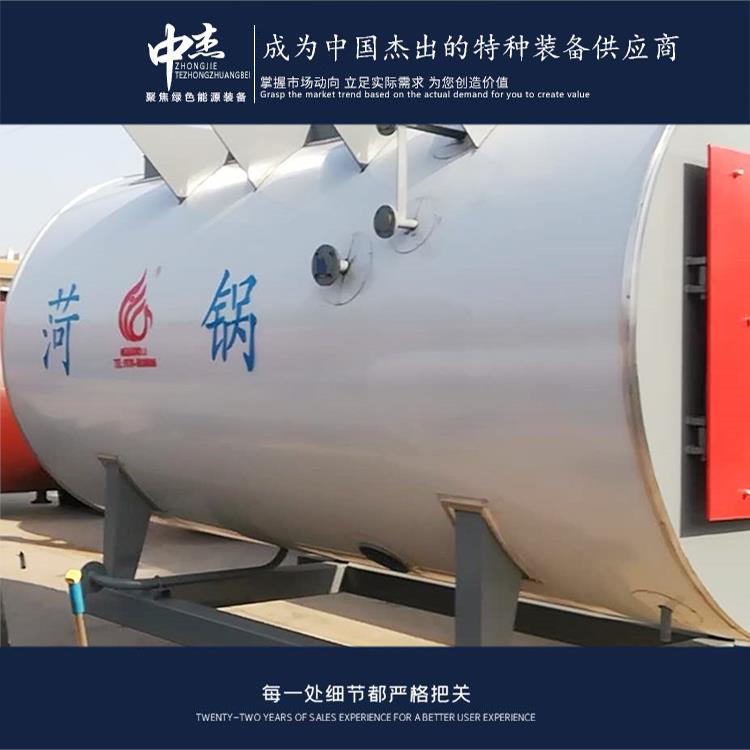
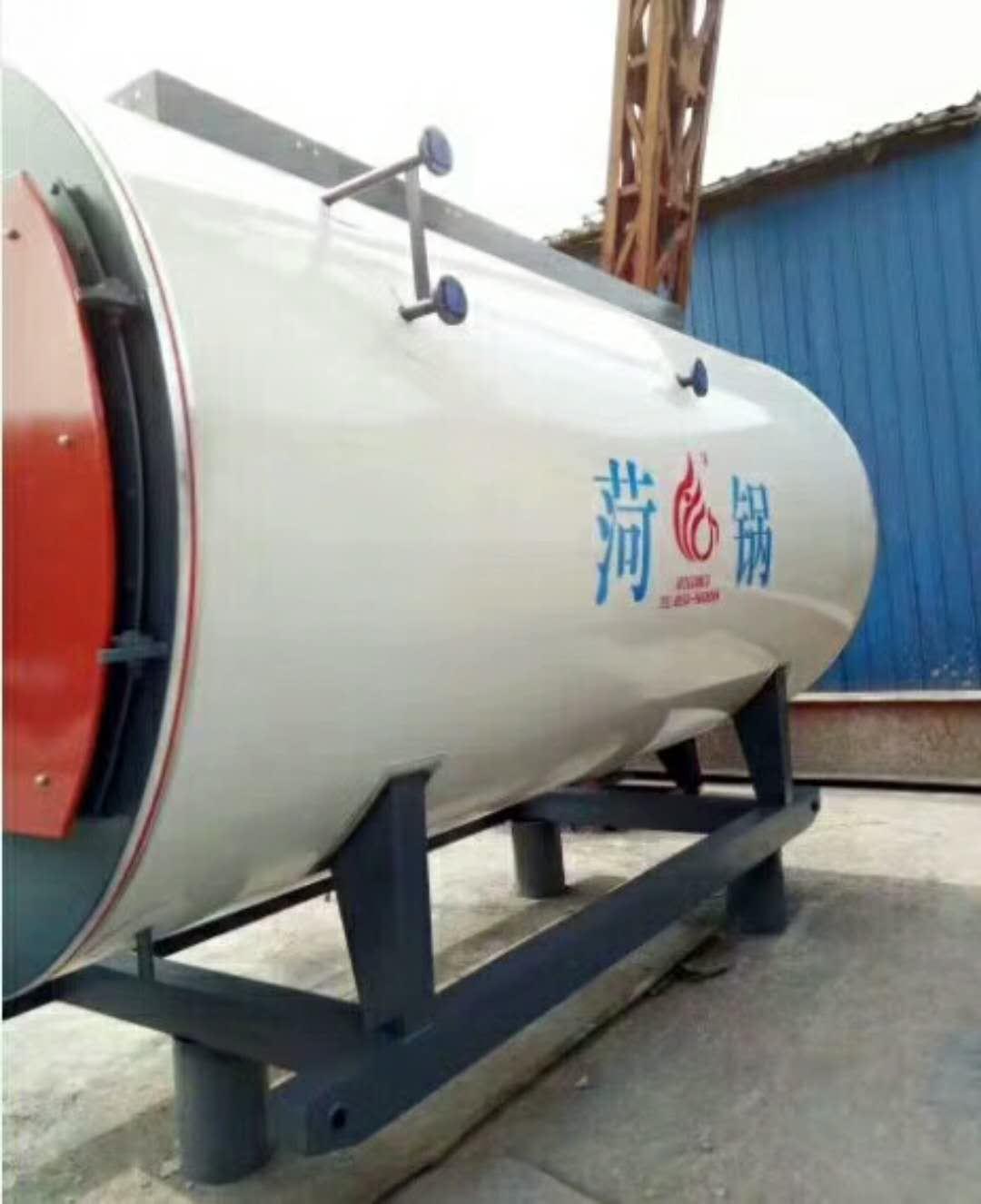


















Shandong Zhongjie Special Equipment's main products include: fuel (gas) boilers, organic heat carrier boilers, biomass boilers, waste heat recovery boilers, and other boiler products; vacuum insulation cryogenic pressure vessels such as LNG tanks, oxygen/nitrogen/argon tanks, and CO2 tanks; pressure vessel products such as denitrification engineering equipment, heat storage and energy storage equipment, and complete chemical equipment sets; central air conditioning and HVAC equipment like ground (water) source heat pumps, air source units, water-cooled screw units, and air-cooled modular units. Planned products include large-scale energy centers, LNG transport vehicles, LNG tank containers, and other green energy equipment.
The flow rate standard for heat-conducting oil in the oil tubes of a thermal oil furnace is typically determined by specific application and equipment requirements, with no unified fixed value. Generally, the flow rate of the heat-conducting oil within the oil tubes should be maintained within a reasonable range to ensure the normal operation of the equipment and the heat transfer efficiency. Excessive flow rate of the heat-conducting oil can lead to issues such as increased system pressure loss and pump power consumption, increased pipeline friction loss leading to energy loss, and increased system noise and vibration. On the other hand, a low flow rate of the heat-conducting oil can result in insufficient heat transfer, affecting the thermal efficiency of the equipment, prolonged stay of the heat-conducting oil in the pipeline, which can lead to oxidation and thermal decomposition, impacting the lifespan of the oil, and the formation of carbon deposits in the pipeline, increasing resistance and affecting fluid flow. Therefore, when designing and operating the thermal oil furnace system, it is necessary to consider specific equipment parameters, the properties of the heat-conducting oil, and pipeline layout, among other factors, to determine the appropriate flow rate of the heat-conducting oil. Typically, the flow rate should be within the range of 0.5-2.0 m/s, but the specific values need to be adjusted and optimized based on actual conditions. In practice, the flow rate of the heat-conducting oil can be controlled by monitoring and adjusting the pump flow rate and pipeline resistance to meet the thermal energy demands and operational requirements of the equipment.
Chemical cleaning of industrial boilers is a common method used to effectively remove dirt and scale from inside the boiler, enhancing heat exchange efficiency and extending the boiler's lifespan. Below are the general steps and methods for industrial boiler chemical cleaning:
Preparation: Turn off the boiler's power and gas supply, drain the water and steam from the boiler, and ensure the boiler is in a safe condition. Prepare the required chemical cleaning agents and equipment.
Cleaning Agent Selection: Choose the appropriate chemical cleaning agent based on the boiler's material and the nature of the dirt. Common cleaning agents include acidic cleaners, alkaline cleaners, and chelating agents.
Cleaning Agent Circulation: Dissolve the cleaning agent in a sufficient amount of water and pump it into the boiler. Determine the circulation time and temperature based on the boiler's size and the extent of the dirt.
Cleaning Agent Action: During the circulation, the cleaning agent reacts chemically with the dirt inside the boiler, dissolving and decomposing it. Acidic cleaners can remove rust and scale, while alkaline cleaners can remove grease and organic matter.
Rinsing and Neutralizing: After the cleaning agent circulation is complete, rinse the boiler with clean water to flush out the cleaning agent and dissolved dirt. Simultaneously, use a neutralizer to neutralize any remaining acidic or alkaline substances, ensuring the boiler's neutrality.
Inspection and Maintenance: After cleaning, inspect the boiler to ensure the cleaning effectiveness and normal operation. Perform necessary maintenance and upkeep as required.
Points to Note When Conducting Industrial Boiler Chemical Cleaning:
1. Strictly follow the usage instructions and safety operating procedures for chemical cleaning agents to ensure the safety of the operators.
2. Select the appropriate cleaning agent and method based on the boiler's material and the cleaning agent's properties.
3. Control the concentration, temperature, and circulation time of the cleaning agent to avoid unnecessary damage to the boiler.
4. Monitor the concentration and pH value of the cleaning agent in a timely manner during the cleaning process, adjusting the cleaning conditions as needed.
5. Flush the boiler after cleaning to ensure all cleaning agents and dirt are completely removed.
6. After cleaning, carry out maintenance and upkeep promptly to ensure the normal operation and long-term use of the boiler.
In textile processing factories, common types of boilers include the following:
- Steam Boiler: A steam boiler is one of the commonly used types in textile processing factories. It can produce high-temperature and high-pressure steam for processes such as heat treatment, dyeing, boiling, etc. in the textile processing. Steam boilers have advantages such as rapid heating, stability, and high efficiency.
- Hot Water Boiler: Suitable for low-temperature textile processing techniques like washing and drying, hot water boilers provide a stable supply of hot water with high temperature control accuracy and low energy consumption.
- Hot Air Boiler: Used for drying processes in textile processing, hot air boilers transfer heat energy to textiles through the hot air produced by combustion, achieving quick drying. They have the advantages of fast heating and high thermal efficiency.
When selecting the appropriate boiler type for a textile processing factory, consider the following factors:
- Processing Requirements: Determine the required heat medium (steam, hot water, hot air) and parameters such as working temperature and pressure based on the specific processing requirements of the factory.
- Energy Costs and Efficiency: Consider the energy consumption and efficiency of different boiler types and choose one that meets processing needs with high energy utilization efficiency.
- Environmental Protection Requirements: Pay attention to the emission standards and environmental performance of the boiler and select the appropriate type.
- Maintenance and Operation: Evaluate the maintenance requirements and operational ease of the boiler type to ensure smooth and cost-effective operation.
Selecting the appropriate gas steam boiler requires considering the following factors: Steam Demand: First, determine your steam requirements, including steam pressure and evaporation capacity. Based on actual needs, choose a boiler with a rated evaporation capacity and steam pressure to ensure it meets your production or heating requirements. Fuel Type: Gas steam boilers use gas as fuel, with common types including natural gas, LPG, etc. Consider available gas resources and costs when selecting the appropriate fuel type. Boiler Efficiency: The efficiency of the boiler directly impacts energy utilization and operating costs. Choosing a high-efficiency gas steam boiler can reduce energy consumption and operating costs. Pay attention to the boiler's thermal and combustion efficiency to select a more efficient model. Boiler and Manufacturer Quality: Opt for a gas steam boiler from a reputable manufacturer to ensure product quality and reliability. Understand the manufacturer's production capacity, after-sales service, and technical support, and choose a reliable supplier. Safety and Environmental Protection: Focus on the safety and environmental performance of the boiler. Ensure the boiler has necessary safety protection devices and monitoring systems, as well as a combustion system that meets environmental standards to minimize environmental impact. Economic Viability: In addition to purchase costs, consider operating and maintenance costs. Consider the overall energy consumption of the boiler.
Our company attaches great importance to technological innovation and R&D design. We have one municipal-level enterprise technology center in Heze City, equipped with non-destructive testing, physical and chemical testing, welding testing, hydrostatic testing, and other testing facilities. We have over 600 types of equipment, including CNC machine tools, X-ray flaw detectors, digital ultrasonic flaw detectors, mechanical property testing machines, chemical analyzers, spectrometers, tensile testing machines, plasma welding machines, and more. The key products and technologies we have developed, such as temperature and pressure vessel welding, biomass boiler emissions reduction, and waste heat utilization, have successively been selected for multiple Shandong Provincial Department of Industry and Information Technology science and technology innovation projects, Shandong Provincial key projects, and Heze City innovation and excellence projects. We have accumulated 27 authorized utility models, 16 authorized inventions, participated in drafting 2 standards, 2 industry standards, and registered 15 trademarks. The technical team of our company, in collaboration with Professor Yajiang Li of Shandong University, has developed deep cryogenic container processing technology using the international plasma arc + filler wire tungsten inert gas arc welding (PAW-GTAW) technology. The provincial-level scientific and technological achievement identification has confirmed that the technology level in the field of deep cryogenic container manufacturing has reached an international standard.
Choose ZJET Customization, let's create brilliance together!
WeChat Official Account

Scan to follow Official Account



















