


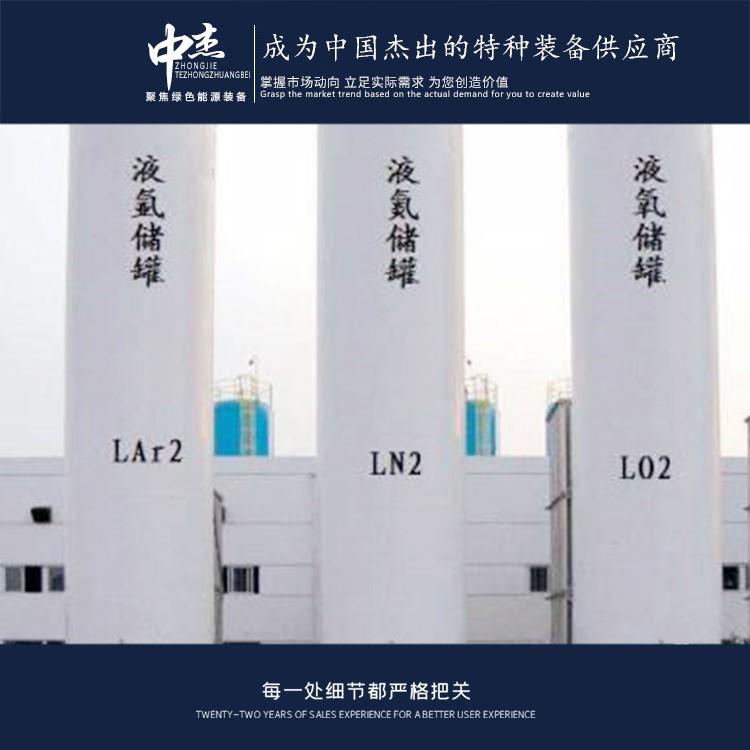

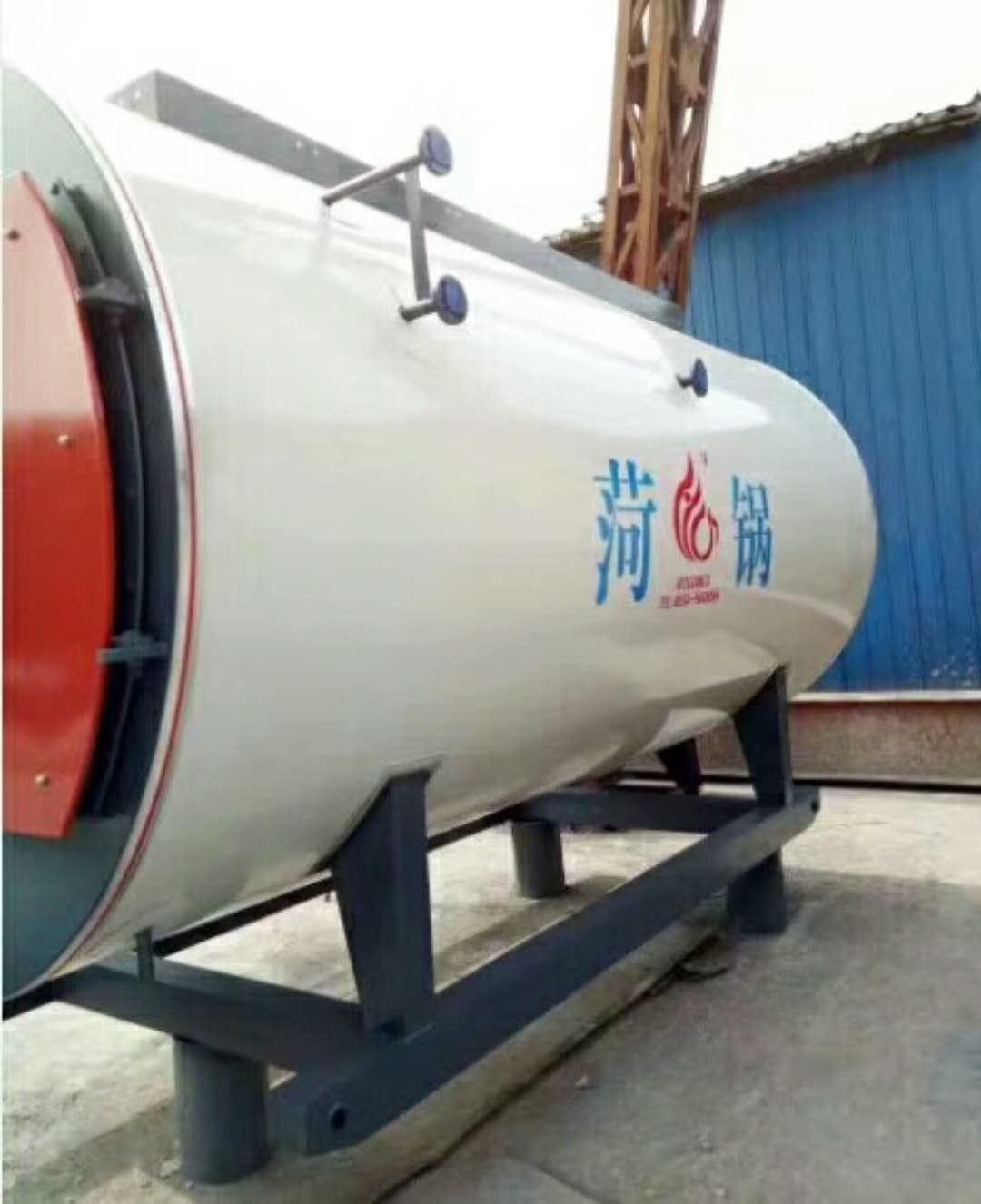
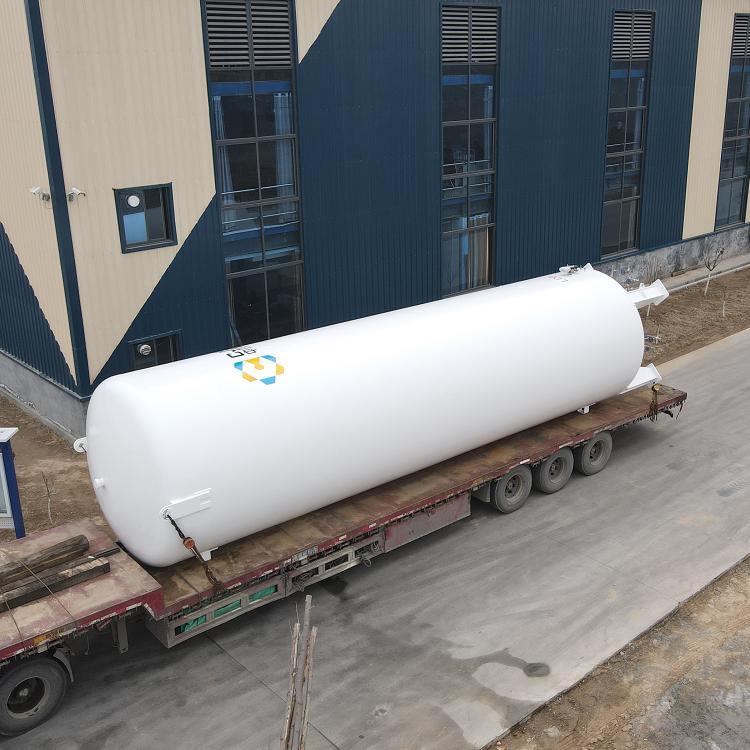


















Shandong Zhongjie Special Equipment's main products include: fuel (gas) boilers, organic heat carrier boilers, biomass boilers, waste heat boilers, and other boiler products; vacuum insulation cryogenic pressure vessels such as LNG tanks, oxygen/nitrogen/argon tanks, and CO2 tanks; pressure vessel products such as denitrification engineering equipment, heat storage and energy storage equipment, and complete chemical equipment sets; central air conditioning and HVAC equipment such as ground (water) source heat pumps, air source units, water-cooled screw units, and air-cooled modular units. Planned products include large-scale energy centers, LNG transport vehicles, LNG tank containers, and other green energy equipment.
When storing CO2 tanks, the following requirements must be followed to ensure safety and effectiveness:
Ventilation: Tanks should be stored in well-ventilated areas to avoid the accumulation of CO2 gas. Ensure adequate air circulation around the tanks to prevent gas buildup and asphyxiation risks.
Fire and Explosion Prevention: Keep tanks away from fire sources, high-temperature areas, and flammable materials. Avoid open flame operations near tanks to prevent fire and explosion hazards.
Sunlight Protection: Store tanks in areas shielded from direct sunlight to prevent overheating and pressure increase. Direct sunlight can raise tank temperatures, increasing the risk of leakage and explosion.
Mechanical Damage Prevention: Keep tanks away from machinery and heavy objects to avoid collisions and damage. Mechanical damage may cause tank leakage or破裂, leading to safety incidents.
Identification and Warning Signs: Clearly label tanks with the type of stored gas, pressure, and other relevant information. Set up warning signs around the tanks to alert personnel to their presence and related safety precautions.
Regular Inspections: Conduct regular checks of tank appearance, valves, and connections to ensure they are undamaged. Take immediate repair actions if any anomalies are detected.
Storage Capacity Control: Control the storage capacity of tanks to prevent exceeding the rated capacity. Exceeding the rated capacity can cause excessive tank pressure, increasing safety risks.
Storage Records: Document tank usage, including filling dates, filling quantities, and inspection records. Regularly inspect and maintain tanks, and keep related records.
It's important to note that specific storage requirements may vary depending on tank type and application. When storing CO2 tanks, operate in accordance with relevant specifications and standards and consult experts to ensure safety and effectiveness.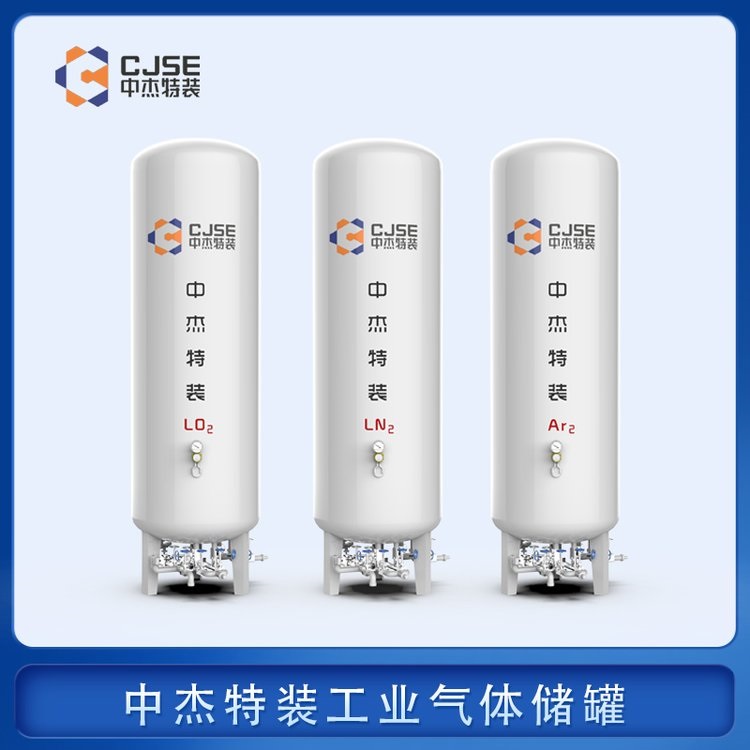
When selecting a carbon dioxide tank support, consider the following factors: Load Capacity: The design and selection of the support should be able to bear the weight and pressure of the tank. The load-bearing capacity of the support should be determined based on the tank's size, weight, and working conditions. Stability: The support should have sufficient stability to prevent tilting or collapse of the tank during use. The design of the support should take into account the center of gravity location and changes of the tank to provide stable support. Corrosion Resistance: As carbon dioxide has some corrosive properties, the material choice for the support should have good corrosion resistance to prevent corrosion and damage. Installation and Maintenance Convenience: The design of the support should consider the ease of installation and maintenance to facilitate the installation, adjustment, and maintenance of the tank. Compliance with Standards and Regulations: The design and selection of the support should comply with relevant standards and specifications, such as Standard GB150 "Steel Pressure Vessels." Additionally, other related factors can be considered, such as cost, reliability, and durability. When selecting a support, consult engineers or consulting companies for advice and guidance.
For accessories of CO2 storage tanks, such as valves, pipes, and pressure relief devices, maintenance and protection are crucial. Here are some suggestions:
Regular Inspection: Regularly check the appearance and operational condition of the accessories to ensure no damage, loose parts, or leaks. Pay special attention to the sealing performance and operational flexibility of valves.
Cleaning and Maintenance: Regularly clean the accessories to remove dirt and impurities on the surface. Use appropriate cleaning agents and tools, avoiding corrosive substances.
Lubrication Maintenance: For accessories requiring lubrication, such as valve pistons and stems, perform regular lubrication maintenance. Use suitable lubricants to ensure the smooth operation and sealing performance of valves.
Sealing Inspection: Regularly check the sealing performance of the accessories, such as valve seals and sealing surfaces. Replace any damaged or worn-out sealing parts promptly.
Corrosion Protection: For accessories prone to corrosion, such as pipes and valves, take corrosion protection measures, such as applying anti-corrosion coatings or wrapping with anti-corrosion materials.
Regular Calibration: Calibrate measuring equipment such as level sensors and pressure sensors regularly to ensure accuracy and reliability.
Regular Maintenance: Develop a regular maintenance plan based on the usage and requirements of the accessories, including cleaning, lubrication, and inspections, to ensure long-term stable operation.
Storage and Transportation Precautions: For spare parts or accessories that require replacement, pay attention to moisture-proof, shock-proof, and damage-proof during storage and transportation to avoid affecting their normal use.
The above suggestions are for the maintenance and protection of CO2 storage tank accessories. Specific operations should be based on the characteristics and requirements of the accessories and comply with relevant regulations.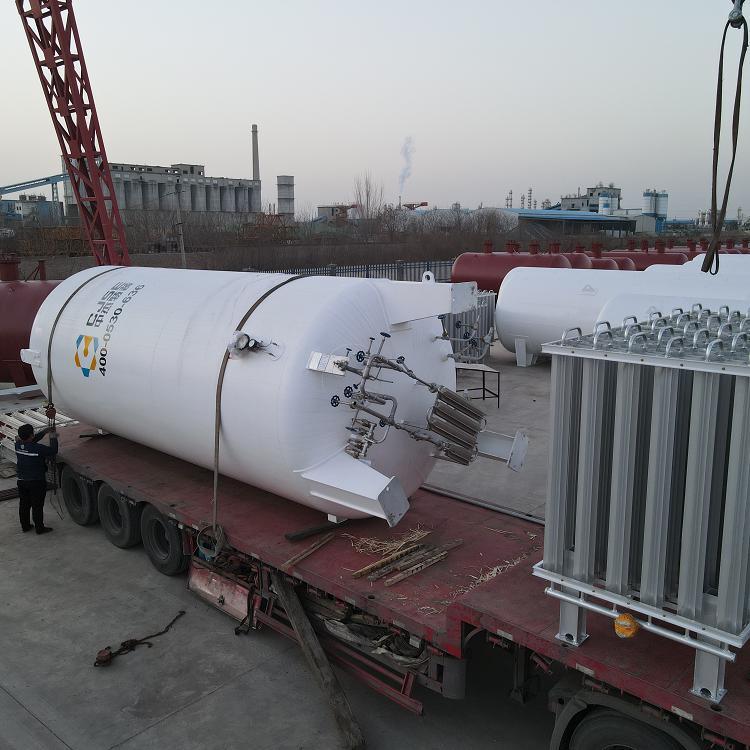
The quality of CO2 storage tanks is influenced by several factors: Material Quality: The quality of the tank's material directly impacts its corrosion resistance, strength, and sealing performance. Common materials include carbon steel and stainless steel. Choosing high-quality materials can enhance the tank's quality and lifespan. Manufacturing Process: The manufacturing process significantly affects the tank's quality. The welding, heat treatment, and surface treatment during production must comply with relevant standards and regulations to ensure structural integrity and performance stability. Design Standards: The tank's design must adhere to relevant design specifications and standards, such as industry standards. A well-designed tank ensures sufficient strength and safety under normal operating conditions. Safety Components: Safety components of the tank, such as safety valves, pressure sensors, and temperature sensors, play a crucial role in quality and safety. Selecting high-quality components and installing and adjusting them correctly can improve the tank's quality and safety. Inspection and Testing: Inspections and tests are required during the manufacturing process, including material inspections, weld seam testing, and pressure testing. These tests ensure the tank meets quality requirements and complies with safety standards. Usage and Maintenance: The tank's usage and maintenance also impact its quality. Proper use and regular maintenance can extend the tank's lifespan and maintain its optimal working condition. In summary, the quality of CO2 storage tanks is influenced by various factors, including material quality, manufacturing process, design standards, safety components, inspections and testing, and usage and maintenance. When selecting and using storage tanks, attention should be given to these factors to ensure quality and safety.
Our company attaches great importance to technological innovation and research and development. We have one municipal-level enterprise technology center in Heze City, equipped with testing facilities for non-destructive testing, physical and chemical tests, welding tests, hydrostatic tests, etc. We have over 600 various instruments and equipment, including CNC machine tools, X-ray flaw detectors, digital ultrasonic flaw detectors, mechanical property test machines, chemical analyzers, spectrometers, tensile testing machines, plasma welding machines, and more. The key products and technologies we have developed, such as temperature and pressure vessel welding, biomass boiler emission reduction, and waste heat utilization, have successively been selected for multiple Shandong Provincial Department of Industry and Information Technology science and technology innovation projects, Shandong key projects, and Heze City innovation and excellence projects. We have accumulated 27 authorized utility models, 16 authorized inventions, participated in drafting 2 standards, 2 industrial standards, and registered 15 trademarks. The technical team, in collaboration with Professor Li Yajiang of Shandong University, has jointly developed deep cryogenic vessel processing technology using the international plasma arc + filler wire tungsten inert gas arc welding (PAW-GTAW) technology. After the provincial-level scientific and technological achievement identification, the technology level has reached an international standard in the field of deep cryogenic vessel manufacturing. Choose Zhongjie Special Equipment, and let's create brilliance together!
WeChat Official Account

Scan to follow Official Account



















