


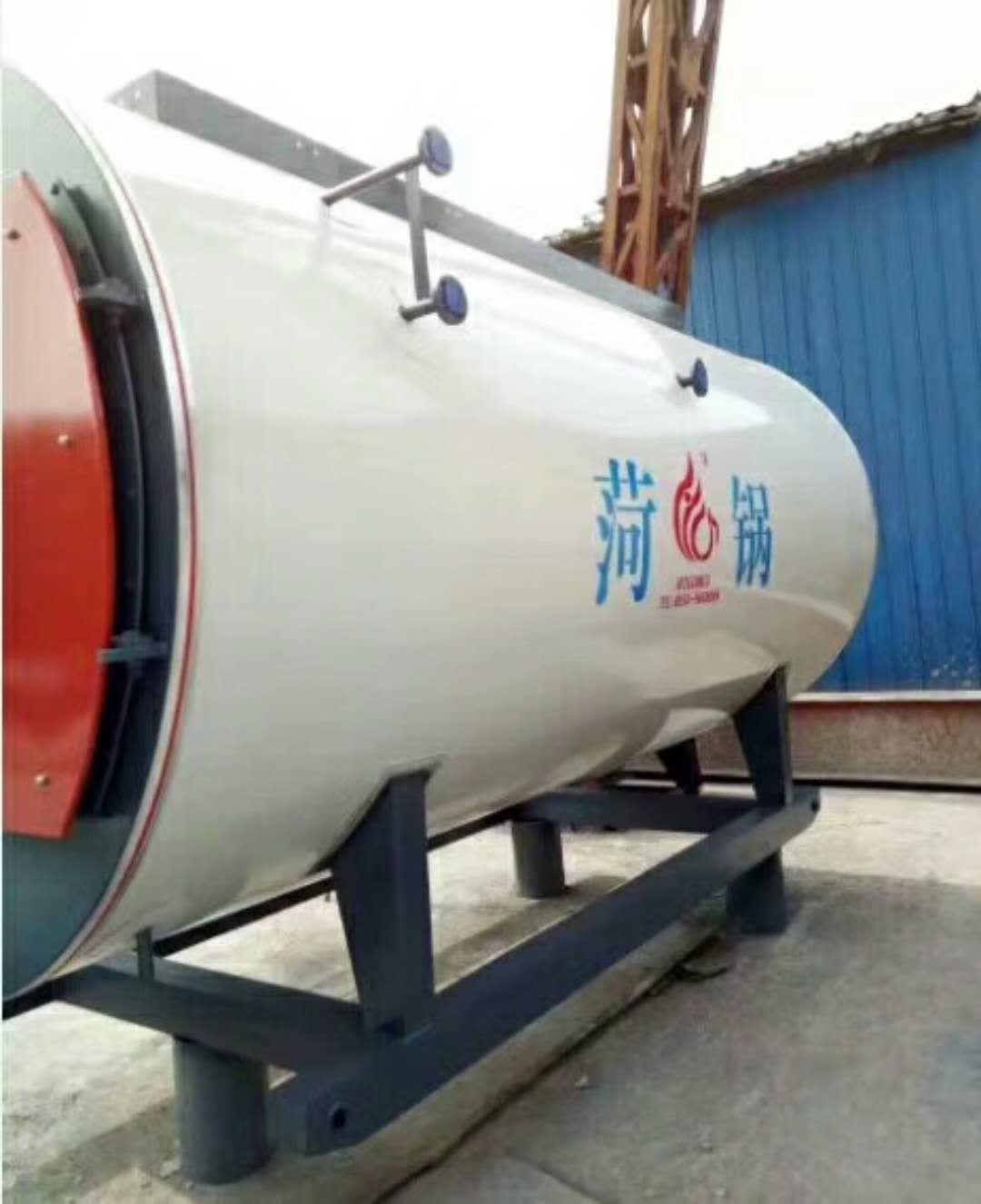

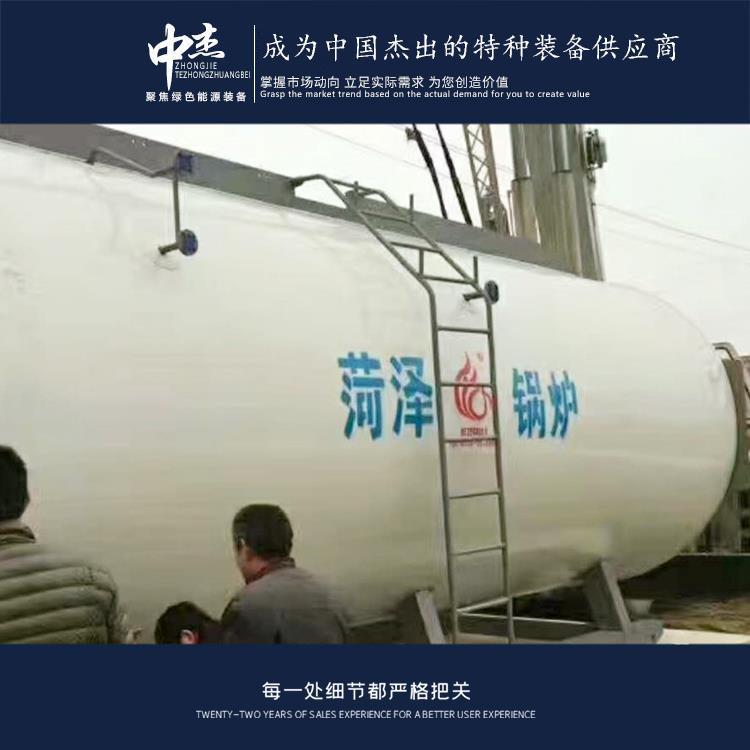
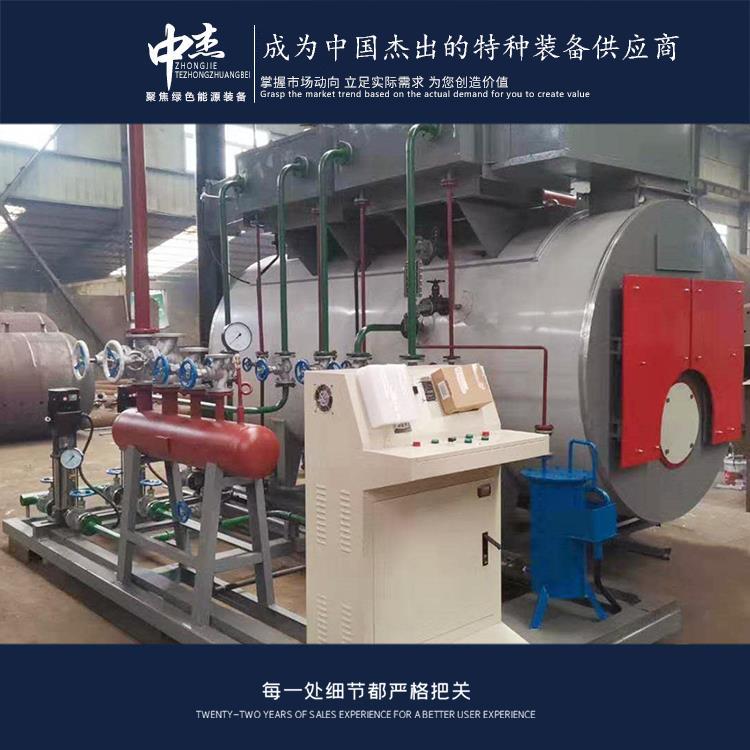


















Shandong Zhongjie Special Equipment Co., Ltd. (formerly Heze Boiler Factory Co., Ltd.) was established in 2001, located at No. 2218 Jinan Road, Economic Development Zone, Heze City, with a registered capital of 50 million yuan and total assets of 500 million yuan. The company has 7 major business centers: boilers, deep-freezing vessels, pressure vessels, central air conditioning, engineering installation, international trade, and the Internet of Things. It has three factory areas on Jinan Road, East Changjiang Road, and Bohai Road, covering a total of 200,000 square meters, with the main workshop area at 83,000 square meters. It currently employs 710 staff, including 247 engineering and technical personnel and 82 intermediate-level technicians. In December 2016, it was recognized as a "High-tech Enterprise" by the Science and Technology Department. In June 2021, it was identified as a "Specialized and New Enterprise in Shandong Province" by the Industrial and Information Technology Department. In June 2022, it was recognized as a "Deer Enterprise in Shandong Province" and in August 2022, as a "Specialized and New Small Giant Enterprise" by the Ministry of Industry and Information Technology.
The flow rate standard for the heat-conducting oil in the oil pipes of a thermal oil furnace is typically determined by the specific application and equipment requirements, with no fixed uniform value. Generally, the flow rate of the heat-conducting oil within the pipes should be maintained within a reasonable range to ensure the normal operation of the equipment and the effectiveness of heat transfer. Excessive flow rates of the heat-conducting oil can lead to issues such as increased system pressure loss and pump power consumption, higher friction losses in the pipes resulting in energy loss, and increased system noise and vibration. On the other hand, low flow rates can cause insufficient heat transfer, affecting the thermal efficiency of the equipment, prolonged residence time of the heat-conducting oil in the pipes leading to oxidation and thermal decomposition, and the formation of carbon deposits in the pipes, increasing resistance and affecting fluid flow. Therefore, when designing and operating a thermal oil furnace system, it is necessary to consider specific equipment parameters, the properties of the heat-conducting oil, and pipeline layout, among other factors, to determine an appropriate flow rate. Typically, the flow rate should be within the range of 0.5-2.0 m/s, but the specific values should be adjusted and optimized based on actual conditions. In practice, the flow rate of the heat-conducting oil can be controlled by monitoring and adjusting the pump flow and pipeline resistance to meet the equipment's heat energy needs and operational requirements.
Potential causes of uneven heat distribution in steam boilers may include the following aspects:
- Inconsistent combustion: In the combustion process, uneven mixing of fuel and air, or improper design and adjustment of the burner, can lead to inconsistent combustion. This results in some areas producing more heat while others produce less.
- Pipe blockage: The presence of blockages or scaling within the steam boiler's transmission pipes can cause uneven heat transfer. Blockages or scaling impede steam flow, limiting heat transfer in certain areas while allowing better transfer in others.
- Heat exchanger issues: If the heat exchanger in the steam boiler has scaling, corrosion, or blockage problems, it can lead to uneven heat transfer. These issues affect the heat conduction efficiency of the heat exchanger, impacting the heat transfer in certain areas.
- Water level problems: Inaccurate or unstable water level control in the steam boiler can result in uneven steam production. Both high and low water levels can affect steam production and distribution, leading to uneven heat.
- Boiler load changes: Changes in the boiler load can also cause uneven heat distribution. Sudden increases or decreases in load may prevent the boiler from adjusting heat production and distribution in a timely manner, resulting in uneven heat.
To address the issue of uneven heat distribution in steam boilers, regular inspection and maintenance of the boiler equipment is required to ensure the normal operation of combustion and heat exchange processes. Additionally, the burner and control systems should be adjusted reasonably, water levels should be maintained stable, pipes and heat exchangers should be kept clean, and so on, to enhance
For the maintenance of industrial gas-fired boilers, here are some common methods and precautions: Clean the burner: Regularly clean the interior and nozzle of the burner to ensure normal combustion of the gas, avoiding carbon buildup and blockages. Inspect the gas supply system: Regularly check the gas supply system, including gas pipes, valves, and pressure regulators, to ensure normal supply, no leaks, or blockages. Clean the flue and heat exchanger: Regularly clean the flue and heat exchanger to remove soot and dirt, maintaining heat exchange efficiency, and avoiding overheating and energy loss. Check water level and pressure: Regularly inspect the boiler's water level and pressure to ensure safe operation within the specified range. Refill water and adjust pressure to avoid issues caused by low or high water levels. Inspect safety devices: Regularly check the boiler's safety devices, including safety valves, pressure switches, and water level controllers, to ensure proper functioning and safe operation. Check the control system: Regularly inspect the boiler's control system, including automatic controllers, sensors, and instruments, to ensure accuracy and reliability, and to promptly detect and repair faults. Scheduled maintenance: Regularly perform maintenance, including lubricating parts, replacing worn components, and checking electrical connections, to extend the boiler's lifespan and stability. Keep records: Record the boiler's operating parameters, maintenance records, and fault situations to help promptly identify issues and analyze operational conditions. Train operators: Ensure that operators have sufficient
Industrial boiler thermal deaeration is a commonly used deaeration method, featuring:
- Deaeration: Thermal deaeration involves heating the boiler feed water to release dissolved oxygen from the water using heat. As the water temperature rises during the thermal deaeration process, the solubility of oxygen decreases, allowing for effective removal of oxygen from the water.
- No Chemicals Required: Unlike other deaeration methods, thermal deaeration does not require the use of chemicals, thus avoiding environmental pollution and equipment corrosion caused by chemicals. It also reduces operating costs and complexity.
- Automated Control: Thermal deaeration can be achieved through an automated control system, which adjusts the feed water temperature and flow rate based on the boiler's operating status and water quality to achieve optimal deaeration results.
- Wide Application Range: Thermal deaeration is suitable for various types of industrial boilers, including coal-fired, gas-fired, and oil-fired boilers. Whether it's a small or large boiler, thermal deaeration can be used for deaeration treatment.
- Improved Boiler Efficiency: Removing dissolved oxygen from the water can reduce corrosion and oxidation reactions within the boiler, extending its lifespan. Additionally, reducing the presence of oxygen can enhance the boiler's thermal efficiency and lower energy consumption.
- Note: While thermal deaeration effectively removes oxygen from the water, it may not address other water quality issues such as hardness and alkalinity. Therefore, in practical applications, it is necessary to consider the characteristics of water quality and the requirements of the boiler to select an appropriate deaeration method.
ZJ Special Equipment adheres to the grand vision of "realizing employees' dreams, creating value for customers, and striving for the prosperity and strength of our motherland," focusing solely on the development of green energy equipment. We dedicate high-value products and services to society!
WeChat Official Account

Scan to follow Official Account



















