


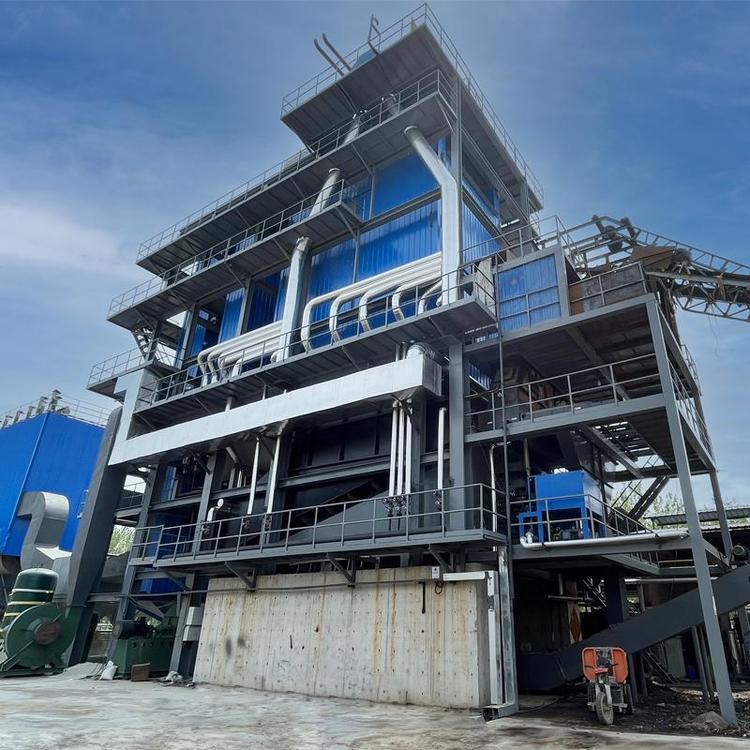

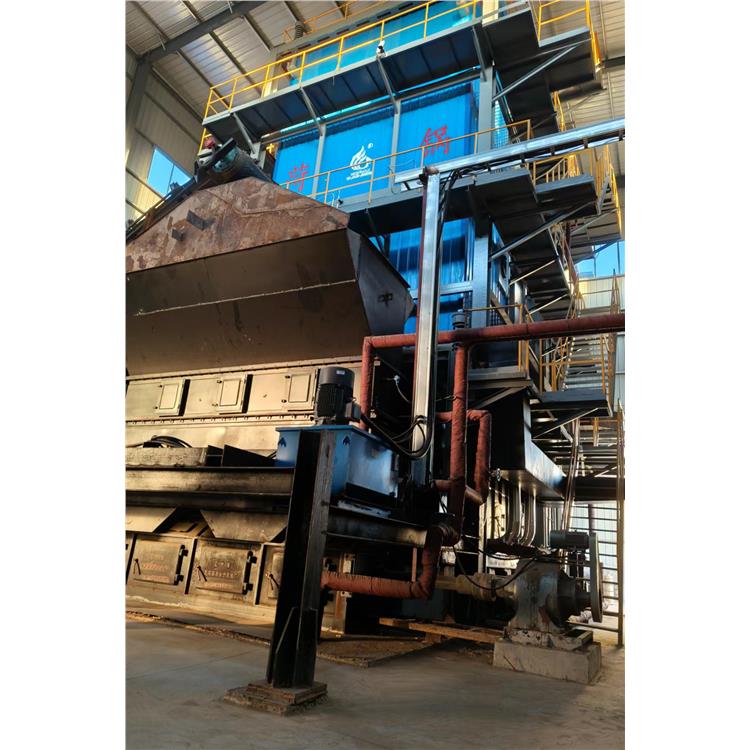
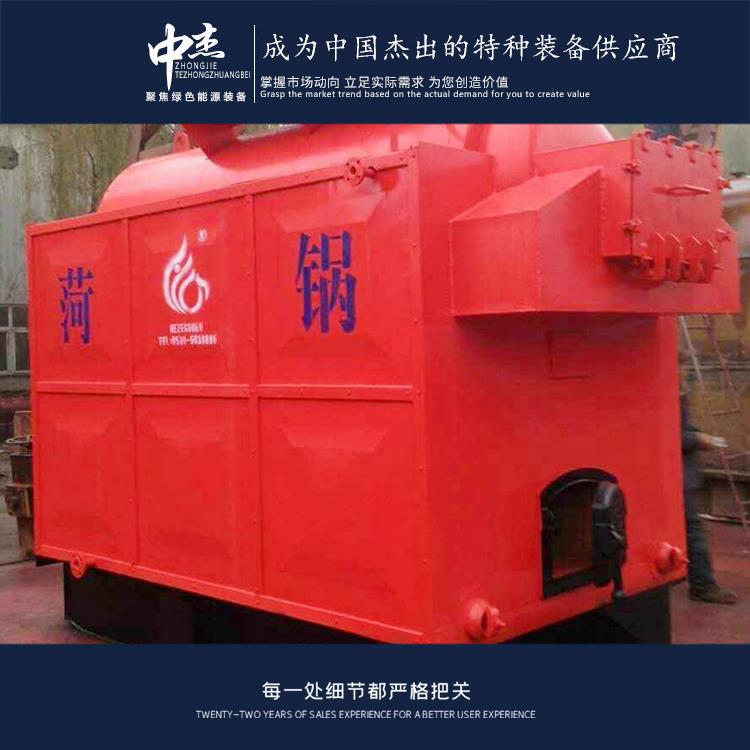


















Shandong Zhongjie Special Equipment (formerly Heze Boiler Factory Co., Ltd.) was established in 2001, located at No. 2218 Jinnan Road, Economic and Technological Development Zone, Heze City. With a registered capital of 50 million yuan and total assets of 500 million yuan, the company has seven business centers: boilers, deep-freeze containers, pressure vessels, central air conditioning, engineering installation, international trade, and the Internet of Things. It has three factory sites on Jinnan Road, East Changjiang Road, and Bohai Road, covering a total area of 200,000 square meters, with the main workshop spanning 83,000 square meters. It currently employs 710 people, including 247 engineers and technicians and 82 intermediate-level technicians. In December 2016, it was recognized as a "High-Tech Enterprise" by the Science and Technology Department. In June 2021, it was identified as a "Specialized and New Enterprise in Shandong Province" by the Department of Industry and Information Technology. In June 2022, it was named a "Gazelle Enterprise in Shandong Province" and in August 2022, it was recognized as a "Specialized and New Small Giant Enterprise" by the Ministry of Industry and Information Technology.
To enhance the thermal efficiency of biomass boilers, consider the following aspects:
Optimize the combustion system: Reasonably adjust the combustion system of biomass boilers, including parameters such as combustion air volume, combustion temperature, and combustion time, to achieve complete combustion and utilization of the fuel. Combustion technologies adopted, such as fluidized bed combustion and gasification combustion, can enhance combustion efficiency.
Control Excessive Air: Reasonably control the air supply during the combustion process of biomass boilers to prevent excessive air from entering the furnace, thereby reducing fuel oxidation and heat loss. Adjust the combustion air flow and air distribution to achieve the optimal mixture of fuel and air, enhancing combustion efficiency.
Enhanced waste heat recovery: The flue gas from biomass boiler combustion contains a significant amount of heat energy, which can be recovered and utilized through heat recovery devices such as economical air preheaters and economizers, thereby improving the thermal efficiency of the boiler.
Optimize boiler operating parameters: Reasonably adjust the operating parameters of biomass boilers, such as boiler water temperature and steam pressure, to enhance thermal efficiency. Adjust the boiler's operating mode according to actual needs and load changes, to prevent excessive or insufficient heating, and improve energy utilization efficiency.
Regular Cleaning and Maintenance: Schedule regular cleaning and maintenance of biomass boilers to remove ash and accumulated dust in the furnace chamber, ensuring heat exchange efficiency and reducing thermal resistance and losses.
Utilize equipment and materials: Select biomass boiler equipment and materials, such as burners and heat exchangers, to enhance thermal conduction and heat exchange efficiency.
By integrating these measures, the thermal efficiency of biomass boilers can be significantly improved, achieving energy utilization.
Before using biomass boilers, the following measures can be taken:
Safety Inspection: Conduct a safety check on biomass boilers to ensure the normal operation of all components and equipment. Inspect the condition of the boiler's burners, valves, sensors, etc., for any signs of damage or leakage.
Clean combustion chamber: Clean the combustion chamber of biomass boilers, the ash and soot produced during the combustion process. Use appropriate tools and cleaning agents for cleaning to ensure the chamber remains clear and clean.
Inspect Fuel Supply System: Check the biomass boiler's fuel supply system to ensure the supply pipes are clear and unobstructed, and that the fuel storage containers are adequately filled. Additionally, inspect the fuel quality to ensure it meets specifications, free of impurities or moisture.
Inspect Water Quality: Check the boiler's water supply to ensure it meets the required standards. Water quality tests can be conducted to measure hardness, pH levels, and other indicators, and appropriate water treatment measures will be taken based on the test results.
Ensure good ventilation: Biomass boilers produce flue gas during combustion, so it's necessary to ensure adequate ventilation around the boiler to exhaust smoke and heat. Ventilation equipment can be installed or ensure the room where the boiler is located has sufficient ventilation openings.
Training and Operation Guidance: Provide training and operational guidance to staff using biomass boilers to ensure they are familiar with the boiler's operation, safety precautions, and emergency response procedures.
These measures help ensure the safety and proper operation of biomass boilers before use, reducing the occurrence of malfunctions and accidents. Additionally, regular maintenance and upkeep are crucial for the long-term stable operation of biomass boilers.
When biomass boilers exhibit abnormal operation, the following measures can be taken:
Inspect Fuel Supply: Examine the biomass supply system to ensure normal fuel supply. Check fuel storage containers, conveyance systems, and feeding devices to eliminate issues of insufficient fuel supply or blockages.
Inspect the combustion system: Check the combustion system, including the ignition device, burner, and combustion chamber. Ensure the burner operates normally and the combustion within the combustion chamber is stable. Clean the burner and combustion chamber, removing carbon deposits and debris.
Inspect smoke emissions: Check the smoke emission system, including chimneys and smoke purification equipment. Ensure smooth smoke emissions and proper operation of the smoke purification equipment. Clean chimneys and smoke purification equipment, remove blockages and accumulated dust.
Inspect Water Circulation System: Examine the water circulation system, including pumps, tanks, pipes, and valves. Ensure normal water circulation, stable water pressure, and level. Clean the pump and pipes to eliminate blockages and leaks.
Inspect Control Systems: Check the control systems, including temperature, pressure, and flow control. Ensure that the control parameters are set correctly and that sensors and actuators are functioning properly. Adjust control parameters to ensure stable boiler operation.
Inspect Safety Devices: Check the safety devices, including pressure gauges, temperature gauges, safety valves, and alarms. Ensure that the safety equipment is sensitive and reliable, and promptly triggers alarms and protective measures.
Seek assistance: If the above solutions do not resolve the issue, it is crucial to promptly seek the help of a boiler maintenance and repair expert. They can conduct more in-depth troubleshooting and repairs to ensure the normal operation of the biomass boiler.
When dealing with abnormal operation of biomass boilers, safety is paramount. Always adhere to relevant operational procedures and safety protocols. Identify and address issues promptly.
Biomass boilers can achieve energy conservation and emission reduction through the following methods:
Combustion Technology: The combustion technology used in biomass boilers, such as fluidized bed combustion and pellet combustion, enhances combustion efficiency, allowing for more thorough fuel utilization and reducing energy waste.
Heat Recovery Utilization: Biomass boilers produce flue gas containing a large amount of heat during the combustion process, which can be recovered and utilized through a flue gas waste heat recovery system. For instance, by using flue gas waste heat boilers or heat exchangers, the heat energy in the flue gas can be converted into hot water, steam, or other forms of heat energy, thereby improving energy utilization efficiency.
Control combustion parameters: Biomass boilers can achieve optimal combustion effects by controlling parameters such as combustion temperature and oxygen supply. Reasonable combustion parameters can enhance combustion efficiency and reduce fuel consumption and emissions.
Fuel Quality Control: Selecting biomass fuels by volume, such as those with high dryness and low ash content, can enhance combustion efficiency and reduce the generation of ash and pollutants.
Regular maintenance and cleaning: Regular maintenance and cleaning of biomass boilers are essential to remove ash and soot from the combustion chamber and flue, ensuring the boiler operates and burns efficiently.
The Control System: Equipped with an automatic control system, it can monitor and adjust the operating status of the biomass boiler in real-time, ensuring the stability and efficiency of the combustion process.
Through these measures, biomass boilers can achieve energy conservation and emission reduction, improve energy utilization efficiency, reduce carbon emissions and the generation of pollutants, and be more environmentally friendly.
Our company places great emphasis on technological innovation and R&D, boasting 1 municipal-level enterprise technology center in Heze City. We have established testing facilities for non-destructive testing, physical and chemical testing, welding testing, hydrostatic testing, etc. Equipped with over 600 units of various instruments and equipment, including CNC machine tools, X-ray flaw detectors, digital ultrasonic flaw detectors, mechanical property testing machines, chemical analyzers, spectrometers, tensile testing machines, plasma welding machines, and more, our R&D of key products such as temperature-pressure vessels for welding, biomass boiler emissions reduction, and waste heat utilization has been selected for multiple Shandong Provincial Department of Industry and Information Technology scientific and technological innovation projects, Shandong Provincial key projects, and Heze City innovative and excellent projects. We have cumulatively obtained 27 authorized utility model patents, 16 authorized invention patents, participated in drafting 2 standards, 2 industry standards, and registered 15 trademarks. Our technical team, in collaboration with Professor Li Yajiang of Shandong University, has developed deep cryogenic container processing technology using the international plasma arc + filler wire tungsten inert gas arc welding (PAW-GTAW) technique. After provincial-level scientific and technological achievement appraisal, our technology level in deep cryogenic container manufacturing has reached an international standard. Choose Zhongjie Special Equipment, and let's create brilliance together!
WeChat Official Account

Scan to follow Official Account



















