


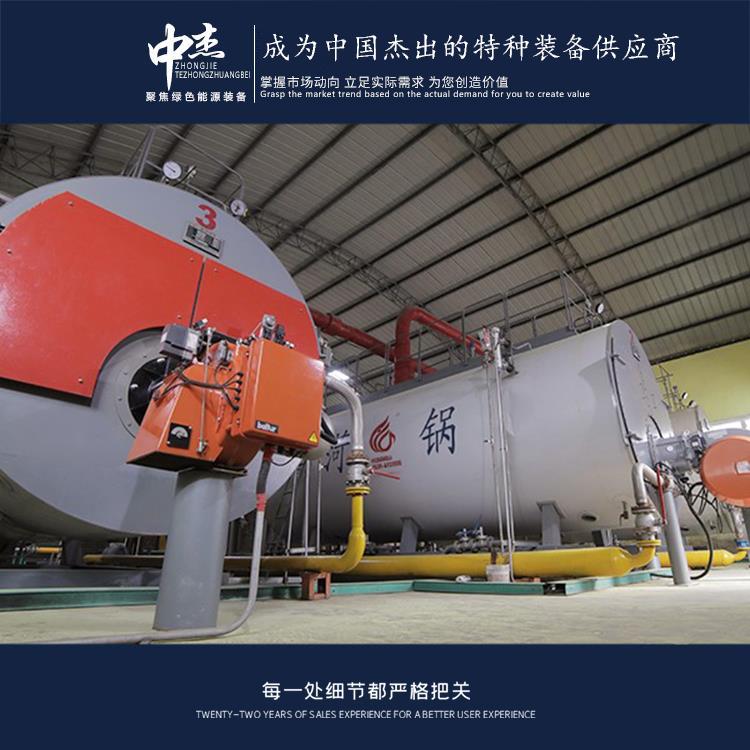

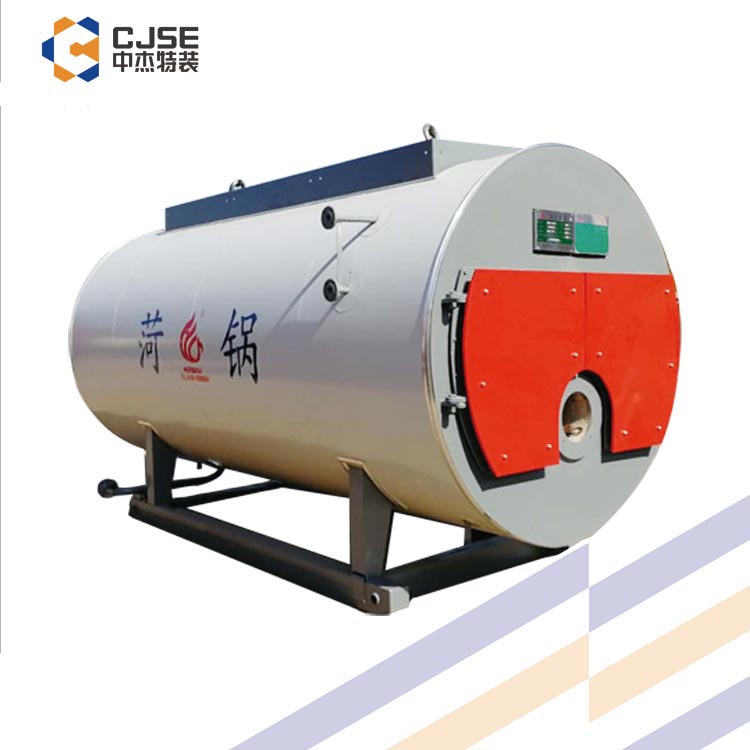
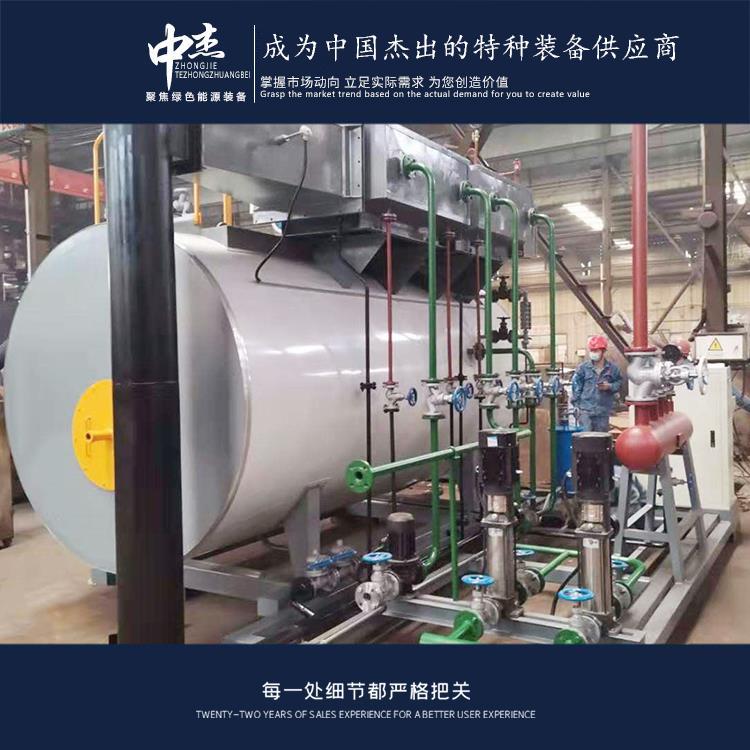


















Shandong Zhongjie Special Equipment (formerly Heze Boiler Factory Co., Ltd.) was established in 2001, located at No. 2218 Jinan Road, Economic and Technological Development Zone, Heze City. With a registered capital of 50 million yuan and total assets of 500 million yuan, the company operates seven business centers: boilers, deep-freeze containers, pressure vessels, central air conditioning, engineering installation, international trade, and the Internet of Things. It has three factory sites on Jinan Road, East Yangtze Road, and Bohai Road, covering a total area of 200,000 square meters, with the main workshop spanning 83,000 square meters. It currently employs 710 people, including 247 engineering and technical personnel and 82 intermediate-level technicians. In December 2016, it was recognized as a "High-tech Enterprise" by the Science and Technology Department. In June 2021, it was identified as a "Specialized and New Enterprise in Shandong Province" by the Industry and Information Technology Department. In June 2022, it was named a "Gazelle Enterprise in Shandong Province" and in August 2022, it was recognized as a "Specialized and New Small Giant Enterprise" by the Ministry of Industry and Information Technology.
If a gas boiler gas leak is detected, the following measures must be taken immediately to handle the situation:
1. Immediately shut off the gas supply: First, quickly close the gas supply valve to cut off the gas supply. This prevents further leakage and reduces safety risks.
2. Ventilate the area: Open windows and doors to ensure proper indoor air circulation and expel any remaining gas. This helps lower the indoor gas concentration, reducing the risk of explosion and poisoning.
3. Avoid open flames and electrical appliances: In the event of a gas leak, avoid using open flames and electrical equipment to prevent fires or electrical sparks that could cause an explosion.
4. Do not operate electrical switches: Do not operate electrical switches, including lights, TVs, computers, etc., to prevent sparks that could lead to accidents.
5. Contact the gas company or personnel: Promptly contact the local gas company or personnel to report the gas leak and request them to inspect and handle the situation.
6. Do not use a mobile phone or make phone calls: In case of suspected gas leaks, do not use a mobile phone or make phone calls to avoid static electricity that could cause an explosion.
7. Keep away from the leak area: Stay as far away from the leak area as possible to ensure your safety. Do not approach the gas boiler or the leak point to avoid injury.
Remember, handling a gas boiler gas leak is a dangerous task that requires caution. It is best handled by professionals to ensure safety.
To ensure proper safety procedures for industrial boilers, attention should be given to the following aspects:
- Adhere to laws and regulations: Understand and comply with relevant laws, regulations, and standards, including those governing boiler safety management and standards for boiler use and maintenance. Ensure compliance with legal requirements throughout the process.
- Establish a robust management system: Develop a comprehensive industrial boiler safety management system, clearly define responsibilities and authorities, and standardize operational procedures and safety measures. Draft operational guidelines and emergency response plans to ensure orderly execution of safety procedures.
- Training and education: Conduct training and education for personnel involved in the safety management of industrial boilers to enhance their safety awareness and skill levels. This includes operators, maintenance staff, and administrators, all of whom should receive appropriate training.
- Regular inspections and maintenance: Conduct regular inspections and maintenance of industrial boilers to ensure proper operation and safety performance. This includes checking and maintaining key components such as the combustion system, water level control, safety valves, and pressure gauges.
- Safety equipment and facilities: Equip with necessary safety equipment and facilities, such as safety valves, pressure gauges, water level indicators, and burners, ensuring their proper operation and effectiveness.
- Regular inspections and evaluations: Conduct regular inspections and evaluations of industrial boilers to ensure compliance with safety requirements. This includes regular pressure tests, water quality inspections, and combustion efficiency assessments.
- Safety records and document management: Establish a comprehensive system for safety records and document management, documenting the operation, maintenance records, and accident reports of industrial boilers. Update and preserve relevant safety information in a timely manner.
- Regular drills and emergency response training: Organize regular safety drills and emergency response training to enhance the ability to respond to emergencies and improve efficiency in emergency handling.
The above are some basic points for ensuring the proper management of industrial boiler safety procedures. Specific operations should be conducted according to actual circumstances and relevant requirements.
When designing a fuel-gas boiler room, the following points should be considered:
- Safety considerations: Ensure the design of the boiler room complies with relevant safety standards and regulations. Account for fire risks by installing appropriate firewalls, fire doors, and fire isolation facilities. Ensure good ventilation in the boiler room with suitable ventilation equipment and flue systems to expel harmful gases produced by combustion.
- Space and layout: Plan the space and layout of the boiler room based on the number and size of the boilers. Ensure there is sufficient space for operation, maintenance, and cleaning. Arrange the boilers, fuel storage equipment, flue systems, and pipe layouts in a manner that facilitates operation and maintenance.
- Fuel supply and storage: Consider the requirements for fuel supply and storage. Ensure the safety and reliability of fuel supply pipelines and equipment to prevent leaks and contamination. Plan the capacity and location of fuel storage equipment rationally to ensure adequate fuel supply and compliance with relevant safety requirements.
- Emission and exhaust gas treatment: Consider the exhaust gas emissions and treatment resulting from combustion. Install appropriate flue systems and exhaust gas treatment equipment to reduce the impact of emissions on the environment. Ensure the design and layout of the flue system are reasonable and can effectively expel smoke and exhaust gases.
- Control and monitoring systems: Design suitable control and monitoring systems to ensure the safety and operation of the boiler. This includes monitoring and control equipment for parameters such as temperature, pressure, and flow, as well as alarm and automatic shutdown devices. Ensure operators can promptly understand the operating status of the boiler and take appropriate actions.
Yes, durable thermal oil boilers generally have a longer lifespan. Here are some reasons:
- Material Quality: Thermal oil boilers are made from materials such as high-temperature and corrosion-resistant steel and alloys. These materials can withstand high temperatures and pressures, offering good durability and anti-corrosion properties, thereby extending the boiler's lifespan.
- Design and Manufacturing Process: Durable thermal oil boilers typically utilize designs and manufacturing processes that ensure longevity. Rational structural design and precise manufacturing techniques reduce stress concentration and thermal stress, enhancing the boiler's stability and durability.
- Regular Maintenance and Service: Regular maintenance and service of thermal oil boilers are crucial for extending their lifespan. Regularly cleaning and inspecting the boiler's internal pipes, flues, and burners, and promptly replacing worn-out parts, can reduce malfunctions and damage, and extend the boiler's life.
- Proper Operation and Management: Correct operation and management are also significant factors in ensuring the lifespan of thermal oil boilers. Operators should follow the operation manual and procedures, avoid overloading and improper operation, and ensure the boiler operates safely and stably.
It should be noted that even durable thermal oil boilers require regular inspections and maintenance to ensure proper operation and extend their lifespan. Additionally, the boiler's lifespan is also influenced by factors such as the operating environment, load conditions, and operational methods. Therefore, reasonable use and maintenance are key to ensuring the longevity of thermal oil boilers.
Our company highly values technological innovation and research and development. We have 1 municipal-level enterprise technology center in Heze City, equipped with testing facilities for non-destructive testing, physical and chemical tests, welding tests, hydrostatic tests, etc. We have over 600 pieces of equipment, including CNC machine tools, X-ray flaw detectors, digital ultrasonic flaw detectors, mechanical property test machines, chemical analyzers, spectrometers, tensile test machines, plasma welding machines, and more. Our key products such as welding for temperature-pressure vessels, biomass boiler emissions reduction, and waste heat recovery have successively been included in multiple Shandong Provincial Department of Industry and Information Technology scientific and technological innovation projects, key provincial projects, and Heze City innovation and excellence projects. We have accumulated 27 authorized utility models, 16 authorized inventions, participated in drafting 2 standards, 2 industry standards, and registered 15 trademarks. Our technical team, in collaboration with Professor Li Yajiang of Shandong University, has developed deep cryogenic container processing technology using the internationally recognized plasma arc + wire feeding tungsten inert gas arc welding (PAW-GTAW) technique, which has been appraised as reaching international standards in deep cryogenic container manufacturing.
Choose ZJETT Customized Solutions, let's create brilliance together!
WeChat Official Account

Scan to follow Official Account



















