


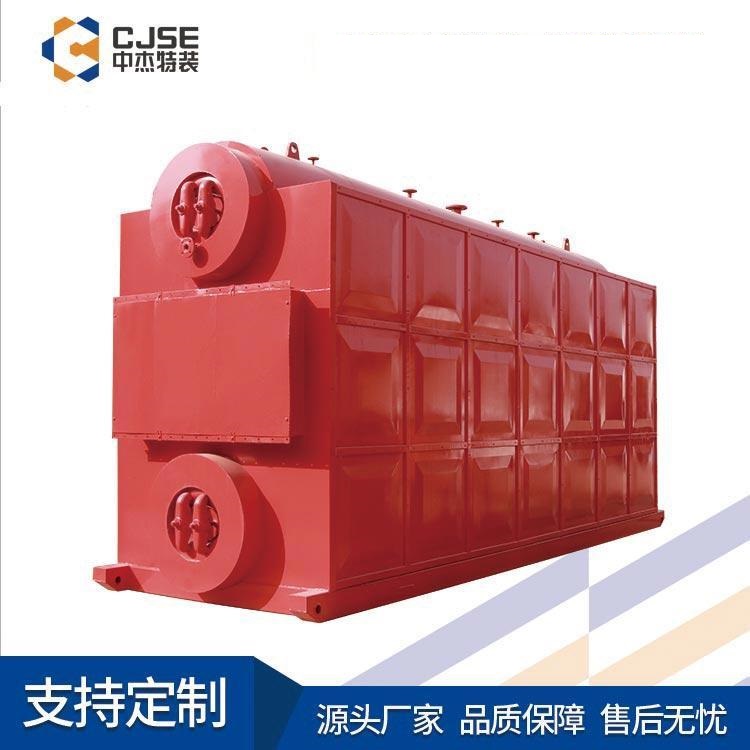


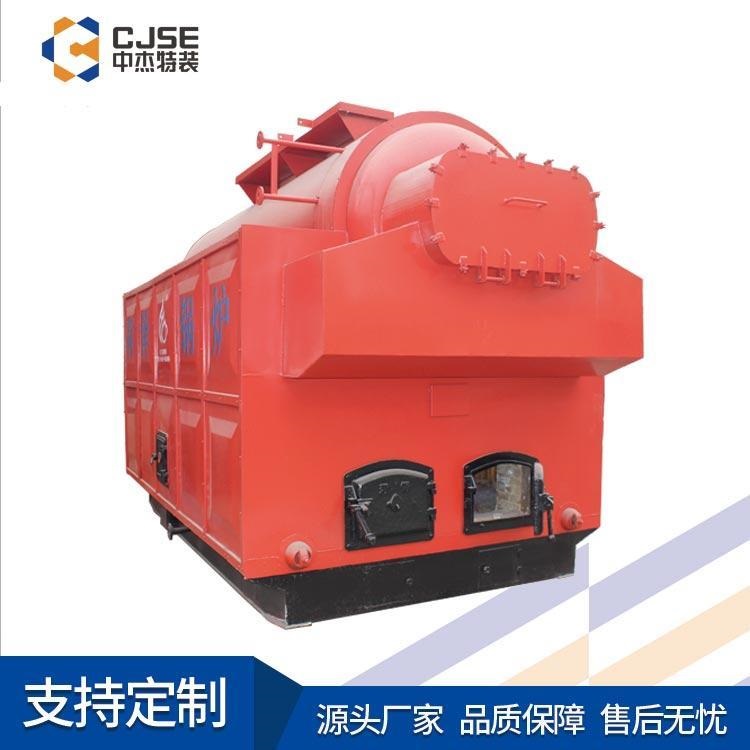


















Shandong Zhongjie Special Equipment (formerly Heze Boiler Factory Co., Ltd.) holds an A-grade boiler manufacturing license, an A2-grade pressure vessel manufacturing license, an A2-grade pressure vessel design license, a B-grade boiler installation license, and GB2/Class, GC2/Class pressure pipeline installation licenses, as well as an electromechanical equipment installation contracting qualification. It is a member of the China Boiler and Water Treatment Association, the China Chemical Equipment Association, and the director unit of the Shandong Equipment Manufacturing Association. The company has also passed the ISO9001 Quality Management System, ISO14001 Environmental Management System, OHSAS18001 Occupational Health and Safety Management System certifications, and the American ASME/U2 certification.
Current biomass boilers encounter the following issues in practical application:
Unstable fuel supply: The supply of biomass fuel is subject to seasonal and regional limitations, resulting in an unstable fuel supply for biomass boilers. This may lead to the biomass boilers not being able to run continuously or requiring frequent fuel changes, increasing operation costs and management complexities.
Low combustion efficiency: Due to the characteristics of biomass fuel and the complexity of the combustion process, the combustion efficiency of biomass boilers is relatively low. Some fuels have high volatile and ash content, which may produce excessive ash and particulate matter during combustion, thereby reducing combustion efficiency and heat energy utilization.
NOx Emission Issue: Biomass boilers produce a significant amount of nitrogen oxides (NOx) during the combustion process, which has an adverse environmental impact. Controlling and reducing NOx emissions is a crucial issue for biomass boilers.
Combustion Equipment Wear: The high ash content in biomass fuel can cause wear and clogging in the combustion process, leading to reduced equipment lifespan and frequent maintenance and cleaning requirements.
Ash residue from combustion: Ash residue produced by biomass boiler combustion requires proper handling and disposal. Improper management may lead to environmental pollution and hazards.
Lack of unified technical standards and specifications: Currently, there is a lack of unified technical standards and specifications for biomass boilers.
During operation, biomass thermal oil heaters are prone to scaling due to the high temperature of the thermal oil and long-term use. To prevent the formation of scale, manufacturers of biomass thermal oil heaters typically take the following measures:
Select the appropriate thermal oil: Manufacturers choose thermal oils with good thermal stability and antioxidant properties to minimize the formation of scale. The selection of thermal oil should be reasonably matched based on actual operating conditions and usage requirements.
Regulate oil temperature and flow rate: Manufacturers will control the temperature and flow rate of the heat transfer oil based on its characteristics and operational requirements. Excessive temperature and rapid flow can lead to scale formation, so appropriate adjustments are necessary.
Regular Cleaning and Maintenance: Manufacturers recommend users to regularly clean and maintain biomass thermal oil heaters to remove scale buildup. Cleaning agents and equipment that can be used during the process, as well as the scale removal, will restore the normal operation of the heater.
Install filters and descaling devices: Manufacturers may install filters and descaling devices in biomass thermal oil heaters to filter out impurities and scale from the thermal oil. These devices effectively prevent scale formation and extend the service life of the thermal oil heater.
Regular Monitoring and Analysis: Manufacturers may advise users to regularly monitor and analyze the properties and quality of the thermal oil, to promptly identify any anomalies and take appropriate measures.
Chain biomass boiler is a common type of biomass boiler, and its working principle and process are as follows:
Fuel Supply: Biomass fuel (such as wood chips, straw, etc.) is conveyed to the combustion chamber of the chain grate boiler via the feeding system.
The combustion process: Fuel is ignited in the combustion chamber while the chain boiler's chain system starts operating. The fuel is gradually propelled forward by the movement of the chain, simultaneously burning within the combustion chamber. During combustion, the fuel is thoroughly mixed with air, and the heat energy produced is transferred to the boiler's water or other working medium.
Flue Gas Emission: The flue gas produced by combustion is channeled through the flue system of the combustion chamber and discharged into the chimney. During the flue gas emission process, it can be treated with flue gas purification equipment to reduce the emitted particulate matter and gas pollutants.
Heat Recovery: The heat generated from combustion is transferred to water or other working substances through a heat exchanger in the boiler, raising their temperature. After heat recovery, the hot water or steam can be used for heating, hot water supply, or other industrial processes.
Control System: Chain biomass chain boilers are typically equipped with an automatic control system that monitors and adjusts parameters such as temperature, pressure, and fuel supply during the combustion process. The control system can automatically adjust according to actual needs to ensure the safe and efficient operation of the boiler.
Overall, the biomass chain grate boiler gradually feeds biomass fuel into the combustion chamber through a chain system for burning. The thermal energy is transferred to water or other working substances via a heat exchanger, achieving heat recovery and utilization. This boiler boasts high combustion efficiency and strong fuel adaptability, and is widely used in heating, industrial heating, and other fields.
Biomass fuel boilers may encounter the following issues during operation:
Unstable fuel quality: The quality of biomass fuel is affected by factors such as raw material source, processing methods, and storage conditions, leading to inconsistent fuel quality. Inconsistent fuel quality may impact combustion efficiency and the stable operation of boilers.
Ash disposal issues: Biomass fuel produces a large amount of ash during combustion, including waste, ash content, and unburned material. The handling and disposal of ash can lead to environmental pollution and disposal costs.
High-Temperature Corrosion: Ash and elements like chlorine in biomass fuel are prone to cause corrosion at high temperatures, damaging the metal components of boilers. Appropriate measures must be taken to protect and treat against high-temperature corrosion issues.
Low combustion efficiency: The combustion characteristics of biomass fuel differ from traditional fossil fuels, potentially resulting in lower combustion efficiency. It is necessary to optimize the combustion system and control strategies to enhance combustion efficiency and reduce energy waste.
Gases Emitted from Combustion: The combustion of biomass fuel produces certain emissions, such as carbon dioxide, nitrogen oxides, and particulates. These emissions have an impact on the environment and air quality, necessitating appropriate control measures.
Transport and Storage Costs: The transportation and storage costs for biomass fuel are higher, particularly for areas far from the supply source. This may increase the operational costs for biomass fuel boilers.
In summary, biomass fuel boilers face issues such as inconsistent fuel quality, ash and slag disposal, and high temperatures.
Our company attaches great importance to technological innovation and R&D design. We have one municipal enterprise technology center in Heze City, equipped with non-destructive testing, physical and chemical testing, welding testing, hydrostatic testing, and other testing facilities. We have over 600 pieces of various equipment such as CNC machine tools, X-ray flaw detectors, digital ultrasonic flaw detectors, mechanical property testing machines, chemical analyzers, spectrometers, tensile testing machines, and plasma welding machines. Our key products and technologies, including temperature-pressure vessel welding, biomass boiler emission reduction, and waste heat utilization, have successively been selected for multiple Shandong Provincial Department of Industry and Information Technology Science and Technology Innovation projects, Shandong Provincial Key Projects, and Heze City Innovation and Excellence projects. We have accumulated 27 authorized utility model patents, 16 authorized invention patents, participated in drafting 2 standards, 2 industry standards, and registered 15 trademarks. The technical team of our company, in collaboration with Professor Yajiang Li of Shandong University, has jointly developed deep cryogenic container processing technology using the international plasma arc + wire feeding argon arc welding (PAW-GTAW) technology. The provincial-level scientific and technological achievement evaluation has determined that the technology level in the field of deep cryogenic container manufacturing has reached international standards. Choose ZJ Special Equipment, and let's create brilliance together!
WeChat Official Account

Scan to follow Official Account



















