


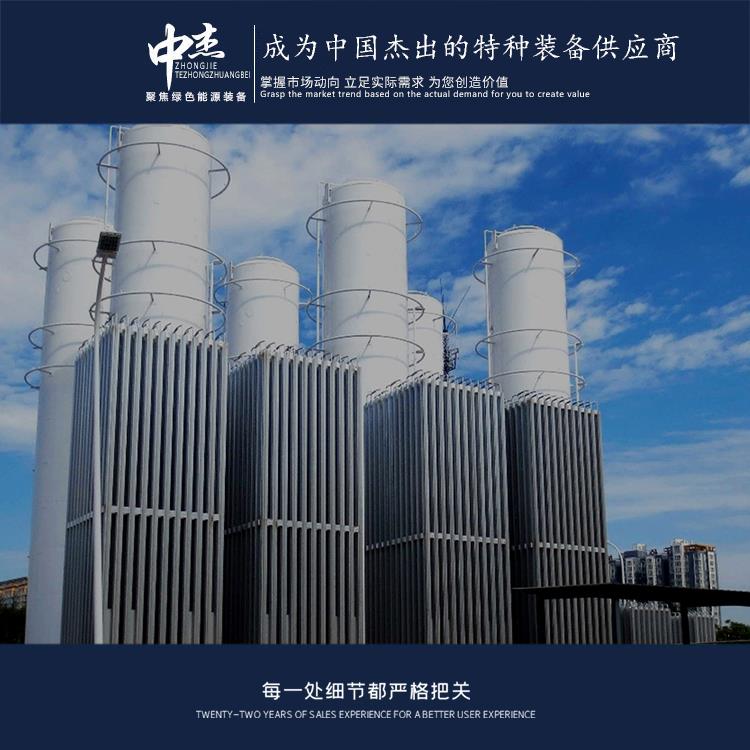

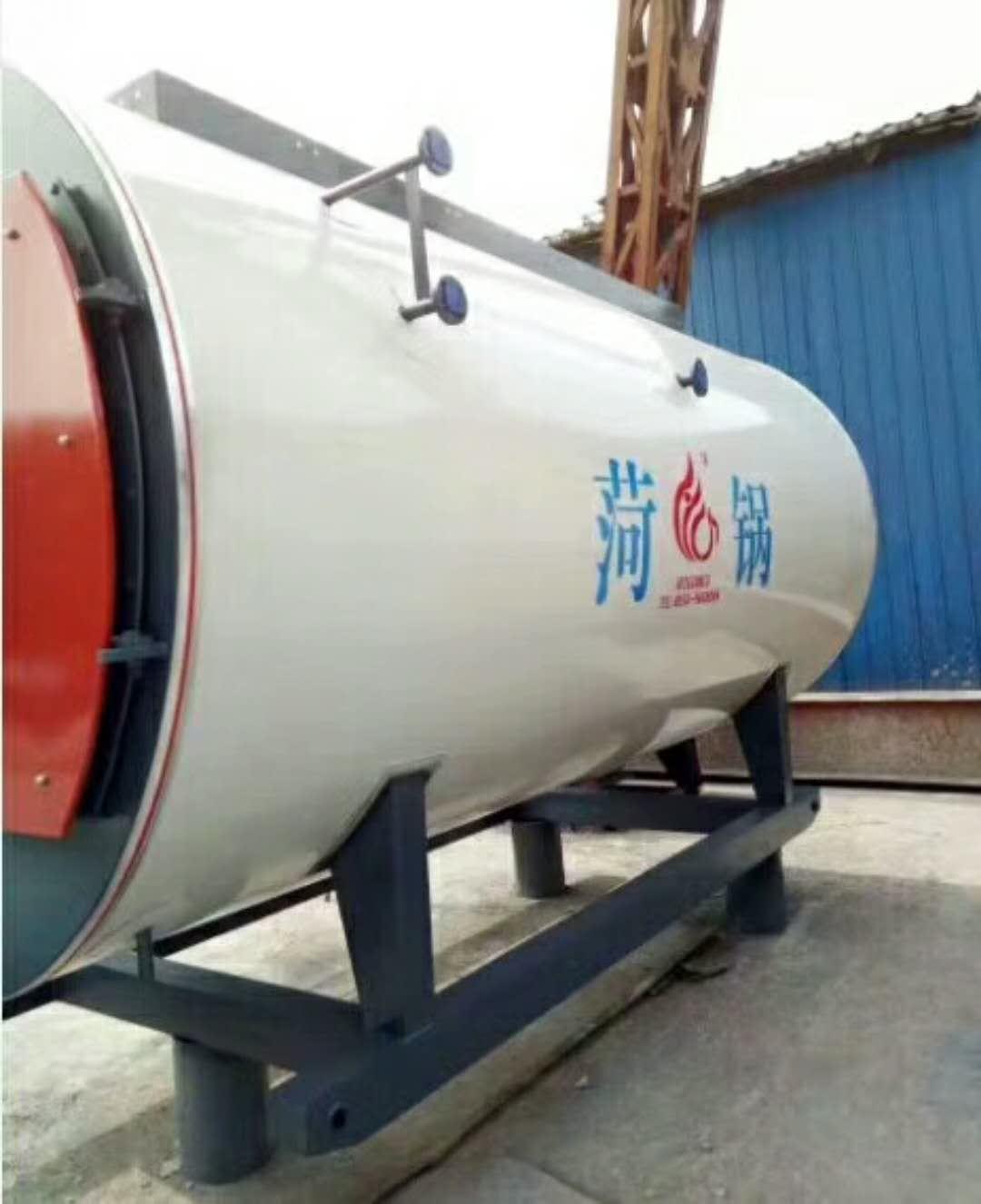
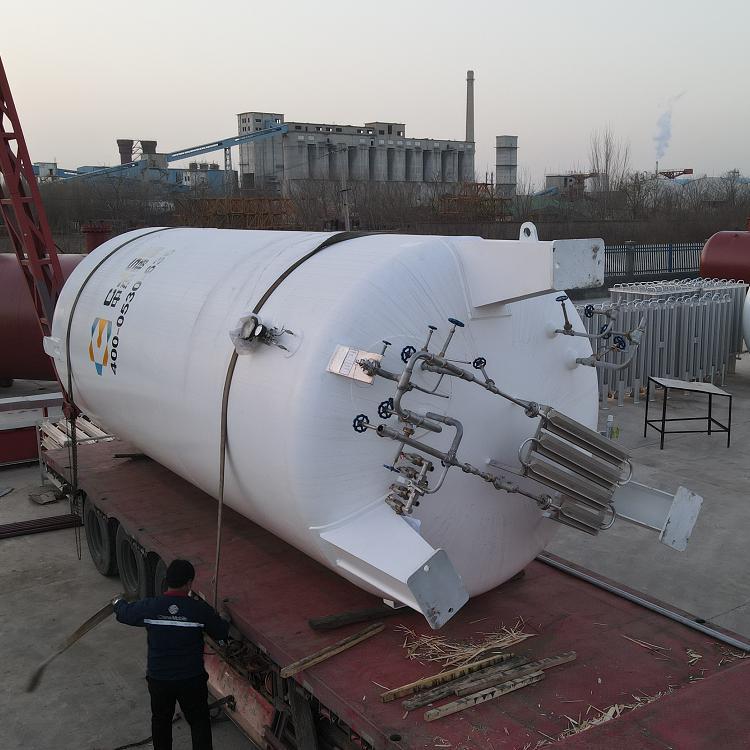


















Shandong Zhongjie Special Equipment's main products include: fuel (gas) boilers, organic heat carrier boilers, biomass boilers, waste heat recovery boilers, and other boiler products; vacuum insulation cryogenic pressure vessels such as LNG tanks, oxygen/nitrogen/argon tanks, and CO2 tanks; pressure vessel products such as denitrification engineering equipment, heat storage and energy storage equipment, and complete chemical equipment; central air conditioning and ventilation equipment such as ground (water) source heat pumps, air source units, water-cooled screw units, and air-cooled modular units. Planned products include large-scale energy centers, LNG transport vehicles, LNG tank containers, and other green energy equipment.
Carbon dioxide storage tanks' standard specifications can vary depending on design and application requirements. Here are some common standard parameters:
- Storage Capacity: The capacity of carbon dioxide tanks is typically expressed in kiloliters (L) or cubic meters (m), ranging commonly from a few thousand to tens of thousands of liters.
- Working Pressure: The working pressure of carbon dioxide tanks is usually around 20 to 25 MPa at room temperature, with the specific pressure determined by application needs and design standards.
- Design Temperature: The design temperature of carbon dioxide tanks is generally in the low-temperature range, typically between -40°C to -60°C, to accommodate the liquefaction and storage requirements of carbon dioxide.
- Material: Carbon dioxide tanks are commonly made of high-strength steel or alloy materials to withstand stress and loads under high pressure and low-temperature environments.
- Insulation: The interior of the tank is equipped with insulation to reduce heat transfer and liquid evaporation. The insulation is usually a multi-layer structure, including thermal insulation materials and an external protective layer.
- Safety Valve and Pressure Relief Devices: Tanks are equipped with safety valves and pressure relief devices to control internal pressure and prevent overpressure and explosions.
- Level Monitoring and Control: Tanks are fitted with level monitoring devices to monitor the liquid level inside. Timely monitoring and control of the level ensure the liquid stored within the tank remains within a safe range.
Note that specific standard parameters for carbon dioxide storage tanks may vary due to different design standards, application requirements, and manufacturers. When selecting and using carbon dioxide storage tanks, it is important to consider these factors.
In recent years, the peak development of low-temperature liquid storage tanks can be attributed to the following factors:
- Increased energy demand: With economic growth and population expansion, there's a rising need for energy. Low-temperature liquid storage tanks are primarily used for storing liquefied natural gas (LNG), liquid oxygen (LOX), liquid nitrogen (LIN), and other low-temperature liquid energy sources to meet the growing energy demand.
- Greenhouse gas emission reduction: These tanks can store and transport liquid carbon dioxide (CO2) for carbon capture and storage (CCS) technologies, helping to reduce greenhouse gas emissions. As environmental protection and climate change concerns rise, the demand for low-temperature liquid storage tanks in the CCS field also increases.
- Industrial development needs: The application of low-temperature liquid storage tanks in the industrial sector is also on the rise. For instance, in industries such as chemicals, pharmaceuticals, food and beverages, there is a need to store and transport low-temperature liquid raw materials or products like liquid nitrogen, liquid oxygen, and liquid ethylene. With the development of these industries, the demand for low-temperature liquid storage tanks also grows.
- Technological advancement and innovation: In recent years, there have been continuous advancements and innovations in the design, manufacturing, and transportation of low-temperature liquid storage tanks. The application of new materials, optimization of tank structures, and improvements in safety control systems have made these tanks safer and more reliable, further propelling their peak development.
In summary, factors such as increased energy demand, greenhouse gas emission reduction, industrial development needs, and technological advancement and innovation have collectively driven the peak development of low-temperature liquid storage tanks in recent years. As related industries continue to develop and technology advances,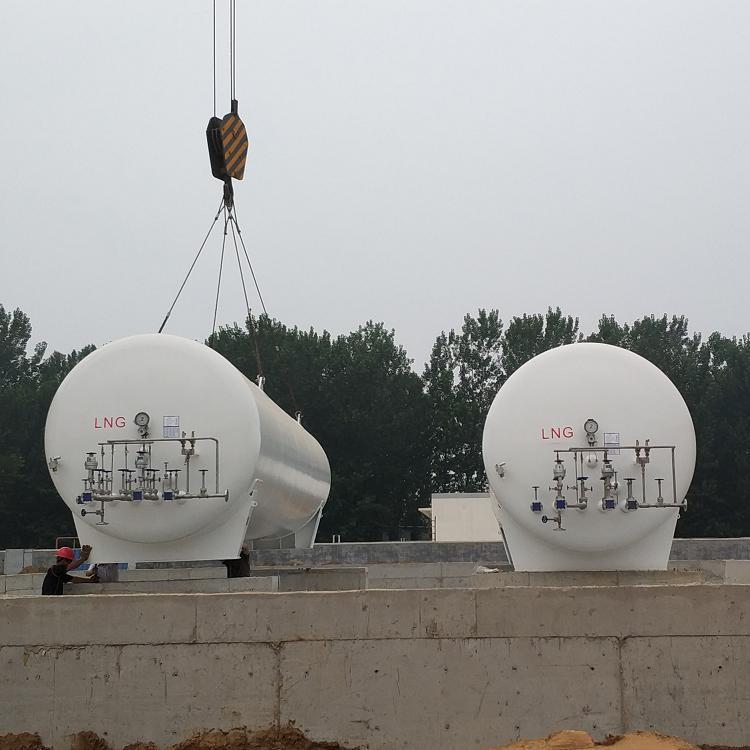
The automated maintenance system for carbon dioxide storage tanks typically includes the following main components:
- Pressure Maintenance System: Monitors and adjusts the internal pressure of the tank to ensure the carbon dioxide within remains at a safe and stable pressure range. This system includes pressure sensors, control systems, pressure regulating valves, and pressure reserve devices.
- Temperature Control System: Monitors and adjusts the internal temperature of the tank to maintain the carbon dioxide within an appropriate temperature range. This system includes temperature sensors, control systems, and temperature regulating devices.
- Level Monitoring System: Measures and monitors the liquid level within the tank to ensure the carbon dioxide level stays within a safe range. The system can utilize float level gauges, pressure level gauges, and ultrasonic level gauges.
- Leak Detection System: Monitors for leaks in the tank and pipeline systems, detecting and alerting to them promptly. This system can employ gas sensors, liquid sensors, and leak alarms.
- Fire Detection and Extinguishing System: Monitors for fires in the tank area and takes appropriate extinguishing measures. The system includes fire detectors, alarms, and extinguishing equipment.
- Remote Monitoring and Control System: Monitors and controls the operational status and parameters of the tank remotely, enabling remote operation and management. This system can connect via network to provide real-time data and remote control functions.
These are the main components of a typical automated maintenance system for carbon dioxide storage tanks. The specific system configuration and functions can be customized according to the tank's design requirements and application scenarios. These automated maintenance systems enhance the tank's safety, stability, and reliability, reducing the need for manual intervention and operational risks.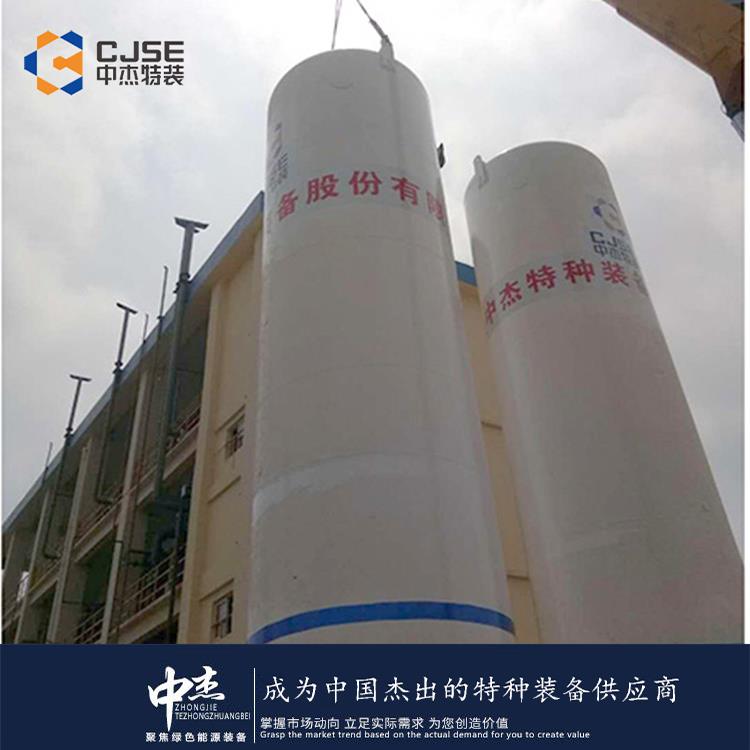
When storing carbon dioxide tanks, the following requirements must be followed to ensure safety and effectiveness:
Ventilation: Tanks should be stored in well-ventilated areas to prevent the accumulation of carbon dioxide gas. Ensure there is adequate air circulation around the tank to avoid gas buildup and asphyxiation risks.
Fire and Explosion Prevention: Keep tanks away from ignition sources, high-temperature areas, and flammable materials. Avoid open flame operations near the tank to prevent fire and explosion risks.
Sunlight Avoidance: Store tanks in locations shielded from direct sunlight to prevent overheating and pressure increase. Direct sunlight can raise tank temperatures, increasing the risk of leaks and explosions.
Mechanical Damage Prevention: Keep tanks away from machinery and heavy objects to avoid collisions and damage. Mechanical damage can lead to tank leaks or ruptures, causing safety hazards.
Labeling and Warning Signs: Clearly label tanks with information such as the type of gas stored and pressure. Set up warning signs around the tanks to remind personnel of their presence and related safety precautions.
Regular Inspections: Conduct regular inspections of the tank's exterior, valves, and connections to ensure they are intact. Take prompt corrective actions if any abnormalities are found.
Storage Capacity Control: Control the storage capacity of the tank to prevent exceeding the rated capacity. Overfilling can lead to excessive tank pressure, increasing safety risks.
Storage Records: Keep records of the tank's usage, including filling dates, quantities, and inspection records. Regularly inspect and maintain the tank, and retain relevant records.
Note that specific storage requirements may vary depending on tank type and application. When storing carbon dioxide tanks, operate according to relevant regulations and standards and consult with experts to ensure safety and effectiveness.
Zhongjie Special Equipment upholds the grand vision of "realizing employees' dreams, creating value for customers, and striving for the prosperity and strength of our motherland," and is dedicated to the development of the green energy equipment industry. We offer society products and services with high cost-performance!
WeChat Official Account

Scan to follow Official Account



















