


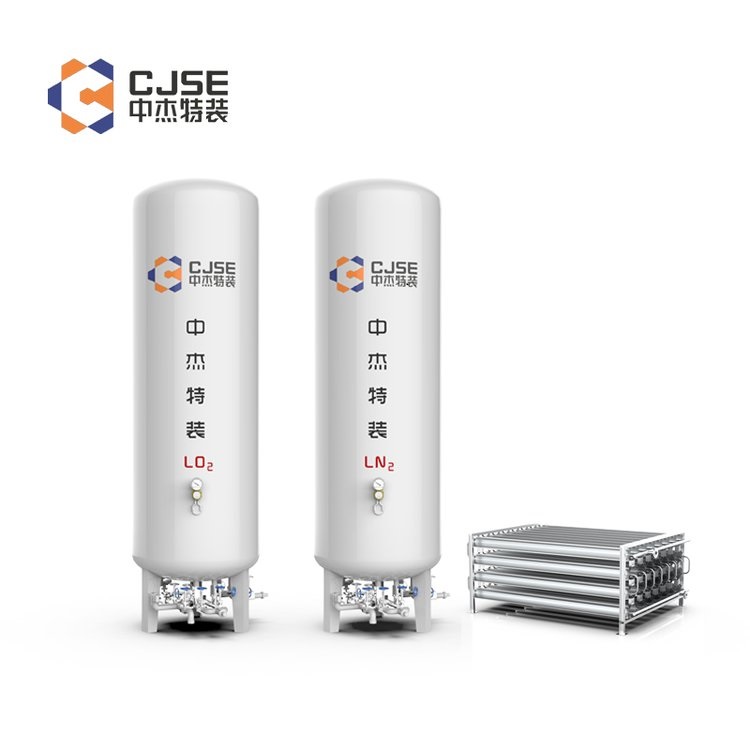

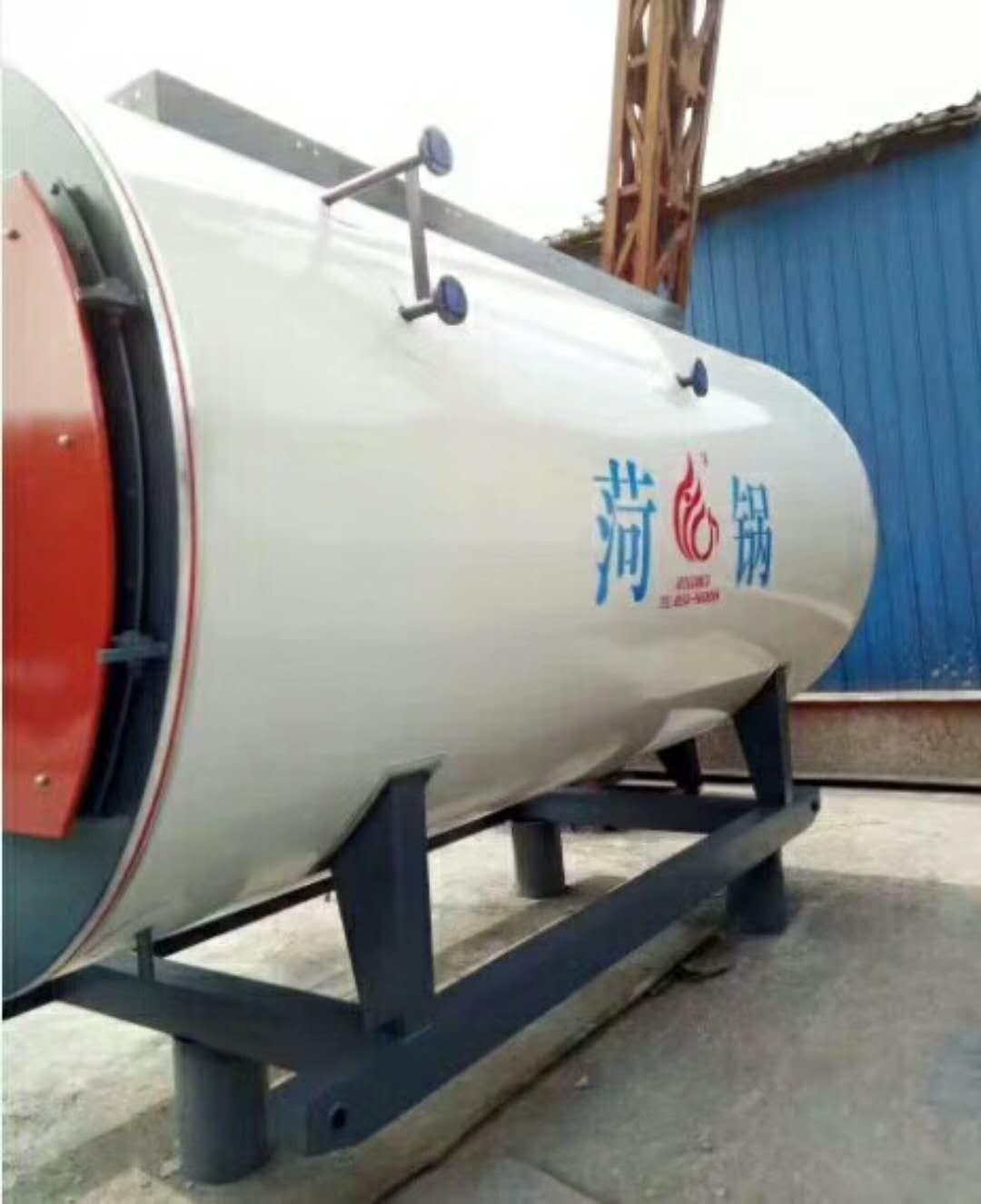
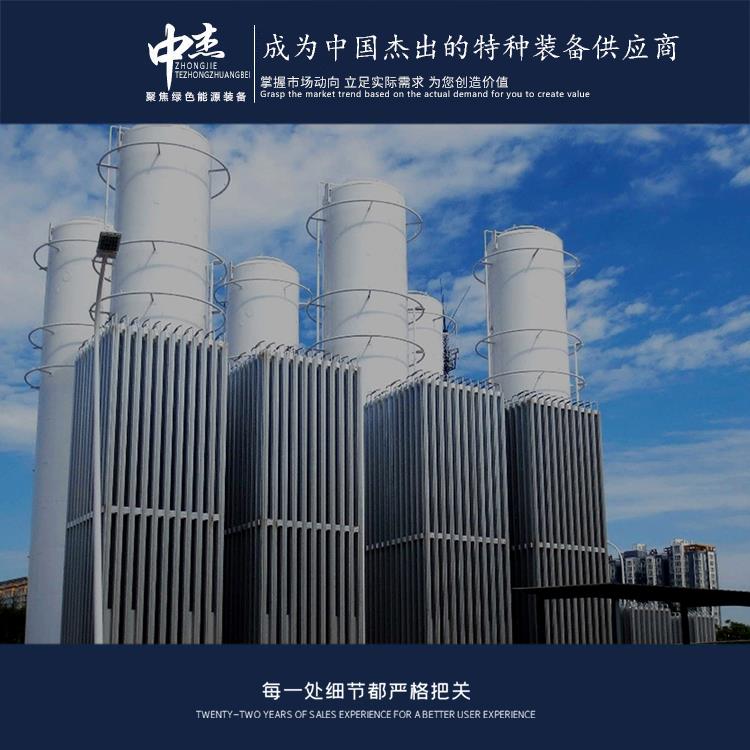


















Shandong Zhongjie Special Equipment (formerly Heze Boiler Factory Co., Ltd.) holds an A-grade boiler manufacturing license, an A2-grade pressure vessel manufacturing license, an A2-grade pressure vessel design license, a B-grade boiler installation license, and GB2/Class and GC2/Class pressure pipeline installation licenses, as well as a mechanical and electrical equipment installation contracting qualification. It is a member of the China Boiler and Water Treatment Association, the China Chemical Equipment Association, and the director unit of the Shandong Equipment Manufacturing Association. The company has also passed the ISO9001 Quality Management System, ISO14001 Environmental Management System, OHSAS18001 Occupational Health and Safety Management System certifications, and the American ASME/U2 certification.
The primary reason for pre-cooling the liquid oxygen tank before use is to lower the tank's internal temperature to below the boiling point of liquid oxygen, enabling the conversion of oxygen to a liquid state.
The boiling point of liquid oxygen is -183°C; at room temperature, oxygen is in a gaseous state. Liquid oxygen tanks require cooling the oxygen below its boiling point to convert it into a liquid for storage and supply.
The pre-cooling process typically includes the following steps:
Clean Storage Tank: It is necessary to clean the tank first to ensure there are no impurities or contaminants inside, to avoid affecting liquid oxygen.
Emptying and Exhausting: To empty the gas inside the storage tank and expel it through the exhaust system to reduce the gas content within the tank.
Add Liquid Nitrogen: Inject liquid nitrogen into the storage tank. The low temperature of the liquid nitrogen can quickly cool the air and walls inside the tank, thereby lowering the tank's temperature.
Waiting for Cooling: The liquid nitrogen inside the storage tank will gradually lower the temperature of the tank through heat conduction until it reaches below the boiling point of liquid oxygen.
The purpose of pre-cooling is to ensure the tank's temperature is low enough to meet the storage and supply requirements for liquid oxygen. Pre-cooling can reduce the evaporation and loss of liquid oxygen, and also helps maintain the safety and stability of the tank.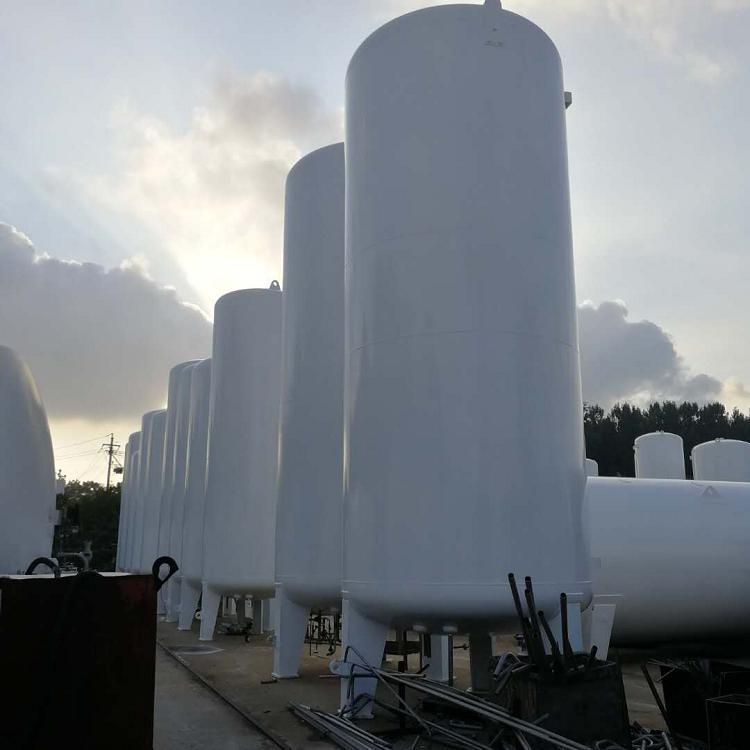
Routine inspections and maintenance of liquid oxygen tanks are crucial for their safe operation. The following are general steps for daily inspections and maintenance of liquid oxygen tanks:
Visual Inspection: Regularly inspect the exterior of the tank, including the shell, welds, valves, and fasteners, etc. Pay attention to any signs of cracks, corrosion, deformation, or other abnormal conditions.
Leak Detection: Utilize appropriate leak detection equipment to inspect tanks and connecting areas for leaks. Leak detection methods such as gas detectors or liquid oxygen probes can be employed.
Pressure Testing: Regularly conduct pressure tests to inspect the tank's sealing and pressure resistance. Perform pressure tests according to relevant standards and specifications, and record the test results.
Valve and Fitting Inspection: Verify that the tank's valves and fittings are functioning properly and there are no loose or damaged conditions. Ensure the valves operate smoothly and reliably.
Insulation Layer Inspection: Verify that the storage tank's insulation layer is intact without any damage or detachment. Repair or replace any damaged insulation materials to ensure effective insulation.
Cleaning and Drainage: Regularly clean the interior of the tank to remove accumulated impurities and dirt. Regularly drain to prevent杂质 and sediment in liquid oxygen from damaging the tank.
Safety Equipment Inspection: Examine the safety equipment around the storage tanks, such as fire separation areas and alarm systems, to ensure they are functioning properly.
Record and Document Management: Record the results of each inspection and maintenance, including the inspection date, contents, identified issues, and corrective measures. Establish comprehensive management records and documentation to facilitate tracking and management of the tank's operational status.
Please note that inspections and maintenance of liquid oxygen tanks should be conducted by trained personnel, adhering to relevant regulations and standards. Ensure safety during maintenance and operation, and consult experts for accurate guidance.
The filling of low-temperature liquid nitrogen tanks refers to the process of transferring liquid nitrogen from an external supply source into the tank. Below is an explanation of the filling process for low-temperature liquid nitrogen tanks:
Preparation: Before filling the liquid nitrogen tank, preparation work must be conducted. This includes inspecting the tank's condition and safety, ensuring the tank is clean, free of impurities, and contaminants. Additionally, check the quality of the liquid nitrogen from the supply source and the safety of the supply pipeline.
Connect supply source: Link the liquid nitrogen supply source to the liquid outlet of the storage tank. Ensure the connection is securely fastened to prevent leaks.
Control Liquid Level: During the bottling process, it is necessary to control the liquid nitrogen level to prevent overfilling or overflow. A liquid level gauge or a liquid level control system can be used to monitor and control the level.
Slow Injection: The injection of liquid nitrogen should be done slowly to prevent rapid vaporization and increased pressure. Appropriate valves and flow control devices can be used to regulate the injection rate.
Monitor Pressure: During the canning process, it is necessary to monitor the tank's pressure to ensure it remains within the safe range. Pressure gauges or pressure sensors can be used for monitoring.
Canning Complete: Stop injecting liquid nitrogen when the liquid level reaches the predetermined filling quantity or the tank's capacity limit. Disconnect from the supply source and ensure the sealing integrity of the filling port.
Safe Operation: Throughout the bottling process, it is essential to adhere to relevant safety regulations and operating guidelines. Liquid nitrogen is highly flammable and extremely cold, so operators must wear appropriate personal protective equipment and ensure the operation environment is free of any ignition sources.
When bottling liquid nitrogen, be mindful of its low-temperature properties and safety. Ensure safe operation and control throughout the bottling process to guarantee the safe operation of the storage tank and effective storage of the liquid nitrogen.
Prior to using the liquid oxygen tank, the following preparations must be made:
Safety Inspection: Ensure the tank and its surrounding environment are safe. Check for any damage, leaks, or other safety hazards on the tank. Make sure there are no flammable materials or other hazardous items around the tank.
Tank Preparation: Inspect the tank's exterior, including the shell, welds, valves, and fittings. Ensure the tank has no visible damage or corrosion. Check that the insulation layer is intact and undamaged.
Liquid Oxygen Filling: Utilize liquid oxygen delivery equipment to fill the tank with liquid oxygen. Ensure that the flow rate and pressure of the liquid oxygen are maintained within a safe range during the filling process.
Pressure Control: Storage tanks should be equipped with pressure control devices to ensure the internal pressure of the tank remains within a safe range. Inspect and adjust the pressure control devices to ensure they are functioning properly.
Valve Operation: Check that the valves and connections on the tank are functioning properly. Ensure the valves open and close smoothly and reliably. Adjust the opening and closing status of the valves as needed.
Safety equipment: Inspect the safety equipment around the storage tank, such as fire separation areas and alarm systems, to ensure they are functioning properly.
Operator Training: Ensure operators are proficient in the safe operation of liquid oxygen tanks.
Shandong Zhongjie Special Equipment, welcome customers to our factory for business discussions.
WeChat Official Account

Scan to follow Official Account



















