


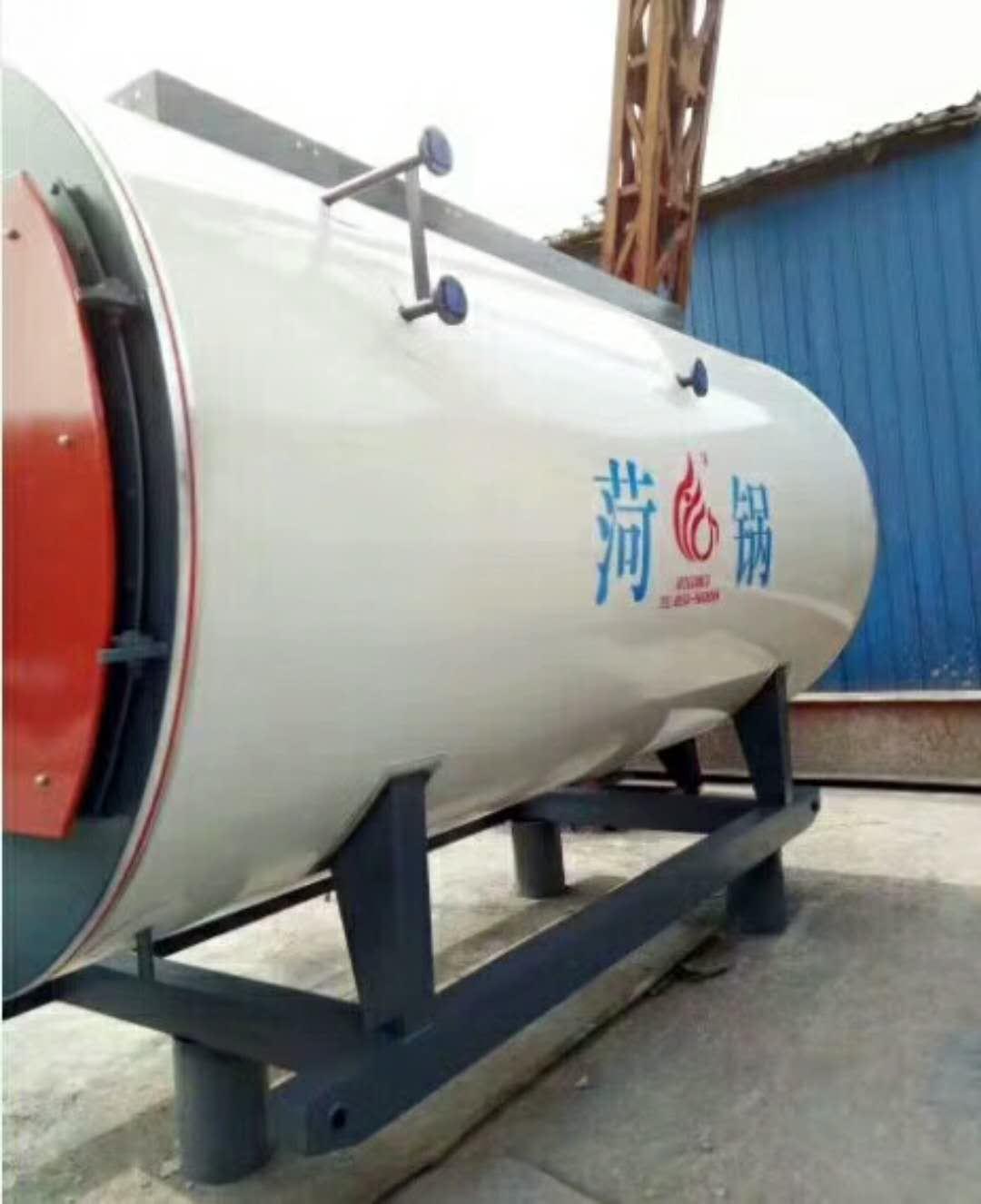

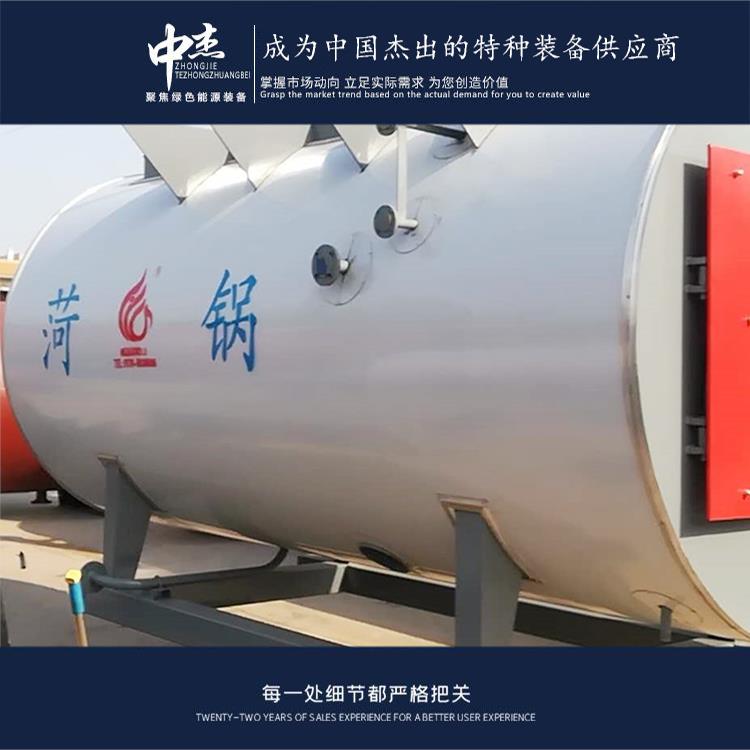
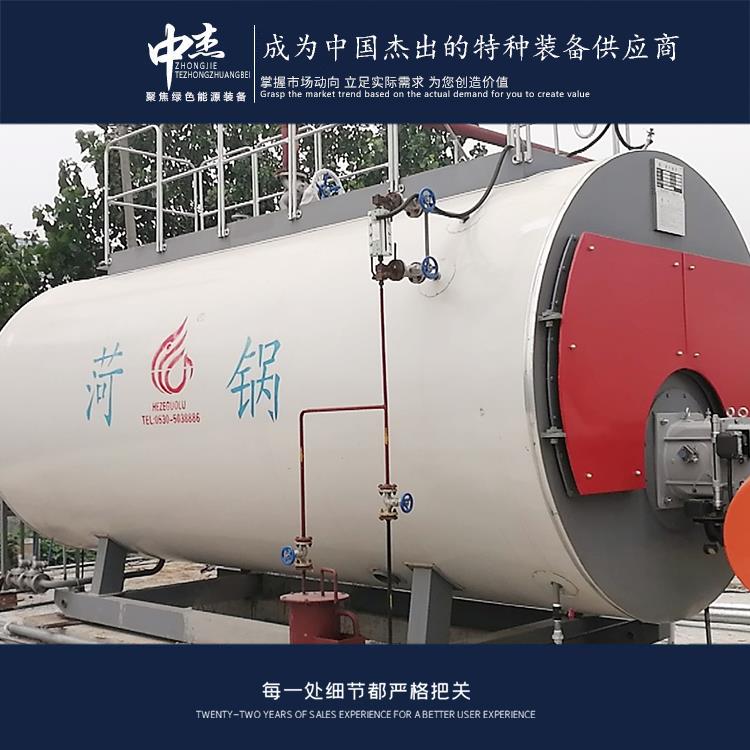


















Shandong Zhongjie Special Equipment (formerly Heze Boiler Factory Co., Ltd.) holds an A-grade boiler manufacturing license, an A2-grade pressure vessel manufacturing license, an A2-grade pressure vessel design license, a B-grade boiler installation license, and GB2/GB3-grade pressure pipeline installation licenses, as well as equipment and machinery installation contracting qualifications. It is a member of the China Boiler and Water Treatment Association, the China Chemical Equipment Association, and a director unit of the Shandong Equipment Manufacturing Association. The company has also passed certifications for the ISO9001 Quality Management System, ISO14001 Environmental Management System, OHSAS18001 Occupational Health and Safety Management System, and the American ASME/U2 certification.
In the combustion chamber of a thermal oil furnace, adjusting the air door during low flame conditions is crucial. Here are some common knowledge and precautions:
The function of the air door: The air door is a key component in the combustion chamber that controls the supply of combustion air. By adjusting the opening of the air door, the flow of combustion air can be controlled, thereby influencing the oxygen supply and combustion effect during the combustion process.
Adjustment during low flame conditions: Under low flame conditions, the burner needs to maintain a stable combustion to ensure combustion efficiency and heat output. In this case, the opening of the air door needs to be adjusted appropriately to maintain an adequate supply of combustion air. Generally, the opening of the air door is relatively smaller during low flame to maintain an appropriate oxygen supply, avoiding incomplete combustion or instability.
The ratio of combustion air to fuel: Under low flame conditions, it is necessary to ensure the appropriate ratio of combustion air to fuel. Excessive combustion air can lead to incomplete combustion and energy waste, while insufficient combustion air can result in unstable combustion and the production of harmful gases. By adjusting the opening of the air door, the ratio of combustion air to fuel can be controlled to achieve a stable combustion effect.
Burner adjustment and optimization: During the installation and adjustment of the combustion chamber of the thermal oil furnace, appropriate adjustment and optimization are required. Through actual operation and monitoring, the opening of the air door and other parameters should be adjusted to achieve the best combustion effect and energy efficiency performance. This requires bas
To ensure proper safety procedures for industrial boilers, attention should be given to the following aspects:
- Adhere to laws and regulations: Understand and comply with relevant laws, regulations, and standards, including those governing boiler safety management and standards for boiler operation and maintenance. Ensure compliance with legal requirements throughout the process.
- Establish a comprehensive management system: Develop a robust industrial boiler safety management system, clearly define responsibilities and authorities, and standardize operational procedures and safety measures. Draft operational guidelines and emergency response plans to ensure orderly safety procedures.
- Training and education: Conduct training and education for personnel involved in industrial boiler safety procedures, enhancing their safety awareness and skill levels. This includes training for boiler operators, maintenance staff, and management personnel.
- Regular inspections and maintenance: Conduct regular inspections and maintenance of industrial boilers to ensure proper operation and safety performance. This includes checking and maintaining critical components such as the combustion system, water level control, safety valves, and pressure gauges.
- Safety equipment and facilities: Equip necessary safety equipment and facilities, such as safety valves, pressure gauges, water level indicators, and burners. Ensure the proper operation and effectiveness of these facilities.
- Regular inspections and assessments: Conduct regular inspections and assessments of industrial boilers to ensure compliance with safety requirements. This includes regular pressure tests, water quality inspections, and combustion efficiency evaluations.
- Safety records and document management: Establish a comprehensive system for safety records and document management, recording the operation, maintenance, and accident records of industrial boilers. Update and preserve relevant safety documents promptly.
- Regular drills and emergency response training: Organize regular safety drills and emergency response training to enhance the ability to respond to emergencies and improve the efficiency of emergency handling.
The above are basic points for ensuring proper safety procedures for industrial boilers. Specific operations should be tailored to actual circumstances and requirements.
Excessive exhaust gas temperature in a thermal oil boiler may be due to several reasons:
Incomplete combustion: If the fuel is not fully combusted during the boiler's combustion process, it results in a large amount of unburned fuel and harmful substances in the flue gas, raising the exhaust gas temperature. Possible causes include insufficient fuel supply, incorrect burner adjustment, or burner wear.
Excess air: Excessive air can lower the combustion temperature, making the heat in the flue gas insufficient to reduce the flue gas temperature to a reasonable level. Possible causes include incorrect burner adjustment or excessively wide air door openings.
Chimney blockage: Accumulated ash, coking, or other impurities in the chimney can obstruct the flow of flue gas, increasing its residence time and leading to higher exhaust gas temperature.
Abnormal thermal oil flow: Abnormal thermal oil flow, whether too high or too low, can lead to uneven heat transfer, increasing the flue gas temperature.
Boiler overheating: Improper temperature control in the thermal oil boiler can cause overheating, raising the exhaust gas temperature.
Boiler design issues: Design problems such as a narrow chimney or poor flue gas flow can also lead to excessively high exhaust gas temperature.
To address the issue of excessive exhaust gas temperature, a comprehensive inspection and analysis of the thermal oil boiler is required. Solutions can include adjusting burner parameters, cleaning the chimney, checking thermal oil flow and temperature control, etc. In severe cases, modifications or repairs to the boiler system may be necessary. Additionally, regular maintenance and inspections are crucial preventive measures against excessive exhaust gas temperature.
Industrial boilers, during their long-term operation, can accumulate scale and sediments, affecting heat exchange efficiency and the normal operation of the boiler. Here are some effective descaling methods:
1. Mechanical Cleaning: This involves using cleaning equipment and tools to wash away scale and sediments inside the boiler with high-pressure water or mechanical brushes. This method is suitable for lighter scale and sediments.
2. Chemical Cleaning: Utilize chemical cleaning agents to dissolve scale and sediments through chemical reactions. Choose the appropriate cleaning agent based on the composition and nature of the scale, and follow the instructions provided. Safety operations are crucial to avoid damage to equipment and the environment.
3. Acid Cleaning: Acid cleaning is a common descaling method for hard-to-dissolve scale and sediments. Common acid cleaning agents include, etc., and the appropriate agent and concentration should be selected based on the specific situation. Safety operations are essential to prevent harm to equipment and personnel.
4. Alkaline Cleaning: Alkaline cleaning is a descaling method for specific types of scale, suitable for alkaline scale. Common alkaline cleaning agents include, etc., and the appropriate agent and concentration should be selected based on the specific situation. Safety operations are crucial to avoid harm to equipment and personnel.
5. Physical Descaling: Physical descaling methods include ultrasonic cleaning and electro-dissolution. Ultrasonic cleaning uses the vibration effect of ultrasound to shake the scale into pieces. Electro-dissolution utilizes the principle of electrolysis to dissolve scale through the action of electricity. These physical descaling methods are suitable for special situations and specific types of scale.
When selecting a descaling method, it is necessary to consider the specific conditions of the boiler.
Our company attaches great importance to technological innovation and research and development. We have one municipal enterprise technical center in Heze City, with test facilities for non-destructive testing,理化analysis, welding, hydrostatic testing, and more. We are equipped with over 600 types of instruments and equipment, including CNC machines, X-ray flaw detectors, digital ultrasonic flaw detectors, mechanical property testing machines, chemical analyzers, spectrometers, tensile testing machines, plasma welding machines, and others. Our developed key products such as temperature and pressure vessel welding, biomass boiler emission reduction, and waste heat recovery have successively entered several Shandong Province Ministry of Industry and Information Technology innovation projects, key projects of Shandong Province, and Heze City innovation and excellence projects, etc. We have累计 obtained 27 authorized utility models, 16 authorized inventions, participated in drafting 2 standards, 2 industry standards, and registered 15 trademarks. The deep cryogenic vessel processing technology jointly developed by our technical team and Professor Yajiang Li of Shandong University, using the international plasma arc + filler wire tungsten inert gas welding (PAW-GTAW) technology, has been appraised at the provincial level for scientific and technological achievements, and its technical level has reached international standards in the field of deep cryogenic vessel manufacturing.
Choose ZJET Customized Solutions, let's create brilliance together!
WeChat Official Account

Scan to follow Official Account



















