


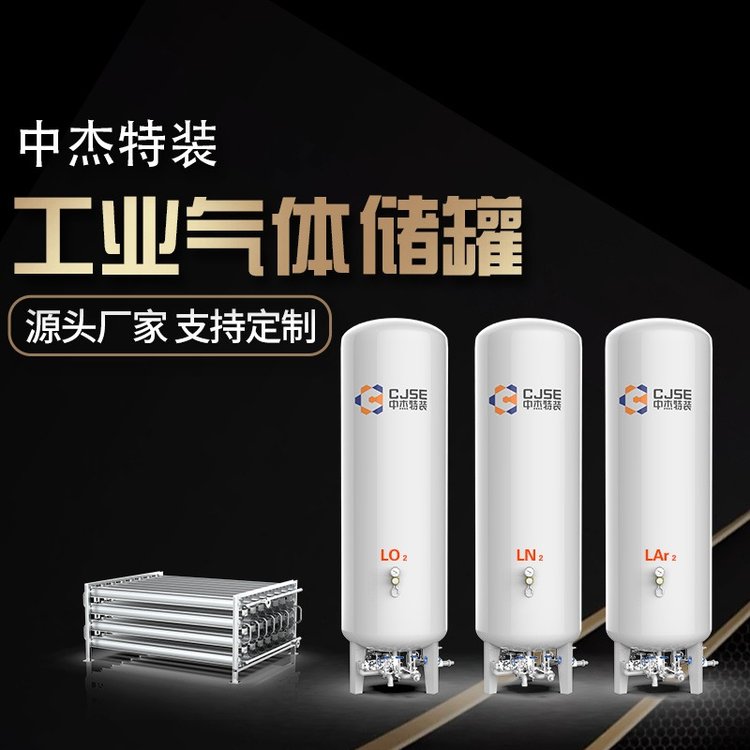

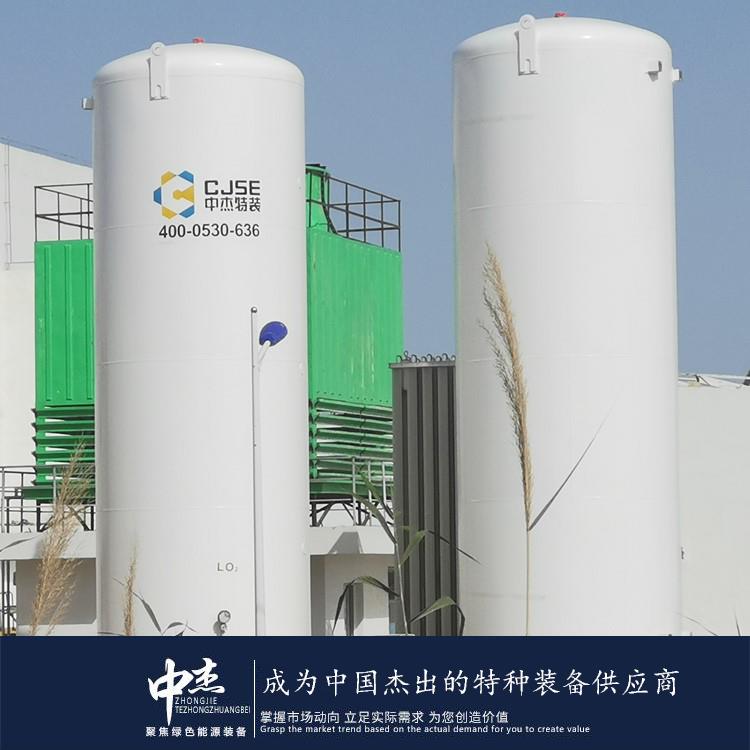
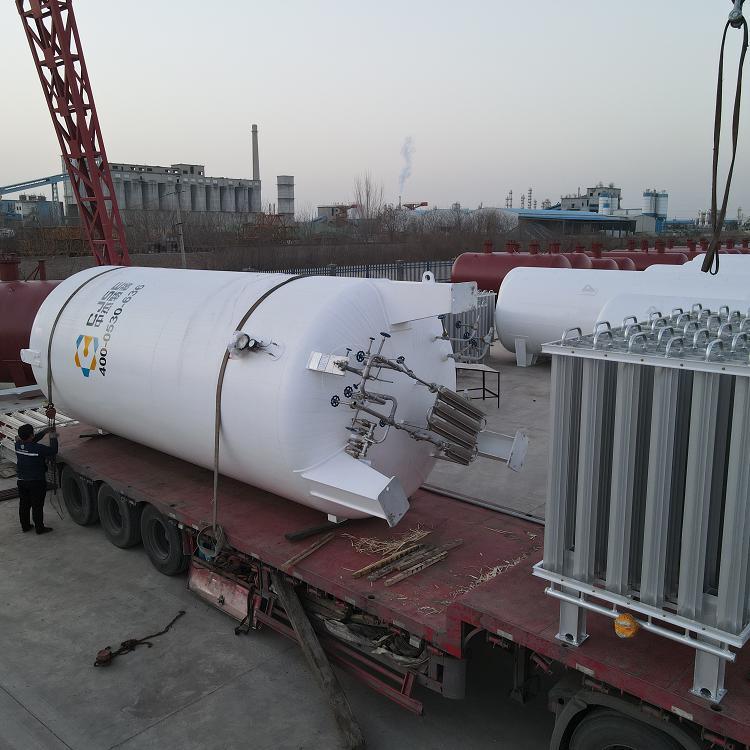


















Shandong Zhongjie Special Equipment's main products include: fuel (gas) boilers, organic heat carrier boilers, biomass boilers, waste heat boilers, and other boiler products; vacuum insulation cryogenic pressure vessels such as LNG tanks, oxygen/nitrogen/argon tanks, CO2 tanks; pressure vessel products like denitrification engineering equipment, heat storage and energy storage equipment, complete chemical equipment sets; central air conditioning and ventilation equipment such as ground (water) source heat pumps, air source units, water-cooled screw units, and air-cooled modular units. Planned products include large-scale energy centers, LNG transport vehicles, LNG tank containers, and other green energy equipment.
Protection techniques for liquid nitrogen tanks include the following:
Wear protective gear: When operating liquid nitrogen tanks, it is mandatory to wear appropriate protective gear, including gloves, protective clothing, and non-slip shoes. This gear helps protect the skin from the low temperatures of liquid nitrogen and other hazards.
Avoid direct contact: Liquid nitrogen is extremely cold and can cause chilling. Hence, it is crucial to avoid direct contact with liquid nitrogen, especially with the skin. Use tools or utensils for handling to prevent hand contact with liquid nitrogen.
Ensure good ventilation: In the operational area of the liquid nitrogen storage tank, it is essential to maintain adequate ventilation to expel gases produced by the evaporation of liquid nitrogen. Keep air flowing to avoid excessive oxygen concentration, and reduce the risk of fire and explosion.
Prevent Leaks: Regularly inspect liquid nitrogen tanks for leaks and equip with leak detectors and alarm systems. In case of a leak, take immediate action to control and repair it. Avoid the hazards of liquid nitrogen leaks to personnel and the environment.
Fire prevention measures: Nitrogen has a low boiling and freezing point, which can easily cause fires. Measures such as setting up firewalls around liquid nitrogen storage tanks and using fire-retardant coatings are taken to prevent the occurrence and spread of fires.
Electrostatic Protection: Electrostatic buildup in liquid nitrogen tanks can cause sparks, increasing the risk of fire. Measures such as using electrostatic conductive materials and anti-static equipment should be taken to reduce the accumulation and release of static electricity.
Regular inspections and maintenance: Conduct regular checks on the condition of liquid nitrogen tanks and related equipment, including valves, pipes, pressure gauges, etc. Ensure the equipment is in perfect condition, and promptly repair or replace any damaged parts.
Waste Gas Treatment: Liquid nitrogen tanks produce waste gas during operation, which must be properly treated.
The application of strain-hardening in austenitic stainless steel on low-temperature pressure vessels is a common method, which can enhance the material's strength and durability. Here are some details regarding the application of strain-hardening in austenitic stainless steel on low-temperature pressure vessels:
Principle of Strain Hardening: Strain hardening is achieved by introducing plastic deformation into the material, which alters the crystal structure and thereby increases the material's strength. In Austenitic stainless steel, strain can be introduced through methods such as cold working (e.g., cold rolling, cold drawing) or heat treatment (e.g., solution treatment and cold deformation), leading to dislocations and grain boundary sliding in the crystal structure, thereby enhancing the material's strength.
Advantages in Low-Temperature Applications: Austenitic stainless steel exhibits excellent corrosion resistance and low-temperature toughness in cold environments. Strain hardening can further enhance the strength and durability of austenitic stainless steel, enabling it to perform in low-temperature pressure vessels. Under low-temperature conditions, strain hardening effectively resists plastic deformation and fracture, improving the material's tensile strength and impact resistance.
Application Cases: The strain-hardening of austenitic stainless steel is widely used in low-temperature pressure vessels. For instance, in low-temperature containers such as liquid nitrogen, liquid oxygen, and liquid argon tanks, strain-hardened austenitic stainless steel is commonly used as a structural material. These containers must withstand high pressure and impact loads at low temperatures. Strain-hardening enhances the material's strength and durability, ensuring safe operation of the vessels.
It is important to note that strain hardening of austenitic stainless steel must be conducted at the appropriate temperature and deformation conditions to avoid excessive deformation and material embrittlement. When designing and manufacturing low-temperature pressure vessels, the specific engineering requirements and material characteristics should be considered to rationally select and apply strain-hardening techniques for austenitic stainless steel.
Standard parameters for liquid oxygen storage tanks typically include the following:
Capacity: The capacity of liquid oxygen tanks is typically expressed in liters or cubic meters, with common capacities ranging from a few liters to several thousand liters.
Working Pressure: The working pressure of liquid oxygen tanks is typically expressed in megapascals (MPa) or bars (bar), with a common working pressure range varying from 0.2 MPa to 2.5 MPa.
Design Temperature: The design temperature for liquid oxygen tanks is typically expressed in degrees Celsius, with common design temperature ranges varying from -196°C to -150°C.
Material: The primary material for liquid oxygen storage tanks is typically stainless steel, which boasts excellent corrosion resistance and low-temperature performance.
Insulation Layer: Liquid oxygen tanks are typically equipped with an insulation layer to minimize evaporation losses of liquid oxygen. The material for the insulation layer is usually a multi-layer composite material or foam glass.
Safety Valve: Liquid oxygen storage tanks must be equipped with a safety valve to control internal pressure and prevent the tank from bursting due to excessive pressure.
Leak Detectors: Liquid oxygen tanks are typically equipped with leak detectors to promptly detect and alert for any liquid oxygen leaks.
Appearance Design: The appearance design of liquid oxygen storage tanks typically conforms to relevant standards and regulations, including exterior color, markings, and safety warning signs.
It's important to note that the specific parameters of liquid oxygen tanks can vary depending on the manufacturer and application requirements. The ones listed above are general standard parameters commonly encountered. In actual use, one should choose a liquid oxygen tank that fits the specific circumstances.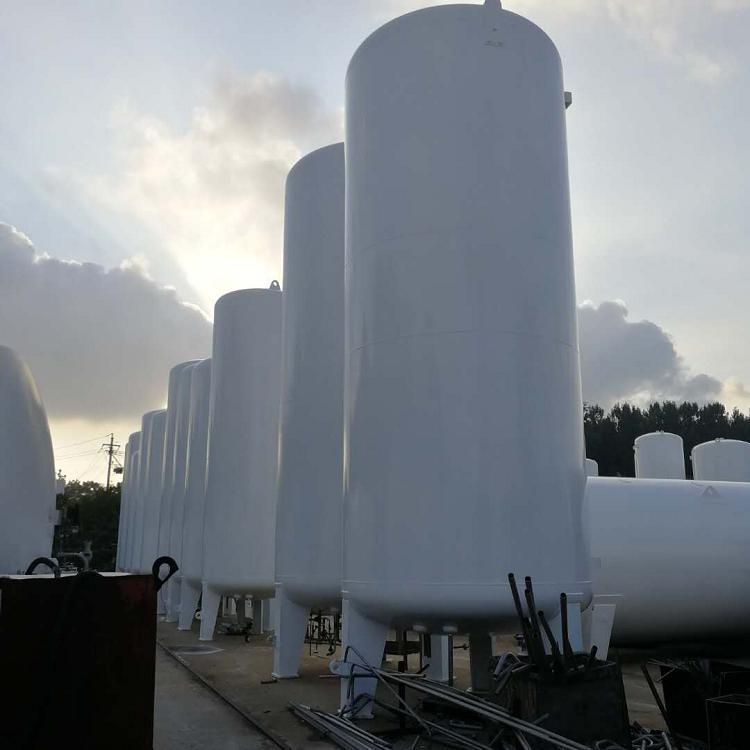
The temperature difference between the interior and exterior of a low-temperature liquid storage tank depends on various factors, including the tank's design, insulation performance, the temperature of the liquid, and the ambient temperature. Generally, the temperature inside the low-temperature liquid storage tank is much lower than that of the external environment.
Low-temperature liquid storage tanks are commonly used for storing liquefied nitrogen, oxygen, argon, and other low-temperature liquids. These liquids have very low boiling points, usually below -100 degrees Celsius. To maintain the low temperature of the liquids, the internal insulation of the tank must be excellent to minimize heat transfer and evaporation loss.
Low-temperature liquid storage tanks typically offer lower temperature variations. Generally, the internal temperature of the tank can be maintained around the boiling point of the liquid, usually several dozen degrees cooler than the external environment. The specific temperature difference depends on the tank's design and insulation properties, as well as the characteristics of the liquid.
It's important to note that the temperature differences in low-temperature liquid storage tanks may change over time. As time passes, the insulating material's performance may be affected by wear or aging, leading to increased temperature differences. Therefore, regular inspection and maintenance of the tank's insulating layer are crucial to ensure its effective and stable insulating performance.
Zhejiang Jietai adheres to the grand vision of "realizing employees' dreams, creating customer value, and striving for the prosperity and strength of our motherland," focusing on the development of green energy equipment industry. We dedicate high-quality, cost-effective products and services to society!
WeChat Official Account

Scan to follow Official Account



















