


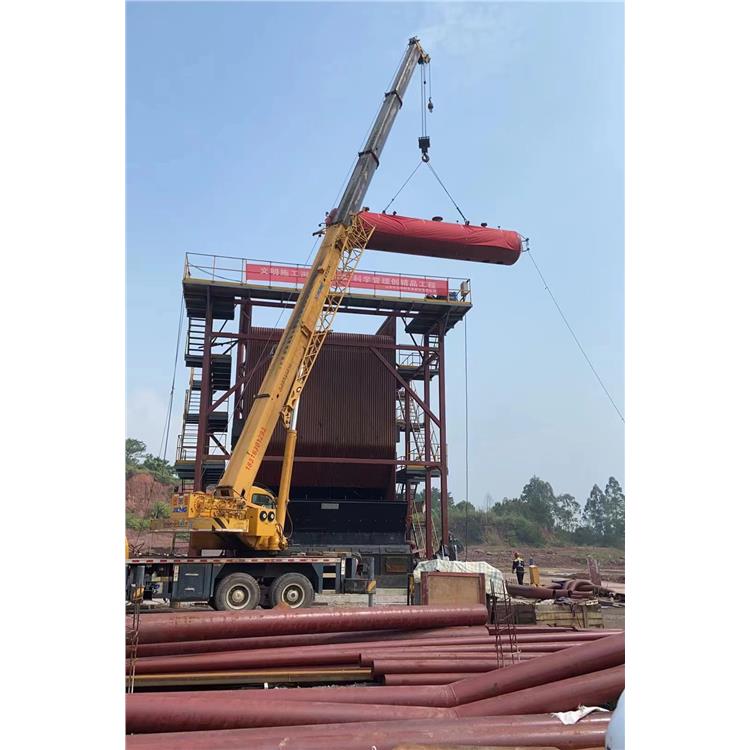


















Shandong Zhongjie Special Equipment's main products include: fuel (gas) boilers, organic heat carrier boilers, biomass boilers, waste heat boilers, and other boiler products; vacuum insulation cryogenic pressure vessels such as LNG tanks, oxygen-nitrogenargon tanks, and CO2 tanks; pressure vessel products such as denitrification engineering equipment, heat storage and energy storage equipment, and complete chemical equipment; central air conditioning and HVAC equipment such as ground (water) source heat pumps, air source units, water-cooled screw units, and air-cooled modular units. Planned products include large-scale energy centers, LNG transport vehicles, LNG tank containers, and other green energy equipment.
To burn biomass pellets and avoid coking issues, the following measures can be taken:
Appropriate Particle Size: The size of biomass pellets is crucial for combustion efficiency. The particle size should be controlled within an appropriate range, typically 3-5 millimeters. Larger particles can lead to incomplete combustion, while smaller particles tend to scatter and clog easily.
Sufficient Oxygen Supply: Adequate oxygen supply is required for combustion to ensure complete reaction. Biomass boilers should ensure an ample oxygen supply in the combustion chamber, which can be achieved by adjusting the ventilation system and operating parameters of the burners.
Appropriate Combustion Temperature: The combustion temperature of biomass pellets is also a significant factor affecting combustion efficiency. Low combustion temperatures can lead to incomplete combustion, while high temperatures are prone to coking. Biomass boilers should adjust the combustion temperature to an appropriate range based on the fuel characteristics and combustion requirements.
Appropriate combustion time: The combustion time of biomass pellets also needs to be properly controlled. Insufficient combustion time can lead to incomplete burning, while excessive time can cause coking. Biomass boilers should adjust the combustion time to an appropriate range based on the fuel characteristics and combustion requirements.
Regular Cleaning and Maintenance: Biomass boilers require regular cleaning and maintenance to keep the combustion chamber and flue passages clear. Regularly cleaning the ash and carbon buildup within the combustion chamber, and the flue and heat exchanger, can prevent the occurrence of coking issues.
Be mindful that biomass fuels and biomass boilers of different types may vary; the specific operations and adjustments should be made according to the actual circumstances. When making adjustments and
Biomass fuel boilers feature the following product characteristics:
Fuel Diversity: Biomass fuel boilers can accommodate a variety of biomass fuels, such as wood chips, straw, rice husks, etc. This diversity makes biomass fuel boilers more flexible and sustainable in energy utilization.
Eco-friendly Low Emission: Biomass fuel boilers burn biomass fuel, resulting in relatively low emissions during combustion, such as particulate matter and nitrogen oxides. Consequently, biomass fuel boilers offer lower carbon emissions and environmental pollution.
Energy-saving: Biomass fuel boilers utilize advanced combustion technology and heat recovery techniques, enabling efficient combustion and energy utilization. High combustion and thermal efficiency ensure maximum energy extraction from biomass fuel.
Automated Control: The biomass fuel boiler is equipped with an automated control system capable of precise control and adjustment of parameters such as temperature, pressure, and fuel supply. The control system features safety protection functions to ensure the safe operation of the boiler.
High Reliability and Stability: The materials and technology used in biomass fuel boilers offer excellent durability and stability. Rigorous quality control and testing ensure the high reliability and long-term stable operation of the boilers.
Flexible Application: Biomass fuel boilers are widely applicable in industrial, commercial, and residential sectors, including heating, heating supply, and steam generators. They offer flexible installation methods and capacity options to meet diverse customer needs.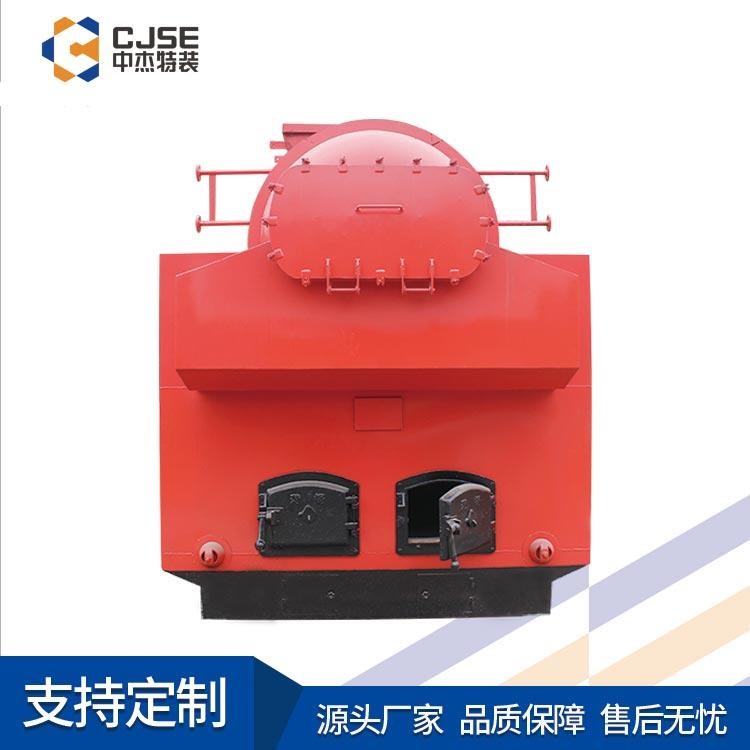
Preventing malfunctions is crucial for maintaining the smooth operation of biomass hot water boilers. Here are some methods for preventive maintenance:
Regular inspections and maintenance: Perform regular checks and maintenance on biomass hot water boilers, including cleaning, lubricating, and securing. Verify that all parts and connections of the boiler are functioning properly, ensuring it remains in good working condition.
Clean combustion system: Regularly clean the combustion system, including the combustion chamber, burner, and burner nozzle, etc. Remove ash, deposits, and dirt to maintain the free flow of the combustion system, and avoid issues such as incomplete combustion and unstable flames.
Inspect Water Quality: Regularly check the water quality of biomass hot water boilers, including water hardness, alkalinity, and impurities in the water. Implement corresponding water treatment measures based on water quality to prevent scale and corrosion, and protect the boiler's heat exchangers and pipes.
Clean heat exchangers: Regularly clean the heat exchangers of biomass hot water boilers to remove dirt and dust. Accumulated dirt and dust can reduce the heat transfer efficiency of the heat exchangers, affecting the boiler's thermal efficiency and operational stability.
Inspect Safety Valves and Pressure Gauges: Regularly inspect and test the safety valves and pressure gauges of the biomass hot water boiler to ensure proper operation. The proper functioning of the safety valves and pressure gauges is crucial for ensuring the safety and stability of the boiler.
Maintain records and monitoring: Record operational parameters and fault conditions of the biomass hot water boiler, and conduct monitoring and analysis. Detect and resolve issues promptly to prevent faults from occurring or escalating.
Biomass boiler pellets are a common form of biomass fuel, also known as biomass pellets or wood pellets. They are small granular fuels produced by processing biomass raw materials (such as wood chips, straw, wheat straw, fruit shells, etc.) through processes like crushing, drying, and compression.
Biomass boiler pellet fuel features the following characteristics:
High Energy Density: Biomass pellet fuel boasts a high energy density, allowing for more energy to be stored in a relatively smaller volume, making it convenient for transportation and storage.
Easier to Burn: Biomass pellet fuel is uniformly shaped and sized, ensuring a stable combustion process, easy control of combustion parameters, and improved combustion efficiency.
Low humidity and low ash content: Biomass pellet fuel, after drying and processing, has low humidity and relatively low ash content, which reduces water evaporation and ash production during combustion, improving combustion efficiency and reducing pollutant emissions.
Renewable & Eco-friendly: Biomass pellet fuel is a renewable energy source that can be recycled through the regeneration process. The carbon dioxide emitted during combustion can be absorbed by the biomass for regeneration, forming a cycle with minimal environmental impact.
Broad combustion adaptability: Biomass pellet fuel is suitable for biomass boilers, featuring strong combustion adaptability. Different types and specifications of pellet fuel can be selected according to actual conditions to meet the varying needs of various boilers.
Biomass pellets are widely used in biomass boilers, representing a clean and renewable energy source that is crucial for reducing carbon emissions and protecting the environment.
Shandong Zhongjie Special Equipment, welcome customers to our factory for cooperation discussions.
WeChat Official Account

Scan to follow Official Account



















