


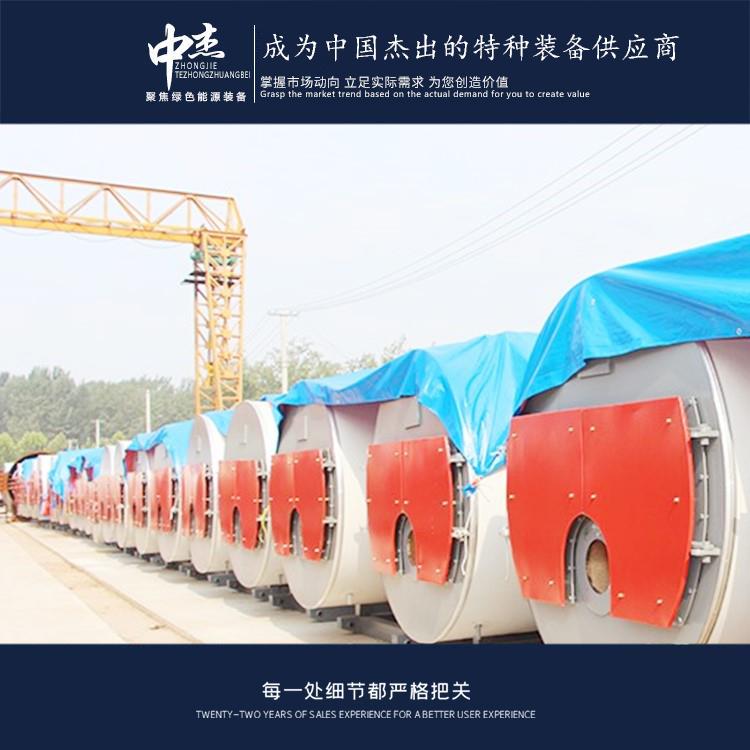



















Shandong Zhongjie Special Equipment (formerly Heze Boiler Factory Co., Ltd.) was established in 2001, located at No. 2218 Jinnan Road, Development Zone, Heze City, with a registered capital of 50 million yuan and total assets of 500 million yuan. The company has 7 business centers: boilers, deep-freezing containers, pressure vessels, central air conditioning, engineering installation, international trade, and Internet of Things. It has three factory sites on Jinnan Road, East Changjiang Road, and Bohai Road, covering a total of 200,000 square meters, with the main workshop spanning 83,000 square meters. It currently employs 710 people, including 247 engineers and technicians, and 82 intermediate-level technicians. In December 2016, it was recognized as a "High-tech Enterprise" by the Science and Technology Department. In June 2021, it was identified as a "Specialized and New Enterprise in Shandong Province" by the Ministry of Industry and Information Technology. In June 2022, it was recognized as a "Gazelle Enterprise in Shandong Province" and in August 2022, as a "Specialized and New Small Giant Enterprise" by the Ministry of Industry and Information Technology.
When designing a fuel-gas boiler room, the following considerations should be taken into account:
Safety Considerations: Ensure the design of the boiler room complies with relevant safety standards and regulations. Consider fire risks and install appropriate firewalls, fire doors, and isolation facilities. Ensure proper ventilation in the boiler room, with suitable ventilation equipment and flue systems to expel harmful gases produced by combustion.
Space and Layout: Plan the space and layout of the boiler room based on the number and size of the boilers. Ensure there is sufficient space for operation, maintenance, and cleaning. Arrange the boilers, fuel storage equipment, flue systems, and piping layouts for ease of operation and maintenance.
Fuel Supply and Storage: Consider the requirements for fuel supply and storage. Ensure the safety and reliability of fuel supply pipelines and equipment to prevent leaks and contamination. Plan the capacity and location of fuel storage equipment appropriately to ensure an adequate fuel supply and compliance with safety requirements.
Emission and Waste Gas Treatment: Consider the emissions and treatment of waste gases produced by combustion. Install suitable flue systems and flue gas treatment equipment to reduce the impact of emissions on the environment. Ensure the design and layout of the flue system are reasonable and capable of effectively expelling smoke and waste gases.
Control and Monitoring Systems: Design appropriate control and monitoring systems to ensure the safety and operation of the boiler. This includes monitoring and control equipment for parameters such as temperature, pressure, and flow, as well as alarm and automatic shutdown devices. Ensure operators can promptly understand the operating status of the boiler and take appropriate actions.
When using a gas heat transfer oil furnace, the following points should be noted:
- Safe Operation: A gas heat transfer oil furnace is a high-temperature equipment, and safety must be observed during operation. Operators should be familiar with the operation procedures and safety precautions of the equipment, wear necessary personal protective equipment, and ensure safe operation.
- Gas Supply: A stable gas supply is required for a gas heat transfer oil furnace. Before use, check if the gas pipeline is clear and the gas valve is open to ensure normal gas supply.
- Heat Transfer Oil Circulation: The heat transfer oil furnace needs to circulate the heat transfer oil to the heat source equipment through a circulating pump. Before use, check the operation of the circulating pump to ensure it is functioning properly.
- Temperature Control: A gas heat transfer oil furnace usually requires a temperature control system to control the temperature of the heat transfer oil. Before use, check the settings and adjustments of the temperature control system to ensure accurate and reliable temperature control.
- Regular Maintenance: Regular maintenance and maintenance are required for a gas heat transfer oil furnace, including cleaning the burner, checking the tightness of the pipeline and valves, and replacing worn parts. Regular maintenance can ensure the normal operation of the equipment and extend its service life.
- Environmental Protection: During combustion, a gas heat transfer oil furnace produces exhaust gas, and emissions must be ensured. Appropriate exhaust gas treatment measures, such as flue gas purification equipment, can be taken to reduce environmental impact.
- The above are some points to note when using a gas heat transfer oil furnace. To ensure safety and the normal operation of the equipment, it is recommended to follow relevant operation procedures and safety requirements, and to carry out regular maintenance and inspections. If necessary, consult the manufacturer or engineer of the gas heat transfer oil furnace.
Based on the provided information, I cannot accurately determine the heating area for a 40-ton gas-fired hot water boiler or the gas pressure for an atmospheric pressure gas boiler. The determination of these parameters requires considering multiple factors, including the boiler's design specifications, the type and quality of the gas, and the heating system requirements. The heating area is typically calculated based on the size of the building or industrial production facility to be heated, as well as the heat load. Common calculation methods include heat load calculations based on the building's floor area, the climate conditions of the region, and indoor temperature requirements. The gas pressure depends on the type of gas and the design of the gas supply system. Different types of gas (such as natural gas, etc.) have different pressure requirements for supply. The gas pressure also needs to consider factors such as the distance of the gas pipeline, pipeline diameter, and pipeline material. Therefore, for an accurate determination of the heating area for the 40-ton gas-fired hot water boiler and the gas pressure for the atmospheric pressure gas boiler, it is recommended to consult the boiler manufacturer or engineer, who can calculate and design based on the specific situation.
During the production welding of a thermal oil boiler, the following points should be noted:
Welder Qualification: Ensure that the welders involved in the welding work have appropriate qualifications and experience, and are familiar with welding techniques and procedures.
Welding Material Selection: Choose welding materials suitable for the thermal oil boiler, ensuring their compatibility with the thermal oil and high-temperature resistance.
Welding Process Control: Select the appropriate welding process, such as manual arc welding or gas shielded welding, based on the material and design requirements of the thermal oil boiler. Control welding parameters like current, voltage, and welding speed to ensure the quality and strength of the weld.
Welding Area Protection: During the welding process, the welding area must be protected to prevent contamination from the thermal oil and welding materials. Use welding barriers, welding shields, and other equipment to ensure the cleanliness and safety of the welding area.
Post-Welding Treatment: After welding, post-treatment of the weld should be performed, such as slag removal, grinding, and cleaning, to ensure the flatness and surface quality of the weld.
Welding Quality Inspection: Conduct welding quality inspections, including visual examination of the weld, dimensional measurements, and non-destructive testing, to ensure the welding quality meets requirements.
Safety Measures: Pay attention to safety measures during the welding process, such as wearing protective glasses, gloves, and fire-resistant clothing, to ensure the safety of the welding operation.
It is important to follow relevant standards and specifications during the welding process to ensure the quality and safety of the welding. If unsure about how to perform welding or if there are safety hazards, seek advice from a welding engineer or consult relevant agencies.
Zhongjie Special Equipment upholds the grand vision of "realizing employees' dreams, creating customer value, and striving for the prosperity and strength of our motherland," and is dedicated to the development of the green energy equipment industry. We offer society high-quality products and services at competitive prices!
WeChat Official Account

Scan to follow Official Account



















