


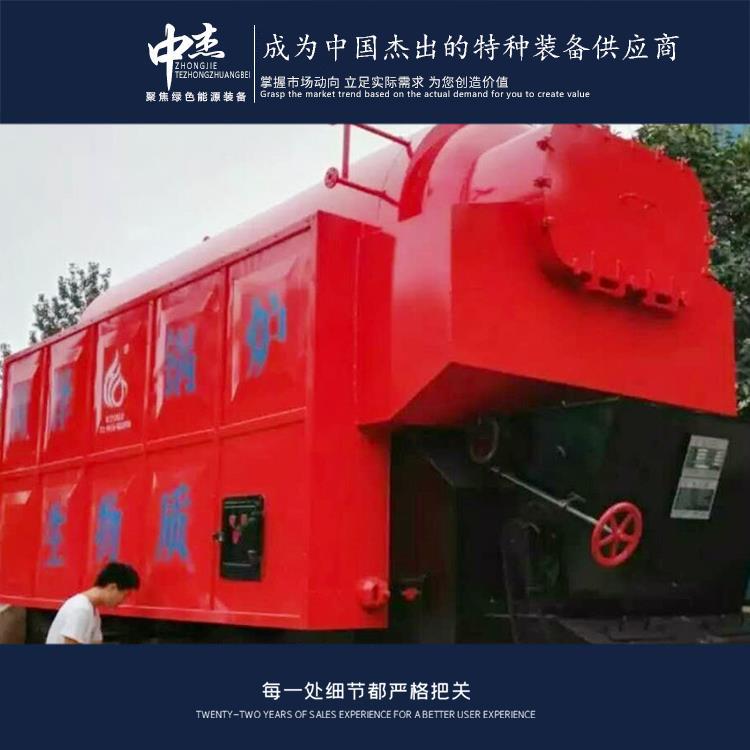


















Shandong Zhongjie Special Equipment (formerly Heze Boiler Factory Co., Ltd.) was established in 2001, located at No. 2218 Jinnan Road, Economic and Technological Development Zone, Heze City. With a registered capital of 50 million yuan and total assets of 500 million yuan, the company has 7 business centers: boilers, deep-freezing containers, pressure vessels, central air conditioning, engineering installation, international trade, and Internet of Things. It operates three factory sites on Jinnan Road, East Changjiang Road, and Bohai Road, covering a total area of 200,000 square meters, with the main workshop spanning 83,000 square meters. Currently, there are 710 employees, including 247 engineers and technicians, and 82 intermediate-level technicians. In December 2016, it was recognized as a "High-Tech Enterprise" by the Science and Technology Department. In June 2021, it was identified as a "Specialized and New Enterprise of Shandong Province" by the Ministry of Industry and Information Technology. In June 2022, it was recognized as a "Gazelle Enterprise of Shandong Province" and in August 2022, as a "Specialized and New Small Giant Enterprise" by the Ministry of Industry and Information Technology.
When using biomass boilers, here are some common usage methods and precautions:
Operation Manual: First, carefully read and understand the biomass boiler's operation manual. The manual will provide detailed instructions and guidance on safe operation, ignition, fuel supply, and combustion adjustment.
Fuel Selection: Choose appropriate biomass fuel such as wood chips, straw, wheat straw, fruit shells, etc. Ensure the fuel quality is good, dry, and free of impurities to guarantee optimal combustion and the normal operation of the boiler.
Ignition Procedure: Proceed with the ignition as instructed in the manual. Typically, this involves activating the igniter or ignition device, ensuring a sufficient fuel supply, and adhering to safety operating procedures.
Combustion Adjustment: Adjust combustion parameters such as fuel supply, oxygen supply, and combustion temperature based on the boiler's operating status and requirements. Adjustments can be made according to the instructions in the operation manual, using the control panel or an automated control system.
Cleaning and Maintenance: Regular cleaning and maintenance of biomass boilers, including the combustion chamber, flue, and heat exchanger components, to ensure combustion efficiency and safety of the boiler.
Safety Precautions: When using biomass boilers, please note the following safety measures: Ensure adequate ventilation around the boiler to prevent smoke accumulation from combustion; Regularly inspect and replace critical components such as burners and valves; Follow the safety operating procedures outlined in the manual to avoid accidents caused by operation errors.
Please note that the above information is general in nature regarding usage methods and precautions. Specific usage and operational details may vary depending on the model and manufacturer of the biomass boiler. Therefore, it is recommended to thoroughly read and follow the manufacturer's operating manual and guidelines before using the biomass boiler.
Biomass boilers are prone to corrosion at high temperatures, primarily due to the following reasons:
Fuel Composition: Biomass fuel contains certain ash and elements like chlorine, which, during combustion, form corrosive substances under high temperatures, such as chlorides and salts. These substances react with the metal surface, leading to metal corrosion.
Combustion Conditions: Factors such as combustion temperature, oxygen content, and combustion rate during biomass combustion can affect corrosion. High temperatures, excessive oxygen, and rapid combustion rates can accelerate corrosion.
Smoke Composition: The smoke produced from biomass combustion contains certain acidic substances, such as, etc. These acidic substances react with the metal surface, causing corrosion.
Flue Gas Condensation: During the flue gas condensation process of biomass boilers, water vapor in the flue gas condenses into liquid water, forming acidic condensate. This acidic condensate comes into contact with the metal surface, causing corrosion.
Metal Material Selection: The metal materials used in biomass boilers also affect their resistance to corrosion. Different metal materials exhibit varying corrosion resistance to different corrosive media.
In summary, the main causes of high-temperature corrosion in biomass boilers include factors such as fuel composition, combustion conditions, flue gas composition, flue gas condensation, and metal material selection. To mitigate corrosion issues,
A biomass boiler for centralized heating refers to the application of biomass boilers in the centralized heating systems of cities or large buildings. Below is an analysis of the technical features of biomass boilers for centralized heating:
Combustion Technology: The combustion technology used in biomass boilers for centralized heating, such as fluidized bed combustion and chain grate combustion, enables the combustion of biomass fuel and improves energy utilization efficiency.
Multi-fuel adaptability: Biomass boilers for centralized heating are highly adaptable to various biomass fuels such as wood chips, straw, and waste crops, offering flexible fuel options.
Automated Control System: The automated control system for biomass boilers used in centralized heating can achieve automatic adjustment and operation control of the boiler, enhancing operational stability and safety.
Flue Gas Purification Technology: Flue gas purification equipment, such as dust collectors, desulfurization units, and denitrification units, installed on biomass boilers for centralized heating, can effectively reduce emissions generated during the combustion process and protect the environment.
Heat Recovery Utilization: Biomass boilers for centralized heating are equipped with a heat recovery system, which can utilize the waste heat from combustion for the heating system, improving energy efficiency and reducing energy consumption.
Remote Monitoring and Management: Biomass boilers for centralized heating can be monitored and controlled in real-time through a remote monitoring and management system, enhancing operational efficiency and convenience.
Sustainable Development: Central heating biomass boilers utilize renewable biomass fuel, reducing dependence on fossil fuels, with lower carbon emissions and environmental impact, in line with sustainable development requirements.
In summary, centralized heating with biological
Biomass boiler drying kiln refers to the process of using a biomass boiler for kiln heating. Here are the brief steps:
Prepare fuel: Select suitable biomass fuel such as wood chips and straw, and conduct pretreatment like drying and sieving to ensure the quality of the fuel and its suitability for the furnace.
Ignition and Ignition Adjustment: Place the fuel into the combustion chamber of the biomass boiler, ignite it, and perform ignition adjustment. The ignition adjustment involves adjusting parameters such as the oxygen supply to the combustion chamber, fuel supply, and combustion temperature to ensure stable combustion.
Heating and Temperature Control: As fuel burns, biomass boilers produce high-temperature flue gas, which transfers its heat energy to the dryer through a heat exchanger. During the heating process, it is necessary to control the temperature of the dryer to ensure that the materials inside receive adequate heating.
Furnace Operation and Monitoring: During the furnace heating process, operation and monitoring of the furnace are necessary. Operations include controlling fuel supply, heat transfer, and the movement of materials inside the furnace. Monitoring involves tracking parameters such as furnace temperature, pressure, and combustion efficiency to ensure normal operation and safety.
Furnace Completion and Cleaning: Upon completion of heating or achieving the desired furnace effect, cease fuel supply and heating, and perform the furnace completion procedure. Post-completion, it is necessary to clean the furnace and biomass boiler, including the ash and soot in the combustion chamber and flue, to maintain the cleanliness and proper operation of the equipment.
Zhongjie Special Equipment upholds the grand vision of "realizing employees' dreams, creating value for customers, and striving for the prosperity and strength of our motherland," and is dedicated to the development of the green energy equipment industry. We offer society high-quality products and services at competitive prices!
WeChat Official Account

Scan to follow Official Account



















