


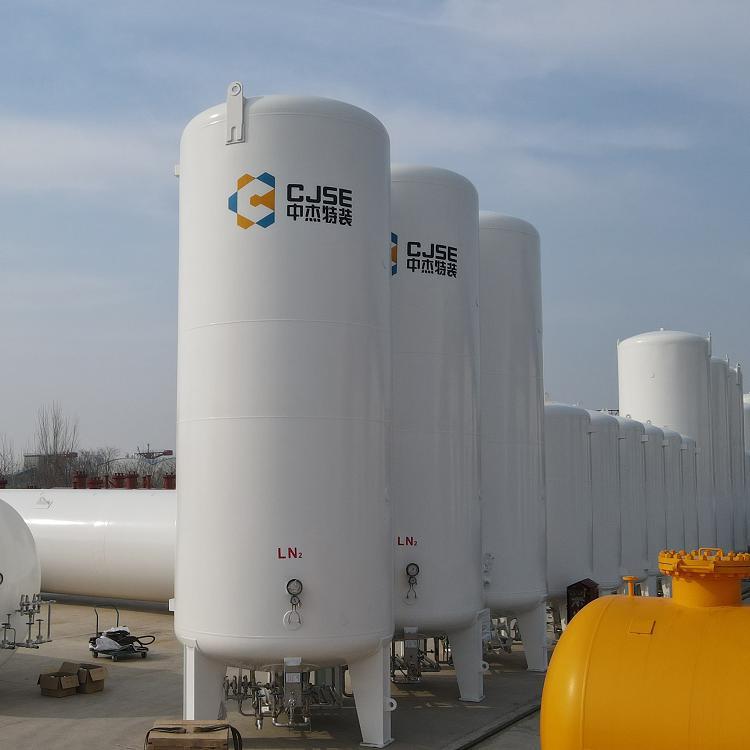


















Shandong Zhongjie Special Equipment Co., Ltd. specializes in the following products: fuel (gas) boilers, organic heat carrier boilers, biomass boilers, waste heat recovery boilers, and other boiler products; vacuum insulation cryogenic pressure vessels such as LNG tanks, oxygen/nitrogen/argon tanks, and CO2 tanks; pressure vessel products including denitrification engineering equipment, heat storage and energy storage equipment, and complete chemical equipment; central air conditioning and HVAC equipment such as ground (water) source heat pumps, air source units, water-cooled screw units, and air-cooled modular units. Planned products include large-scale energy centers, LNG transport vehicles, LNG tank containers, and other green energy equipment.
Liquid argon storage tanks are equipment used for storing and transporting liquid argon, featuring the following characteristics:
Low-temperature retention performance: The liquid argon tank is equipped with special insulation materials and structural design, effectively maintaining the low-temperature state of liquid argon. The tank is internally lined with insulation to minimize heat conduction and loss, ensuring long-term storage of liquid argon.
High-sealing performance: The liquid argon storage tank boasts excellent sealing properties, effectively preventing leaks and evaporation of liquid argon. The tank's valves, fittings, and seals are precision-designed and manufactured, ensuring reliable sealing performance.
High strength and corrosion resistance: The liquid argon tank is made of high-strength materials, capable of withstanding the high pressure and low temperature of liquid argon. Both the internal and external surfaces of the tank are specially treated for excellent corrosion resistance, able to withstand corrosion and oxidation from liquid argon.
Safety Performance: The liquid argon storage tank is equipped with multiple safety protection measures, including safety valves, pressure sensors, and level monitoring devices. These devices can monitor and control the tank's pressure, temperature, and level, ensuring the tank operates within a safe range.
Reliability and stability: The liquid argon tank undergoes rigorous design, manufacturing, and testing, ensuring excellent reliability and stability. The tank can store and transport liquid argon stably for extended periods, guaranteeing that the quality and performance of the liquid argon remain unaffected.
Easy to operate and maintain: The liquid argon tank is relatively simple to operate and maintain, equipped with valves and connectors that are easy to use. The maintenance work mainly includes regular inspections, cleaning, and repairs, which can extend the service life of the tank.
The performance features of liquid argon tanks make them essential for storing and transporting liquid argon, widely used in scientific research, industry, and other fields. When using liquid argon tanks, it is crucial to strictly adhere to the relevant operational specifications and safety requirements to ensure safe usage.
During the degreasing process of high vacuum pipelines in low-temperature liquid storage tanks, the following steps can be taken:
Preparation: Ensure the cleanliness and readiness of the defatting equipment and tools. Check the connections and sealing of the pipeline system to ensure there are no leaks.
Pipe Cleaning: Utilize suitable cleaning agents and tools to clean the pipes, removing surface dirt and grease. Methods such as mechanical brushing, high-pressure water jetting, or chemical cleaning can be employed.
De-greasing Process: Select an appropriate de-greaser and inject it into the pipeline system. The de-greaser can be an organic solvent or an alkaline solution, the specific choice depending on the pipeline material and type of dirt. Ensure the de-greaser fully covers the inner wall of the pipeline and maintains a certain contact time.
Pipe Flush: Drain the degreaser from the pipeline system and flush with clean water to remove any remaining degreaser and dirt. High-pressure water or gas can be used during the flush process to ensure the cleanliness of the interior pipe walls.
Drying Pipeline: Utilize drying equipment or ventilation systems to evaporate or expel moisture from within the pipeline, ensuring the interior wall is dry. Drying can be achieved using hot air or nitrogen.
Inspection and Testing: After degreasing, inspect and test the pipeline to ensure cleanliness and sealing. Visual inspection, pressure testing, or other relevant tests can be conducted.
Be mindful that during the degreasing process of high vacuum pipelines in low-temperature liquid storage tanks, adhere to relevant safety operational procedures and guidelines. Ensure that operators have the necessary safety awareness and operational skills to prevent any accidental incidents.
Liquid nitrogen tanks are widely used in various industries, primarily in the following aspects:
Industry: Liquid nitrogen tanks are used in the field for storing and supplying liquid nitrogen, which is essential for low-temperature freezing preservation of biological samples, cells, tissues, and vaccines. They are widely used in biopharmaceutical research institutions and biobanks, among other organizations.
Experimental Research: Liquid nitrogen tanks are used in scientific research and laboratories to provide low-temperature environments, for cryopreservation and cryogenic experiments. Liquid nitrogen tanks play a crucial role in experimental research across various fields such as physics, chemistry, biology, and materials science.
Metalworking Industry: Liquid nitrogen tanks are used in the metalworking and welding industries for providing low-temperature cooling, applied in processes such as metal cutting, welding, and heat treatment. Liquid nitrogen tanks can achieve the required hardness and toughness of metal during the processing.
Food Industry: Liquid nitrogen tanks are used in the food industry for freezing and refrigerating foods such as frozen meats, frozen fruits, and frozen seafood. The low temperature of liquid nitrogen can quickly freeze foods, preserving their freshness and quality.
Semiconductor Industry: Liquid nitrogen tanks are used in semiconductor manufacturing and the electronics industry to provide a low-temperature environment, for the freezing and preparation of semiconductor materials. The low temperature of liquid nitrogen can enhance the purity and performance of semiconductor materials.
The configuration of liquid nitrogen tanks typically includes the following aspects:
Vessel Structure: Liquid nitrogen tanks commonly feature a double or multi-layered design, filled with insulating material in the middle to minimize heat transfer and evaporation of the liquid nitrogen. The tank material is typically made of stainless steel or aluminum alloy, offering excellent corrosion and low-temperature resistance.
Insulation Layer: The insulation layer of liquid nitrogen tanks usually employs multi-layer insulation materials, such as polyethylene foam, glass fiber, and vacuum layers, to reduce heat transfer and evaporation of liquid nitrogen.
Temperature Control System: Liquid nitrogen tanks are usually equipped with a temperature control system, used to regulate the tank's temperature to maintain liquid nitrogen.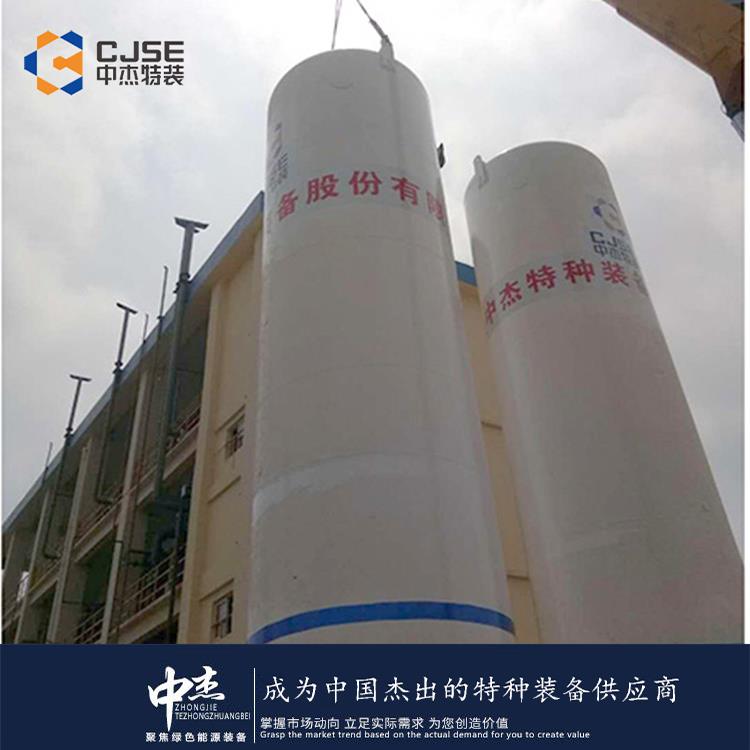
When initially using a liquid nitrogen tank, there are several precautions to consider for safe and effective operation. Here are some suggested points to keep in mind:
Safe Operation: Liquid nitrogen is a low-temperature liquid with strong refrigerating and asphyxiating effects. When handling liquid nitrogen tanks, proper personal protective equipment must be worn, such as insulated gloves and protective suits. Avoid direct contact with liquid nitrogen to prevent injury or other harm.
Ventilation Environment: Liquid nitrogen evaporation produces a significant amount of gas, which may displace other gases, leading to a decrease in oxygen content in the air. Therefore, when using liquid nitrogen storage tanks, it is crucial to ensure proper ventilation in the operational area to prevent oxygen deficiency.
Tank Inspection: Prior to the first use of a liquid nitrogen tank, a thorough check of the tank's appearance and seal should be conducted. Ensure there are no visible damages, leaks, or other safety hazards. If any issues are found, they should be promptly repaired or the tank replaced.
Filling Storage Tanks: Prior to the first use of a liquid nitrogen storage tank, it is necessary to fill it with liquid nitrogen. During the filling process, adhere to the correct operational steps and safety protocols to ensure a safe and reliable filling procedure. Additionally, monitor and control the filling speed and pressure to avoid excessive tank pressure and temperature increase.
Labeling and Documentation: Prior to the first use of the liquid nitrogen tank, relevant information should be labeled on the tank, such as the storage medium, capacity, manufacturing date, etc. It is also recommended to establish a usage record for the tank, including filling dates, filling quantities, usage conditions, etc., for future tracking and management.
Note that the use of liquid nitrogen tanks involves safety risks such as low temperatures and high pressures. Operators should receive training and strictly adhere to the relevant operational procedures and safety measures. If you are not familiar with the operation or have any doubts, it is recommended to consult with individuals or relevant institutions for guidance.
Shandong Zhongjie Special Equipment, welcome customers to our factory for business discussions.
WeChat Official Account

Scan to follow Official Account



















