


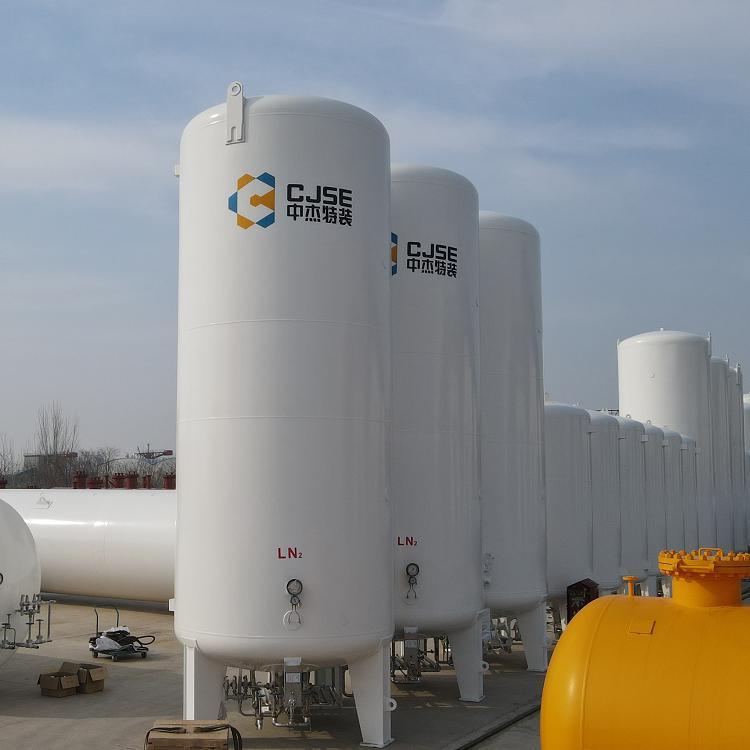

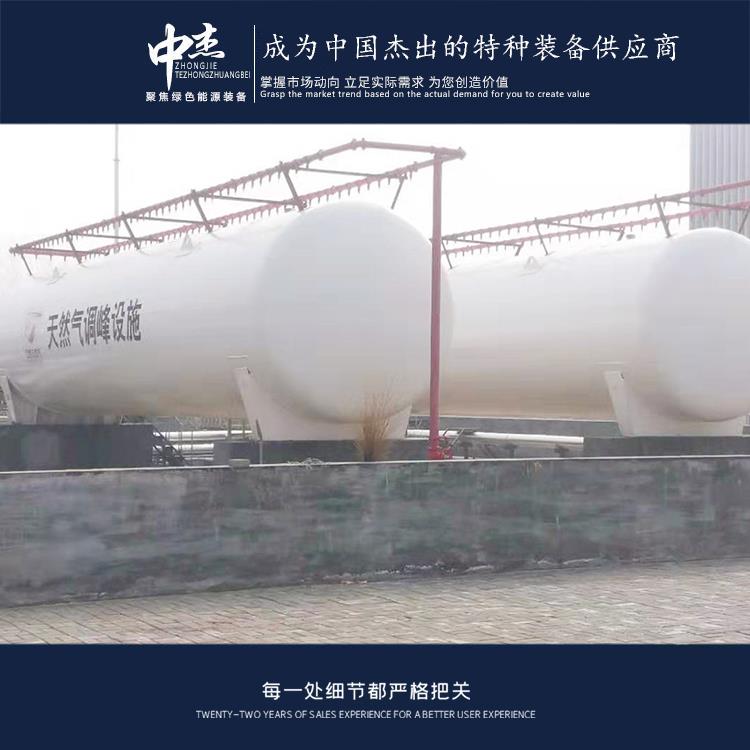


















Shandong Zhongjie Special Equipment's main products include: fuel (gas) boilers, organic heat carrier boilers, biomass boilers, waste heat recovery boilers, and other boiler products; vacuum insulation deep-freeze pressure vessels such as LNG tanks, oxygen/nitrogen/argon tanks, and CO2 tanks; pressure vessel products such as denitrification engineering equipment, heat storage and energy storage equipment, and complete chemical equipment; central air conditioning and ventilation equipment such as ground (water) source heat pumps, air source units, water-cooled screw units, and air-cooled modular units. Planned products include large-scale energy centers, LNG transport vehicles, LNG tank containers, and other green energy equipment.
Oxygen storage tanks and liquid oxygen storage tanks are equipment used for storing oxygen, but they have some distinctions: Storage Form: Oxygen storage tanks are typically used for storing gaseous oxygen, while liquid oxygen storage tanks are for storing liquid oxygen. Oxygen is in a gaseous state at room temperature but is cooled to a liquid state at low temperatures for more efficient storage and use. Storage Pressure: Oxygen storage tanks usually store high-pressure oxygen, with pressures around 200-300 bar. Liquid oxygen storage tanks store liquid oxygen at lower pressures, generally around 2-5 bar. Storage Capacity: Oxygen storage tanks usually have smaller capacities, suitable for personal or small-scale use. Liquid oxygen storage tanks have larger capacities, suitable for industrial or large-scale use. Storage Method: Oxygen storage tanks store oxygen in a gaseous form, through compressed gas storage. Liquid oxygen storage tanks store oxygen in a liquid form, by cooling it to below its boiling point to convert it into a liquid. Safety Requirements: Due to the high oxidizing nature of liquid oxygen, liquid oxygen storage tanks require stricter safety requirements in design and use. Liquid oxygen storage tanks typically need to have good thermal insulation, leak control, and fire prevention measures to ensure safe operation. It should be noted that the specific design and specifications of oxygen storage tanks and liquid oxygen storage tanks may vary depending on different regions and application sites. When using these tanks, it is necessary to follow applicable regulations, standards, and safety guidelines, and to cooperate with local regulatory authorities and personnel to ensure the safety and reliability of the tanks.
Before using the liquid oxygen tank, the following preparations must be made:
Safety Inspections: Ensure the tank and its surrounding environment are secure. Check for any damage, leaks, or other safety hazards in the tank. Make sure there are no flammable substances or other hazardous materials nearby.
Tank Preparation: Inspect the tank's exterior, including the shell, welds, valves, and fittings. Ensure there are no visible damages or corrosion. Check that the insulation layer is intact and undamaged.
Liquid Oxygen Filling: Utilize liquid oxygen delivery equipment to fill liquid oxygen into the storage tank. Ensure that the flow rate and pressure of liquid oxygen are maintained within a safe range during the filling process.
Pressure Control: Tanks should be equipped with pressure control devices to ensure internal tank pressure remains within a safe range. Inspect and adjust the pressure control devices to ensure they are functioning properly.
Valve Operation: Check that the valves and connections on the tank are functioning properly. Ensure the valves open and close smoothly and reliably. Adjust the opening and closing status of the valves as needed.
Safety Equipment: Inspect the safety equipment around the storage tank, such as fire separation areas and alarm systems, to ensure they are functioning properly.
Operator Training: Ensure operators are proficient in the safe operation of liquid oxygen storage tanks.
The reasons for not leaving a liquid oxygen tank idle for extended periods mainly include the following:
Vapor Loss of Liquid Oxygen: Liquid oxygen has a low boiling point, and prolonged storage without use can lead to continuous evaporation, resulting in a loss of liquid oxygen within the storage tank. The evaporation rate of liquid oxygen is rapid, with daily evaporation amounts potentially reaching several percent of the tank's capacity, leading to waste over time.
Safety Risk: Liquid oxygen is a strong oxidizer with high flammability and explosiveness. Long-term empty storage of liquid oxygen tanks increases the opportunity for contact with the surrounding environment, thereby enhancing the risk of unexpected fires and explosions.
Risk of Tank Damage: Long-term storage of liquid oxygen without use can lead to internal oxidation reactions, accelerating corrosion and damage to the tank. Tank damage can affect its sealing performance and structural integrity, increasing the risk of leaks and safety accidents.
Therefore, to ensure the safe storage and effective use of liquid oxygen, the liquid oxygen storage tank should be regularly maintained and serviced to avoid long-term empty storage. When the tank is not in use, appropriate measures should be taken, such as sealing the tank and reducing the evaporation of liquid oxygen, to minimize the loss of liquid oxygen and the safety risks.
Proper maintenance and precautions are crucial for liquid nitrogen tanks. Here are some key points:
Maintenance:
Regular Inspections: Regularly inspect the appearance, valves, pipes, and other components of the liquid nitrogen storage tank to ensure they are intact and undamaged. Pay special attention to check for any leaks, corrosion, or other forms of damage.
Clean Storage Tanks: Regularly clean liquid nitrogen storage tanks to remove internal dirt and deposits. Use appropriate cleaning agents and tools, following the cleaning procedures and safety operation protocols.
Liquid Nitrogen Refill: Refill liquid nitrogen regularly as needed to maintain an adequate storage level in the tank to meet usage requirements.
Maintain Pressure: Regularly inspect the liquid nitrogen tank's pressure to ensure it stays within the safe range. Perform pressure tests and adjustments as necessary.
Corrosion Protection: Depending on the material and usage environment of the storage tank, appropriate corrosion prevention measures are taken to extend the service life of the tank. For instance, applying corrosion-resistant coatings, conducting regular corrosion treatments, etc.
Cautionary Notes:
Safe Operation: When using liquid nitrogen tanks, strict adherence to safety operating procedures and standards is mandatory. Operators must be trained, familiar with the properties and safety requirements of liquid nitrogen, and well-versed in tank equipment and operational processes.
Safety Measures: When using liquid nitrogen tanks, necessary safety precautions must be taken, such as wearing protective gloves and suits. Avoid direct contact with liquid nitrogen to prevent cold exposure.
Leak Control: Conduct regular inspections of liquid nitrogen tanks for leaks, and equip them with leak detectors and alarm systems. In the event of a leak, immediate action should be taken to contain and repair it.
Ventilation Requirements: In enclosed spaces where liquid nitrogen storage tanks are in use, adequate ventilation must be ensured.
Our company attaches great importance to technological innovation and research and development. We have 1 municipal-level enterprise technology center in Heze City, with testing facilities for non-destructive testing, physical and chemical testing, welding testing, hydrostatic testing, etc. We are equipped with over 600 pieces of various equipment such as CNC machine tools, X-ray flaw detectors, digital ultrasonic flaw detectors, mechanical property testing machines, chemical analyzers, spectrometers, tensile testing machines, plasma welding machines, and more. The key products and technologies we have developed, such as temperature and pressure vessel welding, biomass boiler emission reduction, and waste heat utilization, have successively been selected for multiple Shandong Provincial Department of Industry and Information Technology science and technology projects, Shandong Province key projects, and Heze City innovation and excellence projects. We have accumulated 27 authorized utility model patents, 16 authorized invention patents, participated in drafting 2 standards, 2 industry standards, and registered 15 trademarks. The technical team of our company, in collaboration with Professor Li Yajiang of Shandong University, has developed deep cryogenic container processing technology using the internationally recognized plasma arc + wire feeding argon arc welding (PAW-GTAW) technology, which has been appraised as reaching international standards at the provincial level. Choose Zhongjie Special Equipment, let's join hands to create brilliance together!
WeChat Official Account

Scan to follow Official Account



















