


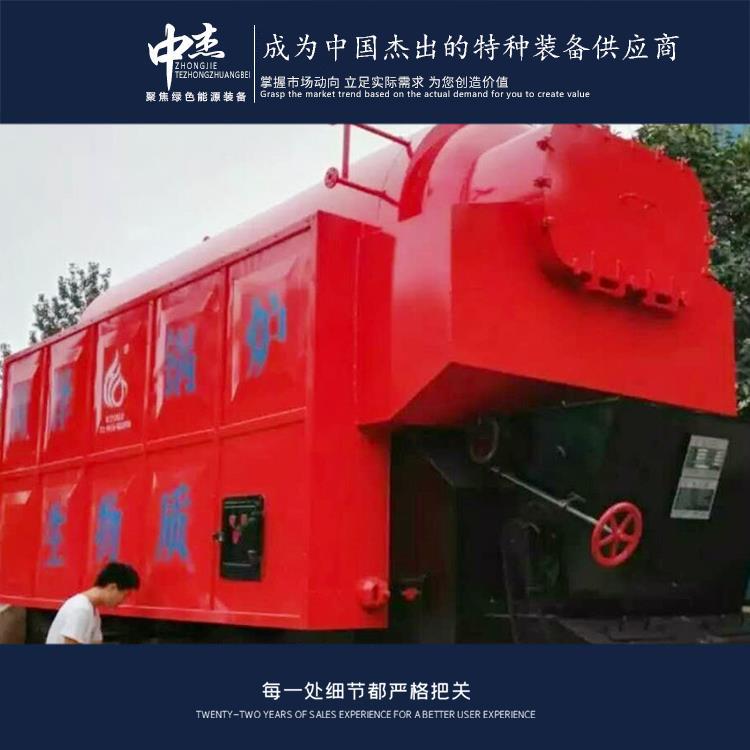

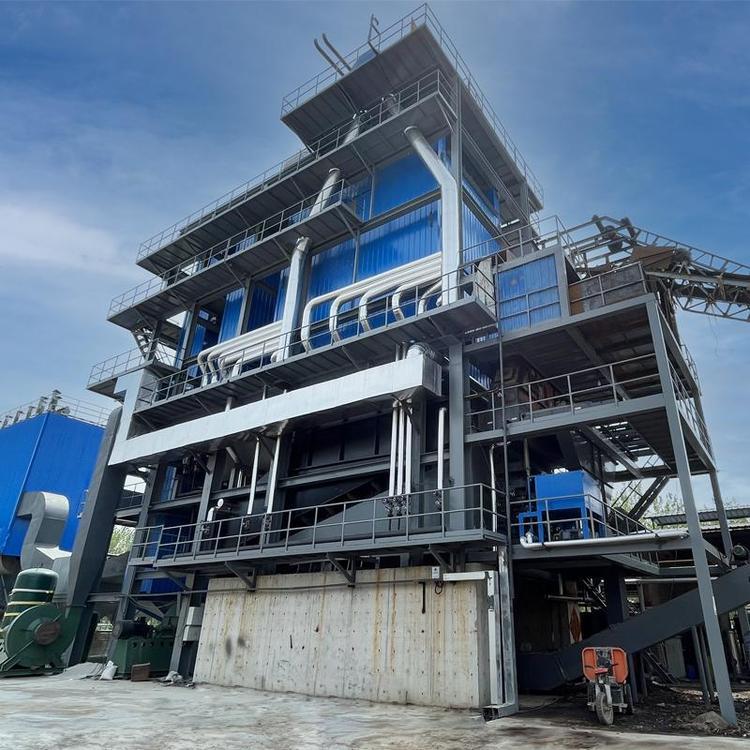


















Shandong Zhongjie Special Equipment (formerly Heze Boiler Factory Co., Ltd.) holds an A-grade boiler manufacturing license, A2-grade pressure vessel manufacturing license, A2-grade pressure vessel design license, B-grade boiler installation, and GB2/Class, GC2/Class pressure pipeline installation licenses, as well as equipment and machinery installation contracting qualifications. It is a member of the China Boiler and Water Treatment Association, the China Chemical Equipment Association, and the director unit of the Shandong Equipment Manufacturing Association, and has passed ISO9001 Quality Management System, ISO14001 Environmental Management System, OHSAS18001 Occupational Health and Safety Management System certifications, and the American ASME/U2 certification.
Horizontal biomass steam boilers possess the following performance advantages:
Low footprint: The horizontal design of the boiler results in a lower overall height, occupying less floor space, making it suitable for use in areas with limited space.
High thermal efficiency: The horizontal biomass steam boiler utilizes advanced combustion technology and heat exchange design, maximizing the thermal energy of biomass fuel, enhancing thermal efficiency, and reducing energy consumption.
Combustion Stability: The horizontal biomass steam boiler utilizes a combustion system that ensures even and stable fuel combustion, minimizing fluctuations and instability during the burning process.
Easy Operation and Maintenance: The horizontal biomass steam boiler is designed for ease of operation and maintenance, featuring manholes and inspection doors for convenient internal inspection, cleaning, and maintenance.
Environmental Protection and Energy Efficiency: Biomass fuel is a renewable energy source. The use of horizontal biomass steam boilers can reduce reliance on traditional fossil fuels and decrease emissions of carbon dioxide and other pollutants, offering excellent environmental protection properties.
Adaptable: The horizontal biomass steam boiler is suitable for various biomass fuels such as sawdust, straw, etc., demonstrating strong fuel adaptability.
In summary, the horizontal biomass steam boiler features a small footprint, high thermal efficiency, stable combustion, and easy operation and maintenance.
When operating biomass boilers, the following safety precautions should be observed:
Familiarize with the operation manual: Before operating the biomass boiler, carefully read and familiarize yourself with the manual to understand the boiler's structure, operating principle, steps, and safety precautions.
Regular inspections and maintenance: Conduct regular checks on all parts and equipment of the boiler to ensure proper operation and safety performance. Promptly clean ash and slag, inspect the sealing of pipes and valves, and keep the boiler clean and unobstructed.
Regulate Fuel Supply: Control the speed and amount of fuel supply to avoid overly rapid or slow delivery, ensuring complete combustion and reducing safety risks.
Control combustion temperature: Maintain an appropriate combustion temperature to avoid excessively low or high temperatures. Too low a temperature can lead to carbon buildup, while too high a temperature may cause incomplete combustion and safety hazards.
Regular cleaning and maintenance of the combustion chamber: Regularly clean ash and carbon deposits from within the combustion chamber to maintain the boiler's cleanliness and prevent coking and blockage issues.
Safety valves and pressure gauges: Ensure the proper operation and accuracy of safety valves and pressure gauges; promptly repair or replace any damaged safety valves and pressure gauges.
Prevent overheating and overpressure: Monitor the boiler's temperature and pressure to avoid overheating and overpressure, and take timely measures to adjust and address the issue.
Prevent Gas Leaks: Regularly inspect the seals of gas pipes and valves to ensure no gas leaks occur, thereby avoiding risks of fire and explosion.
Pre-shutdown procedures: Prior to shutdown, first turn off the fuel and air supplies, then wait for the boiler to cool down before conducting maintenance and cleaning tasks.
Training and Operating Procedures: Ensure that operators have received relevant training, are familiar with operating procedures and emergency response measures, and can operate and handle emergencies correctly.
Above are some safety precautions to be aware of when operating biomass boilers. To ensure the safe operation of the boiler, it is recommended to follow relevant operational procedures and safety standards, and to conduct regular inspections and maintenance.
To enhance the thermal efficiency of biomass boilers, the following measures can be taken:
Optimize the combustion system: Ensure the biomass boiler's combustion system operates effectively and with high efficiency. Adoptable combustion technologies include fluidized bed combustion and chain grate combustion, etc., to enhance combustion efficiency and heat energy utilization.
Control fuel quality: Choose biomass fuels such as dry sawdust, straw, etc., avoiding those with high moisture content. High-moisture fuels consume additional heat for evaporation, reducing combustion efficiency.
Properly Adjust Fuel Supply: Adjust the fuel supply quantity according to actual needs, avoiding both excess and shortage. Excess supply can lead to fuel waste, while insufficient supply may affect combustion efficiency.
Control Combustion Temperature: Maintain an appropriate combustion temperature range, avoiding excessively high or low temperatures. Excessively high temperatures can lead to heat loss of the fuel, while excessively low temperatures will affect combustion efficiency.
Regular Cleaning and Maintenance: Regularly clean the combustion chamber, flue, heat exchanger, and other components of the biomass boiler to maintain their cleanliness and unobstructed flow. Accumulated ash and dirt can affect heat conduction and heat exchange efficiency, thereby reducing thermal efficiency.
Utilize waste heat recovery technology: Employ waste heat recovery units to utilize the residual heat from combustion for heating systems or other applications.
The pressure-setting methods for biomass hot water boilers mainly include the following:
Natural Circulation Pressure Control: Natural circulation pressure control refers to the circulation of hot water to the heating system through natural convection within the boiler. Under the natural circulation pressure control method, there is a significant difference in height between the supply and return water pipes of the boiler, achieving natural circulation through the density difference of the hot water. This method is suitable for small biomass hot water boilers, characterized by simplicity and economy.
Forced Circulation Constant Pressure: This method forces the hot water to circulate through the heating system by using a circulating pump. Under the forced circulation constant pressure mode, the boiler provides sufficient water pressure through the circulating pump to ensure smooth flow of hot water. This approach is suitable for large-scale biomass hot water boilers, featuring stability and reliability.
Micro-positive Pressure Constant Pressure: Micro-positive pressure constant pressure maintains a slight positive pressure in the boiler system, ensuring stable circulation of hot water. Under the micro-positive pressure constant pressure method, the pressure in the boiler system is slightly higher than atmospheric pressure, driving the circulation of hot water through the pressure difference. This method is suitable for situations requiring higher heating temperatures and longer heating distances.
Above are the common pressure maintenance methods for biomass hot water boilers. Depending on specific usage requirements and system design, an appropriate pressure maintenance method can be chosen to ensure the normal operation and heating effect of the hot water boiler.
Chongjie Special Equipment upholds the great vision of "Realizing employee dreams, creating customer value, and striving for the prosperity and strength of our motherland," and is dedicated to the development of green energy equipment. We commit to society with high-quality, cost-effective products and services!
WeChat Official Account

Scan to follow Official Account



















