



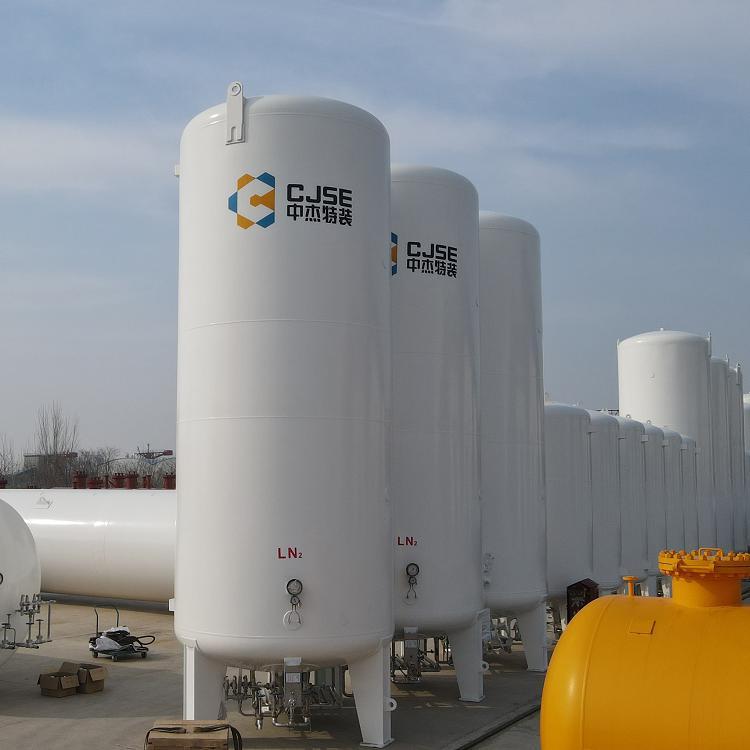
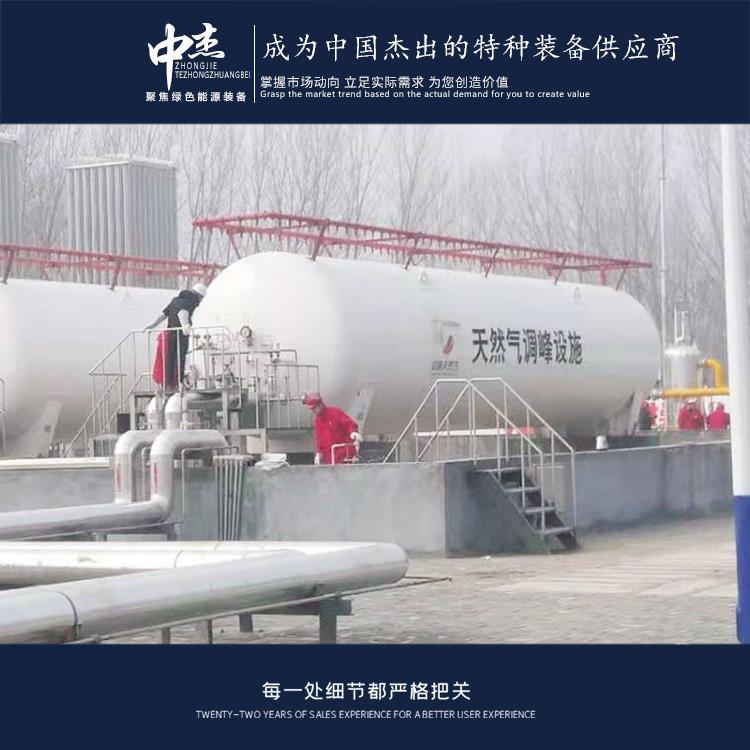


















Shandong Zhongjie Special Equipment's main products include: fuel (gas) boilers, organic heat carrier boilers, biomass boilers, waste heat boilers, and other boiler products; vacuum insulation cryogenic pressure vessels such as LNG tanks, oxygen/nitrogen/argon tanks, CO2 tanks; pressure vessel products like denitrification engineering equipment, heat storage and energy storage equipment, complete chemical equipment; central air conditioning and ventilation equipment such as ground (water) source heat pumps, air source units, water-cooled screw units, and air-cooled modular units. Planned products include large-scale energy centers, LNG transport vehicles, LNG tank containers, and other green energy equipment.
Low-temperature liquid storage tanks feature the following characteristics and usage advantages:
Feature:
Low Temperature Storage: Low-temperature liquid storage tanks can store low-temperature liquids (such as liquid nitrogen, liquid oxygen, etc.) at low temperatures, maintaining their liquid state. Liquid storage can significantly increase storage density and save storage space.
Insulation: Low-temperature liquid storage tanks are equipped with special insulation materials and structural design, effectively reducing heat conduction and retention, maintaining a stable temperature for low-temperature liquids. This helps to minimize energy loss and liquid evaporation.
Safety: Low-temperature liquid storage tanks offer excellent safety performance. The tanks are constructed with special materials and design, capable of withstanding low temperatures and high pressures. Additionally, the tanks are equipped with safety devices such as pressure relief valves and liquid level alarms, ensuring safe operation and usage.
Utilization Advantages:
High Purity Supply: Low-temperature liquid storage tanks can provide high purity liquid substances. Through refrigeration and purification processing, high purity liquid gases can be obtained to meet the requirements of various applications, such as industrial and scientific research fields.
Long-term Storage: Low-temperature liquid storage tanks are designed for long-term storage of low-temperature liquids, extending their service life. By controlling the temperature inside the tank and the performance of the insulation layer, the evaporation and oxidation of the liquid can be slowed down, maintaining its stability and purity.
Wide Applications: Low-temperature liquid storage tanks are extensively used in various fields such as industry and scientific research. They can be utilized for storing liquid oxygen to provide oxygen supply; in the industrial sector, they are used for storing liquefied natural gas (LNG) and liquid nitrogen, among other process gases; in scientific research, they are suitable for storing low-temperature experimental samples.
Environmental Protection and Energy Saving: Low-temperature liquid storage tanks enable effective storage and utilization of low-temperature liquids, reducing energy waste and environmental pollution. Storage of liquid substances
When selecting the pedestal for a liquid argon tank, several factors should be considered:
Load Capacity: The support must be capable of bearing the weight of the liquid argon tank. Select a support with adequate load capacity based on the tank's capacity and dimensions. Typically, the weight of the liquid argon tank is specified in the design specifications, which can be used to determine the support's load capacity.
Stability: The support must provide sufficient stability to ensure the tank does not tilt or sway during use. The design of the support should consider the tank's center of gravity and its changes to provide stable support.
Corrosion Resistance: Liquid argon has low temperature and corrosive properties; the support material should have good corrosion resistance to prevent corrosion and damage. Common support materials include stainless steel, aluminum alloy, etc.
Insulation: Liquid argon storage tanks typically require thermal insulation. The supports should possess adequate insulation properties to minimize heat transfer and the evaporation of liquid argon. The design of the supports should consider the installation and protection of the insulation layer.
Installation and Maintenance: The bracket should feature ease of installation and maintenance, facilitating the tank's installation and routine maintenance tasks.
When selecting the support base for liquid argon tanks, it's recommended to consult with engineers or suppliers. Choose an appropriate base based on the specific tank requirements and usage environment. Also, adhere to relevant design specifications and safety standards to ensure the quality and reliability of the base.
When initially using a liquid nitrogen tank, there are several precautions to consider for safe and effective operation. Here are some suggested points to keep in mind:
Safe Operation: Liquid nitrogen is a cryogenic liquid with strong refrigerating and asphyxiating properties. When handling liquid nitrogen tanks, appropriate personal protective equipment, such as insulated gloves and protective suits, must be worn. Avoid direct contact with liquid nitrogen to prevent injury or other harm.
Ventilation Environment: Liquid nitrogen, upon evaporation, produces a substantial amount of gas, which may displace other gases, leading to a decrease in oxygen content in the air. Therefore, when using liquid nitrogen storage tanks, it is essential to ensure adequate ventilation in the operational area to prevent oxygen deficiency.
Tank Inspection: Before initially using the liquid nitrogen tank, carefully inspect its appearance and seal integrity. Ensure there are no obvious damages, leaks, or other safety hazards. If any issues are found, they should be addressed promptly by repairing or replacing the tank.
Filling Storage Tanks: Before initially using a liquid nitrogen storage tank, it's necessary to fill it with liquid nitrogen. During the filling process, follow the correct operational steps and safety protocols to ensure the process is safe and reliable. Additionally, be mindful of controlling the filling speed and pressure to avoid excessive tank pressure and temperature increase.
Labeling and Record Keeping: Prior to the initial use of a liquid nitrogen tank, relevant information should be labeled on the tank, such as the storage medium, capacity, manufacturing date, etc. It is also recommended to establish a tank usage record, including filling dates, filling quantities, usage status, etc., for future tracking and management.
Note that the use of liquid nitrogen tanks involves safety risks such as low temperatures and high pressures. Operators should receive training and strictly adhere to the relevant operational procedures and safety measures. If you are unfamiliar with the operation or have any doubts, it is recommended to consult experts or relevant organizations for guidance.
To prevent the hazards associated with liquid oxygen storage tanks, the following precautions can be taken:
Safety Operations and Management: Establish and enforce stringent safety operations and management systems, including proper use of tanks, operational procedures, and safety training. Ensure operators possess the necessary safety awareness and skills, adhere to operational procedures, and minimize the likelihood of operational errors and accidents.
Regular Inspections and Maintenance: Conduct regular inspections and maintenance on liquid oxygen tanks, including visual inspections, pressure tests, and leak detection. Promptly identify and address any issues with the tanks to ensure their safety and reliability.
Safety devices and protective equipment: Tanks should be equipped with necessary safety devices, such as pressure relief valves and level alarms, as well as protective equipment like firewalls and explosion-proof devices. These devices and equipment can take timely measures in abnormal situations to ensure the safety of the tank.
Fire prevention measures: Liquid oxygen contains a high concentration of oxygen, which is prone to cause fires. Therefore, fire prevention measures such as fire walls and fire extinguishers should be set up around the storage tank to prevent the spread and expansion of fires.
Leakage Control and Emergency Response Plan: Establish a leakage control and emergency response plan for liquid oxygen storage tanks, including measures for leakage control, emergency response procedures, and evacuation plans for personnel. In the event of a leakage incident, the plan enables prompt action to control the leakage and ensure personnel safety.
Training and Awareness Enhancement: Conduct regular safety training for liquid oxygen tank operators to enhance their safety awareness and emergency response capabilities. Strengthen safety
ZJ Special Equipment upholds the grand vision of "realizing employees' dreams, creating customer value, and striving for the prosperity and strength of our motherland," and is dedicated to the development of the green energy equipment industry. We commit to society with high-quality, cost-effective products and services!
WeChat Official Account

Scan to follow Official Account



















