


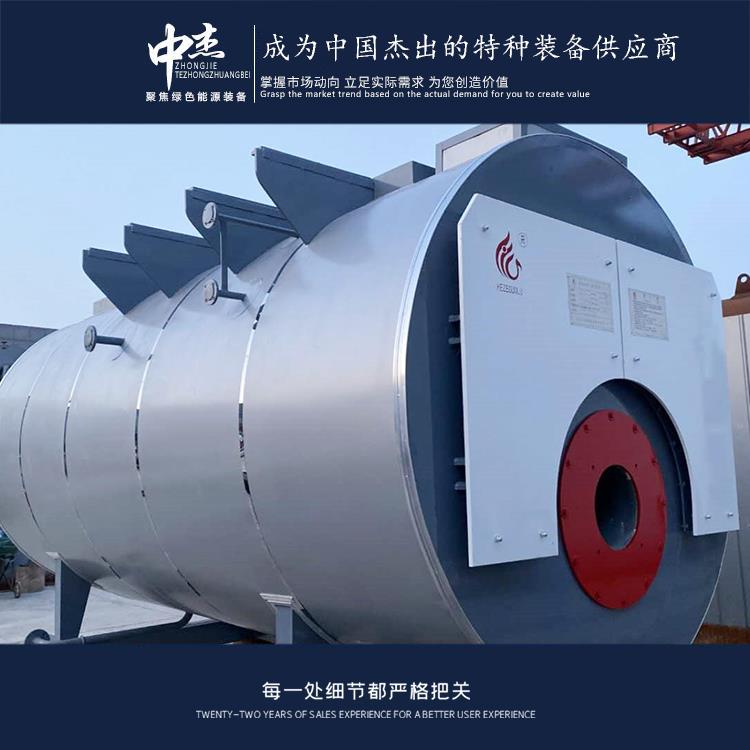

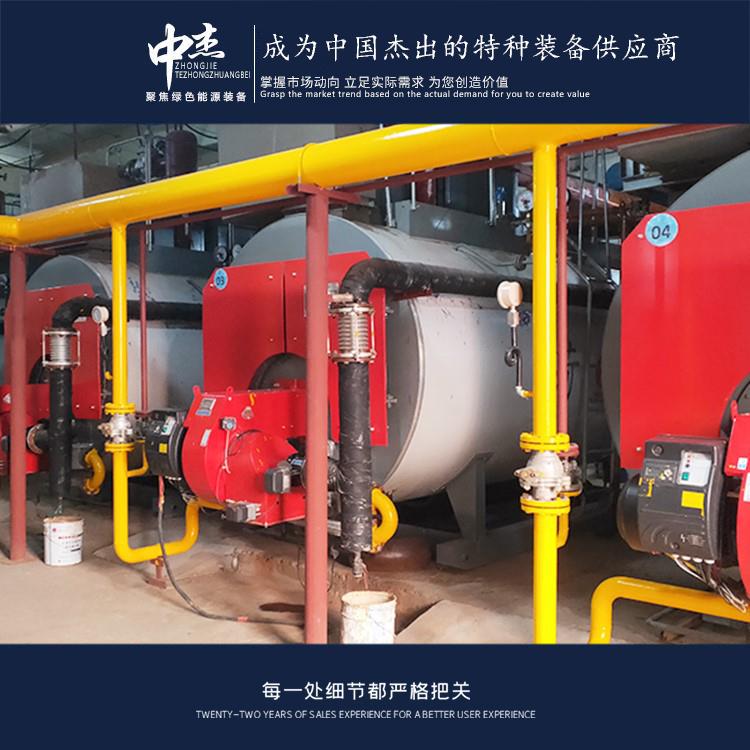
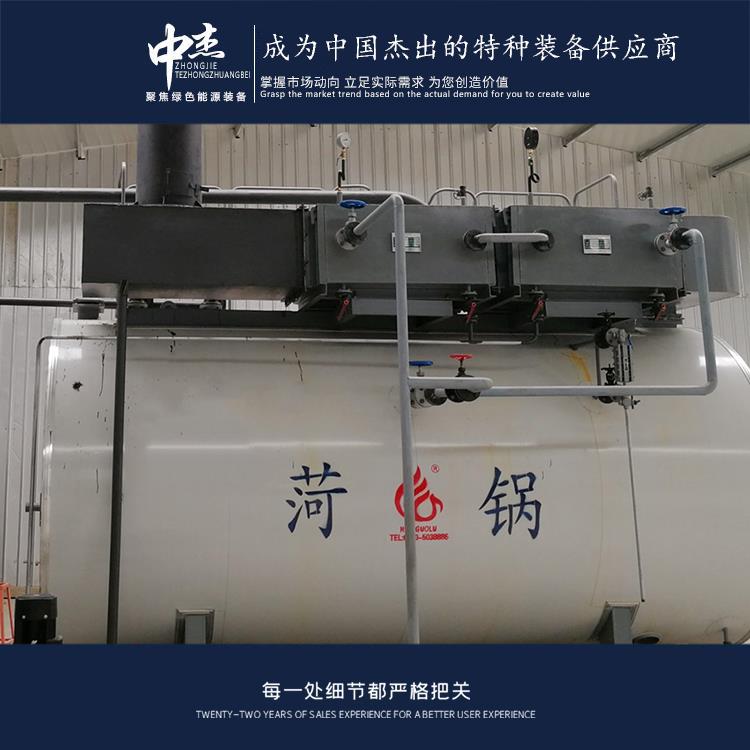


















Shandong Zhongjie Special Equipment's main products include: fuel (gas) boilers, organic heat carrier boilers, biomass boilers, waste heat boilers, and other boiler products; vacuum insulation cryogenic pressure vessels such as LNG storage tanks, oxygen-nitrogen-argon storage tanks, CO2 storage tanks; pressure vessel products such as denitrification engineering equipment, heat storage and energy storage equipment, complete chemical equipment; central air conditioning and ventilation equipment such as ground (water) source heat pumps, air source units, water-cooled screw units, and air-cooled modular units. Planned products include large-scale energy centers, LNG transport vehicles, LNG tank containers, and other green energy equipment.
When selecting the appropriate gas steam boiler, consider the following factors:
Steam demand: First, determine your steam requirements, including steam pressure and evaporation capacity. Choose a boiler with a rated evaporation capacity and steam pressure that align with your actual needs, ensuring it meets your production or heating requirements.
Fuel type: Gas steam boilers use gas as fuel, with common types including natural gas, LPG, etc. Select a suitable gas type based on available resources and cost considerations.
Boiler efficiency: Boiler efficiency directly impacts energy utilization and operational costs. Opt for a high-efficiency gas steam boiler to reduce energy consumption and operating costs. Focus on the boiler's thermal and combustion efficiencies.
Boiler and manufacturer quality: Choose a gas steam boiler from a reputable manufacturer to ensure product quality and reliability. Understand the manufacturer's production capacity, after-sales service, and technical support to select a reliable supplier.
Safety and environmental friendliness: Pay attention to the boiler's safety and environmental performance. Ensure the boiler has necessary safety protection devices and monitoring systems, as well as a combustion system that meets environmental standards, to minimize environmental impact.
Economic considerations: In addition to purchase cost, consider the boiler's operating and maintenance costs. Consider the overall energy consumption of the boiler.
Conduction oil boiler tube plate inspection is crucial for ensuring the safe operation of the boiler and preventing potential issues. The following are general steps for conducting tube plate inspections:
Visual Inspection: Perform a visual check to identify any obvious corrosion, cracks, deformations, or other anomalies on the tube plate surface. Pay special attention to inspecting for cracks or leaks at welds and connections.
Tube Plate Cleaning: Clean the surface of the tube plate thoroughly, removing dirt and deposits to facilitate inspection.
Ultrasonic Testing: Utilize an ultrasonic testing device to inspect the tube plate for any potential cracks or defects. Ultrasonic testing helps determine the integrity and reliability of the tube plate.
Pressure Testing: Conduct a pressure test to verify the sealing and pressure resistance of the tube plate. Gradually increase pressure during the test, observe for any leakage, and ensure the tube plate can withstand the designed pressure.
Tube Plate Thickness Measurement: Use an ultrasonic thickness gauge to measure the thickness of the tube plate to confirm if it meets the design requirements. Pay particular attention to the corrosion status, ensuring it remains within safe limits.
Weld Inspection: Inspect the welds of the tube plate to ensure the quality meets relevant standards and specifications. Check for the integrity of the welds, the quality of the weld, and whether the welding process meets requirements.
Documentation and Reporting: Record and report the inspection results of the tube plate, including identified issues, corrective actions, and recommendations. These records and reports serve as references for future maintenance and management.
It is important to note that tube plate inspections for conduction oil boilers should be conducted by qualified personnel and strictly adhered to relevant standards and specifications. If any issues or anomalies are found, appropriate repair and maintenance measures should be taken promptly to ensure the safe operation of the boiler.
To reduce heat loss in gas boilers, the following measures can be taken:
- Enhance Insulation: Insulate the outer shell and pipes of the gas boiler to minimize heat loss. Use insulating materials like rock wool or glass wool to wrap the boiler and pipes.
- Install Heat Recovery Devices: Install heat recovery units in the flue of the gas boiler to recover waste heat from flue gases. This improves thermal efficiency and reduces heat loss.
- Control Combustion Process: Properly control the combustion process to ensure complete, stable, and efficient combustion. Adjust burner parameters such as air flow and gas supply to enhance combustion efficiency and reduce heat loss.
- Clean Heat Exchangers: Regularly clean the heat exchangers of the gas boiler to remove dirt and sediment from the surface. This maintains the heat exchange efficiency and reduces heat loss.
- Control Flue Gas Temperature: Reasonably control the flue gas temperature of the gas boiler to avoid excessive temperatures leading to significant heat loss. This can be achieved by adjusting burner parameters and flue design.
- Regular Inspection and Maintenance: Conduct regular inspections and maintenance of the gas boiler to ensure proper operation. This includes checking key components like the combustion system, water level control, and safety valves, and promptly repairing or replacing damaged parts.
- Utilize Waste Heat Rationally: Use the excess heat produced by the gas boiler for other heat-intensive processes, such as water heating and heating systems. By utilizing waste heat, energy waste is reduced, and energy utilization efficiency is improved.
These measures can effectively reduce heat loss in gas boilers, enhance energy utilization efficiency, and decrease energy consumption.
Properly selecting a thermal oil heater requires considering the following aspects:
- Thermal Load Demand: First, determine the thermal load required for the thermal oil heater, which is the heat energy needed to be supplied. Based on actual requirements, establish the rated power and thermal load range of the heater to ensure it can meet the required heat energy supply.
- Operating Temperature and Pressure: The operating temperature and pressure range of the thermal oil heater should match the actual application scenario. Choose the appropriate temperature and pressure range according to process requirements and working environment to ensure stable operation of the heater.
- Thermal Oil Type: Select the appropriate type of thermal oil based on process requirements and working environment. Common types include silicone thermal oil, organic thermal oil, and mineral oil thermal oil, each with different operating temperature ranges and performance characteristics, so choose based on actual needs.
- Equipment Quality and Reputation: Choose a supplier with a good reputation and quality assurance. Ensure the manufacturing process and material quality of the thermal oil heater are reliable, providing stable performance and after-sales service.
- Safety and Environmental Protection: The safety and environmental protection of the thermal oil heater are important considerations. Choose a heater with safety protection devices and environmental certifications to ensure personnel and equipment safety during operation.
- Economy and Energy Efficiency: Consider the economy and energy efficiency of the thermal oil heater. Choose a heater with high energy efficiency and energy-saving features to reduce energy consumption and operating costs.
- Considering all these factors, selecting an appropriate thermal oil heater based on actual needs can ensure stable operation of the equipment.
Shandong Zhongjie Special Equipment, welcome customers to our factory for cooperation discussions.
WeChat Official Account

Scan to follow Official Account



















