


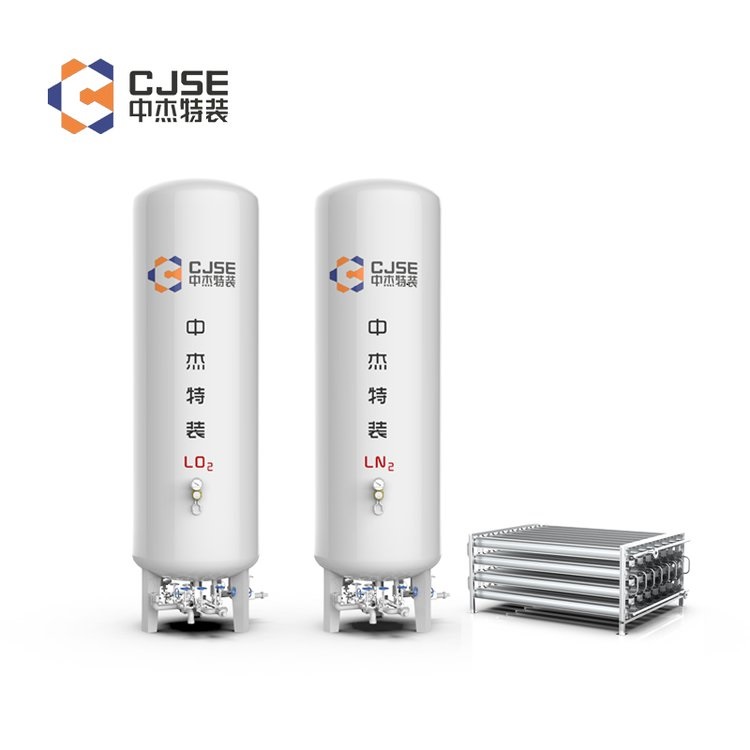


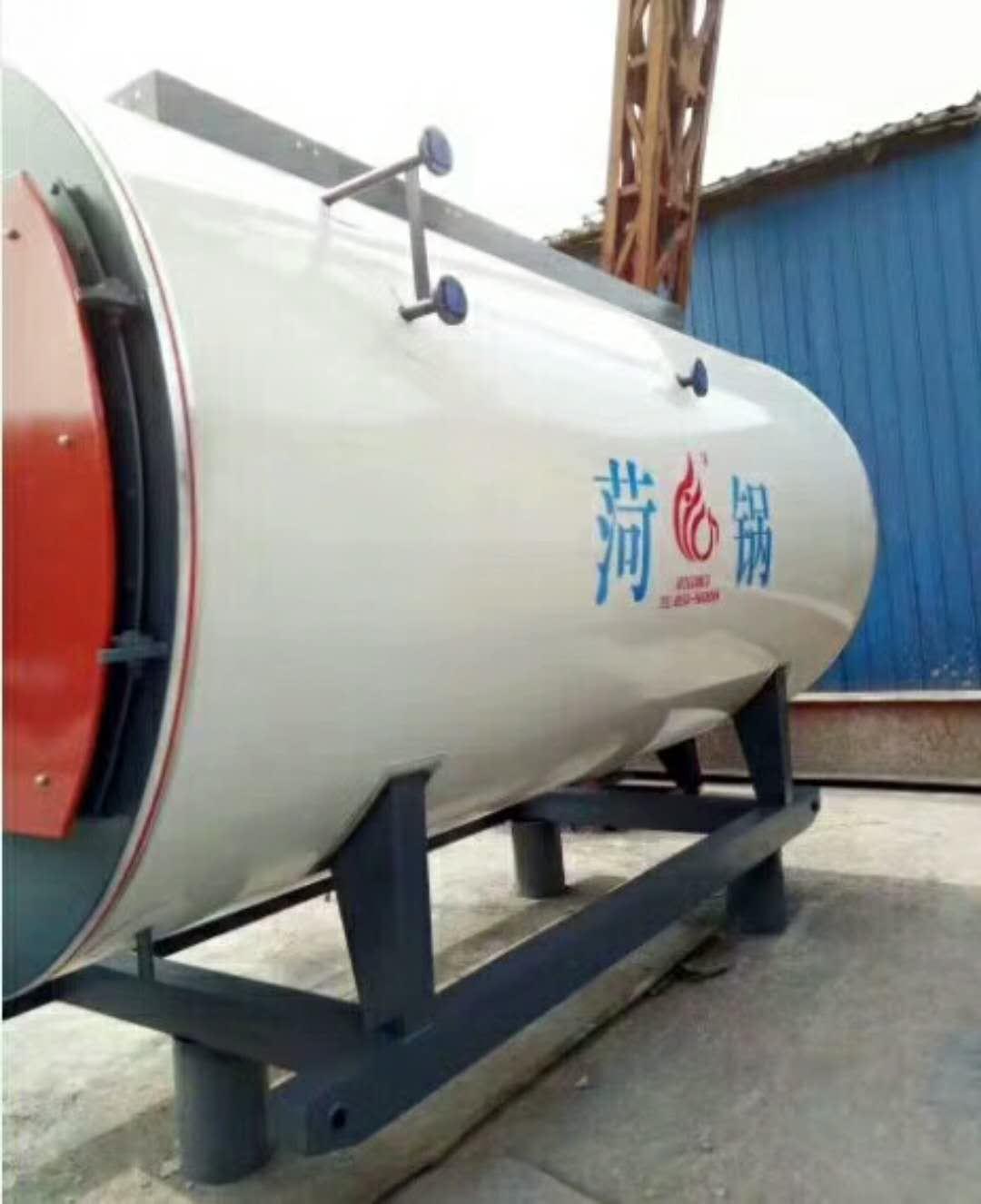


















Shandong Zhongjie Special Equipment (formerly Heze Boiler Factory Co., Ltd.) holds an A-grade boiler manufacturing license, an A2-grade pressure vessel manufacturing license, an A2-grade pressure vessel design license, a B-grade boiler installation license, and GB2/Class, GC2/Class pressure pipeline installation licenses, as well as an electromechanical installation contracting qualification. It is a member of the China Boiler and Water Treatment Association, the China Chemical Equipment Association, and the Council Member of the Shandong Equipment Manufacturing Association. The company has also passed the ISO9001 Quality Management System, ISO14001 Environmental Management System, OHSAS18001 Occupational Health and Safety Management System certifications, and the American ASME/U2 certification.
Liquid nitrogen tanks are widely used in meat freezing. The following are several main applications of liquid nitrogen tanks in meat freezing:
Quick Freezing: Liquid nitrogen tanks can provide low temperatures to rapidly freeze meat to the required temperature. Due to the low-temperature properties of liquid nitrogen, meat temperatures can be quickly reduced in a short period, effectively preserving the quality and texture of the meat.
Chilled Storage: Liquid nitrogen tanks are suitable for long-term frozen storage of meat products. Placing meat in a liquid nitrogen tank maintains it at low temperatures, preventing the growth of bacteria and microorganisms, thereby extending the shelf life of the meat.
Refrigerated Transport: Liquid nitrogen tanks can be used for the frozen transportation of meat products. Placing the meat in a liquid nitrogen tank can maintain its low temperature, ensuring the quality and freshness of the meat throughout the transportation process.
Chilled Processing: Liquid nitrogen tanks can be used for meat freezing. By exposing the meat to liquid nitrogen, the surface of the meat can be quickly frozen, forming a frozen layer, thereby preserving the meat's moisture and nutritional content.
Chilled Processing: Liquid nitrogen tanks can be used for meat chilling processing. Placing meat in liquid nitrogen makes it harder and crispier, facilitating cutting, slicing, and processing.
It's important to note that when using liquid nitrogen tanks for meat freezing, you should adhere to the relevant safety operating procedures and guidelines. Ensure that operators are equipped with the necessary safety awareness and operational skills to prevent accidental incidents. Additionally, consult with food safety experts.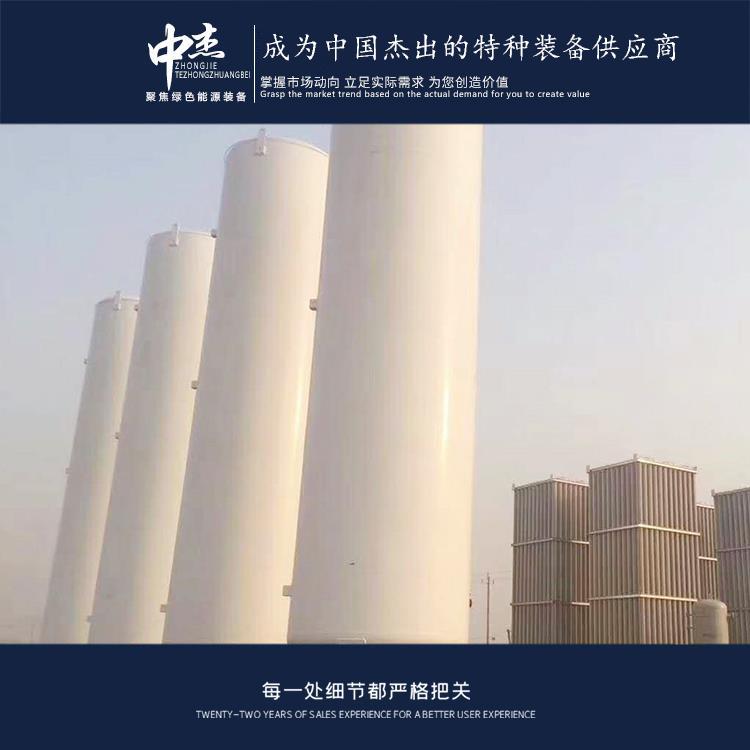
Leakage defects in liquid argon storage tanks may be caused by the following reasons:
Design or Manufacturing Defects: Defects in the design or manufacturing process of the tank, such as loose welding, improper material selection, or poor sealing, lead to leakage issues in the tank.
Corrosion and Oxidation: Long-term exposure to low temperatures can cause corrosion and oxidation in liquid argon tanks. These issues can damage the surface protective layer of the tank, leading to leakage problems.
Fatigue and stress cracking: Over time, due to temperature and pressure fluctuations during long-term use, tanks may experience fatigue and stress cracking. These cracks can lead to a decrease in the tank's sealing performance, resulting in leaks.
Improper Operation: Failure to follow proper procedures during the storage tank's operation, such as overfilling with liquid argon or excessive pressure, can lead to tank damage and leakage.
External Damage: The storage tank may have been damaged by external factors such as mechanical collisions or objects.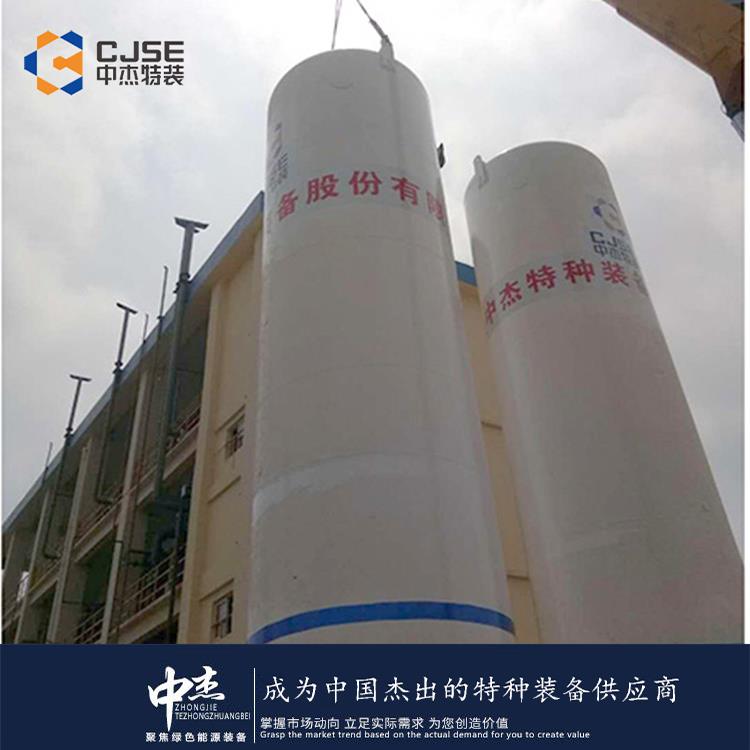
Possible reasons for increased liquid nitrogen tank liquid loss may include:
Evaporation Loss: Liquid nitrogen is a low-temperature liquid with a boiling point of -196 degrees Celsius. Even under good insulation conditions, evaporation of liquid nitrogen occurs. Therefore, the main cause of liquid loss in liquid nitrogen tanks is evaporation. If the insulation layer of the tank is damaged or the insulation performance is poor, evaporation loss will increase.
Leakage: Leaks in liquid nitrogen storage tanks can also lead to increased liquid loss. Leaks may occur at the tank's interfaces, valves, pipelines, and other parts. Leaks can be caused by equipment aging, material fatigue, improper operation, and other reasons.
Improper operation: Incorrect operation and maintenance may also lead to increased liquid nitrogen loss in the storage tank. For example, frequently opening the tank's lid, leaving the lid open for extended periods, and failing to promptly repair leaks.
Environmental Factors: Environmental factors can also affect the liquid nitrogen tank's liquid loss. For instance, high temperatures can decrease the tank's insulation performance, thereby increasing evaporation loss.
To minimize the liquid nitrogen loss in storage tanks, the following measures can be taken:
Ensure the tank's insulation is intact and regularly inspect and maintain the insulation.
Regularly inspect the tank's interfaces, valves, pipes, and other components to ensure good sealing performance and prevent leaks.
Strictly control the frequency and duration of tank openings to prevent unnecessary liquid evaporation.
Avoid using liquid nitrogen tanks in high-temperature environments, or take cooling measures to maintain a low temperature around the tank.
It should be noted that liquid nitrogen tank liquid loss is inevitable, but through reasonable operation and maintenance, it can be reduced to a minimum.
Proper management regulations for the use of low-temperature liquid storage tanks encompass the following aspects:
Tank Selection and Installation: Choose an appropriate low-temperature liquid storage tank and ensure it complies with relevant standards and regulations. Installation of the tank should be carried out by personnel, following the manufacturer's instructions and requirements to ensure stability and safety.
Safety Operating Procedures: Establish and implement safety operating procedures for liquid storage tanks, including startup, shutdown, filling, and venting procedures. Operators must undergo training to understand the characteristics of liquid storage tanks, safety precautions, and emergency response measures.
Safety Equipment and Protection Measures: Tanks should be equipped with necessary safety devices such as pressure sensors, safety valves, leak detectors, etc., to monitor and control the pressure and temperature of the tank. At the same time, operators should wear appropriate personal protective equipment, such as insulating gloves, protective clothing, etc., to ensure their own safety.
Regular Inspections and Maintenance: Conduct regular checks and maintenance on low-temperature liquid storage tanks, including inspecting the tank's appearance, sealing, and corrosion prevention measures. If any issues are found, they should be repaired or the tank replaced promptly to ensure proper operation and safety.
Waste Disposal: Abandoned low-temperature liquid storage tanks should be disposed of in accordance with relevant environmental protection regulations. The residual liquids in the abandoned tanks should be properly handled to prevent environmental pollution.
Tank Record and Tracking: Establish a tank usage record including filling dates, quantities, and usage status. Additionally, it is recommended to set up a tank tracking system for monitoring and managing the usage and maintenance of the tanks.
The above lists some common regulations for the management of low-temperature liquid storage tanks. Specific regulations may vary depending on different industries and regions. When using low-temperature liquid storage tanks, relevant laws and standards should be adhered to, and appropriate management measures should be formulated based on the actual situation.
Our company attaches great importance to technological innovation and R&D design. We have 1 municipal-level enterprise technology center in Heze City, with testing facilities for non-destructive testing, physical and chemical testing, welding testing, hydrostatic testing, etc. We are equipped with over 600 pieces of various instruments and equipment, including CNC machine tools, X-ray flaw detectors, digital ultrasonic flaw detectors, mechanical property testing machines, chemical analyzers, spectrometers, tensile testing machines, plasma welding machines, and more. The key products and technologies we have developed, such as welding for temperature-pressure vessels, emissions reduction in biomass boilers, and waste heat utilization, have successively been selected for multiple Shandong Provincial Department of Industry and Information Technology innovation projects, Shandong Provincial key projects, and Heze City innovation and excellence projects. We have cumulatively obtained 27 authorized utility model patents, 16 authorized invention patents, participated in drafting 2 standards, 2 industry standards, and registered 15 trademarks. The technical team of our company, in collaboration with Professor Yajiang Li of Shandong University, has jointly developed deep cryogenic container processing technology using the international plasma arc + filler wire tungsten inert gas arc welding (PAW-GTAW) technology. After provincial-level scientific and technological achievement evaluation, the technical level has reached international standards in the field of deep cryogenic container manufacturing. Choose Zhongjietech, let's create brilliance together!
WeChat Official Account

Scan to follow Official Account



















