


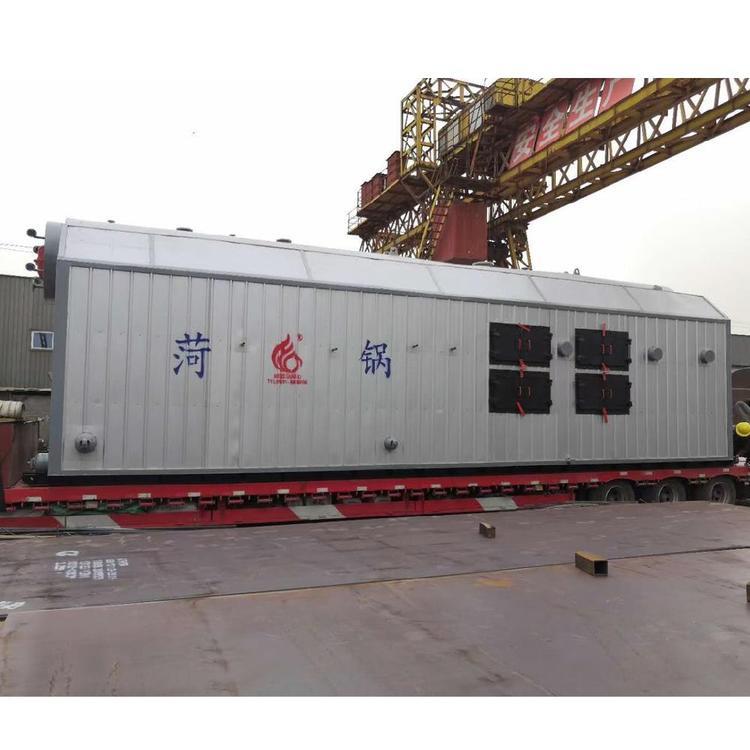

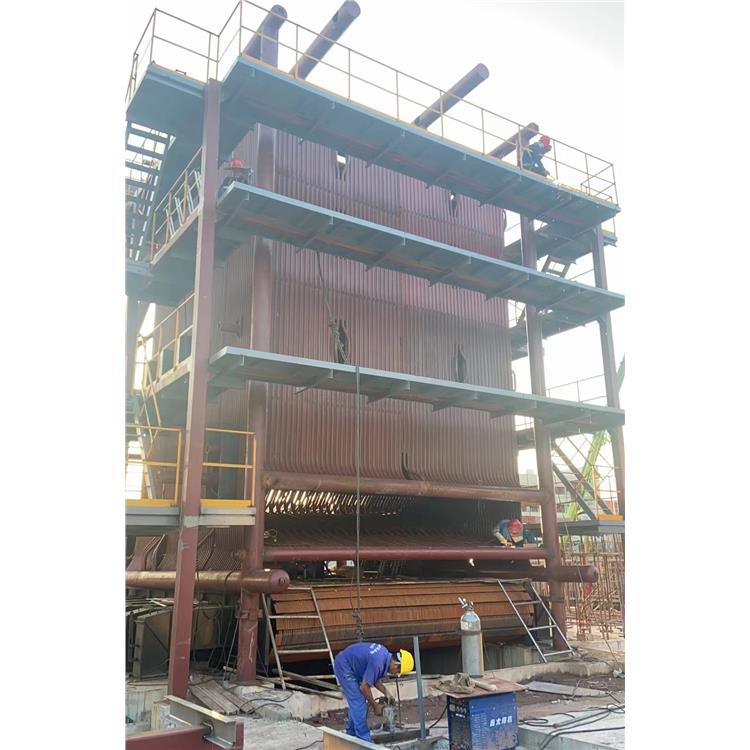


















Shandong Zhongjie Special Equipment specializes in: fuel (gas) boilers, organic heat carrier boilers, biomass boilers, waste heat recovery boilers, and other boiler products; vacuum insulation deep-freeze pressure vessels such as LNG storage tanks, oxygen/nitrogen/argon storage tanks, CO2 storage tanks; pressure vessel products including denitrification engineering equipment, heat storage and energy storage equipment, complete chemical equipment sets; central air conditioning and ventilation equipment such as ground (water) source heat pumps, air source units, water-cooled screw units, and air-cooled modular units. Planned products include large-scale thermal energy centers, LNG transport vehicles, LNG tank containers, and other green energy equipment.
To burn biomass pellets and prevent coking issues, the following measures can be taken:
Appropriate Particle Size: The size of biomass pellets is crucial for combustion efficiency. The particle size should be controlled within an appropriate range, typically 3-5 millimeters. Larger particles can lead to incomplete combustion, while smaller particles are prone to flying off and causing blockages.
Adequate Oxygen Supply: Sufficient oxygen supply is required for combustion to ensure complete reaction. Biomass boilers should ensure an ample oxygen supply within the combustion chamber, which can be achieved by adjusting the ventilation system and operational parameters of the burner.
Appropriate Combustion Temperature: The combustion temperature of biomass pellets is also a significant factor affecting combustion efficiency. Too low a combustion temperature can lead to incomplete combustion, while too high a temperature can easily cause coking. Biomass boilers should adjust the combustion temperature to an appropriate range based on the fuel characteristics and combustion requirements.
Proper Combustion Duration: The burning time of biomass pellets should also be properly controlled. Insufficient burning time leads to incomplete combustion, while excessive burning time may cause coking. Biomass boilers should adjust the burning time according to the fuel characteristics and combustion requirements, ensuring it falls within an appropriate range.
Regular cleaning and maintenance: Biomass boilers require regular cleaning and maintenance to keep the combustion chamber and flue passages clear. Regularly cleaning the ash and carbon deposits in the combustion chamber, and cleaning the flue and heat exchanger, can prevent the occurrence of scaling issues.
Note that there may be differences between different types of biomass fuels and biomass boilers. The specific operations and adjustments should be made based on the actual situation. When making adjustments and
Biomass boilers typically include the following main components:
Combustion chamber: The area used for burning biomass fuel, providing the space and oxygen required for combustion.
Grate: A metal grid located at the bottom of the combustion chamber, used to support fuel and facilitate the flow of gases and slag during the combustion process.
Combustion System: Includes fuel supply system, air supply system, and ignition system, designed to control the supply of fuel and air for the combustion process.
Flue Gas Treatment System: Includes flue gas purification equipment such as dust collectors, desulfurization and denitrification units, used for purifying flue gases produced by combustion and reducing environmental pollution.
Boiler pipeline system: Includes water pipes, steam pipes, and flue gas pipes, used for transferring heat and flue gas.
Heat Exchanger: Used to transfer the thermal energy produced by combustion to the working medium, such as water or steam, for energy conversion.
Control System: Includes automatic control equipment, sensors, and instruments for monitoring and controlling the boiler's operational status, ensuring safety and operation.
Equipment: Includes water supply systems, waste discharge systems, ash handling systems, and fuel storage systems, etc., designed to provide the necessary functions for boiler operation.
These devices collectively form the basic structure of biomass boilers, facilitating the combustion of biomass fuel and the energy conversion process. Specific devices and configurations may vary depending on the type, scale, and application requirements of the boiler.
Biomass boiler combustion offers the following energy-saving features compared to traditional fuel boilers:
Combustion: The combustion technology and design of biomass boilers enable the burning of biomass fuel. Compared to traditional fuel boilers, biomass boilers have higher combustion efficiency, allowing for more energy from the fuel to be utilized, thereby reducing energy waste.
Heat Recovery Utilization: Biomass boilers are equipped with a heat recovery system, enabling the reuse of excess heat generated from combustion in the heating system, thereby enhancing energy efficiency. Traditional fuel boiler flue gas heat is often wasted, but biomass boilers can recover and utilize the heat from flue gas, reducing energy waste.
Renewable Energy Utilization: Biomass boilers utilize renewable biomass fuels such as wood chips, straw, and discarded crops, reducing reliance on finite fossil fuel resources. Compared to traditional fuel boilers, biomass boilers have a more sustainable fuel source, enabling the sustainable use of energy.
Carbon Emission Reduction: The combustion of biomass fuel produces relatively lower carbon emissions compared to traditional fuel boilers. The use of biomass boilers reduces carbon emissions and is more environmentally friendly, as it cuts down on greenhouse gas emissions.
Waste Utilization: Biomass boilers can use agricultural residues like crop straw and wood waste as fuel, effectively utilizing waste resources and reducing resource waste. Compared to traditional fuel boilers, biomass boilers offer a more diverse fuel source and enable the efficient use of waste.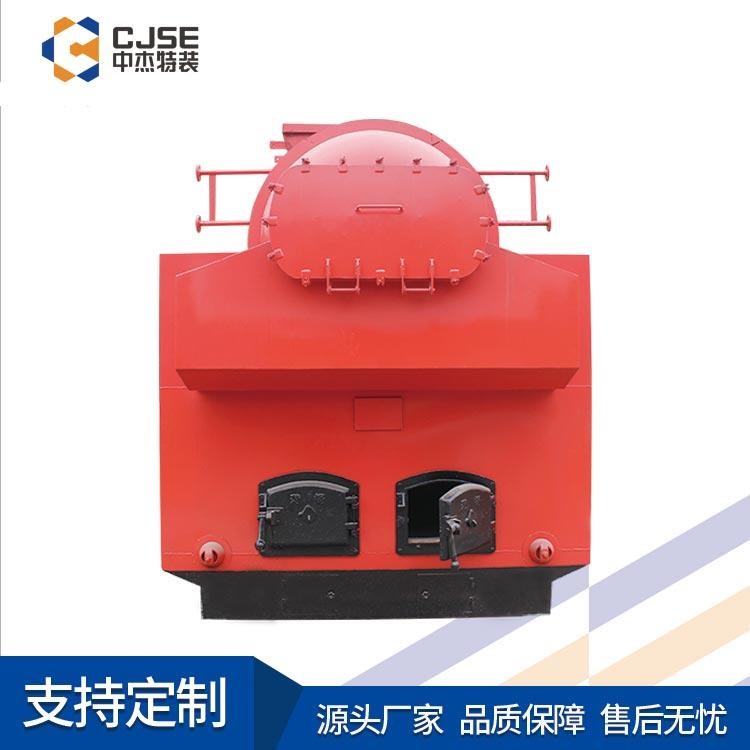
Biomass boilers possess certain characteristics that give them an advantage in energy conservation and environmental protection:
Renewable Energy: Fuel for biomass boilers is derived from renewable sources, such as wood chips, straw, and waste materials. Using biomass fuel compared to fossil fuels can reduce reliance on finite resources and decrease energy consumption.
Low carbon emissions: The amount of carbon dioxide released during the combustion of biomass fuel is roughly equivalent to the amount absorbed during its growth, creating a closed carbon cycle. Compared to the combustion of fossil fuels, biomass boilers emit less carbon dioxide, contributing significantly to the reduction of greenhouse gas emissions.
Combustion: The biomass boiler utilizes advanced combustion and control technologies to achieve combustion. By optimizing the combustion process, it enhances the utilization of thermal energy and reduces energy waste.
Waste Utilization: Biomass boilers can use waste materials as fuel, such as crop straw, wood waste, etc.
Our company highly values technological innovation and R&D design. We possess 1 municipal-level enterprise technology center in Heze City, equipped with testing facilities for non-destructive testing, physical and chemical tests, welding tests, hydrostatic tests, and more. We have over 600 pieces of equipment, including CNC machine tools, X-ray flaw detectors, digital ultrasonic flaw detectors, mechanical property test machines, chemical analyzers, spectrometers, tensile testing machines, plasma welding machines, and others. Our key products and technologies, such as thermal-pressure vessel welding, biomass boiler emission reduction, and waste heat utilization, have been selected for multiple Shandong Provincial Department of Industry and Information Technology Science and Technology Innovation projects, key provincial projects, and Heze City innovation and excellence projects. We have累计 obtained 27 authorized utility model patents, 16 authorized invention patents, participated in drafting 2 standards, 2 industry standards, and registered 15 trademarks. The technical team, in collaboration with Professor Yajiang Li from Shandong University, has developed deep cryogenic container processing technology using the internationally recognized plasma arc + wire filling tungsten inert gas arc welding (PAW-GTAW) technique. The provincial-level scientific and technological achievement appraisal has confirmed that our technology level in deep cryogenic container manufacturing has reached international standards. Choose Zhongjie Special Equipment, and let's create brilliance together!
WeChat Official Account

Scan to follow Official Account



















