




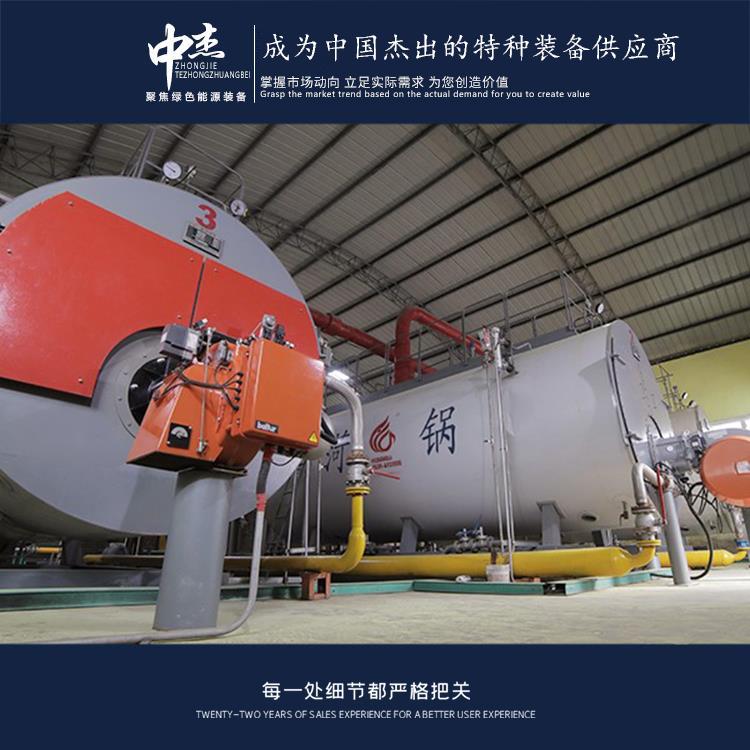


















Shandong Zhongjie Special Equipment (formerly Heze Boiler Factory Co., Ltd.) was established in 2001, located at No. 2218 Jinnan Road, Economic and Technological Development Zone, Heze City. With a registered capital of 50 million yuan and total assets of 500 million yuan, the company operates seven major business centers: boilers, deep-freezing containers, pressure vessels, central air conditioning, engineering installation, international trade, and the Internet of Things. It has three factory sites on Jinnan Road, East Changjiang Road, and Bohai Road, covering a total of 200,000 square meters, with the main workshop spanning 83,000 square meters. It currently employs 710 people, including 247 engineering and technical staff and 82 intermediate-level technicians. In December 2016, it was recognized as a "High-Tech Enterprise" by the Science and Technology Department. In June 2021, it was named a "Specialized and New Enterprise in Shandong Province" by the Industry and Information Technology Department. In June 2022, it was identified as a "Gazelle Enterprise in Shandong Province" and in August 2022, it was recognized as a "Specialized and New Small Giant Enterprise" by the Ministry of Industry and Information Technology.
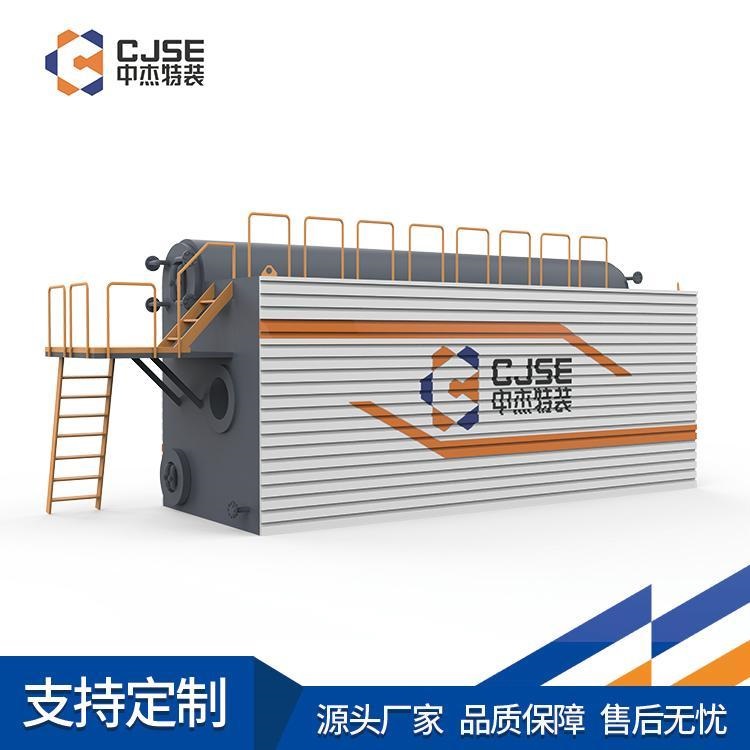
A gas thermal oil furnace is a device that uses gas as fuel and transfers heat energy through thermal oil. Its features include:
- High thermal efficiency: The gas thermal oil furnace uses thermal oil as the heat transfer medium, offering high heat transfer efficiency. The thermal oil has high thermal conductivity and stability, enabling rapid heat transfer and improving energy utilization efficiency.
- Temperature control: The furnace can control the working temperature by regulating gas supply and thermal oil circulation. This temperature control meets various process and production requirements, enhancing production efficiency and product quality.
- Safety and reliability: The furnace employs a closed-loop system, with the combustion process occurring in an enclosed environment, reducing the risk of gas leakage. Additionally, the thermal oil has a high flash point and ignition point, making the combustion process relatively safe and reliable.
- Flexibility: The gas thermal oil furnace is suitable for various industrial fields such as chemicals, textiles, and food processing. It can adapt to different process demands and working conditions, offering strong flexibility.
- Environmental protection and energy saving: The furnace emits relatively low amounts of exhaust during combustion, causing minimal environmental pollution. Due to its high thermal efficiency and temperature control, the furnace can save energy consumption and reduce energy costs.
- It is important to note that regular inspections and maintenance are required for the gas thermal oil furnace during use to ensure proper operation and extend its service life. Moreover, selecting the appropriate model and supplier is crucial for ensuring its features and performance.
The gas steam boiler's gas consumption over a year, for a 1-ton capacity unit, depends on various factors, including the boiler's efficiency, load conditions, and operating hours. Generally, it can be estimated using the following formula: Gas Consumption (m) = Boiler Efficiency × Rated Thermal Power × Operating Hours. Here, the boiler efficiency refers to the boiler's thermal energy utilization efficiency, typically expressed as a percentage; the rated thermal power is the boiler's rated thermal output, usually in kilowatts (kW); and the operating hours are the boiler's running time, typically measured in hours. It's important to note that the boiler's efficiency and rated thermal power can be determined based on the specific model and parameters of the boiler, while the operating hours need to be estimated based on actual usage. Therefore, to accurately calculate the annual gas consumption of a 1-ton gas steam boiler, it is recommended to refer to the technical specifications and operating records of the boiler, or consult the boiler manufacturer or engineer.
In the burner of a thermal oil furnace, adjusting the air shutter under low flame conditions is crucial. Here are some common knowledge and precautions:
The function of the air shutter: The air shutter is a key component in the burner that controls the supply of combustion air. By adjusting the opening of the air shutter, the flow of combustion air can be controlled, thereby affecting the oxygen supply during combustion and the combustion effect.
Adjustment under low flame conditions: Under low flame conditions, the burner needs to maintain stable combustion to ensure combustion efficiency and heat output. In this case, it is necessary to adjust the opening of the air shutter appropriately to maintain a proper supply of combustion air. Generally, the opening of the air shutter is relatively small under low flame conditions to maintain an appropriate oxygen supply, avoiding incomplete combustion or instability.
Ratio of combustion air to fuel: Under low flame conditions, it is necessary to ensure that the ratio of combustion air to fuel is appropriate. Excessive combustion air can lead to incomplete combustion and energy waste, while insufficient combustion air can cause instability and the production of harmful gases. By adjusting the opening of the air shutter, the ratio of combustion air to fuel can be controlled to achieve a stable combustion effect.
Burner adjustment and optimization: During the installation and adjustment of the burner of a thermal oil furnace, appropriate adjustment and optimization are required. Through actual operation and monitoring, adjust the opening of the air shutter and other parameters to achieve the best combustion effect and energy efficiency performance. This requires...
Steam boiler equipment water treatment refers to the process of treating water in steam boilers to ensure normal boiler operation and extend the lifespan of the equipment. Below are the basic knowledge points regarding steam boiler equipment water treatment:
Water Quality Requirements: The water quality in steam boilers is of high importance, usually requiring the removal of impurities, dissolved oxygen, and hardness substances. Impurities and hardness substances can cause scaling and corrosion on the inner walls of the boiler, while dissolved oxygen can lead to corrosion and the formation of bubbles.
Removal of Impurities: Common methods for removing impurities from water include sedimentation, filtration, and ion exchange. Sedimentation involves adding chemicals to make impurities settle, filtration removes impurities through a filtering medium, and ion exchange uses resin to adsorb and exchange ions to remove impurities from the water.
Hardness Adjustment: The hardness substances in water are mainly calcium and magnesium salts, which can cause scaling on the inner walls of the boiler. Hardness can be adjusted by adding chemicals or using water softening equipment to prevent scaling issues.
Removal of Dissolved Oxygen: Dissolved oxygen can cause corrosion and the formation of bubbles. It can be removed by adding oxidizing agents or using deaeration equipment.
pH Control: The pH level of water in steam boilers affects equipment corrosion and scaling. It is usually necessary to control the water pH within an appropriate range, using buffers or regulators to adjust the pH.
Regular Testing and Maintenance: Regular water quality testing of steam boiler equipment, including measuring hardness, dissolved oxygen, and pH levels, should be conducted. Based on the test results, appropriate water treatment measures and maintenance should be taken.
Steam boiler equipment water treatment is a crucial aspect of ensuring normal boiler operation and extending equipment lifespan. Rational water treatment measures can effectively prevent scaling, corrosion, and malfunctions on the inner walls of the boiler.
Shandong Zhongjie Special Equipment, welcome customers for factory discussions and collaboration.
WeChat Official Account

Scan to follow Official Account



















