


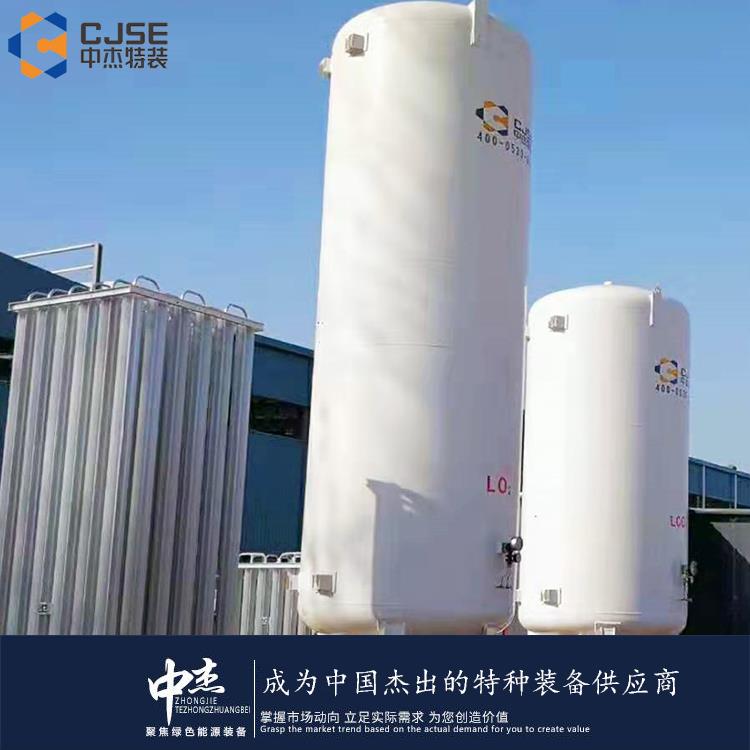

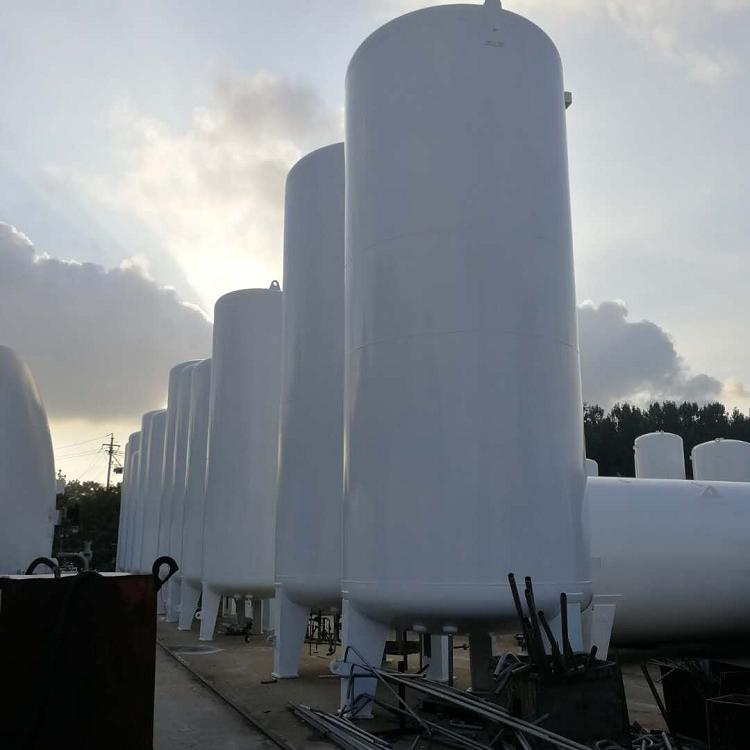
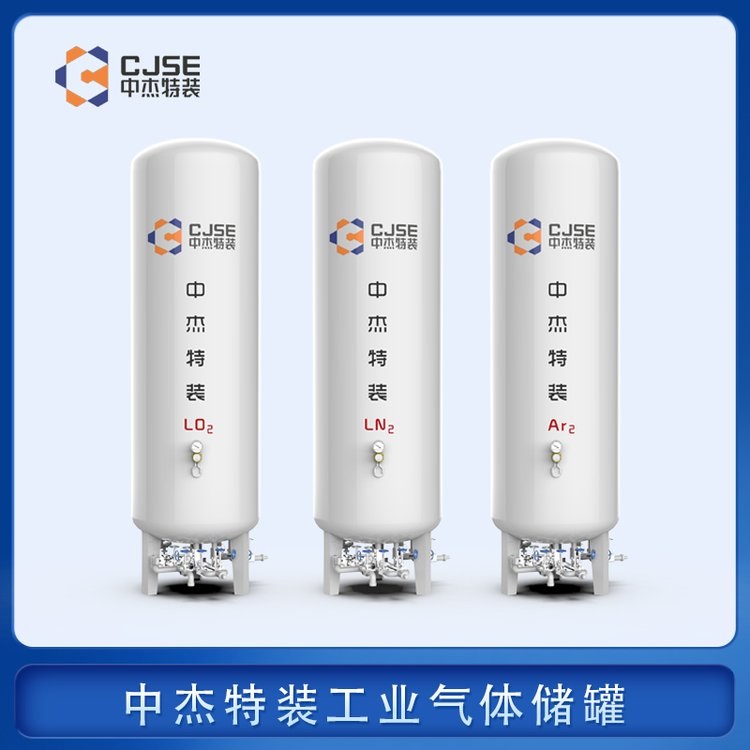


















Shandong Zhongjie Special Equipment Co., Ltd. specializes in: fuel (gas) boilers, organic heat carrier boilers, biomass boilers, waste heat recovery boilers, and other boiler products; vacuum insulation cryogenic pressure vessels such as LNG tanks, oxygen/nitrogen/argon tanks, and CO2 tanks; pressure vessel products including denitrification engineering equipment, heat storage and energy storage equipment, and complete chemical equipment; central air conditioning and ventilation equipment such as ground (water) source heat pumps, air source units, water-cooled screw units, and air-cooled modules. Planned products include large-scale energy centers, LNG transport vehicles, LNG tank containers, and other green energy equipment.
Carbon dioxide storage tanks offer the following advantages:
High storage density: These tanks can compress carbon dioxide gas into a liquid state, significantly increasing storage density. Compared to storing it as a gas, liquid carbon dioxide can be stored in smaller tanks, saving space and costs.
Environmental and renewable: Carbon dioxide is an environmentally friendly gas, and its increase in the atmosphere can lead to warming and climate change. By storing and utilizing carbon dioxide, we can reduce its emissions into the atmosphere, achieving environmental protection and sustainable development.
Multiple application areas: Carbon dioxide storage tanks are widely used in various fields, including the food and beverage industry, industry, fire extinguishing, and gas supply. Carbon dioxide can be used as a preservative for food, a carbonation agent for beverages, as well as a gas and fire extinguishing agent, with broad applications and market demand.
Safe and reliable: During design and manufacturing, carbon dioxide storage tanks typically use high-strength materials (such as carbon steel or stainless steel), offering good pressure resistance and safety. The tanks are usually equipped with safety valves, pressure gauges, level indicators, and other accessories to ensure safe operation. Additionally, carbon dioxide is a non-flammable and non-explosive gas, making it relatively safe.
These advantages make carbon dioxide storage tanks a crucial storage and supply equipment, widely used in multiple industries. However, when using carbon dioxide storage tanks, it is necessary to follow relevant safety operating procedures and standards to ensure safe operation and use.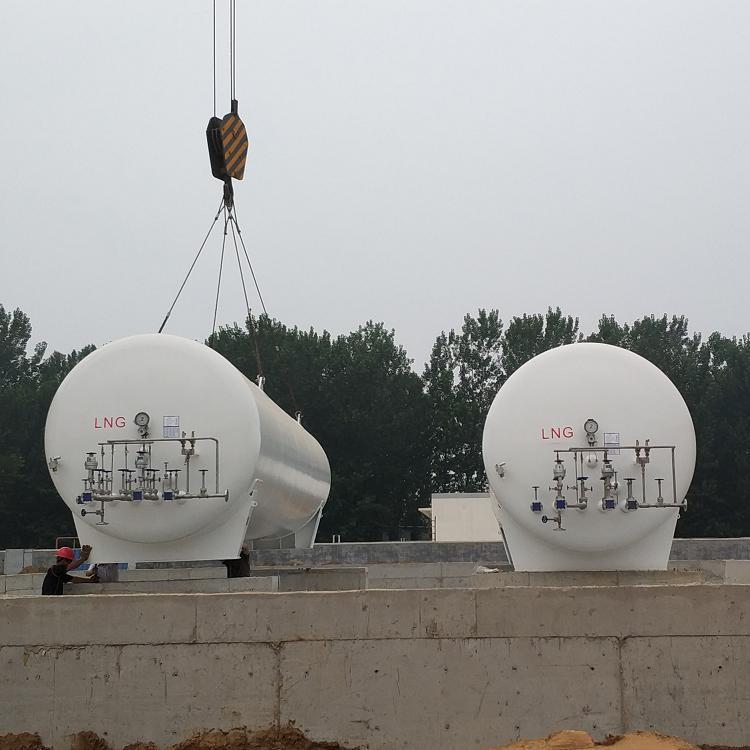
Technical specifications for carbon dioxide storage tanks can be formulated based on different application fields and/or regional standards. The following are some common technical specifications and standards for reference: ASME Standards: The American Society of Mechanical Engineers (ASME) has issued a series of standards on pressure vessels, including specifications for carbon dioxide storage tanks such as ASME BPVC Section VIII Division 1 and ASME BPVC Section VIII Division 2. ISO Standards: The International Organization for Standardization (ISO) has published some standards related to pressure vessels, such as ISO 9809-1 and ISO 9809-2, covering design, manufacturing, and inspection requirements for steel gas cylinders. GB Standards: The China National Standards Authority has issued a series of standards related to pressure vessels, such as GB 150 "Pressure Vessels" and GB 5099 "Steel Gas Cylinders," which include design, manufacturing, and inspection requirements for carbon dioxide storage tanks. DOT Standards: The United States Department of Transportation (DOT) has issued some standards related to pressure vessels and cylinders, such as DOT-3AA and DOT-4BA, covering design, manufacturing, and transportation requirements for liquefied gas storage tanks. EN Standards: The European Committee for Standardization (CEN) has published some standards related to pressure vessels, such as EN 13445 and EN 14382, covering design, manufacturing, and inspection requirements for liquefied gas storage tanks. In addition, other industry standards and specifications may apply to carbon dioxide storage tanks based on specific application needs, such as relevant standards in the food and beverage industry and industry-specific standards. When using carbon dioxide storage tanks, it is necessary to select applicable technical specifications based on specific application requirements and local regulations, and ensure that the tank's design, manufacturing, and use comply with the corresponding standards and specifications.
The application standards for liquid carbon dioxide storage tanks primarily include the following aspects:
Pressure Vessel Standards: Liquid carbon dioxide storage tanks are generally considered pressure vessels, and their design, manufacturing, and use should comply with the relevant pressure vessel standards. In China, common pressure vessel standards include GB150 "Steel Pressure Vessels" and GB18435 "Storage Tanks." Safety Standards: The use of liquid carbon dioxide storage tanks should adhere to relevant safety standards and regulations. For instance, in China, the safe operation of liquid carbon dioxide storage tanks should follow standards such as GB50028 "Design Code for Petroleum and Chemical Enterprises" and GB50016 "Building Design Fire Prevention Code." Inspection and Testing Standards: The inspection and testing of liquid carbon dioxide storage tanks should comply with the corresponding standards and regulations. For example, regular inspections of liquid carbon dioxide storage tanks can refer to standards like GB/T 19638 "Regular Inspection Code for Pressure Vessels." Environmental Protection Standards: The use of liquid carbon dioxide storage tanks should comply with relevant environmental protection standards and regulations. For instance, in China, the exhaust emissions from liquid carbon dioxide storage tanks should meet standards such as "Air Pollutant Emission Standards."
Our company places great importance on technological innovation and R&D, with 1 municipal enterprise technology center in Heze City. We have established testing facilities for non-destructive testing, physical and chemical testing, welding testing, hydrostatic testing, etc. Equipped with over 600 types of instruments and equipment, including CNC machine tools, X-ray flaw detectors, digital ultrasonic flaw detectors, mechanical property testing machines, chemical analyzers, spectrometers, tensile testing machines, plasma welding machines, and more, our key products and technologies such as thermal pressure vessel welding, biomass boiler emissions reduction, and waste heat utilization have successively entered multiple Shandong Provincial Department of Industry and Information Technology science and technology innovation projects, Shandong key projects, and Heze City innovation and excellence projects. We have cumulatively obtained 27 authorized utility models, 16 authorized inventions, participated in drafting 2 standards, 2 industry standards, and registered 15 trademarks. Our technical team, in collaboration with Professor Yajiang Li of Shandong University, has developed deep cryogenic container processing technology using the internationally recognized plasma arc + filler wire argon arc welding (PAW-GTAW) technology. The provincial technological achievement appraisal has determined that our technology level in deep cryogenic container manufacturing has reached an international standard. Choose Zhongjietech, and let's create brilliance together!
WeChat Official Account

Scan to follow Official Account



















