


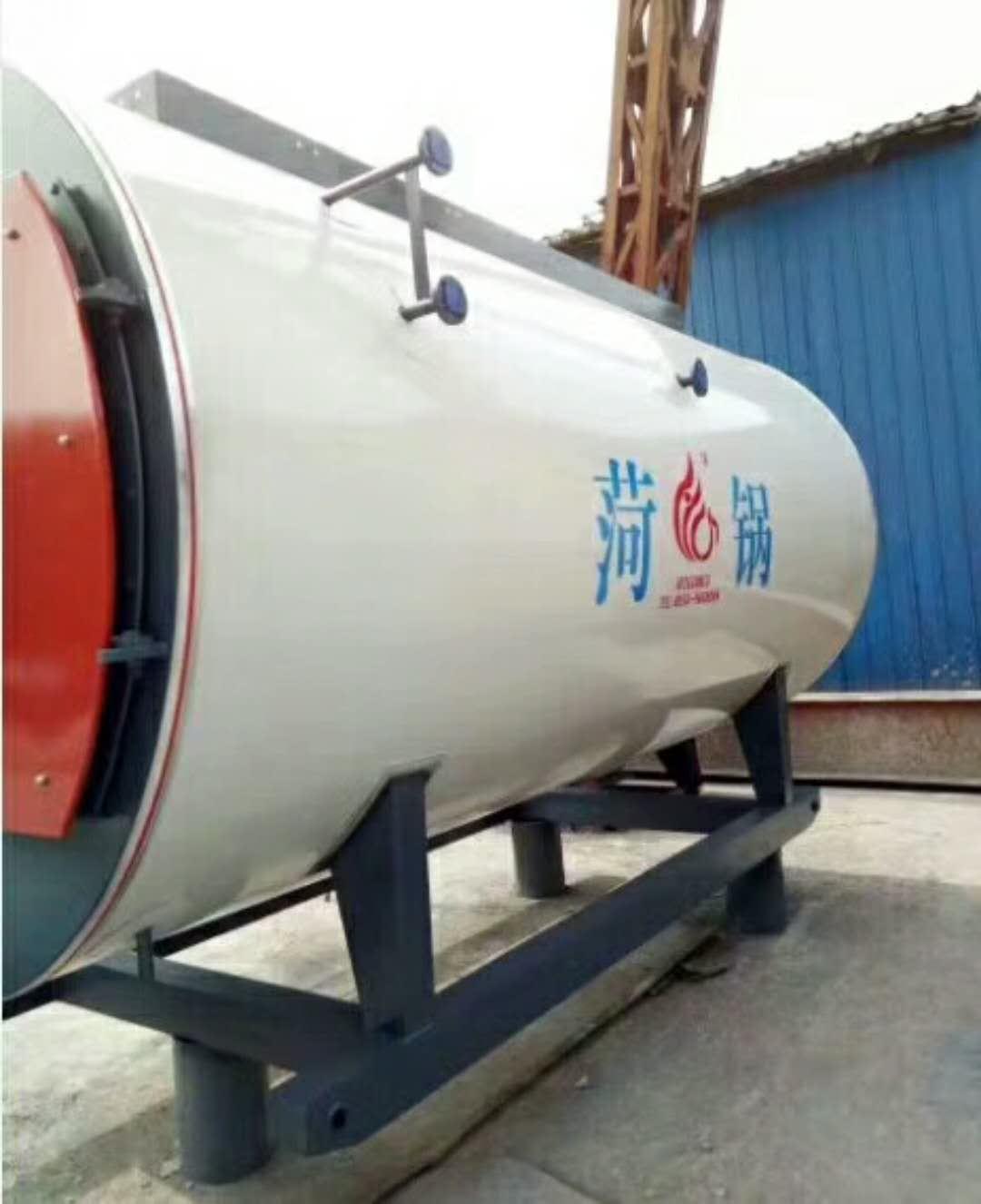



















Shandong Zhongjie Special Equipment (formerly Heze Boiler Factory Co., Ltd.) was established in 2001, located at No. 2218 Jinnan Road, Development Zone, Heze City, with a registered capital of 50 million yuan and total assets of 500 million yuan. The company has 7 business centers: boilers, deep-freeze containers, pressure vessels, central air conditioning, engineering installation, international trade, and Internet of Things. It has three factory sites on Jinnan Road, East Changjiang Road, and Bohai Road, covering a total of 200,000 square meters. The main workshop spans 83,000 square meters. It currently employs 710 people, including 247 engineers and technicians, and 82 intermediate-level technical personnel. In December 2016, it was recognized as a "High-Tech Enterprise" by the Science and Technology Department. In June 2021, it was identified as a "Specialized and New Enterprise in Shandong Province" by the Industry and Information Technology Department. In June 2022, it was recognized as a "Gazelle Enterprise in Shandong Province" and in August 2022, it was identified as a "Specialized and New Small Giant Enterprise" by the Ministry of Industry and Information Technology.
Leakage issues in CO2 storage tanks may be caused by the following factors: Material Corrosion: CO2 has some corrosive properties, and prolonged exposure can lead to corrosion of the tank material. Corrosion can damage the tank's surface protective layer, causing it to lose its seal, resulting in leakage. Welding Defects: The welding joints of the tank may have defects, such as cracks in the welds or voids. These defects can weaken the strength of the welded areas, leading to leakage. Design Defects: Inadequate design or defects in the tank can also cause leakage. For instance, poorly designed interfaces or unreasonable structural designs can lead to leakage issues. Overpressure: If the internal pressure of the tank exceeds its capacity, it may deform or rupture, causing leakage. Temperature Fluctuations: During temperature changes, due to thermal expansion and contraction, CO2 storage tanks may deform or experience stress concentration, leading to leakage. Incorrect Operation: Improper operation and maintenance can also cause tank leakage. For example, over-tightening valves or inadequate maintenance measures can reduce the tank's sealing performance. External Damage: External forces such as impacts, scratches, or corrosion can damage the tank's surface, leading to leakage. To avoid leakage issues in CO2 storage tanks, it is essential to select appropriate materials, reasonable design, and manufacturing processes, and to conduct regular inspections and maintenance. Additionally, operators should receive training and adhere to operational procedures to ensure the safe operation of the tanks.
An automated maintenance system for carbon dioxide tanks typically includes the following main components:
- Pressure Maintenance System: Monitors and adjusts the internal pressure of the tank to ensure carbon dioxide remains within a safe and stable pressure range. This system includes pressure sensors, control systems, pressure regulating valves, and pressure reserve devices.
- Temperature Control System: Monitors and adjusts the internal temperature of the tank to maintain carbon dioxide within an appropriate temperature range. This system includes temperature sensors, control systems, and temperature regulating devices.
- Level Monitoring System: Measures and monitors the liquid level within the tank to ensure carbon dioxide levels are within a safe range. The system can utilize float level gauges, pressure level gauges, and ultrasonic level gauges.
- Leak Detection System: Monitors leaks in the tank and pipeline systems, promptly detecting and alerting to any issues. This system can employ gas sensors, liquid sensors, and leak alarms.
- Fire Detection and Extinguishing System: Monitors fire conditions in the tank area and implements appropriate extinguishing measures. This system includes fire detectors, alarms, and extinguishing equipment.
- Remote Monitoring and Control System: Remotely monitors and controls the operational status and parameters of the tank, enabling remote operation and management. This system connects via network, providing real-time data and remote control functions.
These are the main components of a typical automated maintenance system for carbon dioxide tanks. The specific configuration and functions can be customized according to the tank's design requirements and application scenarios. These automated maintenance systems enhance tank safety, stability, and reliability, reducing the need for manual intervention and operational risks.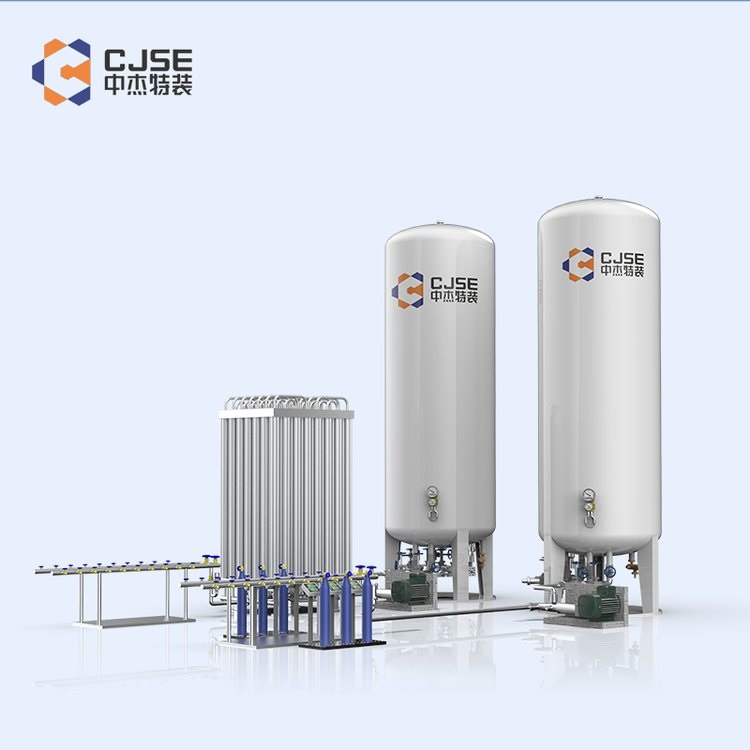
Low-temperature CO2 storage tanks offer several advantages:
- Low-temperature Storage Capacity: These tanks can store CO2 at low temperatures, typically between -40°C to -70°C. This低温 storage capability allows CO2 to be stored in liquid form, significantly reducing the storage space required.
- High Storage Density: Due to CO2 being stored in liquid form at low temperatures, its storage density is relatively high. Compared to gaseous storage, liquid storage can hold more CO2 in a smaller tank, enhancing storage efficiency.
- Environmental and Renewable: CO2 is an eco-friendly gas, and its storage and use generate minimal harmful substances. Additionally, CO2 can be reused through capture and recycling technologies, minimizing environmental impact.
- High Safety: Low-temperature CO2 storage tanks are made from high-strength materials, featuring excellent sealing and corrosion resistance. They are equipped with safety valves and pressure relief devices, effectively controlling internal pressure and temperature to ensure safe storage processes.
- Wide Application: These tanks are widely used across various industries, such as food and beverage, pharmaceutical, and chemical industries. They can be used for freezing food, refrigeration equipment, and gas supply, meeting diverse industrial needs.
In summary, low-temperature CO2 storage tanks provide benefits like low-temperature storage capacity, high storage density, environmental friendliness, renewable use, high safety, and wide application. These advantages make them essential equipment for storing and using CO2 in many industries.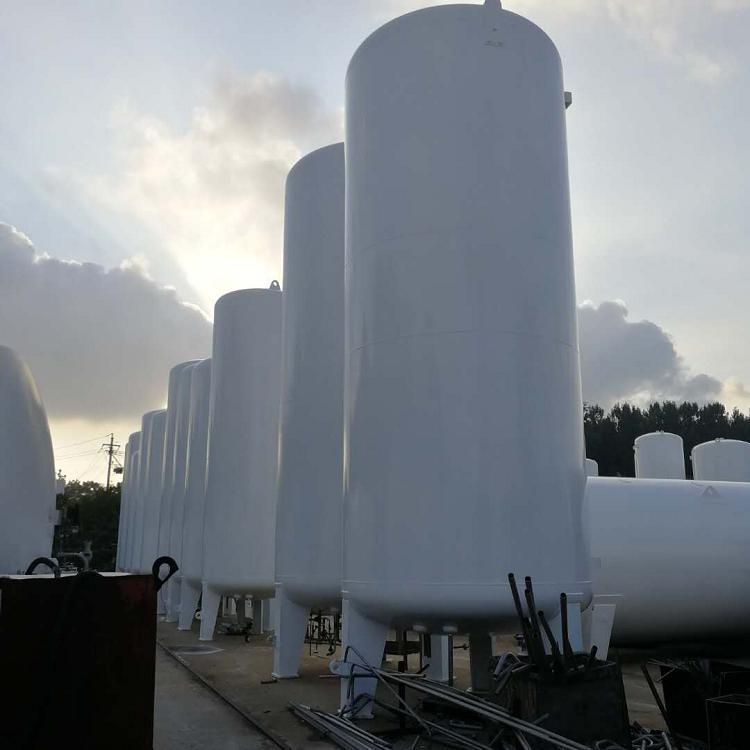
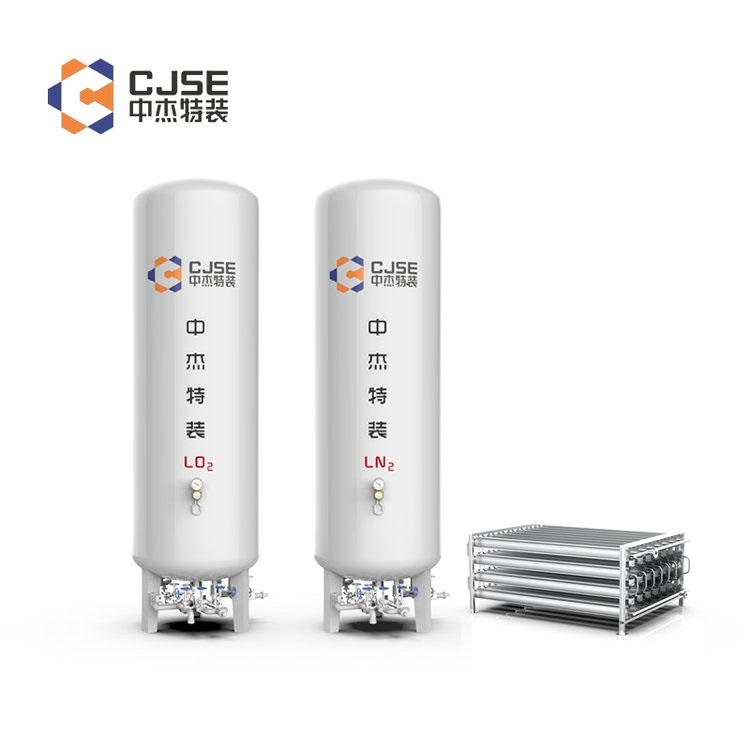
Carbon dioxide (CO2) and liquid oxygen (LOX) storage tanks are equipment used for storing different gases, with some physical differences: Physical State: CO2 is a gas at room temperature and requires low temperatures and high pressures to become liquid. LOX is a liquid at room temperature and can remain in liquid form without special conditions. Storage Temperature: The liquid CO2 storage temperature is typically between -40°C and -78.5°C, while the liquid oxygen storage temperature is usually between -183°C and -183.15°C. The storage temperature of LOX is lower, requiring more stringent insulation measures. Storage Pressure: The liquid CO2 storage pressure is generally between 5-20 MPa, while the liquid oxygen storage pressure is typically between 0.2-2 MPa. The storage pressure of LOX is lower. Density: The density of liquid CO2 is about 0.8 g/cm³, while the density of liquid oxygen is about 1.14 g/cm³. The density of liquid oxygen is greater. Safety: LOX has a high oxygen content, making it highly flammable and oxidizing, necessitating stricter safety measures. CO2 is relatively safe, but can still pose health risks at high concentrations.
Zhongjie Special Equipment adheres to the great vision of "realizing employees' dreams, creating customer value, and striving for the prosperity and strength of our motherland," focusing on the development of green energy equipment. We dedicate high-value products and services to society!
WeChat Official Account

Scan to follow Official Account



















