



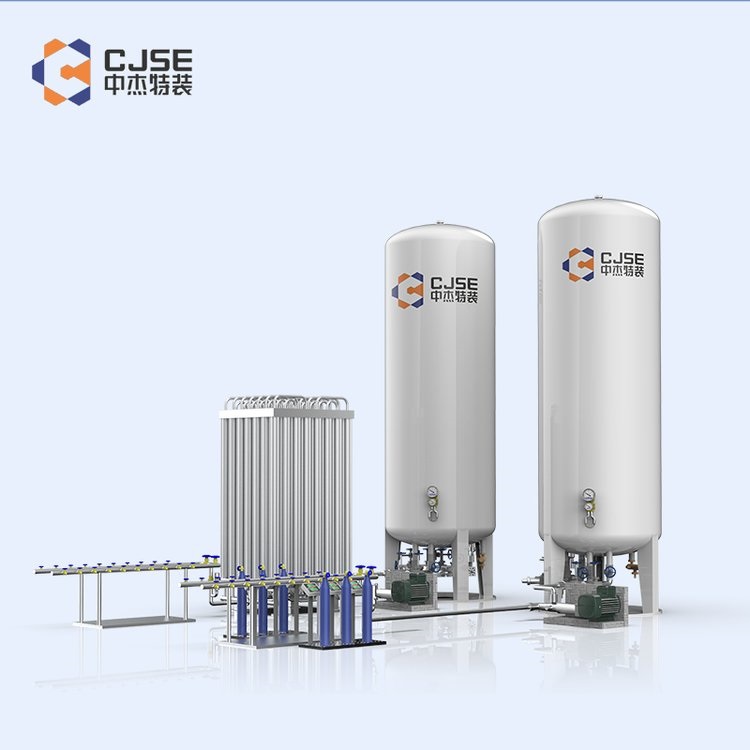
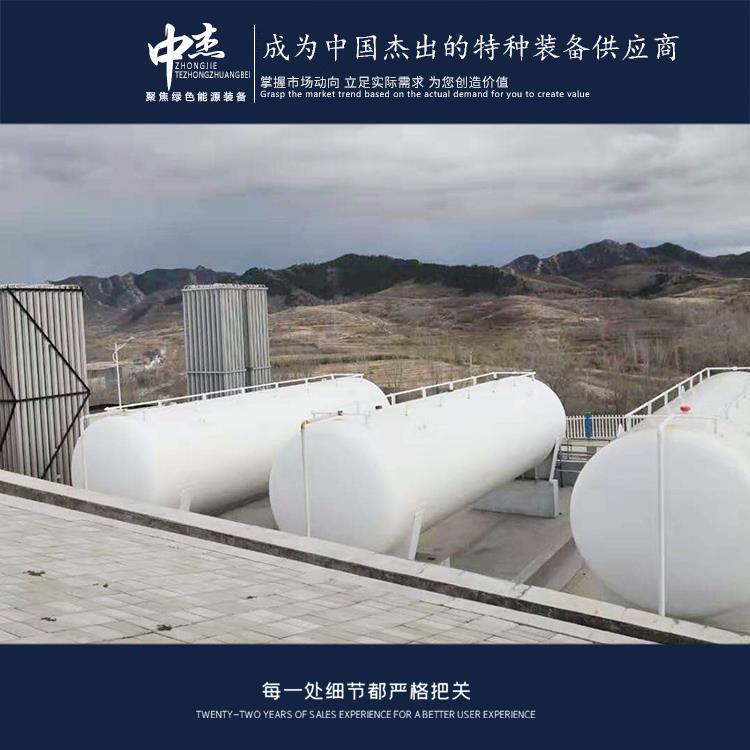


















Shandong Zhongjie Special Equipment's main products include: fuel (gas) boilers, organic heat carrier boilers, biomass boilers, waste heat recovery boilers, and other boiler products; vacuum insulation cryogenic pressure vessels such as LNG tanks, oxygen-nitrogen-argon tanks, and CO2 tanks; pressure vessel products such as denitrification engineering equipment, heat storage equipment, and complete chemical equipment sets; central air conditioning and HVAC equipment such as ground (water) source heat pumps, air-source units, water-cooled screw units, and air-cooled modular units. Planned products include large-scale energy centers, LNG transport vehicles, LNG tank containers, and other green energy equipment.
When cooling carbon dioxide storage tanks, be mindful of the following points and familiarize yourself with the basic steps of the cooling process:
Points to Note:
- Safety: Pay attention to safety during the cooling process to ensure the safety of operators and the surrounding environment. Adhere to relevant safety operating procedures and standards, and use appropriate personal protective equipment.
- Equipment Selection: Choose the appropriate cooling equipment and tools, such as cooling media (e.g., liquid nitrogen), coolers, and cooling systems. Select the suitable cooling equipment based on the tank's size and requirements.
- Temperature Control: Control the temperature during the cooling process to avoid overcooling or insufficient cooling. Determine the appropriate cooling temperature range based on the tank's design requirements and operating conditions.
Cooling Process Analysis:
- Preparations: Ensure there are no residual gases or impurities inside the tank to avoid affecting the cooling effect. Check the tank's sealing and the operation of the safety valve.
- Cooling Media Injection: Inject the cooling media (e.g., liquid nitrogen) into the tank to lower the tank's temperature. Control the injection speed and amount during the process to avoid overinjection, which could lead to excessive pressure.
- Cooling Time: Determine the cooling time based on the tank's size and requirements. The cooling time usually needs to be sufficient to ensure that the carbon dioxide inside the tank is fully cooled and liquefied.
- Temperature Monitoring: Regularly monitor the tank's temperature during the cooling process to ensure it remains within the appropriate range. Use temperature sensors or infrared thermometers for monitoring.
- Cooling Completion: The cooling process is complete when the tank's temperature reaches the predetermined cooling requirements. At this point, the carbon dioxide inside the tank should be in a liquid state.
It is important to note that the specific cooling process and steps may vary depending on different tank designs and usage scenarios. When performing cooling operations, follow relevant safety operating procedures and standards to ensure safety and effectiveness.
Carbon Dioxide Applications in the New Energy Field
Carbon Capture and Storage (CCS): This technology reduces CO2 emissions by capturing CO2 from industrial sources and storing it underground, preventing its release into the atmosphere. It aids in mitigating climate change by decreasing greenhouse gas emissions.
Carbon Utilization: CO2 can be utilized to produce valuable chemicals and fuels. For instance, through CO2 catalytic conversion technology, CO2 can be transformed into fuels like ethanol, which are used in both fuel and chemical industries. This carbon utilization technique helps reduce reliance on traditional fossil fuels and promotes sustainable energy development.
Carbon Dioxide Batteries: These are a new type of battery technology that uses CO2 as the electroactive material. By converting CO2 into electrical energy, carbon dioxide batteries can serve as a sustainable energy storage solution, contributing to the advancement of electric vehicles and renewable energy.
Carbon Dioxide Photocatalysis: This technology uses solar energy to convert CO2 into useful chemicals. By employing photo catalysts, CO2 and water can be transformed into combustible gases or organic compounds, thereby realizing the resource utilization of CO2.
These applications aim to reduce CO2 emissions, enhance energy efficiency, and promote the development of sustainable energy. However, these technologies are still in continuous development and research, requiring further technical breakthroughs and practical verification.
Construction features of carbon dioxide storage tanks mainly include the following aspects: Material Selection: Carbon dioxide storage tanks are typically made of carbon steel or stainless steel to ensure their corrosion resistance and pressure-bearing properties. Welding Process: The welding process of the tank is crucial for its quality and safety. The welding process should comply with relevant standards and specifications to ensure the quality and strength of the welds. Corrosion Prevention Measures: Due to the corrosive nature of carbon dioxide, both the internal and external surfaces of the tank should be treated with corrosion prevention. Common corrosion prevention measures include spraying corrosion-resistant paint, applying a corrosion-resistant coating, or using corrosion-resistant coatings. Safety Valves and Pressure Sensors: The tank should be equipped with safety valves and pressure sensors for monitoring and controlling the internal pressure of the tank to ensure safe operation. Steps for Proper Installation of Carbon Dioxide Storage Tanks: Site Preparation: Select an appropriate site for installation, ensuring the site is level, stable, and meets safety distance requirements. Clean the site to ensure there are no obstacles or fire sources. Foundation Construction: Construct the foundation based on the tank's dimensions and weight. The foundation should have sufficient strength and stability to support the tank's weight and pressure. Tank Installation: Place the tank on the foundation, ensuring there is appropriate padding and fastening equipment between the tank and the foundation. Connect and fasten the tank according to its design requirements. Pipe Connection: Connect the tank to the piping system as needed. Ensure that the connections are sealed properly to prevent leaks. Safety Equipment Installation: Install the required safety equipment for the tank, such as safety valves, pressure sensors, and temperature sensors. Ensure these facilities are correctly installed and connected.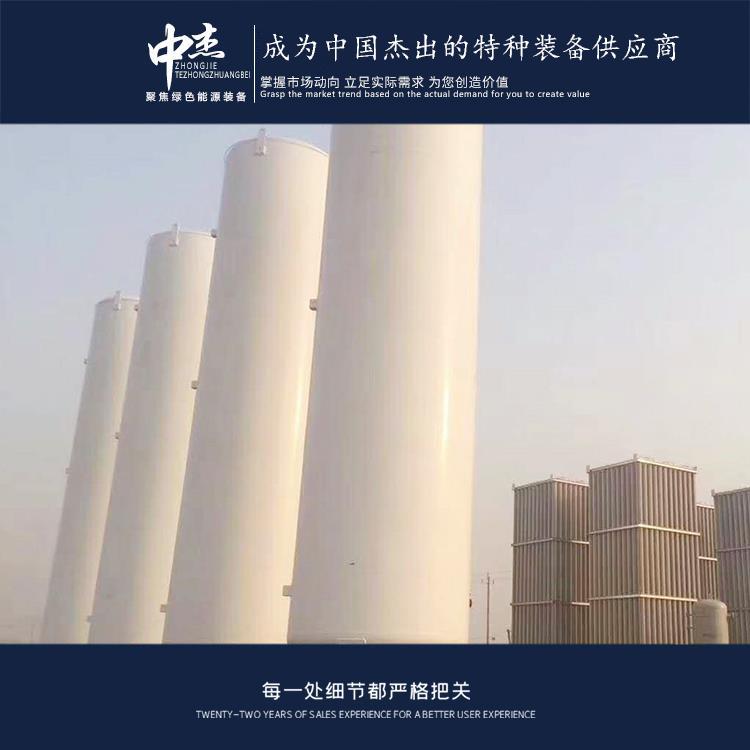
For the maintenance and care of low-temperature liquid storage tanks, here are some tips and precautions:
- Regular Inspections: Regularly check the tank's exterior, internal lining, valves, and pipe connections. Be mindful of corrosion, cracks, oil leaks, and other issues.
- Cleaning and Drainage: Regularly clean the interior of the tank to remove accumulated impurities and sediments. Also, regularly drain the tank to remove liquid and gas impurities.
- Corrosion Prevention: The outer shell and inner lining of low-temperature liquid storage tanks should be treated for corrosion resistance. Regularly inspect and maintain the corrosion-resistant layer or coating to ensure its integrity and effectiveness.
- Temperature and Pressure Control: The temperature and pressure of low-temperature liquid storage tanks should be controlled within the design range. Avoid excessive or low temperatures and pressures that could damage the tank.
- Safety Equipment Inspection: Check the tank's safety equipment, such as safety valves, pressure sensors, and temperature sensors, to ensure they are functioning properly. Verify that their set parameters meet requirements.
- Maintenance of Level Measurement System: Regularly inspect and calibrate the level measurement system to ensure accuracy and reliability. Clean or replace level sensors as needed.
- Fire Prevention Measures: Fire prevention measures for low-temperature liquid storage tanks are crucial. Ensure that fire protection equipment around the tank is in good condition and conduct fire drills regularly.
- Regular Assessments and Monitoring: Regularly assess and monitor the tank, including structural integrity, corrosion, and safety aspects. Based on the assessment results, take appropriate maintenance and repair actions.
- Operator Training: Operators should receive training to understand the characteristics, operational requirements, and safety measures of low-temperature liquid storage tanks. Training should include safe operation, leak handling, and emergency procedures.
Shandong Zhongjie Special Equipment, welcome customers to our factory for business discussions.
WeChat Official Account

Scan to follow Official Account



















