


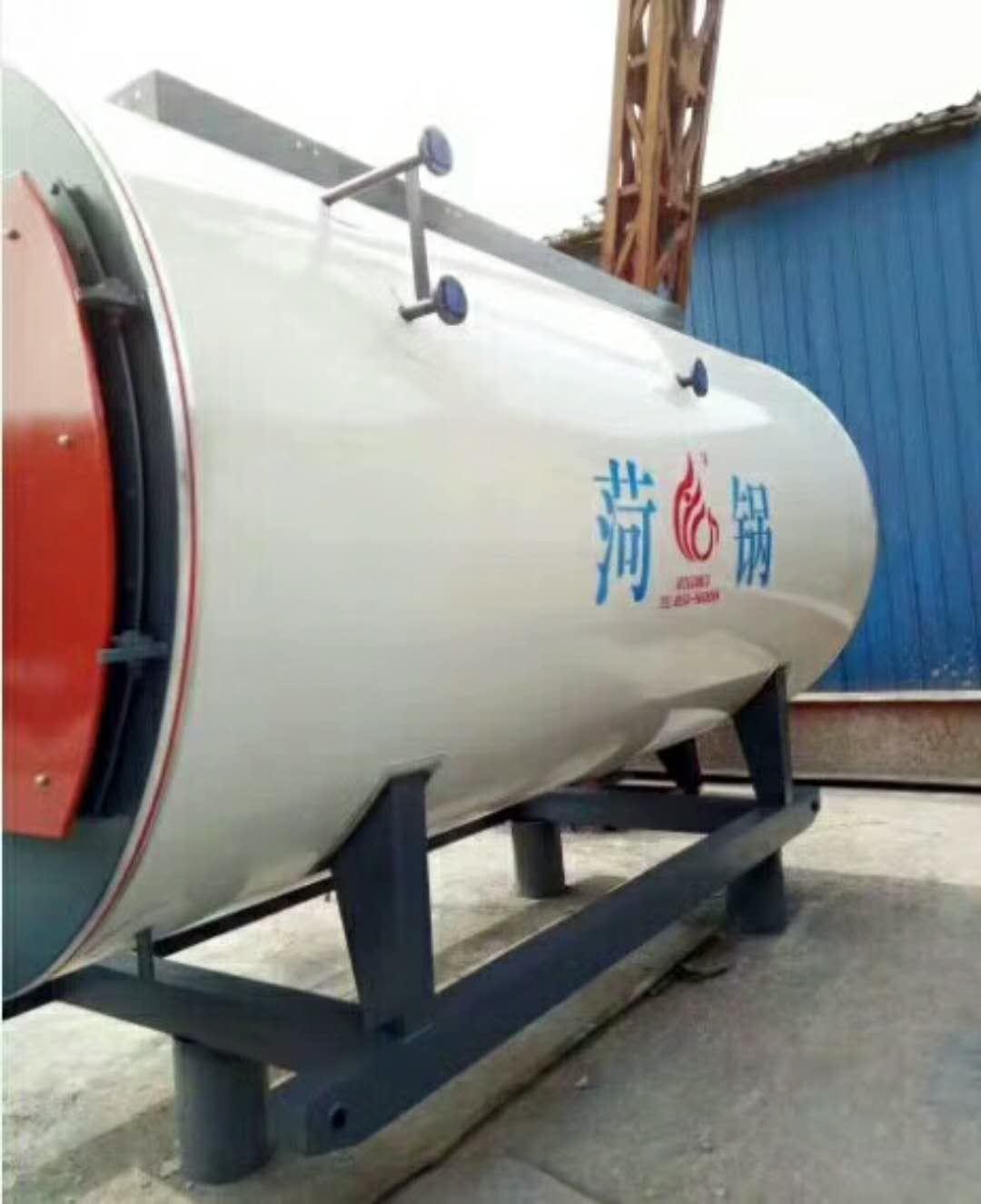

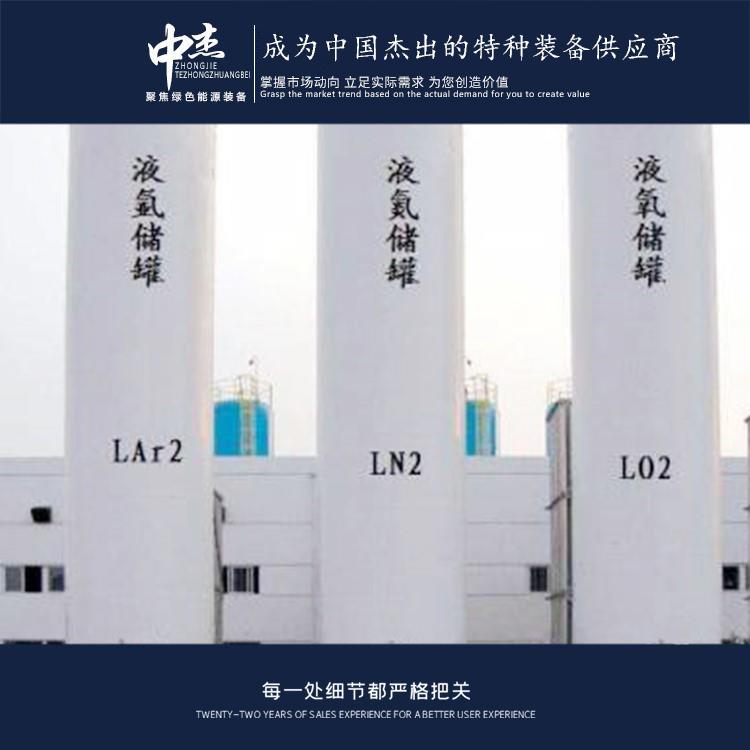
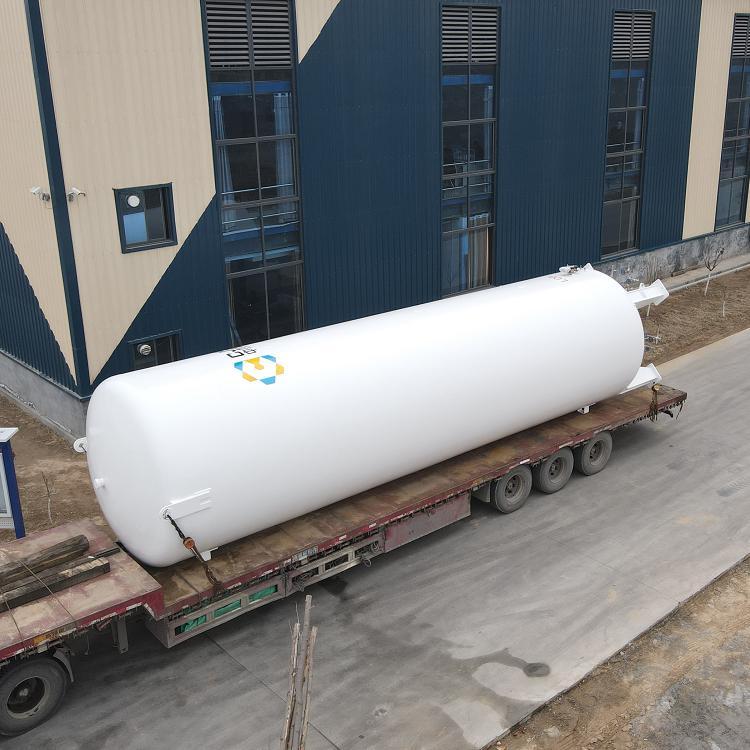


















Shandong Zhongjie Special Equipment Co., Ltd. specializes in the following products: fuel (gas) boilers, organic heat carrier boilers, biomass boilers, waste heat recovery boilers, and other boiler products; vacuum insulated cryogenic pressure vessels such as LNG storage tanks, oxygen/nitrogen/argon storage tanks, and CO2 storage tanks; pressure vessel products including denitrification engineering equipment, heat storage and energy storage equipment, and complete chemical equipment sets; central air conditioning and ventilation equipment such as ground (water) source heat pumps, air source units, water-cooled screw units, and air-cooled modular units. Planned products include large-scale energy centers, LNG transport vehicles, and LNG tank containers, among other green energy equipment.
The filling of a low-temperature liquid nitrogen tank refers to the process of transferring liquid nitrogen from an external supply source into the tank. Below is an explanation of the filling process for low-temperature liquid nitrogen tanks:
Preparation: Prior to filling the liquid nitrogen tank, thorough preparation is required. This includes inspecting the tank's condition and safety, ensuring the interior is clean, free of impurities and contaminants. Additionally, verify the quality of the liquid nitrogen from the supply source and the safety of the supply pipeline.
Connect supply source: Attach the liquid nitrogen supply source to the liquid inlet of the storage tank. Ensure the connection is tight and secure to prevent leaks.
Control the Liquid Level: During the bottling process, it is necessary to control the liquid nitrogen level to avoid overfilling or overflow. A level gauge or a level control system can be used to monitor and control the level.
Slow Injection: The injection of liquid nitrogen should be done slowly to prevent rapid vaporization and increased pressure. Appropriate valves and flow control devices can be used to regulate the injection rate.
Monitor Pressure: During the canning process, it's necessary to monitor the pressure of the storage tank to ensure it stays within a safe range. Pressure gauges or pressure sensors can be used for monitoring.
Canning completed: Stop the injection of liquid nitrogen when the liquid nitrogen level reaches the predetermined filling quantity or the tank's capacity limit. Disconnect the connection with the supply source and ensure the tightness of the filling port.
Safe Operation: Adhere to relevant safety regulations and operating guidelines throughout the canning process. Liquid nitrogen is highly flammable and at low temperatures; operators must wear appropriate personal protective equipment and ensure the operating environment is free from any ignition sources.
When bottling liquid nitrogen, be mindful of its low-temperature properties and safety. Ensure safe operation and control throughout the bottling process to guarantee the safe operation of the storage tank and effective storage of liquid nitrogen.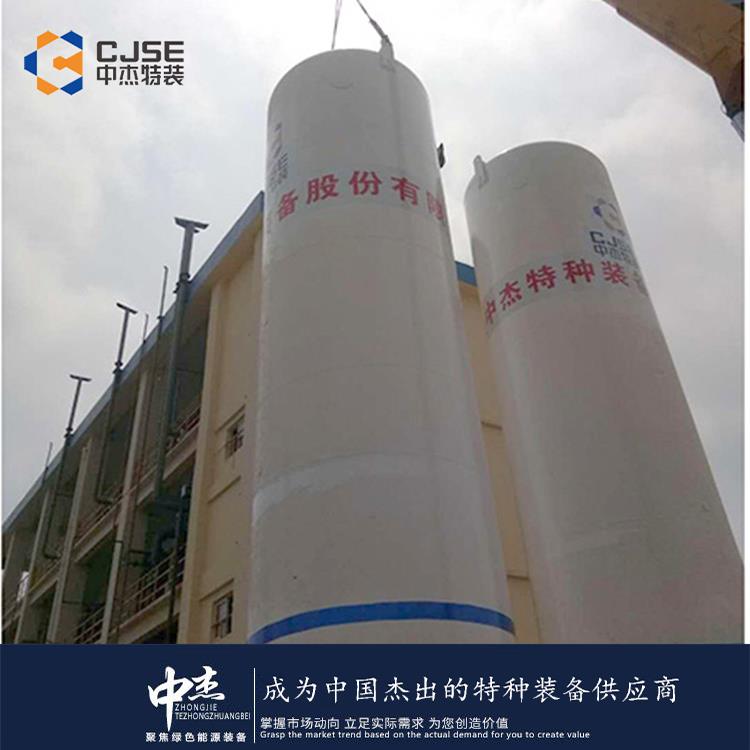
A hydrostatic test of a liquid nitrogen storage tank is a common method used to check the tank's sealing and pressure resistance performance. Below are the general steps for the hydrostatic test of a liquid nitrogen storage tank:
Preparation: Ensure the tank is clean inside and that both gas and liquid are emptied from the tank. Check that the tank's seal and safety devices are functioning properly.
Fill water: Fill the tank internally with water, ensuring the water level is above the low water mark. Use a pump or other appropriate methods for filling.
Apply Pressure: Gradually increase the water pressure using a pressure pump or other pressure source until the predetermined test pressure is reached. The test pressure is typically 1.1 times the design working pressure of the tank.
Pressure Maintenance: After reaching the test pressure, maintain it for a period (usually 30 minutes to 1 hour), and observe if there are any abnormal conditions such as leakage or deformation in the tank.
Pressure Release: Gradually release pressure to drain water from the tank until the tank is completely empty.
Inspection and Evaluation: Check for leaks, deformations, or other damage on the surface and inside of the tank. Evaluate the test results to ensure the tank meets design requirements and safety standards.
需要注意的是,液氮储罐水压试验需要由人员进行操作,并遵循相关的安全操作规程。在进行测试前,应仔细阅读和遵守储罐制造商提供的操作指南和安全注意事项。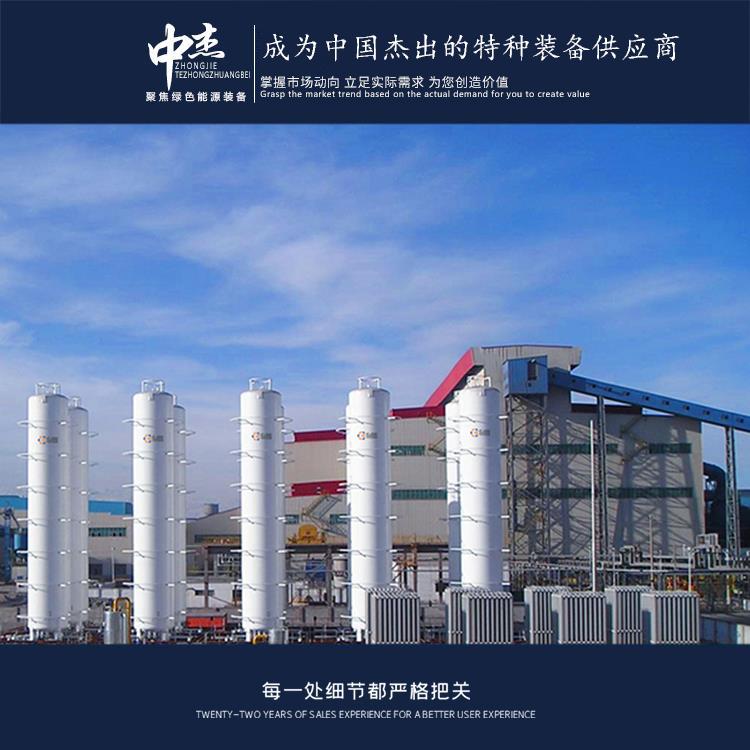
The safety distance between liquid oxygen storage tanks and buildings is typically specified by relevant safety standards and regulations to ensure the safe distance and fire separation between the tank and the building. The following is a general reference for the safety distance between liquid oxygen storage tanks and buildings:
Horizontal Clearance: The horizontal clearance between the liquid oxygen storage tank and the construction is typically required to maintain a certain distance to prevent danger to the structure in case of tank leakage or accidents. The specific clearance distance should be determined based on factors such as the tank's capacity, pressure, and the nature of the structure, with a general recommendation to maintain a safe distance.
Vertical clearance: The vertical distance between the liquid oxygen storage tank and the structure must also meet relevant safety requirements. This is to prevent any potential leaks or accidents from posing a danger to the structure. The specific clearance requirements will depend on factors such as the tank's capacity, pressure, and the height of the structure, generally recommending maintaining a certain safety distance.
Fire Retardant Separation: Liquid oxygen contains a high oxygen content and is highly flammable. In the event of a leak or accident, it may cause a fire. Therefore, a certain fire retardant separation is required between the liquid oxygen storage tank and the structure to ensure that the fire does not spread or pose a danger to the structure. Specific fire retardant separation requirements:
Standard parameters for liquid oxygen storage tanks typically include the following:
Capacity: The capacity of liquid oxygen tanks is typically expressed in liters or cubic meters, with common sizes ranging from a few liters to several thousand liters.
Working Pressure: The working pressure of liquid oxygen tanks is typically expressed in megapascals (MPa) or bars (bar), with a common working pressure range varying from 0.2 MPa to 2.5 MPa.
Design Temperature: The design temperature for liquid oxygen storage tanks is typically expressed in degrees Celsius, with a common range varying from -196°C to -150°C.
Material: The primary material for liquid oxygen storage tanks is typically stainless steel, which boasts excellent corrosion resistance and low-temperature performance.
Insulation Layer: Liquid oxygen tanks are typically equipped with an insulation layer to reduce the evaporation loss of liquid oxygen. The material for the insulation layer is usually a multilayer composite material or foamed glass.
Safety Valve: Liquid oxygen storage tanks must be equipped with a safety valve to control internal pressure and prevent the tank from bursting due to excessive pressure.
Leak Detectors: Liquid oxygen storage tanks are typically equipped with leak detectors to promptly detect and alarm any leaks of liquid oxygen.
Appearance Design: The appearance design of liquid oxygen storage tanks generally complies with relevant standards and regulations, including color, labeling, and safety warning signs.
Note that the specific parameters of liquid oxygen tanks may vary depending on the manufacturer and application requirements; the above are merely general common standard parameters. In actual use, choose the appropriate liquid oxygen tank based on the specific situation.
Our company attaches great importance to technological innovation and research and development. We have one municipal-level enterprise technology center in Heze City, equipped with testing facilities for non-destructive testing, physical and chemical testing, welding testing, hydrostatic testing, etc. We have over 600 various instruments and equipment, including CNC machine tools, X-ray flaw detectors, digital ultrasonic flaw detectors, mechanical property testing machines, chemical analyzers, spectrometers, tensile testing machines, plasma welding machines, and more. The key products and technologies we have developed, such as temperature and pressure vessel welding, biomass boiler emission reduction, and waste heat utilization, have successively been selected for multiple Shandong Provincial Department of Industry and Information Technology science and technology innovation projects, Shandong Provincial key projects, and Heze City innovation and excellence projects. We have cumulatively obtained 27 authorized utility model patents, 16 authorized invention patents, participated in drafting 2 standards, 2 industry standards, and registered 15 trademarks. The technical team of our company, in collaboration with Professor Yajiang Li of Shandong University, has developed deep cryogenic container processing technology using the international plasma arc + filler wire tungsten inert gas arc welding (PAW-GTAW) technology. After provincial-level scientific and technological achievement identification, the technical level has reached the international standard in the field of deep cryogenic container manufacturing. Choose Zhongjietech, let's create brilliance together!
WeChat Official Account

Scan to follow Official Account



















