


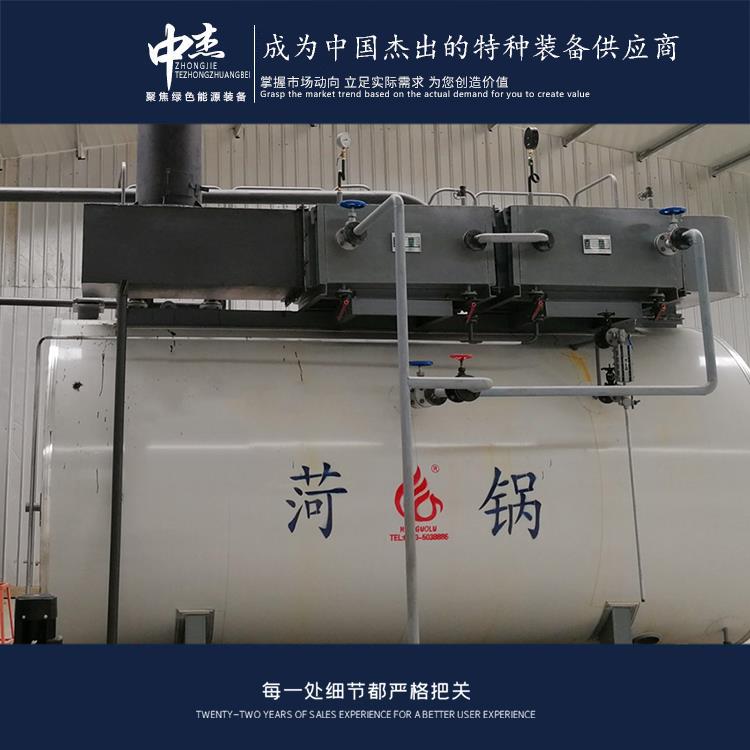

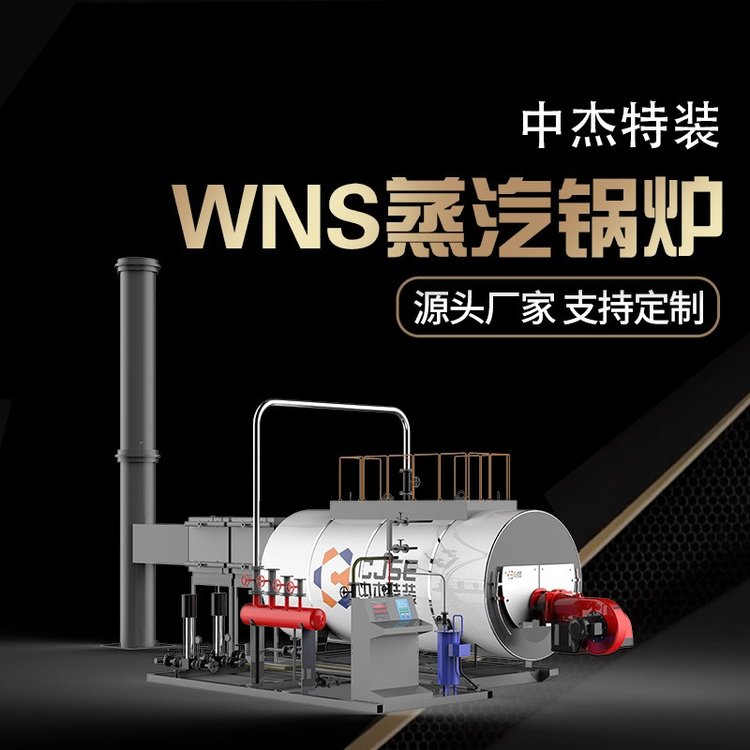
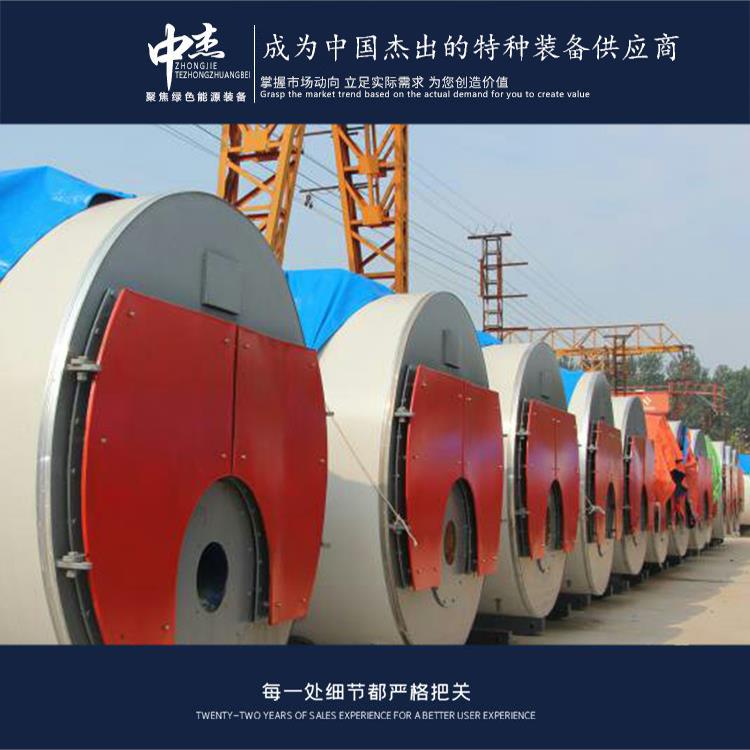


















Shandong Zhongjie Special Equipment (formerly Heze Boiler Factory Co., Ltd.) was established in 2001, located at No. 2218 Jinnan Road, Development Zone, Heze City. With a registered capital of 50 million yuan and total assets of 500 million yuan, the company has 7 business centers: boiler, deep-freezing containers, pressure vessels, central air conditioning, engineering installation, international trade, and Internet of Things. It operates three factory sites on Jinnan Road, East Changjiang Road, and Bohai Road, covering a total area of 200,000 square meters, with the main workshop spanning 83,000 square meters. It currently employs 710 staff, including 247 engineers and technicians, and 82 intermediate-level technical personnel. In December 2016, it was recognized as a "High-Tech Enterprise" by the Science and Technology Department. In June 2021, it was identified as a "Specialized and New Enterprise in Shandong Province" by the Department of Industry and Information Technology. In June 2022, it was recognized as a "Gazelle Enterprise in Shandong Province" and in August 2022, it was identified as a "Specialized and New Small Giant Enterprise" by the Ministry of Industry and Information Technology.
Yes, thermal oil boilers typically come with some self-protection features to ensure safe operation and extend their service life. Here are some common self-protection functions: Overheat Protection: Thermal oil boilers are equipped with overheat protection devices that automatically shut off the burner's gas supply when the thermal oil temperature exceeds the set safe range, preventing overheating of the thermal oil and avoiding equipment damage and safety accidents. Overpressure Protection: Thermal oil boilers also have overpressure protection devices that automatically shut off the burner's gas supply when the thermal oil pressure exceeds the set safe range, preventing the system from exploding or leaking. Burner Automatic Control: The burners of thermal oil boilers are usually equipped with automatic control systems that can automatically adjust the gas supply and combustion effect based on set working parameters, maintaining a stable combustion state and avoiding incomplete or excessive combustion. Temperature Control and Adjustment: Thermal oil boilers are typically equipped with temperature control and adjustment devices that can automatically regulate the circulation and heating of the thermal oil based on the set working temperature, maintaining a stable operating temperature and avoiding both high and low temperatures. Water Level Protection: For some thermal oil boilers, especially water tube thermal oil boilers, water level protection devices are also included to monitor the water level of the thermal oil and water. When the water level is abnormal, the protection device automatically shuts off the burner's gas supply to prevent dry burning and oil leakage. It's important to note that although thermal oil boilers have self-protection features, they still require regular inspections and maintenance to ensure the normal operation and reliability of these protection devices. Moreover, operators need to understand and master the working principles and operation methods of these self-protection features to ensure safe operation.
The temperature control methods for gas boilers typically include:
- Manual Adjustment: The temperature of a gas boiler is controlled by manually operating valves or regulators. Adjust the valve opening or regulator settings as needed to achieve the desired temperature.
- Automatic Adjustment: Gas boilers can be equipped with an automatic control system that uses sensors and controllers to regulate temperature automatically. Sensors detect the boiler's temperature and send signals to the controller, which then automatically adjusts the gas supply and burner status within a set temperature range to maintain the desired temperature.
- Proportional Control: The temperature regulation of gas boilers can also be done through proportional control. Adjust the valve or regulator opening based on temperature changes to maintain a certain proportional relationship between the gas supply and the burner's operational status.
- PID Control: PID control is a commonly used temperature regulation method. The PID controller adjusts the gas supply and burner status based on temperature deviations, rates of change, and integral values to achieve temperature control.
Note that different gas boilers may use different temperature control methods, and the specific method and operation should be determined by the boiler model and control system. When adjusting the temperature, follow safety operating procedures to ensure the boiler operates normally and maintains safety.
Industrial boilers, during their long-term operation, can accumulate scale and deposits, which affect heat exchange efficiency and the normal operation of the boiler. Here are some effective descaling methods:
1. Mechanical Cleaning: Utilizing cleaning equipment and tools, this method employs high-pressure water or mechanical brushes to remove scale and deposits from within the boiler. Suitable for lighter scale and deposits.
2. Chemical Cleaning: Employing chemical cleaning agents to dissolve scale and deposits through chemical reactions. Select the appropriate cleaning agent based on the composition and nature of the scale, and follow the instructions provided. Safety operations are crucial to avoid damage to equipment and the environment.
3. Acid Cleaning: A commonly used descaling method for difficult-to-dissolve scale and deposits. Commonly used acid cleaners include, etc., and the appropriate cleaner and concentration should be chosen based on the specific situation. Safety operations are essential to prevent harm to equipment and personnel.
4. Alkaline Cleaning: A descaling method for specific types of scale, suitable for alkaline scale. Commonly used alkaline cleaners include, etc., and the appropriate cleaner and concentration should be chosen based on the specific situation. Safety operations are essential to prevent harm to equipment and personnel.
5. Physical Descaling: Physical descaling methods include ultrasonic cleaning and electro-dissolution, etc. Ultrasonic cleaning uses the vibration effect of ultrasound to shake the scale into fragments. Electro-dissolution utilizes the principle of electrolysis to dissolve scale through the action of electricity. These physical descaling methods are suitable for special situations and specific types of scale.
When selecting a descaling method, it is necessary to consider the specific conditions of the boiler.
When installing a gas boiler unit, the following points should be noted:
Safety: Gas boilers are equipment that uses gas as fuel, so safety must be ensured during installation. Firstly, choose an appropriate installation location, far from flammable materials and combustible gases, and ensure good ventilation. Secondly, install according to relevant safety regulations, including the connection of gas pipes and the installation of gas valves.
Pipe Connection: Gas boilers need to be connected to the gas pipeline to ensure a smooth gas supply. During the connection process, use suitable pipes and joints to ensure a secure connection and prevent gas leaks. Additionally, conduct leak tests to ensure there are no leaks.
Exhaust Duct: Gas boilers produce exhaust gases during combustion and require an appropriate exhaust duct. The exhaust duct must be kept clear to prevent the accumulation of exhaust gases indoors, which could pose safety hazards and air pollution.
Electrical Connection: Gas boilers typically require an electrical supply, so electrical connections must be made during installation. Ensure the electrical connections are correct and secure to avoid circuit shorts or other electrical issues.
Water System: Gas boilers usually need to be connected to the water system, including water supply and drain pipes. During the connection process, ensure the water pipes are securely connected to prevent leaks or unstable water pressure.
Commissioning and Testing: After installation, commission and test the gas boiler. This includes ignition tests, combustion effect tests, and temperature control tests to ensure the boiler operates normally and is safe and reliable.
It is recommended to follow relevant installation specifications and requirements when installing a gas boiler unit. If you do not possess the necessary technical knowledge, it is best to have a qualified installer perform the operation to ensure the installation process is safe and reliable.
Shandong Zhongjie Special Equipment, welcome customers to our factory for business discussions.
WeChat Official Account

Scan to follow Official Account



















