


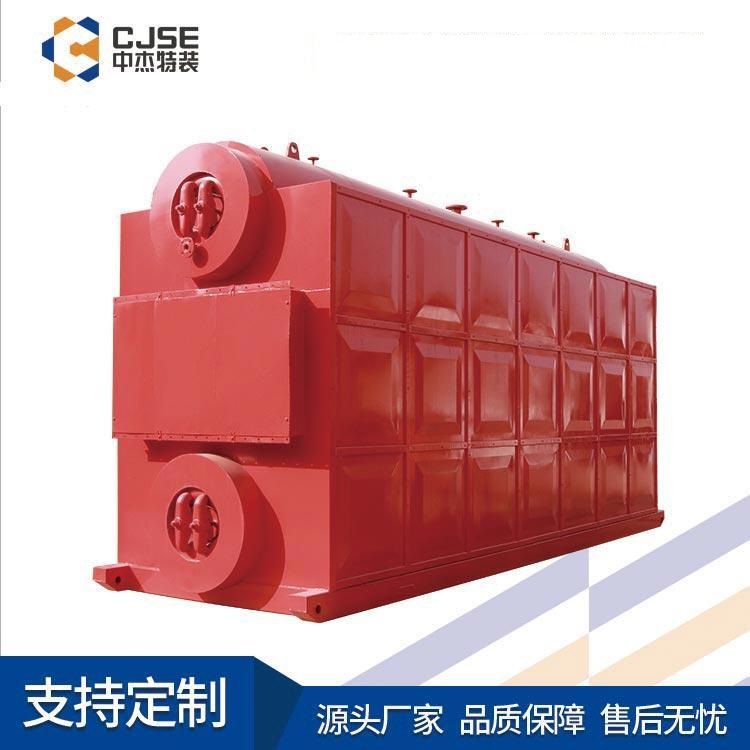

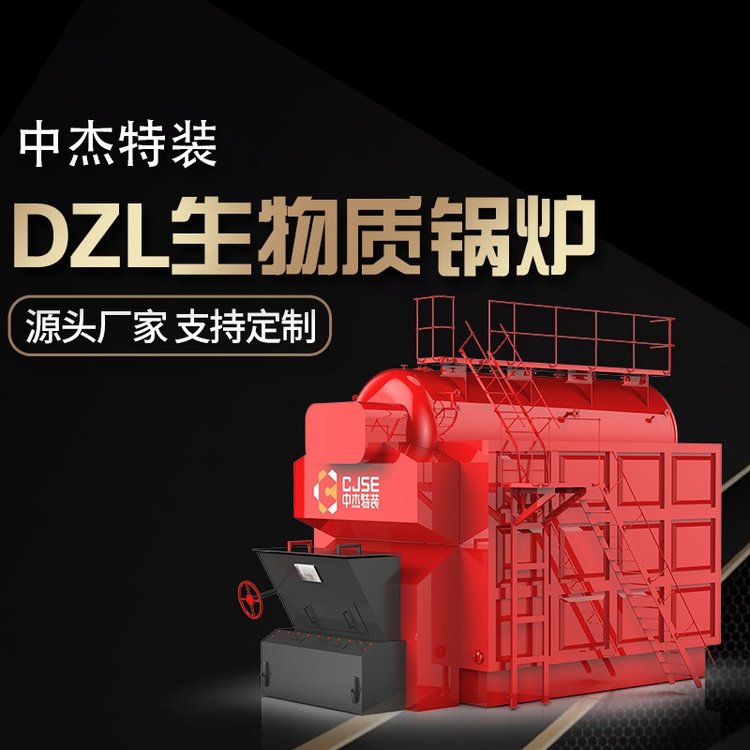
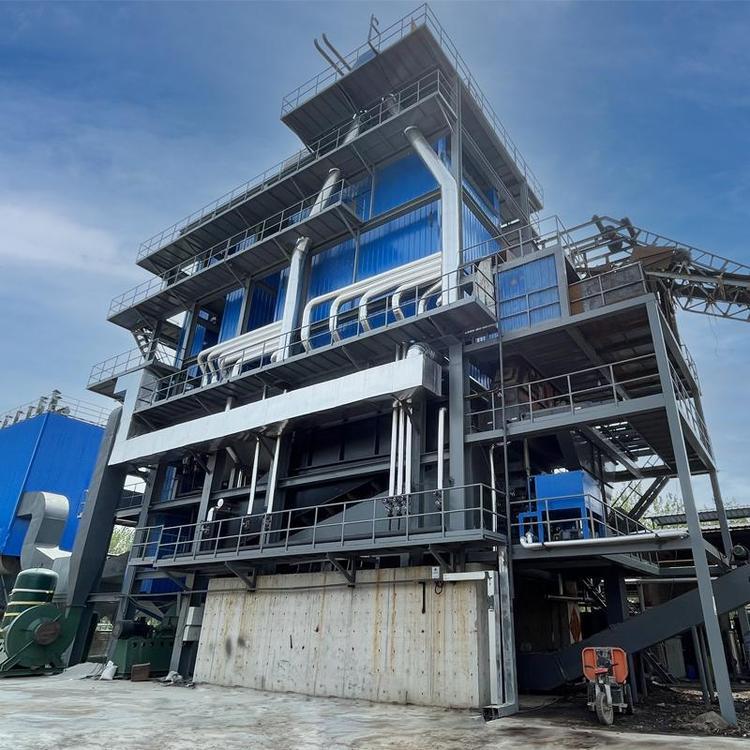


















Shandong Zhongjie Special Equipment (formerly Heze Boiler Factory Co., Ltd.) was established in 2001, located at No. 2218 Jinan Road, Development Zone, Heze City, with a registered capital of 50 million yuan and total assets of 500 million yuan. The company has 7 business centers: boilers, deep-freeze containers, pressure vessels, central air conditioning, engineering installation, international trade, and the Internet of Things. It has three factory sites on Jinan Road, East Yangtze Road, and Bohai Road, covering a total area of 200,000 square meters, with the main workshop spanning 83,000 square meters. It currently employs 710 people, including 247 engineering and technical staff and 82 middle-level technical personnel. In December 2016, it was recognized as a "High-tech Enterprise" by the Science and Technology Department. In June 2021, it was identified as a "Specialized and New Enterprise in Shandong Province" by the Department of Industry and Information Technology. In June 2022, it was recognized as a "Gazelle Enterprise in Shandong Province" and in August 2022, as a "Specialized and New Small Giant Enterprise" by the Ministry of Industry and Information Technology.
The pressure maintenance methods for biomass hot water boilers mainly include the following:
Natural Circulation Pressure Control: Natural circulation pressure control refers to the process of circulating hot water to the heating system through natural convection within the boiler. Under the natural circulation pressure control method, there is a significant difference in height between the supply and return water pipes of the boiler, achieving natural circulation through the density difference of the hot water. This method is suitable for small biomass hot water boilers, characterized by simplicity and economy.
Forced circulation pressure maintenance: This involves using a circulating pump to forcibly circulate hot water to the heating system. Under the forced circulation pressure maintenance method, the boiler provides adequate water pressure through the circulating pump, ensuring smooth flow of hot water. This method is suitable for large biomass hot water boilers, characterized by stability and reliability.
Micro-positive Pressure Constant Pressure: Micro-positive pressure constant pressure maintains a slight positive pressure in the boiler system to ensure stable circulation of hot water. Under this method, the pressure in the boiler system is slightly higher than atmospheric pressure, driving the circulation of hot water through the pressure difference. This approach is suitable for situations requiring higher heating temperatures and longer heating distances.
Above are the common methods of setting pressure for biomass hot water boilers. Depending on specific usage requirements and system design, the appropriate pressure setting method can be chosen to ensure the normal operation and heating effect of the hot water boiler.
Biomass boilers typically require auxiliary equipment to ensure their proper operation and utilization of biomass fuel. Here are some common auxiliary equipment:
Feeding System: Used to deliver biomass fuel to the combustion chamber of a boiler. The feeding system typically includes conveyors, screw conveyors, and vibratory feeders, which can be selected based on the fuel characteristics and boiler requirements.
Combustion System: Used for burning biomass fuel. The combustion system includes a combustion chamber, burners, fans, and other equipment to ensure thorough mixing of fuel and air and control the combustion process.
Flue Gas Purification Equipment: Used to treat flue gases produced by combustion, reducing emissions of particulate matter and gas pollutants. Common flue gas purification equipment includes dust collectors, desulfurization units, denitrification units, etc., which can be selected according to emission standards and environmental protection requirements.
Heat Exchangers: Devices used to transfer the thermal energy produced by combustion to water or other working fluids, enabling the recovery and utilization of thermal energy. Heat exchangers typically include pipe-type heat exchangers, flue gas waste heat boilers, etc., which can improve energy utilization efficiency.
Control System: Monitors and controls the operational parameters of biomass boilers, including temperature, pressure, and fuel supply. The control system enables automatic adjustment and protection functions, ensuring the safe and efficient operation of the boiler.
Equipment: Includes water supply systems, wastewater systems, pressure vessels, fuel storage equipment, etc. These devices are used to provide water for boilers, treat wastewater, store fuel, and ensure the normal operation of the boiler.
Above are some common auxiliary equipment for biomass boiler, the specific configuration and selection can be determined according to actual needs and project requirements.
Adjusting the combustion of biomass boilers can be done through the following steps:
Establish combustion parameters: Determine appropriate combustion parameters based on the biomass boiler's design and fuel characteristics, including combustion temperature, oxygen supply, and fuel supply rate.
Adjust combustion temperature: Adjust the combustion temperature based on the fuel characteristics and combustion requirements. Excessive combustion temperature can lead to overburning of fuel and energy waste, while insufficient combustion temperature can result in incomplete combustion and increased emissions.
Regulate Oxygen Supply: Adjust the oxygen supply based on the oxygen content during the combustion process. Excessive oxygen supply may lead to incomplete fuel combustion and energy waste, while insufficient oxygen supply may result in incomplete combustion and increased emissions.
Adjust fuel supply rate: Adjust the fuel supply rate based on heat load and fuel characteristics. Excessive fuel supply rate may lead to overburning and energy waste, while an insufficient fuel supply rate may result in incomplete combustion and inadequate heating.
Monitoring and Adjustment: By monitoring critical parameters during the combustion process, such as combustion temperature, oxygen content, and flue gas composition, adjust combustion parameters in a timely manner to ensure the stability of the combustion process.
It should be noted that adjusting the combustion of biomass boilers requires consideration of the specific kettle
The DZH steam boiler is a manually fired solid fuel boiler featuring the following technical characteristics:
Burning Method: The DZH steam boiler utilizes a manual combustion method, where the operator manually feeds fuel and adjusts the combustion process. This method is relatively simple and offers flexible operation, suitable for small to medium-sized applications.
Multiple Fuel Adaptability: The DZH steam boiler boasts strong fuel adaptability, capable of burning solid fuels such as wood chips and straw. This feature allows the DZH steam boiler to be widely used in various regions and under different fuel resource conditions.
Furnace Structure: The DZH steam boiler features a double-chamber furnace structure, with a partition between the combustion chambers. This design enhances the temperature and combustion efficiency of the chambers, thereby improving thermal efficiency.
Flue Gas Channels: The DZH steam boiler features a spiral flue tube design for its flue gas channels, which increases the contact area between flue gas and water, enhancing heat exchange efficiency. Additionally, a flue gas reversal chamber is incorporated within the flue gas channels, allowing the flue gas to flow repeatedly within the furnace, thereby increasing the residence time of the flue gas and improving combustion efficiency.
Safety Protection: The DZH steam boiler is equipped with various safety devices such as pressure controllers, water level controllers, and overheat protectors, ensuring the safe operation of the boiler.
Compact Structure: The DZH steam boiler boasts a compact structure, occupying minimal space, making it ideal for installation in limited areas.
Overall, the DZH steam boiler boasts strong fuel adaptability, flexible operation, and high thermal efficiency, making it suitable for small to medium-sized solid fuel steam demand applications.
Shandong Zhongjie Special Equipment, welcome customers to visit our factory for business discussions.
WeChat Official Account

Scan to follow Official Account



















