





















Shandong Zhongjie Special Equipment (formerly Heze Boiler Factory Co., Ltd.) holds an A-grade boiler manufacturing license, A2-grade pressure vessel manufacturing license, A2-grade pressure vessel design license, B-grade boiler installation license, and GB2/Class, GC2/Class pressure pipeline installation license, as well as equipment and machinery installation contracting qualifications. It is a member of the China Boiler and Water Treatment Association, the China Chemical Equipment Association, and the Council Member of the Shandong Equipment Manufacturing Association. The company has also passed the ISO9001 Quality Management System, ISO14001 Environmental Management System, OHSAS18001 Occupational Health and Safety Management System certifications, and the American ASME/U2 certification.
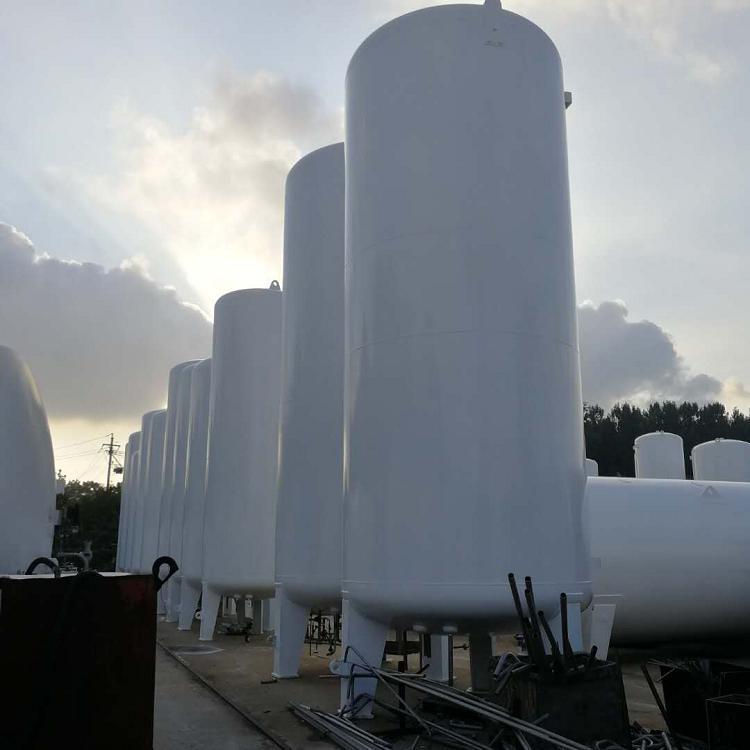
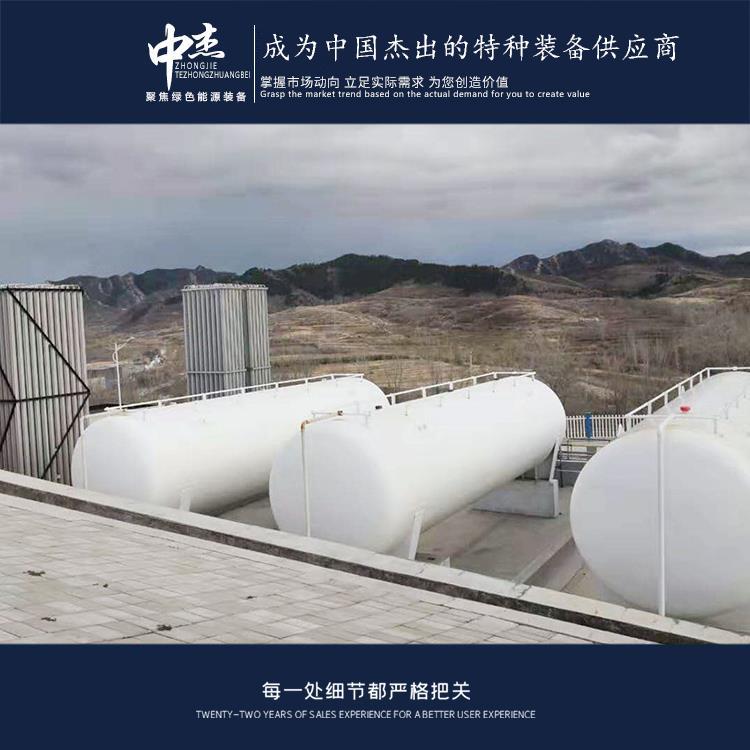
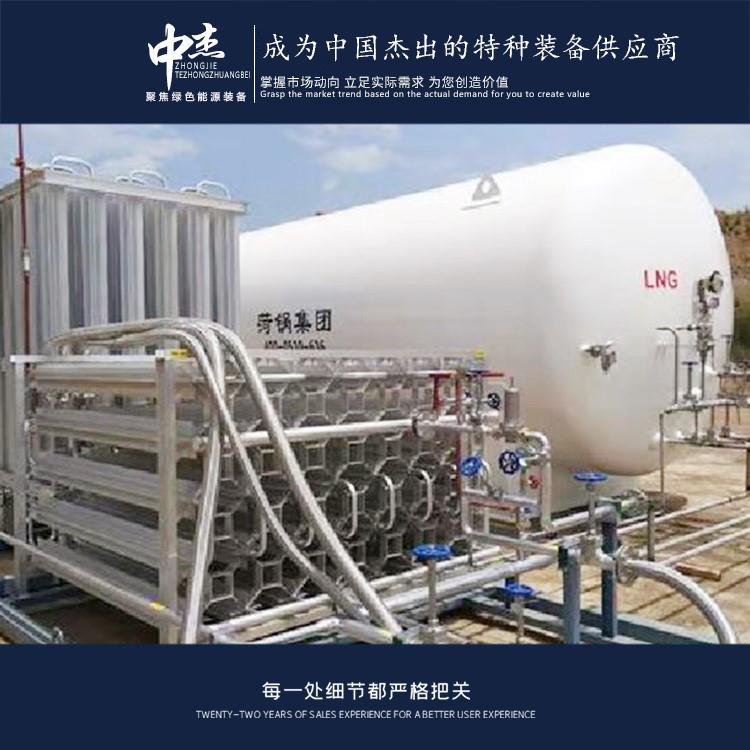
A Liquid Oxygen Station is a facility used for storing and supplying liquid oxygen, with the liquid oxygen tank being a key component of the station. The liquid oxygen tank has several important functions and characteristics:
Store Liquid Oxygen: Liquid oxygen tanks are primarily used for storing liquid oxygen, cooling gaseous oxygen below its critical temperature to convert it into a liquid state. The storage density of liquid oxygen is high, allowing for a large amount of oxygen to be stored in a relatively small space.
Maintain Low Temperature: Liquid oxygen tanks are typically designed with a double-layer structure, separated by a vacuum layer between the inner and outer layers to minimize heat transfer and maintain low temperatures. This helps preserve the低温 state of the liquid oxygen, preventing premature vaporization.
Safety Design: During the design and manufacturing process, liquid oxygen tanks must prioritize safety. They are typically made from high-strength materials such as stainless steel or aluminum alloys to withstand high pressure and low-temperature conditions. Additionally, liquid oxygen tanks are equipped with safety valves, pressure sensors, and temperature sensors to ensure internal pressure and temperature remain within safe limits.
Supply System Connection: Liquid oxygen tanks are typically connected to the supply system to transport liquid oxygen to the required locations. The supply system includes liquid oxygen pumps, pipelines, and valves, etc., which are used to extract liquid oxygen from the tank and deliver it to the user end.
Liquid oxygen storage tanks play a crucial role in storing and maintaining liquid oxygen at oxygen stations. Their design and operation must strictly adhere to relevant safety regulations and procedures to ensure the safety and reliability of the storage and supply process.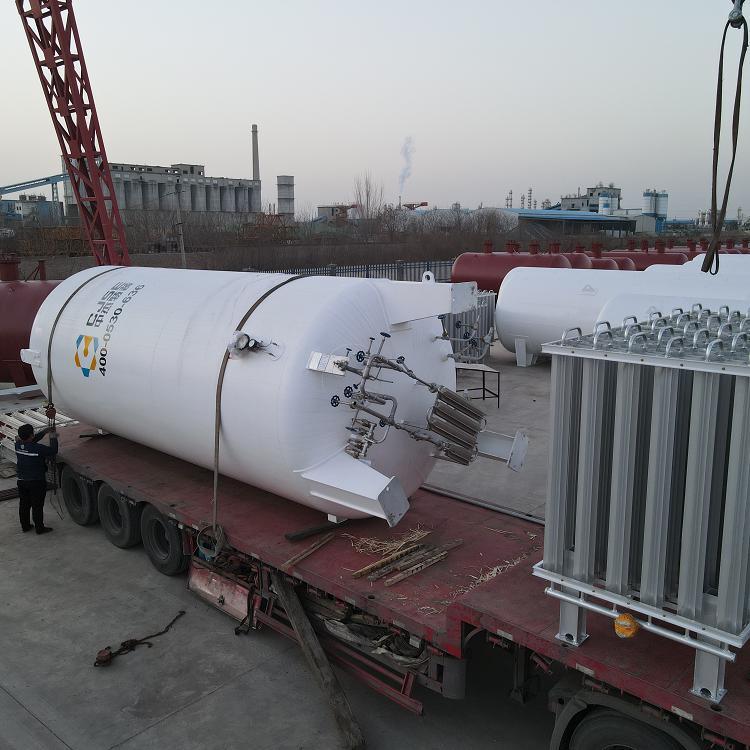
Protection tips for liquid nitrogen tanks include the following:
Wear protective gear: When handling liquid nitrogen tanks, it is mandatory to wear appropriate protective gear, including gloves, protective clothing, and non-slip shoes. This gear helps shield the skin from the low temperatures of liquid nitrogen and other hazards.
Avoid direct contact: Liquid nitrogen is extremely cold and can cause chilling. Therefore, avoid direct contact with liquid nitrogen, especially with the skin. Use tools or utensils for handling to prevent direct hand contact with liquid nitrogen.
Note Ventilation: In the operational area of the liquid nitrogen tank, adequate ventilation is mandatory to expel gases produced by the evaporation of liquid nitrogen. Maintain air circulation to avoid excessive oxygen concentration, and reduce the risk of fire and explosion.
Prevent Leaks: Regularly inspect the liquid nitrogen tanks for leaks and equip them with leak detectors and alarm systems. In case of a leak, take immediate action to control and repair it. Avoid the hazards of liquid nitrogen leaks to personnel and the environment.
Fire prevention measures: Liquid nitrogen has a low boiling and freezing point, which is prone to causing fires. Firewalls and fire-retardant coatings should be installed around the liquid nitrogen storage tanks to prevent fire occurrences and spread.
Electrostatic Protection: Electrostatic buildup in liquid nitrogen tanks can cause sparks, increasing the risk of fire. Measures such as using electrostatic conductive materials and anti-static equipment should be taken to reduce the accumulation and release of static electricity.
Regular inspections and maintenance: Conduct regular checks on the condition of liquid nitrogen tanks and related equipment, including valves, pipes, pressure gauges, etc. Ensure the equipment is in perfect condition and promptly repair or replace any damaged parts.
Waste Gas Treatment: Liquid nitrogen storage tanks will produce waste gas during operation, and appropriate waste gas treatment measures must be taken.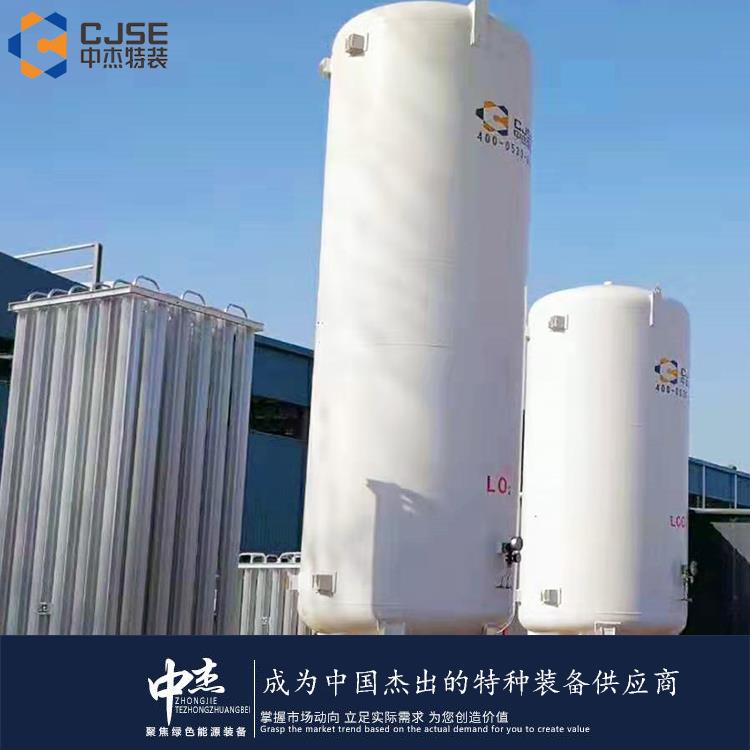
When selecting the pedestal for a liquid argon tank, several factors should be considered:
Load Capacity: The support must be capable of bearing the weight of the liquid argon tank. Select a support with sufficient load capacity based on the tank's capacity and dimensions. Typically, the weight of the liquid argon tank is provided in the design specifications, allowing you to determine the support's load capacity from these data.
Stability: The support must provide sufficient stability to prevent the tank from tilting or swaying during use. The design of the support should take into account the tank's center of gravity and its changes to ensure stable support.
Corrosion Resistance: Liquid argon has low temperatures and corrosive properties; therefore, the material of the support should have good corrosion resistance to prevent corrosion and damage. Common support materials include stainless steel, aluminum alloy, etc.
Insulation: Liquid argon storage tanks generally require thermal insulation. The supports should have certain insulating properties to reduce heat transfer and evaporation of the liquid argon. The design of the supports should consider the installation and protection of the insulation layer.
Installation and Maintenance: The bracket should be designed for ease of installation and maintenance, facilitating the tank's installation and routine maintenance tasks.
When selecting the support for a liquid argon storage tank, it's advisable to consult with engineers or suppliers. Choose an appropriate support based on the specific tank requirements and usage environment. Additionally, adhere to relevant design specifications and safety standards to ensure the quality and reliability of the support.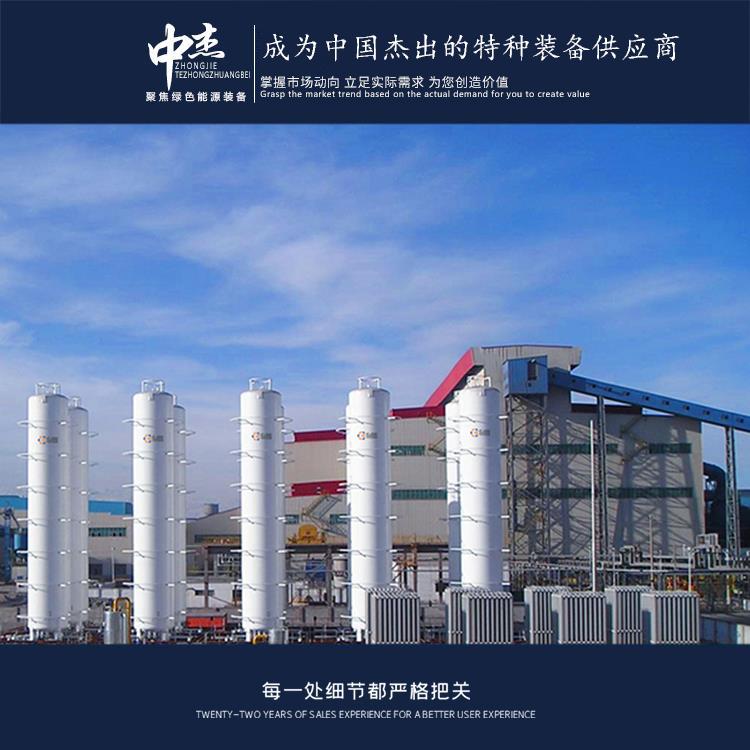
The materials used for making liquid oxygen tanks typically need to have excellent low-temperature resistance and corrosion resistance. The following are common materials for liquid oxygen tank construction:
Stainless Steel: A commonly used material for making liquid oxygen storage tanks, stainless steel boasts excellent corrosion resistance and mechanical strength. Common stainless steel grades include 304 and 316.
Aluminum Alloy: Aluminum alloys are also commonly used in the manufacturing of liquid oxygen tanks, offering low density and excellent corrosion resistance. Common aluminum alloy materials include 5083 and 6061 alloys.
Fiberglass Reinforced Plastic (FRP): FRP is a composite material made of glass fibers and resin. It boasts excellent corrosion resistance and mechanical strength, making it suitable for liquid oxygen storage tanks in special environments.
碳钢(Carbon Steel):碳钢是一种常见的储罐制作材料,具有较高的强度和耐腐蚀性。然而,碳钢在液氧环境下容易发生氧化反应,因此需要采取防腐措施。
It's important to note that the choice of materials for liquid oxygen tanks should be determined based on specific application requirements, working conditions, and safety standards. When selecting materials, consider the properties of liquid oxygen and the design requirements of the tank to ensure safety and reliability. Additionally, manufacturers and suppliers often provide material selection advice and technical support.
Our company attaches great importance to technological innovation and R&D design. We have one city-level enterprise technology center in Heze City, equipped with testing facilities for non-destructive testing, physical and chemical testing, welding testing, hydrostatic testing, etc. We have over 600 various instruments and equipment, including CNC machine tools, X-ray flaw detectors, digital ultrasonic flaw detectors, mechanical property testing machines, chemical analyzers, spectrometers, tensile testing machines, plasma welding machines, and more. The key products we have developed, such as temperature and pressure vessel welding, biomass boiler emission reduction, and waste heat utilization, have successively been selected for multiple Shandong Provincial Department of Industry and Information Technology science and technology innovation projects, Shandong key projects, and Heze City innovation and excellence projects. We have cumulatively obtained 27 authorized utility models, 16 authorized inventions, participated in drafting 2 standards, 2 industry standards, and registered 15 trademarks. Our technical team, in collaboration with Professor Yajiang Li from Shandong University, has developed deep cryogenic vessel processing technology using the international plasma arc + filler wire tungsten inert gas arc welding (PAW-GTAW) technology, which has been appraised as reaching international standards in the field of deep cryogenic vessel manufacturing at the provincial level. Choose Zhongjie Special Equipment, let's create brilliance together!
WeChat Official Account

Scan to follow Official Account



















