


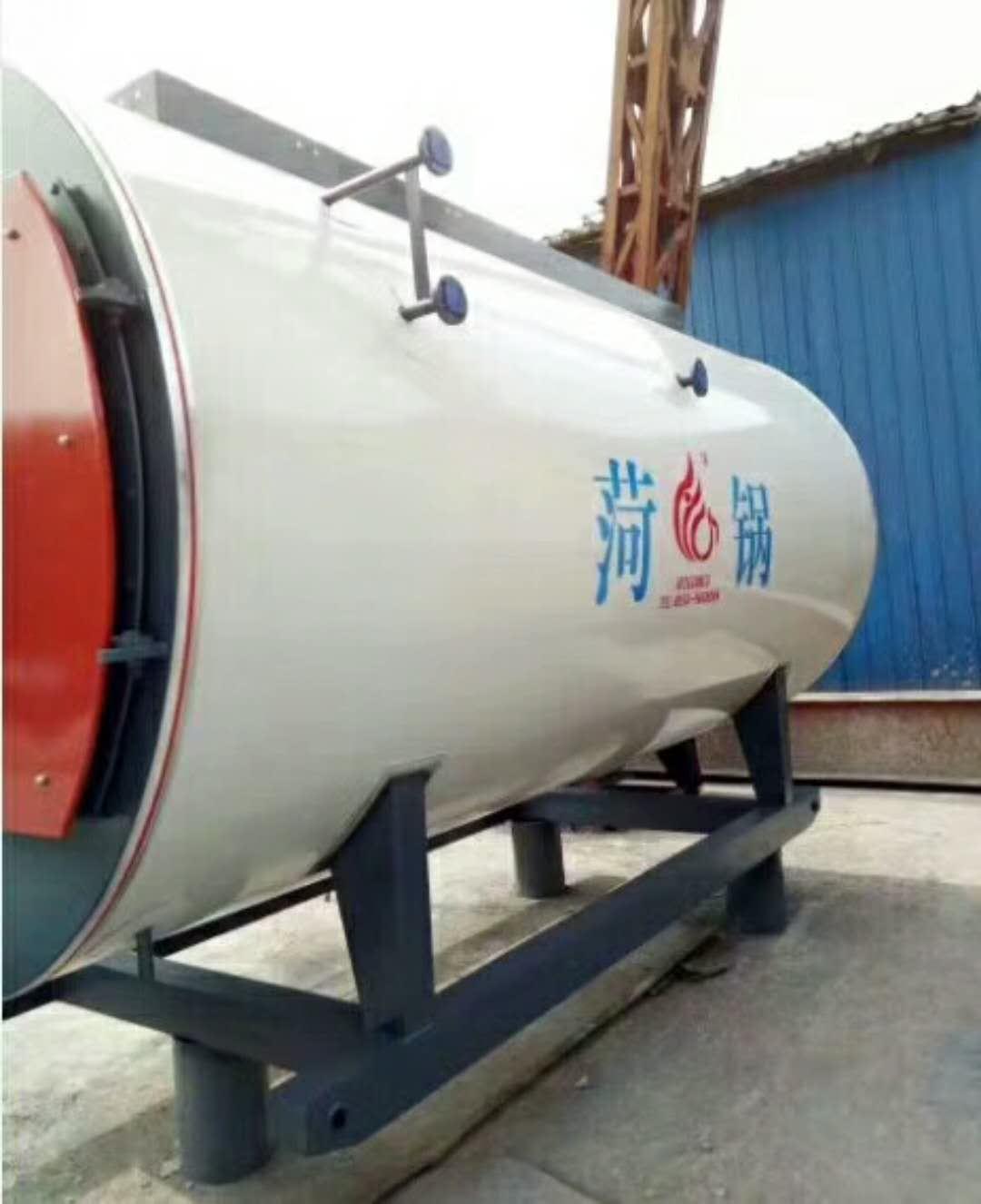

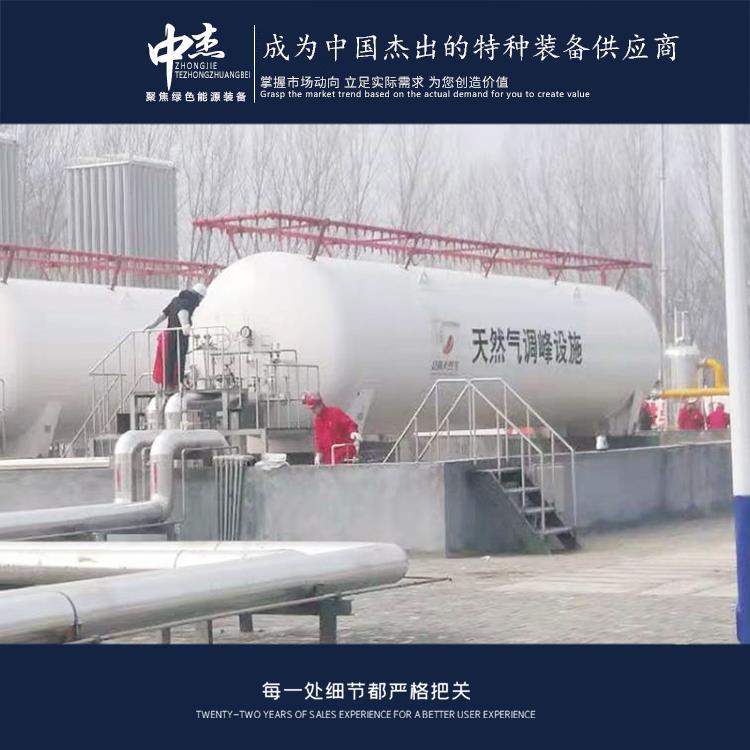
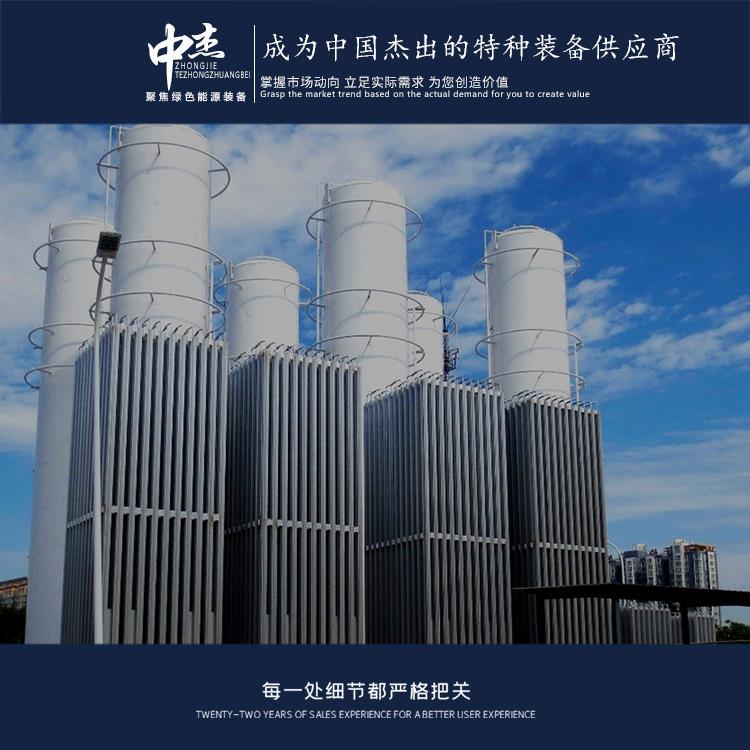


















Shandong Zhongjie Special Equipment (formerly Heze Boiler Factory Co., Ltd.) was established in 2001, located at No. 2218 Jinnan Road, Economic and Technological Development Zone, Heze City. With a registered capital of 50 million yuan and total assets of 500 million yuan, the company has seven business centers: boilers, deep-freezing containers, pressure vessels, central air conditioning, engineering installation, international trade, and Internet of Things. It has three factory sites on Jinnan Road, East Changjiang Road, and Bohai Road, covering a total of 200,000 square meters, with the main workshop spanning 83,000 square meters. It currently employs 710 people, including 247 engineering and technical staff and 82 middle-level technical personnel. In December 2016, it was recognized as a "High-tech Enterprise" by the Science and Technology Department. In June 2021, it was identified as a "Specialized and New Enterprise in Shandong Province" by the Ministry of Industry and Information Technology. In June 2022, it was recognized as a "Gazelle Enterprise in Shandong Province" and in August 2022, it was identified as a "Specialized and New Small Giant Enterprise" by the Ministry of Industry and Information Technology.
Liquid oxygen tanks are used for storing and supplying liquid oxygen as fuel and an oxidizer, playing a crucial role in launch propulsion systems, etc. Industrial Production: Liquid oxygen is used as an oxidizer in industrial production for processes such as combustion, oxidation, and oxygen supply. Liquid oxygen tanks are used to store and supply liquid oxygen to meet the demands of industrial applications like metal cutting, welding, and chemical reactions. Equipment: Liquid oxygen tanks are used in equipment to supply oxygen, such as oxygen therapy, oxygen inhalation, and operating rooms. These tanks provide high-purity oxygen while maintaining a low temperature to meet the equipment's oxygen requirements. Laboratory Research: Liquid oxygen tanks are used in scientific research and laboratories to provide liquid oxygen as experimental materials and reagents. The low temperature and high purity of liquid oxygen make it widely applicable in laboratories for fields such as materials science, chemical reactions, and biomedical research. In summary, liquid oxygen tanks are crucial in various fields including industrial production, equipment, and laboratory research, providing storage and supply functions for liquid oxygen at the application sites.
Low-temperature liquid storage tanks are equipment used for storing low-temperature liquids, commonly employed for liquid oxygen, liquid nitrogen, liquid argon, and other low-temperature liquids. These liquids exist in a gaseous state at room temperature but are cooled to a liquid state under low temperatures for easier storage and use. These storage tanks are typically made of high-strength materials like stainless steel or aluminum alloys to withstand low temperatures and high pressures. They are often equipped with insulation to minimize evaporation and maintain低温 conditions. The applications of low-temperature liquid storage tanks include but are not limited to the following areas: They are widely used in rocket engines and propulsion systems, such as liquid oxygen, liquid nitrogen, and liquid hydrogen tanks, for storing and supplying low-temperature liquids as fuel and oxidizers to propel the engines and enable their operation. In industrial production, low-temperature liquid storage tanks are used for storing and supplying liquids like liquid oxygen, nitrogen, and argon, which serve as coolants, raw materials for gas separation, and reactants in chemical reactions. They are also used in medical applications, such as oxygen therapy and oxygen inhalation, and operating rooms. In scientific research and laboratories, low-temperature liquid storage tanks provide low-temperature liquids as coolants and cryogenic media, used for cooling laboratory equipment, material research, superconductivity, and low-temperature physics. In summary, low-temperature liquid storage tanks are extensively used in various fields such as aerospace, industrial production, and laboratory research, for storing and supplying low-temperature liquids to meet the needs of different industries.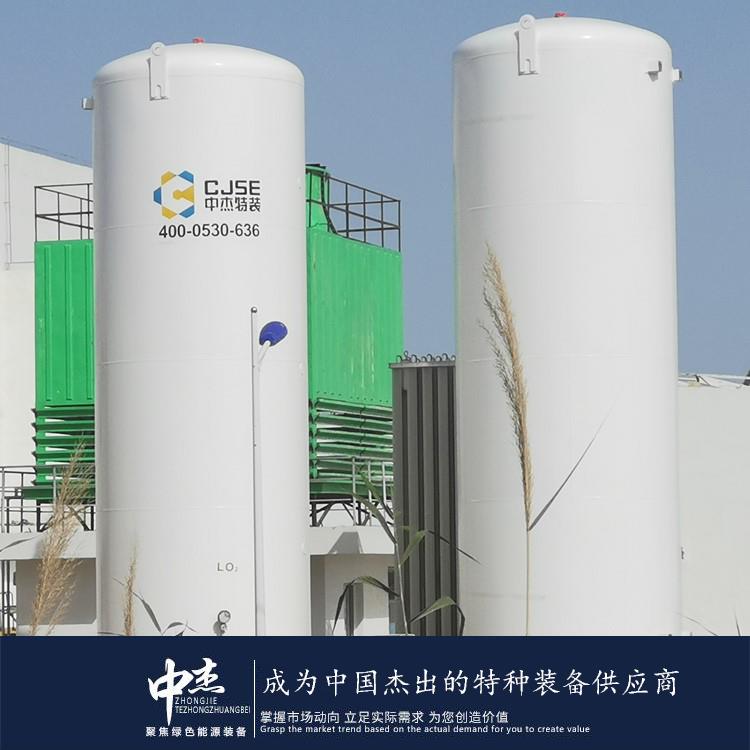
The temperature difference between the interior and exterior of a low-temperature liquid storage tank depends on various factors, including the tank's design, insulation performance, the temperature of the liquid, and the ambient temperature outside. Generally, the temperature inside the low-temperature liquid storage tank is much lower than the ambient temperature outside.
Low-temperature liquid storage tanks are commonly used for storing liquefied nitrogen, oxygen, argon, and other low-temperature liquids. These liquids have very low boiling points, usually below -100 degrees Celsius. To maintain the low temperature of the liquids, the tank must have excellent insulation properties to minimize heat transfer and evaporation loss.
Low-temperature liquid storage tanks usually provide a smaller temperature variance. Generally, the internal temperature of the tank can be maintained near the boiling point of the liquid, typically several tens of degrees Celsius lower than the ambient temperature. The specific temperature variance depends on the tank's design, insulation properties, and the characteristics of the liquid.
It's important to note that the temperature differences in low-temperature liquid storage tanks may change over time. As time passes, the insulating material's performance may be affected by wear or aging, leading to increased temperature differences. Therefore, regular inspection and maintenance of the tank's insulation are crucial to ensure its effective and stable insulating performance.
When selecting the pedestal for a liquid argon tank, several factors need to be considered:
Load Capacity: The support must be capable of bearing the weight of the liquid argon tank. Select a support with adequate load capacity based on the tank's capacity and dimensions. Typically, the weight of the liquid argon tank is specified in the design specifications, which can be used to determine the support's load capacity.
Stability: The support must provide sufficient stability to prevent the tank from tilting or swaying during use. The design of the support should consider the tank's center of gravity and its changes to ensure stable support.
Corrosion Resistance: Liquid argon has low temperature and corrosive properties. The support material should have excellent corrosion resistance to prevent corrosion and damage. Common support materials include stainless steel, aluminum alloy, etc.
Insulation: Liquid argon storage tanks generally require thermal insulation. The supports should have certain insulation properties to reduce heat transfer and evaporation of the liquid argon. The design of the supports should consider the installation and protection of the insulation layer.
Installation and Maintenance: The bracket should feature ease of installation and maintenance for convenient tank installation and routine maintenance tasks.
When selecting the pedestal for a liquid argon tank, it's advisable to consult with engineers or suppliers. Choose an appropriate pedestal based on the specific tank requirements and usage environment. Additionally, adhere to relevant design specifications and safety standards to ensure the quality and reliability of the pedestal.
Zhong Jie Special Equipment upholds the great vision of "realizing the dreams of our employees, creating value for our customers, and striving for the prosperity and strength of our motherland," and is dedicated to the development of the green energy equipment industry. We commit to society with high-quality products and services at competitive prices!
WeChat Official Account

Scan to follow Official Account



















