


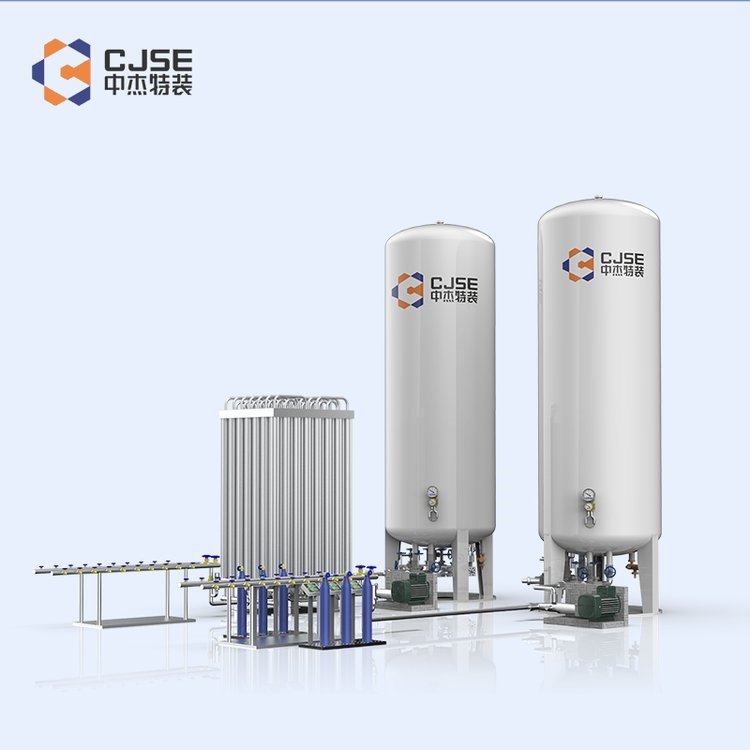

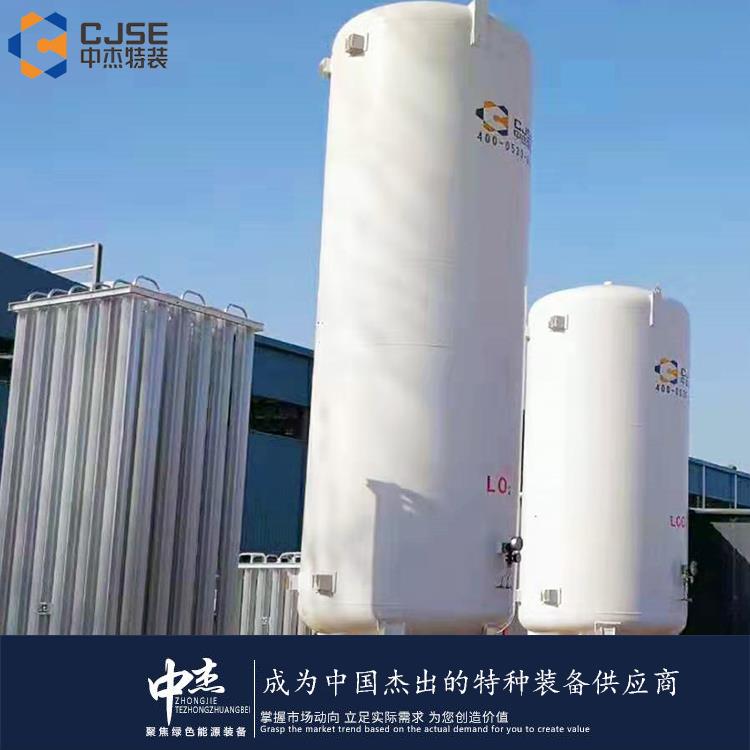
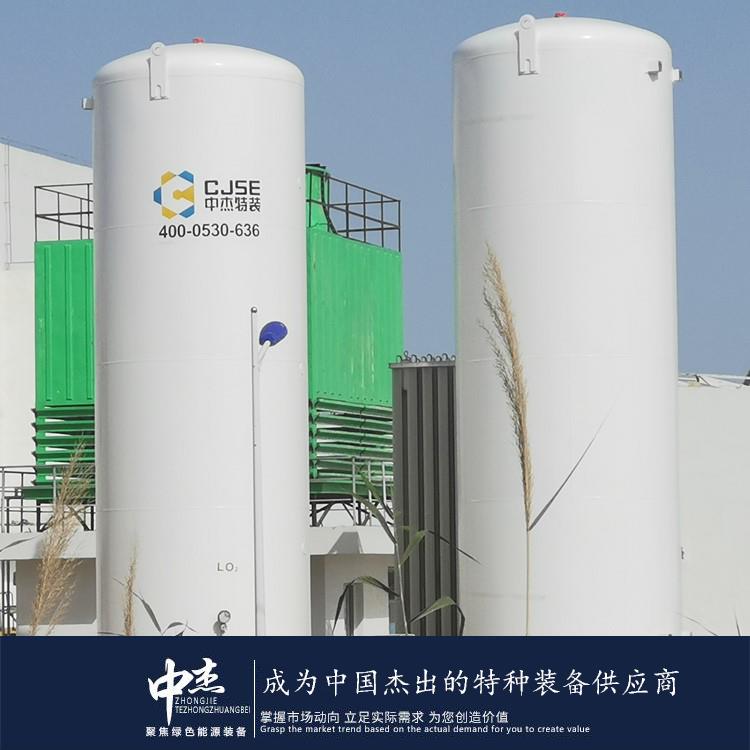


















Shandong Zhongjie Special Equipment's main products include: fuel (gas) boilers, organic heat carrier boilers, biomass boilers, waste heat boilers, and other boiler products; vacuum insulation cryogenic pressure vessels such as LNG storage tanks, oxygen/nitrogen/argon storage tanks, and CO2 storage tanks; pressure vessel products such as denitrification engineering equipment, heat storage and energy storage equipment, and complete chemical equipment; central air conditioning and HVAC equipment such as ground (water) source heat pumps, air source units, water-cooled screw units, and air-cooled modular units. Planned products include large-scale energy centers, LNG transport vehicles, LNG tank containers, and other green energy equipment.
Common defects in carbon dioxide storage tanks may include deformation during use. Here are some reasons that could lead to tank deformation: Overpressure: When the internal pressure of the tank exceeds its design pressure, deformation may occur. This could be due to operational errors, system failures, or other causes. Temperature Fluctuations: Carbon dioxide tanks expand and contract with temperature changes, and if the temperature changes are too extreme or rapid, deformation may result. Internal Corrosion: If there is internal corrosion in the tank, it can damage the structural integrity, leading to deformation. External Damage: External impacts, compressions, or other physical damages can cause tank deformation. Incorrect Installation or Use: Incorrect installation or usage methods can lead to uneven stress on the tank, resulting in deformation. Tank deformation can reduce the structural integrity of the tank and even pose risks of leakage or rupture. Therefore, regular inspections and maintenance of tank integrity are crucial, as well as adhering to proper operational and installation procedures. If tank deformation or other defects are detected, the tank should be immediately discontinued from use and professional assistance should be sought for inspection and repair. Do not attempt to repair or continue using a defective tank yourself to ensure operational safety.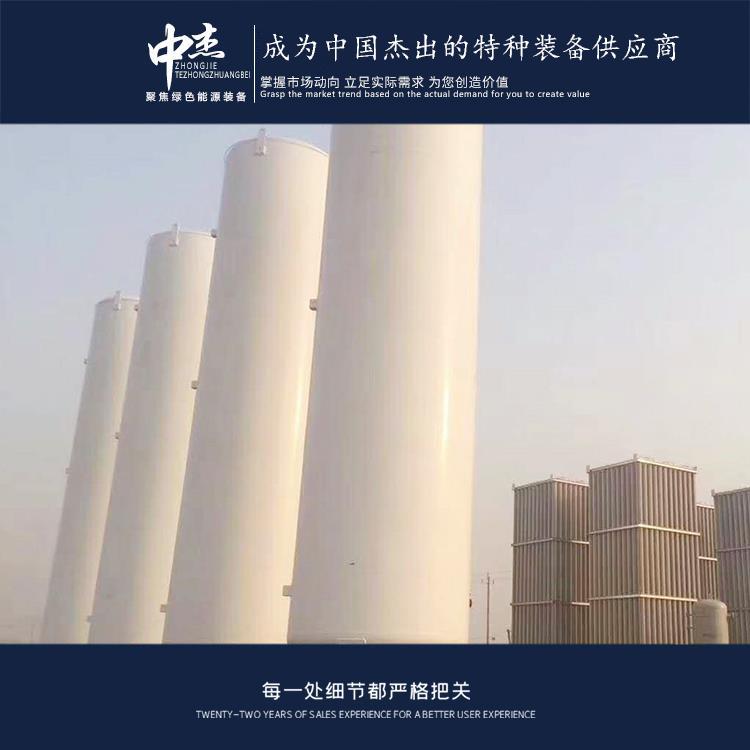
When cooling carbon dioxide storage tanks, be mindful of the following considerations and familiarize yourself with the basic steps of the cooling process:
**Considerations:**
- **Safety:** Pay attention to safety during the cooling process to ensure the safety of operators and the surrounding environment. Adhere to relevant safety operating procedures and standards, and use appropriate personal protective equipment.
- **Equipment Selection:** Choose the appropriate cooling equipment and tools, such as cooling media (e.g., liquid nitrogen), coolers, and cooling systems. Select the suitable cooling equipment based on the tank's size and requirements.
- **Temperature Control:** Control the temperature during the cooling process to avoid overcooling or insufficient temperature. Determine the appropriate cooling temperature range based on the tank's design requirements and operating conditions.
**Cooling Process Analysis:**
- **Preparation:** Ensure there are no residual gases or impurities inside the tank to avoid affecting the cooling effect. Check the tank's sealing and the operational status of the safety valve.
- **Cooling Media Injection:** Inject the cooling media (e.g., liquid nitrogen) into the tank to lower the tank's temperature. Control the injection speed and quantity to avoid over-injection leading to excessive pressure.
- **Cooling Time:** Determine the cooling time based on the tank's size and requirements. The cooling time typically needs to be sufficient to ensure that the carbon dioxide inside the tank is fully cooled and liquefied.
- **Temperature Monitoring:** Regularly monitor the tank's temperature during the cooling process to ensure it remains within the appropriate range. Use temperature sensors or infrared thermometers for monitoring.
- **Cooling Completion:** The cooling process is complete when the tank's temperature reaches the predetermined cooling requirements. At this point, the carbon dioxide inside the tank should be in a liquid state.
**Note:** The specific cooling process and steps may vary due to different tank designs and usage scenarios. When performing cooling operations, follow relevant safety operating procedures and standards to ensure safety and effectiveness.
Carbon dioxide tanks are safe when used and maintained properly, but can pose dangers if safety protocols are not followed or there are incorrect operations. Below are some potential hazards associated with carbon dioxide tanks:
- High Pressure Hazard: Carbon dioxide tanks are typically used to store high-pressure CO2 gas, thus presenting a high-pressure risk. If the tank is damaged, overheated, or over-pressurized, it could lead to explosions or leaks, causing personal injury and property damage.
- Asphyxiation Hazard: Carbon dioxide is an asphyxiating gas, and high concentrations can displace oxygen in the air, leading to asphyxiation. When using carbon dioxide tanks in enclosed spaces, ensure there is adequate ventilation and oxygen supply to avoid asphyxiation risks.
- Freezing Hazard: Liquid carbon dioxide is extremely cold, and contact with it can cause frostbite. Proper operating procedures and the use of appropriate personal protective equipment must be followed to prevent frostbite.
- Fire Hazard: Although carbon dioxide itself is not flammable, it can suppress oxygen supply at high concentrations, potentially extinguishing fires. However, if CO2 leaks into the air, it may form flammable mixtures, increasing the risk of fire.
To ensure safety, adhere to the relevant safety operating procedures and guidelines when using carbon dioxide tanks, and receive necessary training. Regular inspections and maintenance of the tanks, following the manufacturer's recommendations and local regulations, can reduce potential hazards. In case of abnormal situations or leaks, take appropriate emergency measures immediately and notify relevant personnel.
Carbon dioxide has several key applications in carbonated beverages:
- Creating bubbles and texture: Carbon dioxide is the key component responsible for the formation of bubbles and effervescence in carbonated drinks. When dissolved in the beverage, it forms bicarbonate ions, resulting in a fizzy and bubbly texture. This creates a unique taste and mouthfeel characteristic of carbonated drinks.
- Adjusting pH levels: Carbon dioxide reacts with water to form carbonic acid, which helps regulate the pH levels of carbonated beverages. By controlling the amount of carbon dioxide dissolved, the acidity can be adjusted to achieve a desirable taste and mouthfeel.
- Providing a refreshing sensation: The carbon dioxide bubbles in carbonated drinks can give a refreshing feeling. When consumed, the bubbles stimulate the taste buds on the tongue, creating a cool and tingling sensation, enhancing the drink's taste and mouthfeel.
- Extending shelf life: Carbon dioxide in carbonated drinks serves as a preservative. Due to its acidity and properties, it inhibits the growth of microorganisms, extending the shelf life of carbonated beverages.
- Note that excessive consumption of carbonated drinks may have negative health effects, such as tooth erosion and osteoporosis. Therefore, moderate consumption is important.
Chongjie Special Equipment upholds the great vision of "Realizing employees' dreams, creating customer value, and striving for the prosperity and strength of our motherland," and is dedicated to the development of green energy equipment. We contribute to society with high-quality products and services at competitive prices!
WeChat Official Account

Scan to follow Official Account



















