


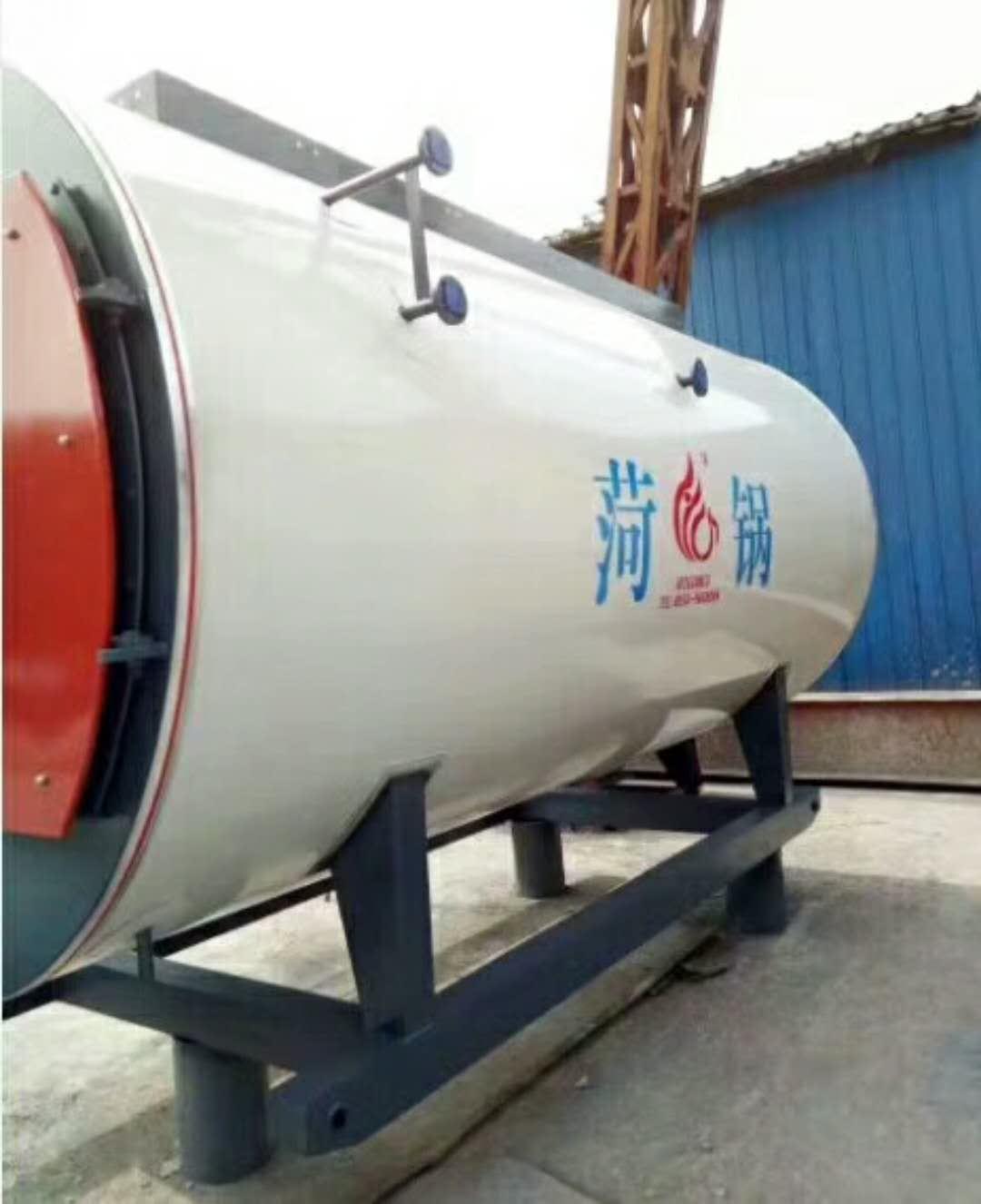

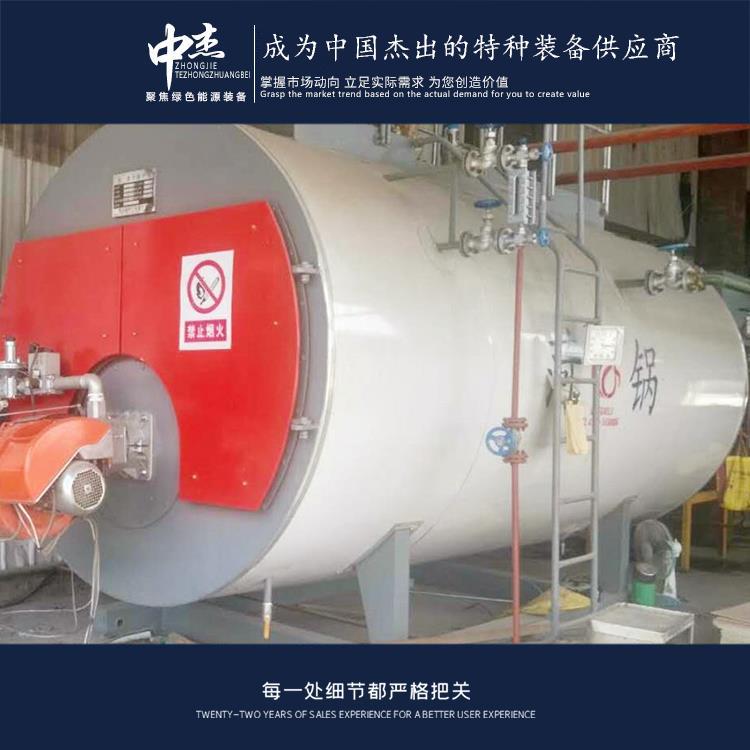
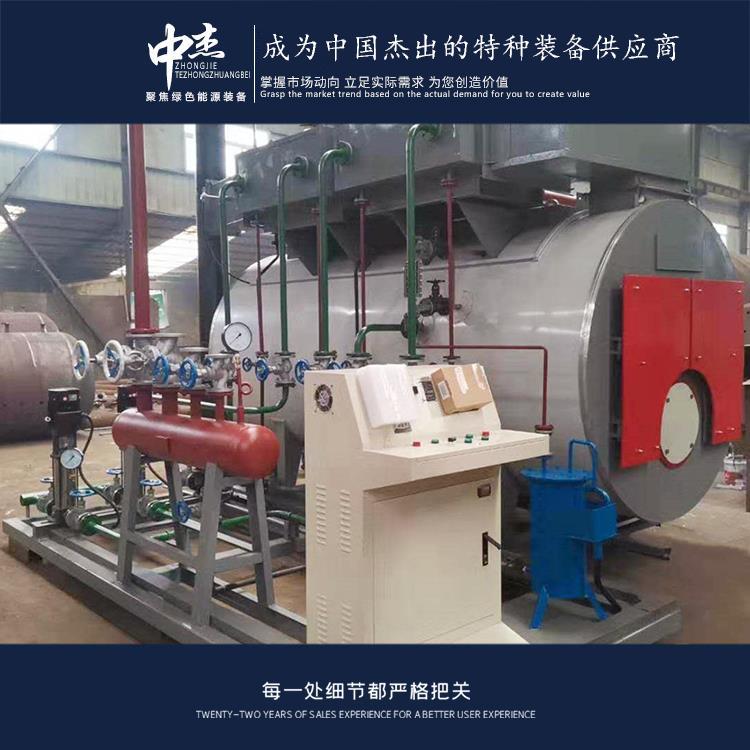


















Shandong Zhongjie Special Equipment Co., Ltd. specializes in the following main products: fuel (gas) boilers, organic heat carrier boilers, biomass boilers, waste heat recovery boilers, and other boiler products; vacuum insulation cryogenic pressure vessels such as LNG storage tanks, oxygen-nitrogenargon storage tanks, and CO2 storage tanks; pressure vessel products including denitrification engineering equipment, heat storage and energy storage equipment, and complete chemical equipment sets; central air conditioning and ventilation equipment such as ground (water) source heat pumps, air source units, water-cooled screw units, and air-cooled modules. Planned products include large-scale energy centers, LNG transport vehicles, LNG tank containers, and other green energy equipment.
The Zhongjie Skid-mounted Heat Transfer Oil Boiler is a common industrial thermal energy equipment featuring the following product characteristics: High thermal efficiency: The Zhongjie skid-mounted heat transfer oil boiler employs advanced combustion technology and heat exchanger design, effectively transferring the thermal energy produced by fuel combustion to the heat transfer oil, achieving energy utilization and enhancing thermal efficiency. Stable and reliable: Made with materials and precision manufacturing techniques, this boiler boasts excellent high-temperature resistance and a stable operational state, ensuring long-term stable operation and high reliability. Temperature control: The boiler is equipped with a temperature control system that can monitor and adjust the temperature of the heat transfer oil in real time, guaranteeing precision and stability in the process. Multiple safety protection devices: The boiler features multiple safety protection systems, such as overheat protection, pressure protection, and burner failure protection, to effectively prevent accidents. Additionally, the boiler uses clean combustion technology, producing minimal emissions and being environmentally friendly. Easy operation: The Zhongjie skid-mounted heat transfer oil boiler utilizes an intelligent control system with a user-friendly interface and easy parameter adjustments, making operation simple and reducing operation difficulty and labor costs. Overall, the Zhongjie skid-mounted heat transfer oil boiler is characterized by stability, reliability, and efficiency, suitable for many industrial fields such as chemicals, textiles, and food processing, providing users with reliable thermal energy supply and process temperature control.
Gas boiler temperature control methods typically include:
Manual adjustment: Adjust the temperature of the gas boiler by manually operating the valves or regulators. Adjust the valve opening or regulator settings as needed to achieve the desired temperature.
Automatic adjustment: Gas boilers can be equipped with automatic control systems that use sensors and controllers for automatic temperature regulation. Sensors detect the boiler temperature and send signals to the controller, which then automatically adjusts the gas supply and burner status based on the set temperature range to maintain the desired temperature.
Proportional control: Temperature regulation in gas boilers can also be achieved through proportional control. Adjust the valve or regulator opening based on temperature changes to maintain a proportional relationship between gas supply and burner status.
PID control: PID control is a commonly used temperature regulation method. The PID controller adjusts the gas supply and burner status based on temperature deviations, rates of change, and integral values to achieve temperature control.
It should be noted that different gas boilers may use different temperature control methods, and the specific method and operation should be determined according to the boiler model and control system. When adjusting the temperature, follow safety operating procedures to ensure normal operation and safety performance of the boiler.
The inspection content and requirements for gas-fired boilers typically include the following aspects:
- Safety valve and pressure gauge: Check the installation and fixation of the safety valve and pressure gauge to ensure proper operation and accurate pressure display.
- Combustion system: Inspect the working condition of the burner, including ignition, combustion, and combustion stability. Check the connection of the gas supply pipeline and valves to ensure no leaks.
- Flue and heat exchanger: Examine the cleanliness of the flue and heat exchanger, including accumulated dust and dirt, to ensure heat exchange efficiency and smoke emissions meet requirements.
- Water level control system: Check the working condition of the water level controller and gauge to ensure accurate and reliable water level control, preventing excessive or low water levels.
- Gas supply system: Inspect the installation and connection of the gas supply pipeline and valves to ensure normal gas supply and no leaks.
- Electrical system: Check the wiring and connection of the electrical system, including power supply, controllers, and sensors, to ensure normal operation of electrical equipment and avoid electrical faults.
- Safety devices: Verify the working condition of safety devices, including safety valves, pressure switches, and temperature controllers, to ensure proper operation and ensure safe boiler operation.
- Records and documents: Review the boiler's operating records, maintenance records, and inspection reports, ensuring complete and accurate records of operation and maintenance.
The inspection of gas-fired boilers should be conducted by institutions or individuals with the appropriate qualifications, following relevant laws, regulations, and standards. The frequency and specific requirements for inspections can be determined based on the boiler's usage and local regulations. Timely inspections and maintenance ensure safe and efficient operation of gas-fired boilers.
In the burner of a thermal oil furnace, adjusting the air shutter during low flame conditions is crucial. Here are some common knowledge and precautions:
The role of the air shutter: The air shutter is a key component in the burner that controls the supply of combustion air. By adjusting the opening of the air shutter, the flow of combustion air can be controlled, thereby affecting the oxygen supply and combustion effect during the combustion process.
Adjustment during low flame conditions: In low flame conditions, the burner needs to maintain stable combustion to ensure combustion efficiency and heat output. In this case, the opening of the air shutter should be appropriately adjusted to maintain a suitable supply of combustion air. Generally, the opening of the air shutter is relatively small during low flame conditions to maintain an appropriate oxygen supply, avoiding incomplete combustion or instability.
Ratio of combustion air to fuel: In low flame conditions, it is necessary to ensure the appropriate ratio of combustion air to fuel. Excessive combustion air can lead to incomplete combustion and energy waste, while insufficient combustion air can cause instability in combustion and the production of harmful gases. By adjusting the opening of the air shutter, the ratio of combustion air to fuel can be controlled to achieve a stable combustion effect.
Burner tuning and optimization: During the installation and tuning of the burner in a thermal oil furnace, appropriate tuning and optimization are required. Through actual operation and monitoring, adjust the opening of the air shutter and other parameters to achieve the best combustion effect and energy efficiency performance. This requires...
Our company highly values technological innovation and R&D, boasting one municipal-level enterprise technology center in Heze City. We have established testing facilities for non-destructive testing, physical and chemical testing, welding testing, hydrostatic testing, and more. We are equipped with over 600 various instruments and equipment, including CNC machine tools, X-ray flaw detectors, digital ultrasonic flaw detectors, mechanical property testing machines, chemical analyzers, spectrometers, tensile testing machines, plasma welding machines, and more. Our developed technologies in temperature-pressure vessel welding, biomass boiler emissions reduction, and waste heat utilization have successively been shortlisted for multiple Shandong Provincial Department of Industry and Information Technology science and technology innovation projects, key projects in Shandong Province, and Heze City innovation and excellence projects. We have cumulatively obtained 27 authorized utility models, 16 authorized inventions, participated in drafting 2 standards, 2 industry standards, and registered 15 trademarks. Our technical team, in collaboration with Professor Yajiang Li from Shandong University, has jointly developed deep cryogenic vessel processing technology, utilizing the international plasma arc + wire filling argon arc welding (PAW-GTAW) technology. After provincial-level scientific and technological achievement evaluation, the technology level has reached an international standard in the field of deep cryogenic vessel manufacturing.
Choose ZJETT for your outfitting needs, let's join hands to create brilliance together!
WeChat Official Account

Scan to follow Official Account



















