


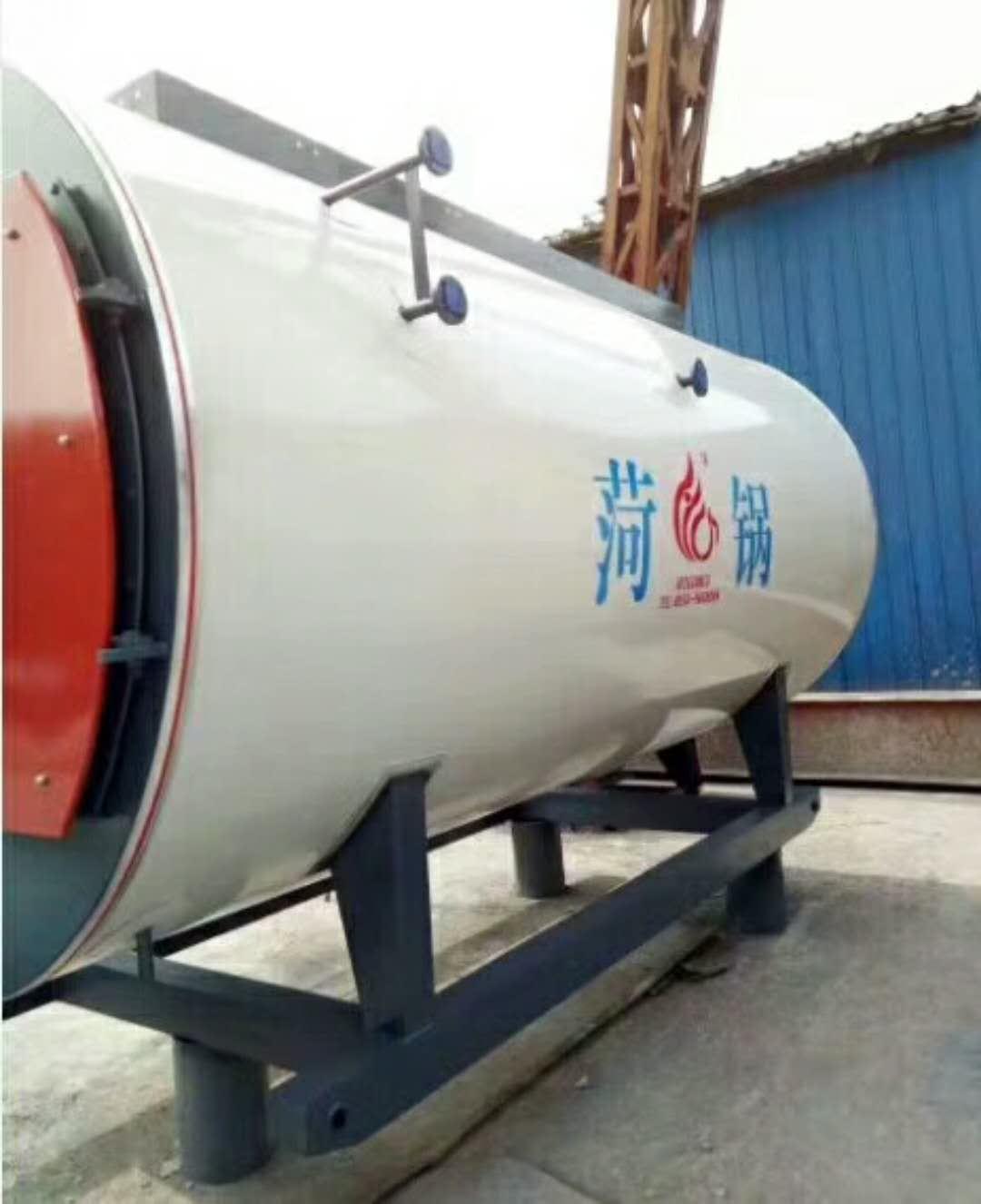

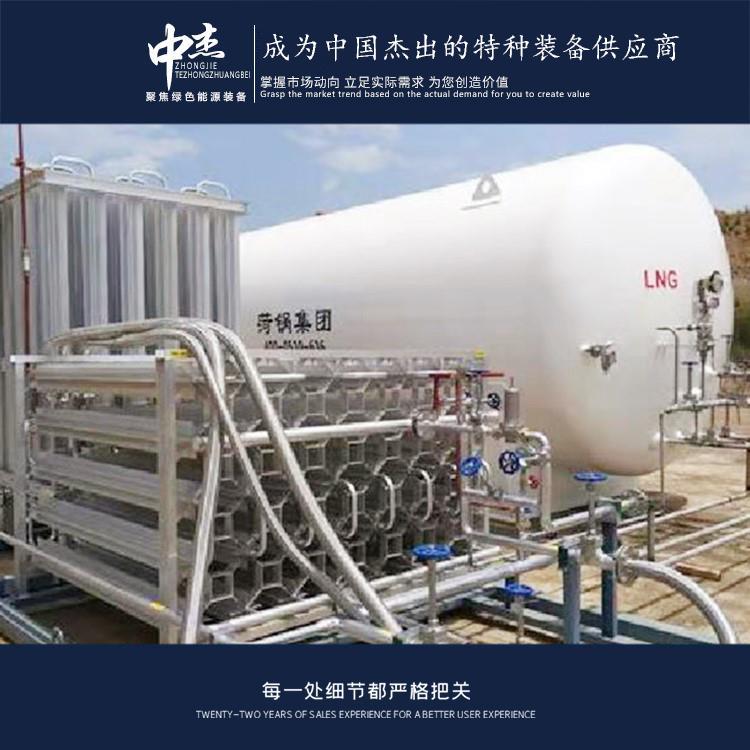
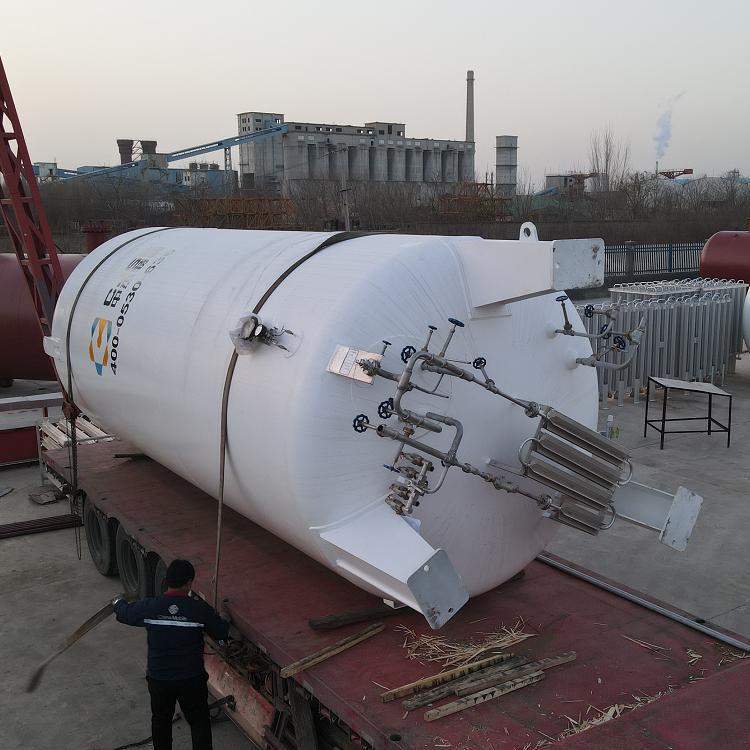


















Shandong Zhongjie Special Equipment's main products include: fuel (gas) boilers, organic heat carrier boilers, biomass boilers, waste heat boilers, and other boiler products; vacuum insulation cryogenic pressure vessels such as LNG tanks, oxygen/nitrogen/argon tanks, and CO2 tanks; pressure vessel products such as denitrification engineering equipment, heat storage and energy storage equipment, and complete chemical equipment; central air conditioning and HVAC equipment such as ground (water) source heat pumps, air source units, water-cooled screw units, and air-cooled modular units. Planned products include large-scale energy centers, LNG transport vehicles, LNG tank containers, and other green energy equipment.
Carbon dioxide level gauges are devices used for measuring and monitoring the liquid level of CO2 within storage tanks. Depending on different working principles and application requirements, common types of CO2 level gauges include the following:
- Buoy Level Gauges: Use the buoyancy of a float to indicate liquid level heights, measured through a mechanical linkage or electrical signal sensor connected to the float.
- Pressure Level Gauges: Utilize the relationship between liquid pressure and level to measure the liquid level. Level height is calculated by measuring the pressure changes on a pressure sensor due to the liquid.
- Ultrasonic Level Gauges: Measure the liquid level by utilizing the propagation time of ultrasound. An ultrasonic transmitter emits waves, and when the beam encounters the liquid surface, part of it is reflected back. The liquid level height is calculated by measuring the reflection time.
- Capillary Level Gauges: Measure the liquid level using the capillary principle. By inserting a thin tube into the liquid, the liquid rises within the tube, and the liquid level height is calculated based on the rise.
- Level Gauges: Measure the liquid level by reflecting waves. A transmitter emits waves, and when the beam hits the liquid surface, part of it is reflected back. The liquid level height is calculated by measuring the reflection time.
The application of these level gauges in CO2 storage tanks can be selected based on specific needs and tank design. When selecting and installing level gauges, factors such as liquid properties, working environment, and precision requirements must be considered, ensuring compatibility with the tank's safe operation and monitoring system.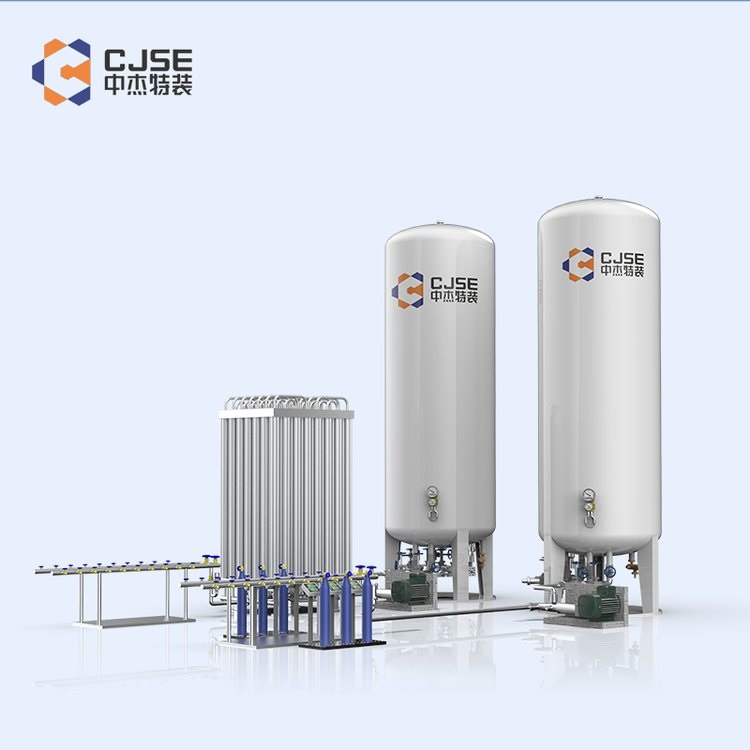
Carbon dioxide storage tanks feature the following characteristics:
- High-pressure Storage: Carbon dioxide storage tanks are typically used for high-pressure storage and can withstand high pressure. The carbon dioxide inside the tank exists in a gaseous or liquid state, with pressure usually ranging from tens to hundreds of MPa (megapascals).
- High-density Storage: When stored in a liquid state, carbon dioxide has a higher storage density. Compared to gaseous storage, liquid storage can hold more carbon dioxide in a relatively smaller tank, enhancing storage efficiency.
- Corrosiveness: Carbon dioxide has some degree of corrosiveness, which can erode certain materials. Therefore, carbon dioxide storage tanks are usually made of corrosion-resistant materials like stainless steel or alloy steel to ensure durability and safety.
- Temperature Sensitivity: Carbon dioxide is in a gaseous state at room temperature but can turn into a liquid at lower temperatures. As a result, carbon dioxide storage tanks typically need to have good insulation properties to maintain a low internal temperature.
- Safety Protection: Storage tanks are equipped with safety valves and pressure relief devices to control internal pressure and temperature, ensuring the safety of the storage process. Additionally, they must have excellent sealing performance to prevent leaks.
- Wide Application: Carbon dioxide storage tanks are widely used in various industries such as food and beverage, pharmaceutical, and chemical industries. They can be used for freezing food, refrigeration equipment, gas supply, and more, meeting diverse industry needs.
- In summary, carbon dioxide storage tanks possess high-pressure storage, high-density storage, corrosiveness, temperature sensitivity, safety protection, and wide application. These features make them essential equipment for storing and using carbon dioxide in many industries.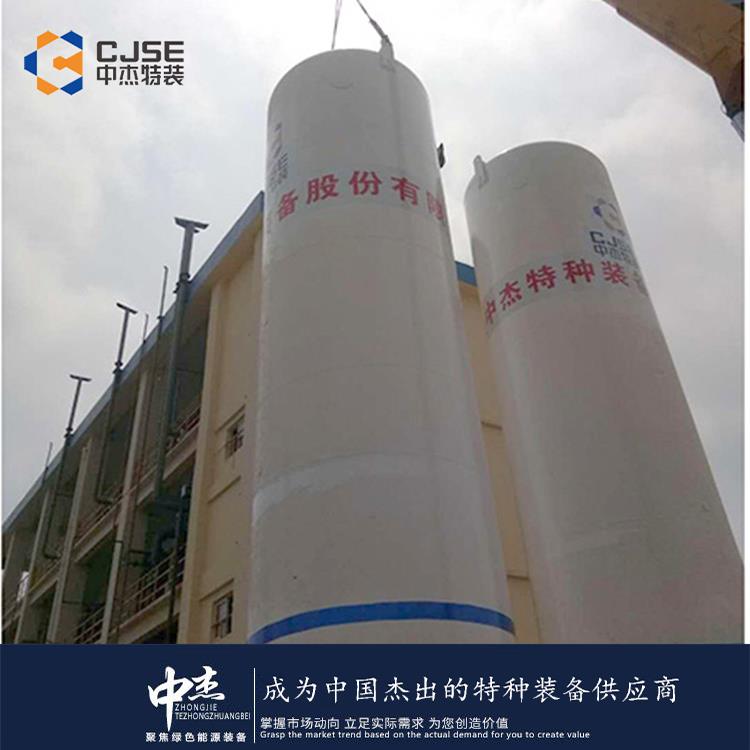
The spacing requirements for carbon dioxide storage tanks are typically governed by relevant safety regulations and standards, with specific spacing demands potentially varying due to factors like location, usage, and tank capacity. Here are some common spacing rules:
- Small spacing between tanks: Generally, the small spacing between adjacent tanks should comply with the requirements of relevant safety regulations and standards. This spacing ensures that in the event of a leak or accident, neighboring tanks are not affected.
- Spacing between tanks and buildings: The spacing between tanks and buildings must also adhere to the relevant regulations and standards. This spacing ensures that the building is not affected in case of a tank leak or accident.
- Spacing between tanks and equipment: The spacing between tanks and other equipment (such as pipelines, pumps, etc.) should also meet the requirements of relevant regulations and standards. This spacing ensures the proper operation and maintenance of the equipment.
- Safety and evacuation routes: Adequate safety and evacuation routes should be provided around and between tanks for safe evacuation during emergencies.
It's important to note that specific spacing rules may vary by region and industry. Therefore, when installing and using carbon dioxide storage tanks, it is essential to refer to local safety regulations and standards and consult with experts to ensure compliance with the relevant requirements.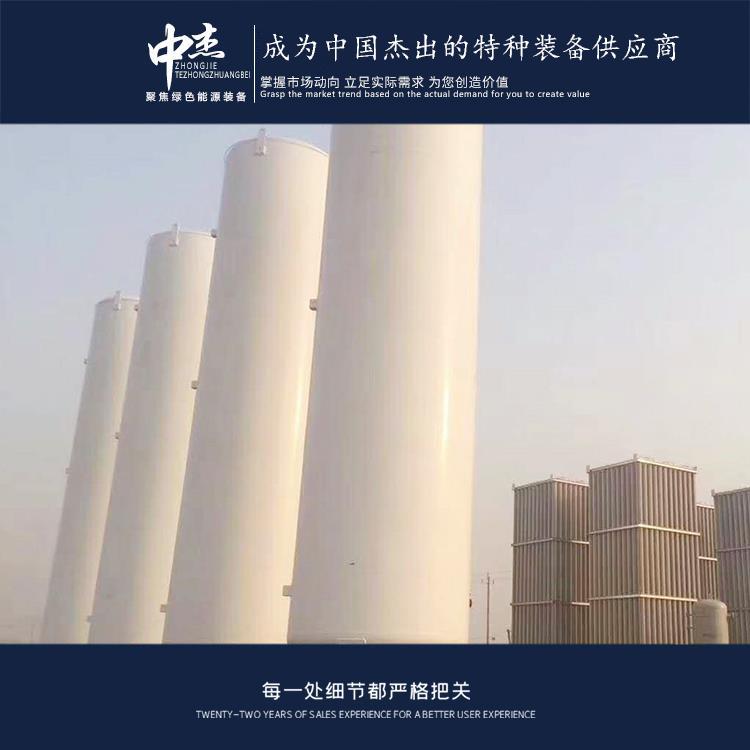
Low-temperature CO2 storage tanks are equipment used for storing and transporting low-temperature liquid CO2. Here are some key points about low-temperature CO2 storage tanks: Tank Structure: These tanks typically feature a double-walled design, with the inner wall for storing liquid CO2 and the outer wall for insulation. The interior is usually made of stainless steel or aluminum alloy, offering excellent corrosion resistance. Storage Temperature: The storage temperature for low-temperature CO2 tanks usually ranges from -40°C to -196°C, depending on specific application requirements. Temperature control is crucial for maintaining the stability and safety of the liquid CO2. Storage Capacity: The capacity of low-temperature CO2 storage tanks can be selected based on actual needs, typically ranging from a few thousand to tens of thousands of liters. The capacity choice should consider storage requirements, supply frequency, and spatial constraints. Safety Protection: These tanks require safety protection devices such as pressure relief valves, pressure sensors, and temperature sensors to ensure internal pressure and temperature remain within safe limits. Transportation: Low-temperature CO2 storage tanks can be transported via road, rail, or ship. Proper insulation measures must be taken during transportation to maintain the low-temperature state of the liquid CO2 inside. Safe Operation: Operation of low-temperature CO2 storage tanks requires training and adherence to safety operating procedures. Operators should be familiar with the tank's characteristics and safety precautions to ensure safe and effective operation. Regular Inspection and Maintenance: Regular inspections and maintenance are necessary for low-temperature CO2 storage tanks, including visual inspections, valve and pipeline checks, and pressure relief device checks. Regular maintenance ensures the tank operates normally and safely. The above points cover some knowledge about low-temperature CO2 storage tanks. When using and operating these tanks, it is essential to follow relevant safety regulations and standards, and consult with experts to ensure safety and effectiveness.
Our company highly values technological innovation and R&D design. We possess 1 municipal-level enterprise technology center in Heze City, with facilities for non-destructive testing, physical and chemical testing, welding testing, hydrostatic testing, and more. We are equipped with over 600 instruments and equipment, including CNC machine tools, X-ray flaw detectors, digital ultrasonic flaw detectors, mechanical property testing machines, chemical analyzers, spectrometers, tensile testing machines, plasma welding machines, and more. The key products we have developed, such as welding for temperature and pressure vessels, biomass boiler emission reduction, and waste heat utilization, have successively been shortlisted for multiple Shandong Provincial Department of Industry and Information Technology innovation projects, Shandong Provincial key projects, and Heze City innovation and excellence projects. We have cumulatively obtained 27 authorized utility model patents, 16 authorized invention patents, participated in drafting 2 standards, 2 industry standards, and registered 15 trademarks. Our technical team, in collaboration with Professor Yajiang Li of Shandong University, has developed deep cryogenic container processing technology using the internationally recognized plasma arc + filler wire tungsten inert gas (PAW-GTAW) welding technology. This technology has been appraised as reaching international standards in the field of deep cryogenic container manufacturing at the provincial level. Choose Zhongjie Special Equipment, and let's create brilliance together!
WeChat Official Account

Scan to follow Official Account



















